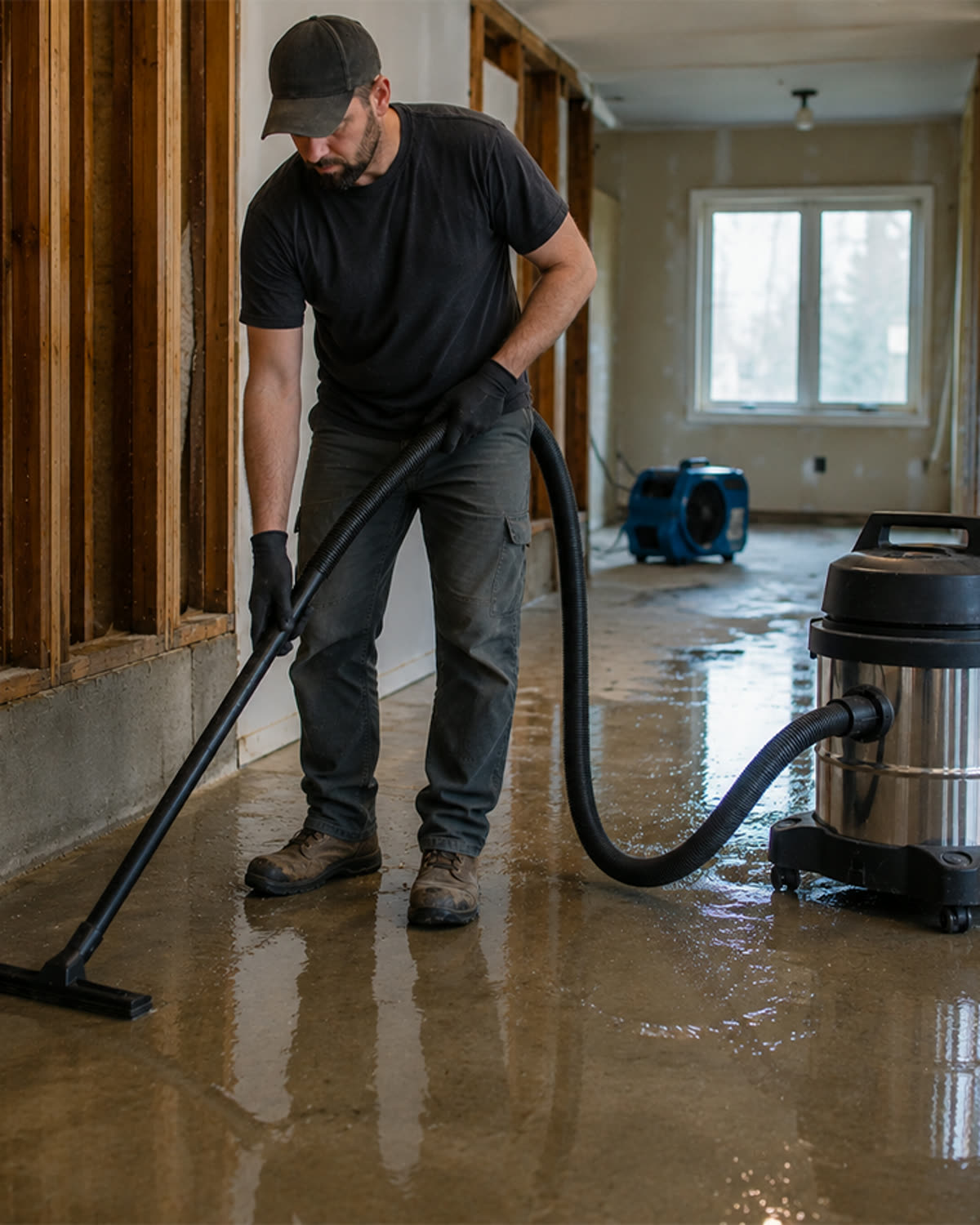
Walk into almost any hardware store and the shop vacuum aisle looks deceptively simple.
Large tank.
Powerful motor.
Heavy-duty wheels.
A big horsepower number printed across the box.
It seems like choosing a vacuum should come down to three questions:
- How big is it?
- How powerful is it?
- How much does it cost?
But those questions rarely tell you whether the vacuum will perform well on the job.
A vacuum that works perfectly for wood chips may struggle with drywall dust.
A compact vacuum may outperform a larger machine when connected to a sander.
A high-horsepower vacuum may lose most of its airflow after the filter loads with fine dust.
And a low-priced vacuum may become extremely expensive once you calculate replacement bags, filters, maintenance, downtime, and early motor failure.
The right shop vacuum is not necessarily the largest, strongest, or most expensive model.
It is the vacuum whose entire system matches the work you actually perform.
Quick Answer
When choosing a shop vacuum, compare these factors:
- Material being collected
- Debris volume
- CFM
- Water lift
- Maintained airflow
- Filtration
- Collection system
- Hose diameter and length
- Tank capacity
- Wet-pickup capability
- Portability
- Noise
- Durability
- Consumable costs
- Replacement-part availability
For fine dust, prioritize filtration, filter protection, good seals, and sustained airflow.
For bulky debris, prioritize hose diameter, collection capacity, and clog resistance.
For power tools, prioritize airflow at the tool, water lift, hose compatibility, and continuous-use performance.
Do not choose a shop vacuum based on peak horsepower alone.
Start With the Work, Not the Vacuum
Most buying mistakes happen because people begin by comparing machines.
A better process begins by defining the job.
Ask:
- What material will I collect?
- How much will I collect?
- How fine is the dust?
- Will the vacuum connect to power tools?
- Will I collect liquids?
- How long will the vacuum run?
- How far must debris travel through the hose?
- How often can the tank be emptied?
- Will the vacuum need to climb stairs?
- How expensive is downtime?
Once you understand the workload, the correct features become much easier to identify.
🔬 Vacuum Science
A shop vacuum performs several jobs at the same time.
It must:
- Create a pressure difference.
- Pull air into the cleaning tool.
- Capture dust and debris.
- Transport that material through the hose.
- Separate debris from the airflow.
- Filter the remaining particles.
- Cool the motor.
- Return cleaned air to the room.
Motor and Fan

↓

Pressure Difference

↓

Air Enters the Tool

↓

Dust and Debris Are Captured

↓

Material Travels Through the Hose

↓

Collection System Removes Debris

↓

Filter Captures Remaining Particles

↓

Air Cools the Motor

↓

Cleaned Air Exits
Buying a vacuum means buying this entire system.
A strong motor cannot compensate for a poor filter.
A large tank cannot compensate for a narrow, clogged hose.
A high-efficiency filter cannot perform correctly if air leaks around its seal.
The Vacuum Selection Framework™
The right shop vacuum balances five categories:
Material

+

Performance

+

Dust Control

+

Workflow

+

Operating Cost

=

Correct Vacuum
Ignoring any one of these categories can produce a poor buying decision.
Step 1: Identify What You Will Vacuum
The material should be the first buying consideration.
Different debris creates different airflow, filtration, and collection demands.
General Workshop Debris
Examples include:
- Wood chips
- Dirt
- Fasteners
- Packaging
- Leaves
- Light construction waste
- Bench cleanup
Prioritize:
- General-purpose airflow
- Moderate tank capacity
- Durable hose
- Practical attachments
- Easy emptying
- Good mobility
A basic wet/dry vacuum may be adequate for this work.
Drywall Dust
Drywall dust is extremely fine and difficult to control.
It rapidly loads filters and can escape through weak seals or inadequate filtration.
Prioritize:
- Fine-dust filtration
- Effective collection before the filter
- Good filter sealing
- Strong maintained airflow
- Easy filter inspection
- Appropriate collection bags
- Controlled emptying
- Dust-resistant internal design
Tank capacity is secondary.
A large vacuum with poor fine-dust management may lose suction faster than a smaller system designed to protect its filter.
Concrete and Masonry Dust
Concrete, cement, mortar, and masonry dust can include extremely fine particles.
Some work may require specialized dust-control equipment and procedures.
Prioritize:
- Strong source capture
- Fine-particle filtration
- Secure dust containment
- Adequate CFM
- Strong water lift
- Filter-cleaning capability
- Compatible tool connections
- Appropriate bags or collection systems
- Equipment suitable for the application
Follow the equipment manufacturer’s instructions and all applicable jobsite and safety requirements.
Sawdust and Wood Chips
Woodworking produces material ranging from microscopic sanding dust to large planer chips.
Sanding Dust
Prioritize:
- Fine filtration
- High useful airflow
- Tool-port compatibility
- Good static pressure
- Filter protection
Table Saw or Miter Saw Dust
Prioritize:
- Strong airflow
- Effective tool hood
- Suitable hose diameter
- Good collection capacity
Planer Chips
Prioritize:
- Large airflow volume
- Large hose
- High collection capacity
- Clog resistance
A standard shop vacuum may not be the best tool for high-volume chip-producing equipment.
A dedicated dust collector may be more appropriate.
Heavy Construction Debris
Examples include:
- Drywall pieces
- Gravel
- Wood scraps
- Screws
- Insulation
- Tile fragments
- Demolition debris
Prioritize:
- Large hose diameter
- Open internal passages
- Strong water lift
- High airflow
- Durable tank
- Clog-resistant attachments
- Large collection capacity
Fine filtration still matters, but the system must also transport bulky material without constant blockages.
Liquids
Wet pickup changes the buying decision.
Prioritize:
- Wet-use configuration
- Reliable float shutoff
- Drain system
- Tank stability
- Suitable hose
- Easy cleaning
- Corrosion-resistant components
- Appropriate wet filters or filter removal procedures
- Manageable full weight
Remember that water weighs approximately 8.3 pounds per gallon.
A large tank can become extremely difficult to move when full.
Mixed Debris
Many contractors collect a combination of:
- Fine dust
- Wood chips
- Fasteners
- Packaging
- Drywall pieces
- Small spills
Mixed debris requires balance.
A medium or large general-purpose vacuum may work well, but the collection system must protect the filter from fine dust while the hose remains large enough for bulky debris.
Step 2: Estimate Debris Volume
The tank must hold enough material to reduce interruptions without becoming unnecessarily large.
Estimate how much debris a typical job produces.
Low Volume
Examples:
- Vehicle cleaning
- Small repairs
- Workbench cleanup
- Minor drilling
- Service calls
A compact vacuum may be enough.
Moderate Volume
Examples:
- Room remodeling
- Flooring installation
- Routine shop cleanup
- Small drywall jobs
- Residential contracting
A medium vacuum often provides the best balance.
High Volume
Examples:
- Demolition
- Commercial renovation
- Flood cleanup
- Large woodworking projects
- High-production construction
A large vacuum or specialized collection system may be necessary.
The Emptying Efficiency Principle™
The goal is not eliminating emptying.
It is minimizing total interruption.
Vacuum Too Small

↓

Constant Emptying

↓

Lost Labor

Vacuum Too Large

↓

Extra Weight and Poor Mobility

↓

Lost Labor

Correct Capacity

↓

Efficient Emptying and Easy Movement
Choose the capacity that creates the least total disruption.
Step 3: Understand CFM
CFM stands for cubic feet per minute.
It measures the volume of air moving through the vacuum system.
CFM is especially important for:
- Capturing airborne dust
- Moving lightweight particles
- Wide floor tools
- Sawdust
- Tool extraction
- Long cleanup passes
- Keeping debris suspended in the hose
Higher useful airflow generally creates a larger dust-capture zone.
But advertised CFM may be measured under conditions that do not reflect a working jobsite.
Real airflow is reduced by:
- Hose length
- Hose diameter
- Attachments
- Filters
- Collection bags
- Bends
- Clogs
- Air leaks
The important question is not only how much air the machine moves when new.
It is how much airflow reaches the tool during use.
Step 4: Understand Water Lift
Water lift measures suction pressure.
It indicates how strongly the vacuum can pull against resistance.
Water lift becomes especially important when:
- The hose is narrow
- The hose is long
- The attachment is restrictive
- The power-tool port is small
- The debris is heavy
- Liquid is being collected
- The filter creates resistance
- Material must be pulled from cracks
Water lift helps begin movement.
CFM helps maintain movement.
The Lift-and-Carry Principle™
Water Lift

↓

Pulls Material Into Motion

CFM

↓

Carries Material Through the Hose
A professional vacuum needs an appropriate balance of both.
Step 5: Ignore Peak Horsepower as a Primary Buying Metric
Peak horsepower is commonly printed in large type on shop vacuum packaging.
It sounds like a direct measure of performance.
It is not.
Peak horsepower does not directly tell you:
- CFM
- Water lift
- Airflow at the tool
- Filtration quality
- Filter life
- Dust containment
- Working performance
- Motor durability
- Noise
- Operating cost
Two vacuums with similar horsepower claims may perform very differently.
Use horsepower as one minor piece of information—not the deciding factor.
Step 6: Evaluate Maintained Airflow
Most shop vacuums perform well with a new filter and empty tank.
The meaningful test is what happens after collecting dust.
Ask:
- How quickly does the filter load?
- Does airflow fall after a few minutes?
- Is there a pre-collection stage?
- Does the bag capture fine dust?
- Can the filter be cleaned easily?
- Does the vacuum have automatic filter cleaning?
- How much airflow returns after cleaning?
- Does debris collect directly around the filter?
A vacuum that maintains moderate airflow may outperform one with higher initial airflow that collapses under dust loading.
The Working Performance Standard™
Advertised Performance

≠

Jobsite Performance

Jobsite Performance

=

Advertised Potential

− Restrictions

− Filter Loading

− Leaks

− Poor Collection Design
Initial specifications show potential.
System design and maintenance determine usable performance.
Step 7: Examine the Filtration System
Filtration should match the material and the environment.
Consider:
- Filter efficiency
- Filter type
- Filter surface area
- Dust-holding capacity
- Seal design
- Washability
- Replacement cost
- Cleaning method
- Fine-dust compatibility
- Availability of final-stage filtration
A filter is only effective when all airflow passes through it.
A highly efficient filter with a poor gasket may still allow dust to escape.
Standard Filters
Standard filters may be appropriate for:
- General debris
- Wood chips
- Dirt
- Light workshop dust
They may not be suitable for large amounts of fine construction dust.
Fine-Dust Filters
Fine-dust filters are designed to capture smaller particles than general-purpose filters.
They may be appropriate for:
- Drywall dust
- Cement dust
- Sanding dust
- Fine sawdust
Finer filtration often creates more resistance, making collection design and filter area especially important.
HEPA Filtration
HEPA filtration is designed to capture very small particles at a specified efficiency under defined test conditions.
However, the filter is only one part of the system.
For effective performance, consider:
- Whether the complete vacuum is sealed
- Whether the filter is properly installed
- Whether air can bypass the filter
- Whether the collection bag contains fine dust
- Whether the machine is approved for the intended application
- Whether the filter remains effective as it loads
A HEPA label alone does not guarantee that the entire system controls dust correctly.
The Filtration Integrity Rule™
Filter Efficiency

×

Seal Integrity

×

Correct Installation

=

Actual Filtration Performance
If any factor fails, overall performance falls.
Step 8: Evaluate the Collection System
The collection system determines how much debris reaches the filter.
Common configurations include:
- Open tank collection
- Disposable bags
- Reusable bags
- Cyclonic separators
- Multi-stage collection systems
The filter should not be forced to function as the primary dust container.
A good collection system captures most material before it reaches the final filtration stage.
Open Tank Collection
Advantages:
- Simple
- Low consumable cost
- Easy for bulky debris
- Convenient for liquids when correctly configured
Disadvantages:
- More dust reaches the filter
- Messier emptying
- Fine dust can become airborne
- Filters may load quickly
Disposable Collection Bags
Advantages:
- Cleaner disposal
- Better filter protection
- Convenient for fine dust
- Less tank contamination
Disadvantages:
- Recurring cost
- Can tear
- Can collapse
- Must be compatible
- May fill before the tank appears full
Reusable Collection Systems
Advantages may include:
- Reduced recurring bag purchases
- Lower long-term waste
- Filter protection
- Consistent availability
- Lower operating cost
Important evaluation points include:
- Filtration performance
- Emptying method
- Durability
- Compatibility
- Cleaning requirements
- Wet and dry performance
- Whether airflow remains stable
Cyclonic Pre-Separation
A cyclone attempts to remove debris before it reaches the vacuum.
Advantages:
- Reduces filter loading
- Increases collection capacity
- May improve filter life
- Useful for woodworking and bulk dust
Disadvantages:
- Additional equipment
- More hoses and connections
- Added resistance
- Increased footprint
- Potential air leaks
- More setup time
The separator must be matched to the airflow and debris.
The Filter Protection Principle™
More Dust Captured Before the Filter

↓

Less Filter Loading

↓

Stronger Working Airflow

↓

Lower Motor Temperature

↓

Longer Filter and Motor Life
Filter protection is one of the most important features in a high-use vacuum system.
Step 9: Choose the Correct Hose Diameter
The hose determines what the vacuum can transport efficiently.
Small Hose
Best for:
- Detail work
- Vehicle interiors
- Small tool ports
- Fine dust
- Tight spaces
Limitations:
- Higher resistance
- Frequent clogs with bulky debris
- Lower total airflow
- Poor performance with larger fragments
Medium Hose
Best for:
- General cleanup
- Remodeling
- Workshops
- Mixed debris
- Routine contractor use
This size often provides the best balance.
Large Hose
Best for:
- Wood chips
- Gravel
- Demolition fragments
- High-volume debris
- Larger floor tools
Limitations:
- Bulkier
- Harder to store
- Less compatible with small tool ports
- May reduce concentrated air velocity
Step 10: Consider Hose Length
Longer hoses increase reach.
They also increase resistance.
A long hose may be useful when:
- The vacuum must remain outside the workspace
- The machine cannot fit near the tool
- The worker covers a large area
- Noise must be moved away from the operator
But added length may reduce airflow at the tool.
When using long hoses, prioritize:
- Adequate water lift
- Appropriate diameter
- Smooth routing
- Minimal bends
- Leak-free connections
Step 11: Evaluate Power-Tool Compatibility
A vacuum used with power tools needs more than general cleaning strength.
Check:
- Tool-port diameter
- Hose compatibility
- Available adapters
- Required CFM
- Static pressure
- Automatic tool activation
- Continuous-use rating
- Filter-cleaning system
- Power outlet capacity
- Cord and hose management
Source extraction must capture dust as it is created.
That requires useful airflow at the tool—not merely at the vacuum inlet.
Automatic Tool Activation
Some vacuums include a power outlet that starts the vacuum when the connected tool starts.
Advantages:
- Easier operation
- Less wasted run time
- Improved dust-control consistency
- Reduced need to reach for the vacuum switch
Check the maximum supported tool load.
Do not exceed the electrical rating.
Automatic Filter Cleaning
Some professional extractors periodically clean the filter during operation.
Potential advantages:
- More stable airflow
- Less manual cleaning
- Reduced downtime
- Better fine-dust performance
Potential disadvantages:
- Higher purchase price
- Additional noise
- More complex maintenance
- Performance varies by design
Automatic filter cleaning can be valuable for continuous fine-dust production.
Step 12: Consider Wet-Pickup Design
Not every vacuum is equally convenient for liquids.
Evaluate:
- Float shutoff
- Drain size
- Drain location
- Tank shape
- Wheel stability
- Wet filter requirements
- Hose drainage
- Ease of cleaning
- Full tank weight
- Whether the bag must be removed
A large tank without a practical drain can become difficult to empty.
Step 13: Evaluate Portability
Portability affects daily productivity.
Consider:
- Empty weight
- Full weight
- Handle design
- Wheel size
- Stair use
- Vehicle storage
- Tank width
- Cord storage
- Hose storage
- Attachment storage
- Stability on uneven surfaces
A vacuum that is difficult to move may not be used consistently.
The Use-It Principle™
The most effective vacuum is the one workers will actually bring to the job.
Difficult to Carry

↓

Left in the Truck

↓

Manual Cleanup

↓

More Airborne Dust

↓

Lower Productivity
Portability is a performance feature.
Step 14: Consider Noise
Noise affects:
- Worker comfort
- Communication
- Occupied buildings
- Residential work
- Long operating sessions
- Customer perception
Compare sound ratings when available.
Also consider whether noise increases as the filter loads.
A vacuum that becomes sharply higher pitched during use may be experiencing airflow restriction.
Use appropriate hearing protection when required.
Step 15: Evaluate Durability
Professional use places stress on:
- Hoses
- Latches
- Wheels
- Handles
- Power cords
- Switches
- Tanks
- Filter mounts
- Accessory holders
Look for:
- Reinforced hose cuffs
- Durable casters
- Secure latches
- Strong tank construction
- Replaceable cords or switches
- Available repair parts
- Service support
- Practical warranty coverage
A strong motor inside a fragile housing does not create a durable vacuum.
Step 16: Calculate Operating Cost
The purchase price is only the beginning.
Include:
- Replacement bags
- Replacement filters
- Pre-filters
- Hoses
- Attachments
- Repairs
- Labor
- Cleaning time
- Downtime
- Motor replacement
- Disposal cost
The True Cost Formula™
Purchase Price

+

Bags

+

Filters

+

Maintenance Labor

+

Downtime

+

Repairs

+

Lost Productivity

=

True Cost of Ownership
A more expensive vacuum may cost less over time if it:
- Uses fewer consumables
- Maintains airflow longer
- Requires less maintenance
- Reduces cleanup time
- Protects the motor
- Experiences less downtime
Step 17: Check Replacement-Part Availability
Before purchasing, confirm whether you can easily obtain:
- Filters
- Bags
- Hoses
- Hose cuffs
- Attachments
- Wheels
- Latches
- Switches
- Motor brushes
- Seals
A vacuum becomes expensive when a small unavailable part forces replacement of the entire machine.
Step 18: Review Storage and Transport
Consider where the vacuum will live.
Ask:
- Does it fit in the truck?
- Can the hose remain attached?
- Is there onboard attachment storage?
- Does the cord wrap securely?
- Will the filter be protected during transport?
- Can the machine tip over?
- Is the tank too wide for shelving?
- Can one person lift it safely?
Storage problems become daily problems.
Step 19: Decide Whether You Need One Vacuum or Several
One machine may not efficiently handle every job.
A contractor may benefit from:
- Compact vacuum for service calls
- Medium vacuum for residential cleanup
- Fine-dust extractor for sanding
- Large wet/dry vacuum for liquid recovery
- Dust collector for high-volume woodworking
Trying to force one vacuum into every application can produce constant compromise.
The Purpose-Matched System™
One Vacuum for Every Job

↓

Compromised Performance

Purpose-Matched Vacuums

↓

Better Performance and Lower Downtime
Multiple machines are not always necessary.
But specialized work often benefits from specialized equipment.
Buying Recommendations by Application
Best Vacuum Features for Homeowners
Prioritize:
- Compact or medium size
- Easy storage
- Versatile attachments
- Wet/dry capability
- Affordable filters
- Good mobility
- Moderate noise
- Reliable seals
Best Vacuum Features for General Contractors
Prioritize:
- Durable hose
- Medium or large capacity
- Strong maintained airflow
- Fine-dust compatibility
- Filter protection
- Easy emptying
- Replaceable parts
- Strong wheels and latches
- Reasonable consumable cost
Best Vacuum Features for Drywall Contractors
Prioritize:
- Fine-dust filtration
- Effective pre-collection
- High filter surface area
- Stable airflow
- Sealed construction
- Easy filter cleaning
- Dust-controlled emptying
- Tool connection
- Low filter replacement frequency
Best Vacuum Features for Concrete Contractors
Prioritize:
- Application-specific dust extraction
- Fine-particle containment
- Strong water lift
- Adequate CFM
- Filter-cleaning system
- Durable hoses
- Secure tool adapters
- Dust-compatible collection
- Compliance with applicable requirements
Best Vacuum Features for Woodworkers
Prioritize:
- Appropriate airflow for the tool
- Hose compatibility
- Fine-dust filtration
- Large-chip capacity when needed
- Cyclonic pre-separation
- Automatic tool activation
- Low static leakage
- Easy collection disposal
Best Vacuum Features for Flooring Contractors
Prioritize:
- Fine-dust control
- Strong airflow
- Durable wheels
- Floor-safe mobility
- Tool compatibility
- Long hose when necessary
- Good filter protection
- Compact transport footprint
Best Vacuum Features for Vehicle Detailing
Prioritize:
- Compact size
- Strong sealed suction
- Flexible hose
- Crevice tools
- Soft brushes
- Long cord
- Easy portability
- Moderate tank capacity
Shop Vacuum Feature Comparison Table
| Feature | What It Tells You | Why It Matters |
|---|---|---|
| CFM | Air volume | Dust capture and transport |
| Water lift | Suction pressure | Heavy debris and resistance |
| Peak horsepower | Motor claim | Limited real-world value |
| Tank capacity | Storage volume | Emptying frequency |
| Hose diameter | Debris pathway | Clogging and airflow |
| Filter type | Particle capture | Dust control |
| Filter surface area | Dust capacity | Maintained airflow |
| Collection bag | Pre-filter collection | Filter protection |
| Automatic filter cleaning | Filter maintenance | Continuous performance |
| Tool activation | Workflow convenience | Source extraction |
| Float shutoff | Liquid protection | Wet pickup |
| Drain | Emptying method | Liquid cleanup |
| Noise rating | Sound output | Operator comfort |
| Weight | Portability | Setup and transport |
| Replacement-part access | Serviceability | Equipment lifespan |
Shop Vacuum Buying Checklist
Job Requirements
- Primary debris identified
- Fine-dust exposure considered
- Daily debris volume estimated
- Wet pickup required
- Tool extraction required
- Operating duration estimated
- Hose reach calculated
- Portability needs identified
Performance
- CFM reviewed
- Water lift reviewed
- Working airflow considered
- Hose diameter appropriate
- Hose length appropriate
- Attachments match the job
- Tool ports compatible
Filtration
- Correct filter available
- Filter seal inspected
- Fine-dust compatibility confirmed
- HEPA option reviewed
- Filter surface area considered
- Filter cleaning method reviewed
- Replacement filter cost calculated
Collection
- Collection-bag options reviewed
- Reusable collection options reviewed
- Cyclone compatibility considered
- Practical capacity estimated
- Emptying method reviewed
- Dust exposure during disposal considered
Workflow
- Empty weight acceptable
- Full weight acceptable
- Stair transport considered
- Vehicle storage confirmed
- Cord length adequate
- Hose storage practical
- Wheels appropriate
- Noise acceptable
Ownership Cost
- Purchase price
- Annual bag cost
- Annual filter cost
- Maintenance time
- Repair availability
- Replacement parts
- Expected downtime
- Warranty and service
Common Buying Mistakes
Choosing by Peak Horsepower
A large horsepower number does not guarantee useful performance.
Choosing by Tank Size
Capacity does not measure suction, airflow, or filtration.
Ignoring Fine Dust
A vacuum that handles wood chips may fail quickly when exposed to drywall or concrete dust.
Ignoring Maintained Airflow
Clean-filter performance may disappear within minutes under heavy dust loading.
Buying the Smallest Hose for “More Suction”
A narrow hose increases resistance and may clog frequently.
Buying the Largest Vacuum Available
Oversized machines create transport, storage, and weight problems.
Ignoring Consumable Cost
Cheap vacuums can become expensive when they require constant bags and filters.
Assuming HEPA Solves Everything
A HEPA filter cannot overcome leaks, poor installation, or excessive filter loading.
Ignoring Emptying Method
A vacuum that is difficult or messy to empty creates recurring labor and exposure problems.
Expecting One Vacuum to Do Every Job
Different dust sources require different performance and filtration systems.
The Contractor Decision Tree™
What Are You Collecting?

↓

Fine Dust?

YES → Prioritize Filtration and Filter Protection

NO

↓

Bulky Debris?

YES → Prioritize Hose Diameter and Capacity

NO

↓

Power Tool Extraction?

YES → Prioritize CFM at Tool and Water Lift

NO

↓

Liquid Pickup?

YES → Prioritize Float, Drain and Full Weight

NO

↓

General Cleanup

↓

Choose Balanced Medium System
Interactive Tool Placeholder
Shop Vacuum Buying Assistant
Ask the user:
- What material do you vacuum most often?
- How much debris is produced per day?
- Do you collect drywall or concrete dust?
- Will the vacuum connect to power tools?
- Do you need liquid pickup?
- What is the largest debris size?
- How long will the vacuum run continuously?
- How many stairs must it climb?
- How often are you willing to empty it?
- What is your annual consumables budget?
Output:
- Recommended vacuum category
- Recommended tank range
- Hose diameter priority
- CFM priority
- Water-lift priority
- Filtration requirement
- Collection-system recommendation
- Portability warning
- Operating-cost estimate
Diagram Placeholder
Anatomy of a Good Shop Vacuum
Create a cutaway illustration labeling:
- Cleaning attachment
- Hose
- Hose cuff
- Inlet
- Collection bag or reusable collection system
- Tank
- Primary filter
- Filter gasket
- Float mechanism
- Motor and fan
- Cooling vents
- Exhaust
- Power cord
- Wheels and latches
Add a callout beside each component explaining what buyers should inspect.
Common Myths
Myth: More horsepower means more suction.
Reality: Horsepower does not directly measure CFM, water lift, or performance at the tool.
Myth: A larger tank means a stronger vacuum.
Reality: Tank size measures capacity only.
Myth: Every wet/dry vacuum works well with fine dust.
Reality: Fine dust requires appropriate filtration, good seals, and filter protection.
Myth: A HEPA filter automatically makes the vacuum safe for every job.
Reality: The entire system must be correctly designed, sealed, configured, and used for the application.
Myth: Disposable bags are always cheaper.
Reality: Recurring bag cost may exceed the purchase price of the vacuum over time.
Myth: The strongest vacuum is always the best vacuum.
Reality: Excess size, noise, weight, and operating cost may reduce productivity.
Myth: A clogged filter is simply part of vacuum ownership.
Reality: Rapid filter clogging often indicates that too much dust is reaching the filter.
Myth: One vacuum should handle every job.
Reality: Specialized dust and debris may require specialized systems.
Frequently Asked Questions
What should I look for when buying a shop vacuum?
Start with the material, debris volume, CFM, water lift, filtration, collection system, hose size, portability, and ownership cost.
How much horsepower should a shop vacuum have?
Horsepower should not be the primary buying metric. Compare airflow, water lift, filtration, hose design, and working performance instead.
Is higher CFM better?
Higher CFM can improve dust capture and transport, but only when that airflow is maintained through the hose, filter, and attachment.
Is higher water lift better?
Higher water lift helps overcome resistance and lift heavier debris. It should be balanced with adequate airflow.
What tank size should I buy?
Choose enough capacity to reduce frequent emptying without creating unnecessary weight and mobility problems.
Should I buy a vacuum with a bag?
A collection bag can improve dust containment and protect the filter. Compare recurring cost, filtration, compatibility, and disposal method.
Do I need a HEPA filter?
It depends on the material and application. Fine or hazardous dust may require high-efficiency filtration and a properly sealed system.
What hose size is best?
Small hoses suit tools and detail work. Large hoses suit bulky debris. Medium hoses offer general-purpose versatility.
Are expensive shop vacuums worth it?
They may be when they maintain airflow longer, protect filters, reduce consumable use, lower downtime, and last longer.
Should I buy a wet/dry vacuum or a dust extractor?
A wet/dry vacuum is useful for general cleanup and liquids. A dust extractor may be better for continuous fine-dust capture from power tools.
What makes a shop vacuum good for drywall dust?
Effective pre-collection, fine filtration, good seals, sustained airflow, easy filter maintenance, and controlled disposal.
What makes a vacuum good for concrete dust?
Strong source capture, fine-particle containment, appropriate filtration, filter cleaning, tool compatibility, and suitability for applicable dust-control requirements.
How can I tell whether a vacuum will maintain suction?
Evaluate its collection design, filter surface area, filter-cleaning method, bag performance, and reviews or testing under actual dust loading—not only clean-filter specifications.
Should I buy one large vacuum or two smaller ones?
Two smaller machines may improve portability, simultaneous use, and redundancy. One large vacuum may provide greater capacity and simpler maintenance.
Key Takeaways
Buying a shop vacuum is not about finding the largest tank or the biggest horsepower number.
It is about matching an airflow and filtration system to the work.
Begin with the material.
Then evaluate:
- Debris volume
- CFM
- Water lift
- Maintained airflow
- Filtration
- Collection design
- Hose diameter
- Tank capacity
- Tool compatibility
- Wet-pickup capability
- Portability
- Durability
- Operating cost
The best vacuum is the one that performs efficiently after the filter begins collecting dust—not just during the first minute after it leaves the box.
It should capture the material, carry it through the hose, contain it before it reaches the filter, maintain airflow, protect the motor, and fit the workflow.
Do not buy specifications.
Buy a complete system.
The right shop vacuum is the one that keeps working efficiently through the entire job.
Related guides
- shop vacuum troubleshooting guide
- the realistic lifespan of a shop vac
- Shop Vacuum Accessories Guide
- How Much Does a Shop Vacuum Really Cost to Own
- What Shop Vacuum Hose Size Do You Need
- Shop Vacuum Tank Size vs. Usable Capacity
- shop vac against a dust extractor
- Shop Vacuum vs. HEPA Dust Extractor for Renovation Work
- sizing a shop vac to the work
- bags that work when fine dust is the problem
- understanding CFM and water lift specs
- related: multi stage shop vacuum filtration for shop vacuum buying guide users
- related: why fine dust destroys vacuums for shop vacuum buying guide users