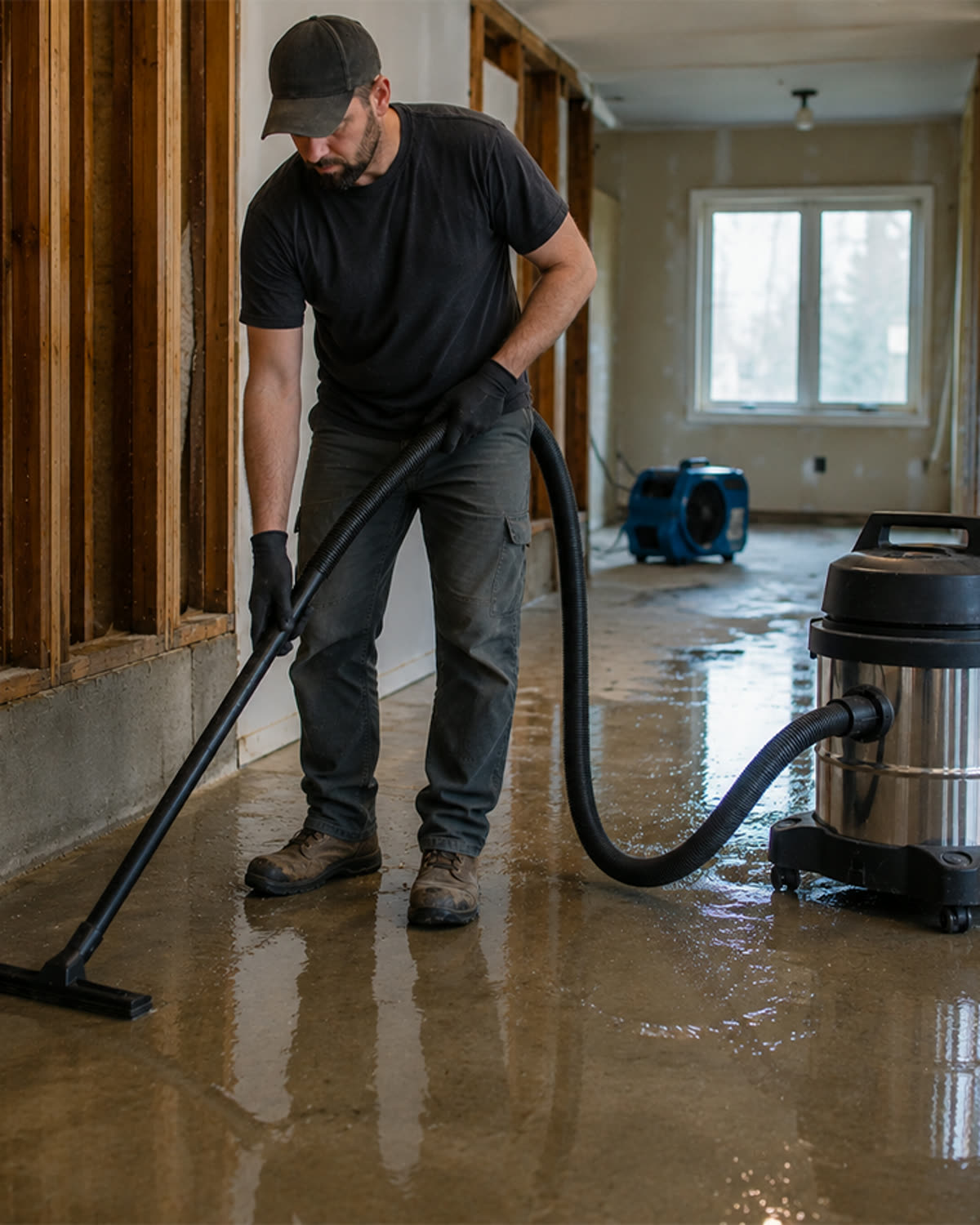
A shop vacuum motor creates the airflow.
Accessories determine how effectively that airflow reaches the job.
The wrong attachment can make a strong vacuum feel weak.
A poor hose can create clogs and resistance.
The wrong filter can release dust or restrict airflow.
An unsuitable bag can tear, collapse, or load too quickly.
Accessories are not minor add-ons.
They are part of the vacuum system.
Quick Answer
The most useful shop vacuum accessories include:
- General-purpose hose
- Fine-dust tool hose
- Large-debris hose
- Floor nozzle
- Squeegee attachment
- Crevice tool
- Brush tool
- Power-tool adapters
- Fine-dust filter
- HEPA filter when appropriate
- Disposable collection bag
- Reusable collection system
- Cyclone separator
- Hose and cord storage
- Anti-static hose when appropriate
Choose accessories based on:
- Debris size
- Particle type
- Tool-port size
- Wet or dry use
- Hose reach
- Filtration needs
- Disposal method
- Mobility
The Accessory Performance Chain™
Cleaning Tool

↓

Hose

↓

Adapter

↓

Collection System

↓

Filter

↓

Vacuum Motor
Every component can either preserve or restrict airflow.
The strongest motor cannot overcome a completely blocked or mismatched accessory path.
Accessory Category 1: Hoses
Hose selection affects:
- Airflow
- Water lift requirements
- Clogging
- Portability
- Tool compatibility
- Reach
Small-Diameter Hose
Best for:
- Sanders
- Routers
- Vehicle detailing
- Small tool ports
- Crevices
- Fine localized dust
Limitations:
- Higher resistance
- More clogging
- Poor bulky-debris transport
- Lower total airflow
Medium-Diameter Hose
Best for:
- General cleanup
- Remodeling
- Mixed debris
- Workshops
- Contractor use
This is often the most versatile hose category.
Large-Diameter Hose
Best for:
- Wood chips
- Leaves
- Drywall fragments
- Gravel
- Demolition debris
- High-volume cleanup
Limitations:
- Bulkier
- Harder to store
- Less compatible with small tools
- May require adapters
Hose Length
Long hose provides reach.
It also creates resistance.
More Hose Length

↓

More Internal Friction

↓

Lower Airflow at Tool
Use the shortest practical hose.
Smooth vs. Corrugated Hose
Corrugated Hose
- Flexible
- Durable
- Easy to route
- More internal resistance
Smooth Hose or Duct
- Lower resistance
- Better for fixed systems
- Less convenient for movement
Accessory Category 2: Floor Nozzles
General Floor Nozzle
Useful for:
- Dirt
- Sawdust
- Construction debris
- Garage cleanup
Wide Floor Nozzle
Covers more area but requires sufficient airflow.
Soft Floor Tool
Useful on:
- Hardwood
- Finished flooring
- Delicate surfaces
Squeegee Tool
Designed for:
- Water
- Smooth floors
- Wet pickup
The nozzle opening must match the material.
The Opening Match Principle™
Fine Dust

↓

Controlled Narrow Capture May Work

Bulky Debris

↓

Larger Open Passage Required

Wide Floor Area

↓

Higher Airflow Required
A wide tool connected to a low-airflow system may leave debris behind.
Accessory Category 3: Crevice Tools
Crevice tools concentrate airflow into narrow spaces.
Useful for:
- Vehicle seats
- Corners
- Baseboards
- Equipment
- Floor edges
- Cabinet interiors
Limitations include:
- High resistance
- Easy blockage
- Whistling
- Poor large-debris transport
Accessory Category 4: Brush Tools
Brush tools loosen material while airflow collects it.
Useful for:
- Dusty surfaces
- Trim
- Vehicle dashboards
- Vents
- Delicate areas
Choose soft bristles for finished surfaces.
Accessory Category 5: Power-Tool Adapters
Adapters connect the vacuum hose to:
- Sanders
- Saws
- Grinders
- Routers
- Drills
- Planers
- Dust shrouds
A good adapter should:
- Seal securely
- Avoid unnecessary restriction
- Remain attached during movement
- Match tool and hose diameter
- Resist cracking
The Adapter Penalty™
Every reducer can add resistance.
Vacuum Hose

↓

Reducer

↓

Second Reducer

↓

Small Tool Port

↓

Working Airflow Falls
Use the fewest transitions possible.
Accessory Category 6: Filters
General-Purpose Filter
For:
- Dirt
- Larger debris
- General workshop cleanup
Fine-Dust Filter
For:
- Drywall
- Sanding
- Fine sawdust
- Cement powder
HEPA Filter
For applications requiring high-efficiency particle capture, provided the complete system is correctly sealed and suitable.
Wet Filter or Foam Sleeve
For specific wet-pickup configurations.
Filters should match the material and manufacturer instructions.
Accessory Category 7: Collection Bags
Standard Paper Bag
Best for light dry debris.
Fine-Dust Paper Bag
Better for smaller particles.
Fleece Bag
Often stronger with improved dust distribution.
Reusable Collection Bag
Reduces recurring purchases and can protect the filter through repeated use.
Plastic Liner
Used only in compatible systems.
The bag is part of the filtration system.
Accessory Category 8: Cyclone Separators
A cyclone removes heavier debris before it reaches the vacuum.
Useful for:
- Sawdust
- Wood chips
- High debris volume
- Stationary workshops
- Filter protection
Potential disadvantages include:
- Added resistance
- Extra hoses
- Air leaks
- Larger footprint
- Reduced portability
Accessory Category 9: Pre-Filters
Pre-filters may wrap or cover the primary filter.
Potential benefits:
- Capture surface dust
- Simplify cleaning
- Extend filter intervals
Potential limitations:
- Added resistance
- Incorrect fit
- Reduced airflow
- Incompatibility with automatic filter cleaning
Accessory Category 10: Anti-Static Components
Anti-static hoses and adapters may reduce:
- Static shocks
- Dust clinging to hose walls
- Charge buildup during fine dry-dust collection
They do not automatically make equipment suitable for combustible or hazardous dust.
Accessory Category 11: Hose Storage
Useful storage prevents:
- Kinks
- Crushed hose
- Lost cuffs
- Tripping hazards
- Vehicle damage
Good storage uses wide loops and avoids excessive tension.
Accessory Category 12: Carts and Mobility Systems
A cart can combine:
- Vacuum
- Cyclone
- Hose
- Attachments
- Tool storage
Benefits:
- Faster movement
- Better organization
- Reduced setup
Limitations:
- Larger footprint
- Stair difficulty
- Vehicle space
- Additional weight
Accessory Match Matrix™
| Task | Priority Accessories |
|---|---|
| Drywall sanding | Tool adapter, fine-dust hose, bag, fine filter |
| Concrete grinding | Application-specific shroud, hose, filter and containment |
| General contracting | Medium hose, floor nozzle, crevice tool, durable bag |
| Woodworking | Tool adapters, separator, fine filter, multiple hose sizes |
| Vehicle detailing | Small flexible hose, crevice tool, soft brush |
| Water pickup | Squeegee tool, wet filter configuration, drain hose |
| Dog grooming | Clog-resistant hose, fine filter, wet tools |
| Pool cleanup | Long wet hose, squeegee, crevice tool |
| Demolition debris | Large hose, open nozzle, durable tank |
| Commercial cleaning | Wide floor tool, ergonomic hose, reusable collection |
How Accessories Affect Suction
An accessory does not increase motor power.
It changes how the available airflow is used.
Good Accessory Match

↓

Less Restriction

↓

Better Capture at Source

Poor Accessory Match

↓

More Restriction or Wrong Capture Area

↓

Weak Real-World Performance
Accessory Buying Checklist
- Fits vacuum inlet
- Fits tool or task
- Hose diameter appropriate
- Hose length practical
- Material suitable for wet or dry use
- Filter suitable for dust
- Bag compatible
- Seals securely
- Does not damage finished surfaces
- Easy to clean
- Replacement parts available
- Storage practical
- Total resistance considered
Common Mistakes
Buying Accessories by Diameter Label Alone
Actual cuffs and connection systems may differ.
Using a Narrow Hose for Bulky Debris
Clogs become frequent.
Using a Wide Floor Tool With Insufficient Airflow
The capture zone becomes weak.
Adding Multiple Adapters
Airflow resistance increases.
Using the Wrong Filter
Dust may pass or airflow may collapse.
Installing an Ordinary Plastic Bag as a Liner
It may block airflow or collapse.
Treating a Cyclone as a Filter
Fine particles still require final filtration.
Ignoring Surface Protection
Hard tools and dirty wheels may scratch finished floors.
Building a Contractor Accessory Kit
A versatile contractor kit may include:
- Medium general-purpose hose
- Narrow tool hose
- Large-debris hose
- Fine-dust bag or reusable collector
- Appropriate primary filter
- Crevice tool
- Wide floor nozzle
- Soft brush
- Squeegee tool
- Common tool adapters
- Spare hose cuffs
- Replacement filter
- Storage system
One attachment set does not need to perform every task.
The Modular Vacuum Principle™
One Vacuum Motor

+

Purpose-Matched Hoses

+

Purpose-Matched Collection

+

Purpose-Matched Attachments

=

Multiple Effective Workflows
Modular accessories can expand capability without forcing one configuration to handle every material.
Frequently Asked Questions
What is the most useful shop vacuum accessory?
For general use, a high-quality hose and correctly matched collection bag often provide the greatest practical benefit.
Does a larger hose increase suction?
It may reduce resistance and move bulky debris more effectively, but it does not increase motor power.
Do I need a cyclone separator?
It is useful for high-volume debris and stationary work but may be unnecessary for mobile light cleanup.
Are universal adapters effective?
They can be, but excessive reductions and loose fits reduce performance.
What filter should I use for drywall dust?
Use a fine-dust-compatible collection and filter system suitable for the vacuum.
Are reusable bags accessories or filters?
They perform both collection and pre-filtration roles.
Should I use different hoses for wet and dry work?
Separate hoses may reduce contamination and drying time for frequent professional use.
Key Takeaways
Shop vacuum accessories determine:
- Where airflow reaches
- What debris can enter
- How much resistance develops
- How well dust is contained
- How quickly the filter loads
- How easy the vacuum is to use
Choose accessories as a system.
The motor creates the potential. The accessories determine how much of that potential reaches the job.
Related guides
- the guide to shop vacuum troubleshooting guide
- the shop vacuum buying guide
- learn more about what shop vacuum hose size do you need
- learn more about shop vacuum tank size vs. usable capacity
- shop vac bags reviewed for heavy dust use
- related: what size shop vacuum for shop vacuum accessories users
- related: why fine dust destroys vacuums for shop vacuum accessories users