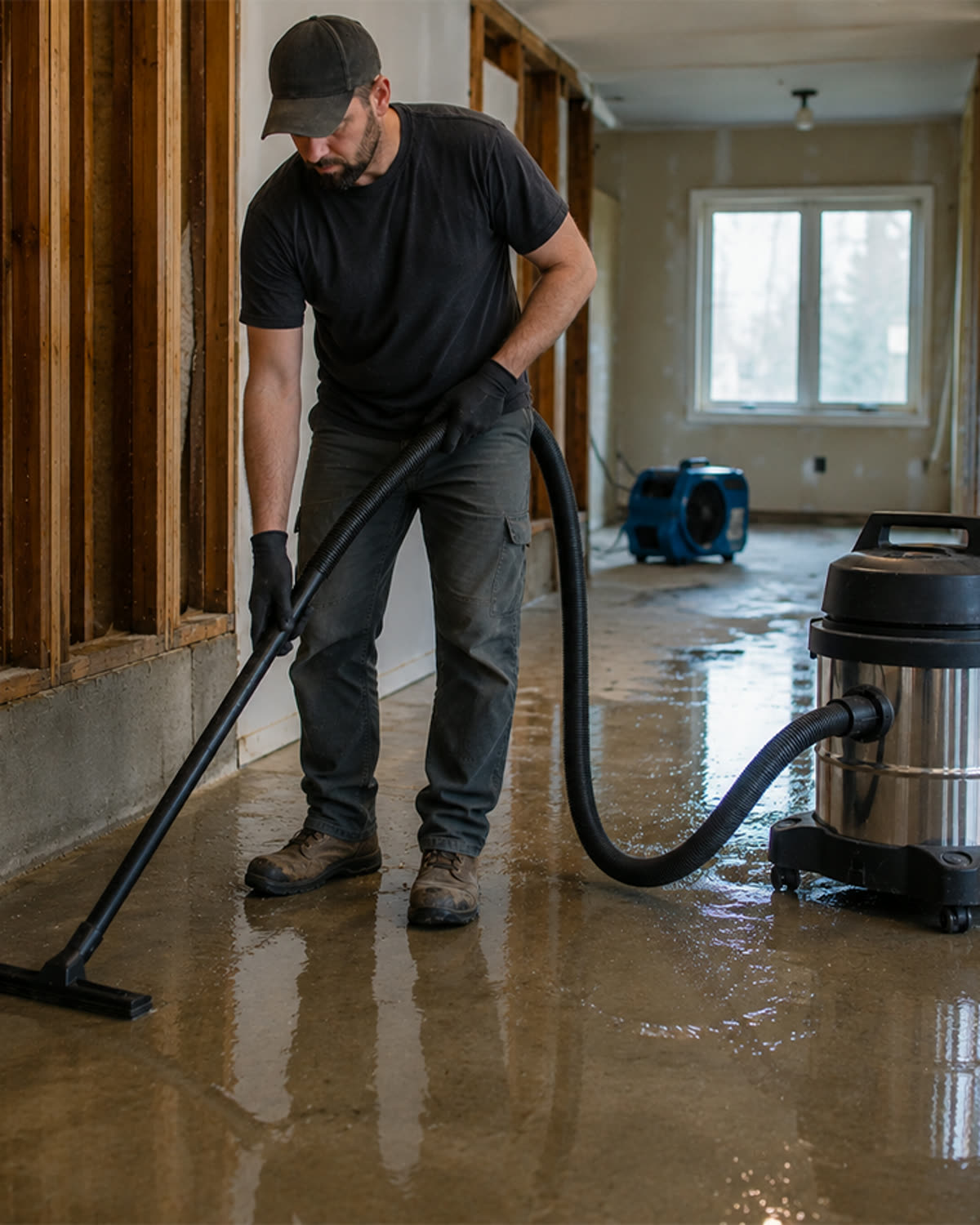
Walk into any supply house and the shop vac bag wall looks the same: a dozen disposables, sized by brand and gallon, all promising to catch dust. Then you run one on a drywall or concrete job and watch the suction die by lunch — and you're back at the wall buying another three-pack next week.
So we ranked the bags contractors actually use on fine dust. We judged each one on four things: suction retention through a full load of fine dust, fitment across common vac brands, motor protection under sustained load, and real cost over a year of regular use — not the sticker price of a single bag. Four of the five are disposables. One isn't. Here's how they stack up.
Quick comparison
| Bag | Type | Fits | Approx. cost | Suction on fine dust |
|---|---|---|---|---|
| Muk Buddy | ♻️ Reusable (2-chamber) | Most 12–20 gal (Shop-Vac, Ridgid, Craftsman, Stanley, DeWalt) | $99 once | Holds — dust kept off the airflow |
| RIDGID VF3502 (Size A) | Disposable | RIDGID 12–16 gal | ~$13–17 / 2-pk | Fades as it fills |
| Shop-Vac Type H (9067100) | Disposable | Select Shop-Vac models | ~$12–16 / 2-pk | Better, still fades |
| Dustless WunderBag (HEPA) | Disposable | Universal, 4–18 gal sizes | ~$20–30 / 2-pk | Strong capture, still single-path |
| Budget generic (Casoman, Puroom…) | Disposable | Varies by listing | ~$8–12 / pk | Clogs fastest |
What actually separates a good shop vac bag from a bad one
Every bag here catches some dust. The difference shows up with fine dust — gypsum, concrete, silica — because that's what packs a filter and kills a motor. Two things decide whether a bag survives it:
- Airflow design. In a standard bag, the dust and the air go down the same path. As it fills, fine dust packs against the filter and chokes the airflow. Suction drops, the motor works harder, and the bag's "full" long before it looks full. (That's the real reason your shop vac loses suction mid-job.)
- Cost over time. A disposable's only real advantage is the price of one bag. Run the math across a year of jobs and the "cheap" option is usually the expensive one — a $12 pack used up every couple of weeks is $150–$300 a year, every year. (We did the full year-one breakdown in disposable vs. reusable shop vac bags.)
Keep those two in mind and the ranking sorts itself out.
1. Muk Buddy — Best Overall (the one you only buy once)
Muk Buddy is the only reusable bag on this list, and it's at #1 for a reason that isn't price — it's the patent-pending 2-chamber design. Instead of running dust and air down the same path, it separates them: the debris drops into one chamber while the airflow stays clear. That's the exact problem with every other bag here, solved at the source.
What that means on the job:
- Suction holds through fine drywall and concrete dust instead of dying by lunch.
- The motor is protected — it's not straining against a choked filter, which is what burns vacs out early.
- You buy it once. Empty it, run it again, job after job. At $99, it pays for itself against a $12–15 disposable pack in roughly two months of regular use — and keeps saving every month after.
It fits the standard 2.5-inch inlet on Shop-Vac, Ridgid, Craftsman, Stanley, DeWalt and most 12–20 gallon wet/dry vacs, so one bag covers a mixed crew. It's the only pick that wins on both performance and cost — every disposable below can only ever win on the sticker price of a single bag.
One honest call-out: Muk Buddy is built for fine dry debris. For heavy wet pickup — concrete slurry, standing water — empty it before the wet pull rather than soaking a full load. It's a dust tool first.
Best for: any crew running a wet/dry vac regularly on fine dust.
See how the 2-chamber design works →
2. RIDGID VF3502 (Size A) — Best Disposable for RIDGID Owners
If you run a 12–16 gallon RIDGID and you want a throwaway, the VF3502 ("Size A," about $13–17 a 2-pack) is the honest pick — right fit, does the basic job. It's a standard single-path bag, though, so on a drywall or concrete load it packs against the filter and the suction fades by the back half of the job. Fine for general shop cleanup; on fine dust you'll be changing it often and rebuying it for the life of the vac.
Best for: RIDGID 12–16 gal owners who want a simple disposable and mostly vac chips and general debris.
3. Shop-Vac Type H (9067100) — Best Disposable for Fine Dust on a Shop-Vac
Shop-Vac's Type H (about $12–16 a 2-pack) is the fine-dust disposable for compatible Shop-Vac models, and it does catch the small stuff better than a basic bag. Same structural catch as the rest, though: single path, so it still chokes and fades as it loads, and it's another recurring line item on every job.
Best for: Shop-Vac owners who mostly deal with fine dust and prefer disposables.
4. Dustless WunderBag (HEPA) — Best Disposable for the Finest Dust
When the dust is genuinely hazardous — silica, lead, mold — the HEPA-rated Dustless WunderBag (about $20–30 a 2-pack) is the strongest disposable option here. It filters particles down to 0.3 microns at 99.97% efficiency (true HEPA), seals the waste in for clean disposal, and comes in sizes from 4 to 18 gallons. It's still single-path and still disposable, so the per-bag cost is the highest on this list and you keep rebuying it — but for hazardous fine dust, capture comes first.
Best for: crews who need HEPA-level capture and accept disposable cost.
5. Budget Generic Bags (Casoman, Puroom, etc.) — Cheapest Per Bag
The Amazon-brand compatibles (roughly $8–12 a pack) are the cheapest way to put a bag in your vac, and for light, occasional use they're fine. On fine dust and hard daily use they fail fastest — thinner media, quicker clogs, more blowouts mid-job. Cheap per bag, expensive per year, and a torn bag on a finished floor costs more than the bag ever saved.
Best for: light or occasional use where cost-per-bag is all that matters.
What about bagless or foam-sleeve filters?
Two alternatives readers ask about. Bagless (just the pleated filter, no bag) works for chunky debris but is brutal on fine dust — the dust hits the filter directly, packs it, and chokes the motor, and you're cleaning or replacing filters constantly. A foam sleeve filter protects the pleated filter during wet pickup but does almost nothing for fine dry dust. For fine dust specifically, a bag that keeps the dust off the airflow beats both — which is the whole point of the 2-chamber approach.
The bottom line
Four of these are solid disposables — and they all share the same two limits: a single-path design that chokes on fine dust, and a price tag that resets every few weeks.
Muk Buddy is the only one that fixes both. The 2-chamber design keeps the dust off the airflow so the suction holds and the motor lasts, and because it's reusable, you buy it once instead of forever. That's why it's the best shop vac bag here — not because it's the cheapest bag on the shelf, but because it's the last one you'll buy.