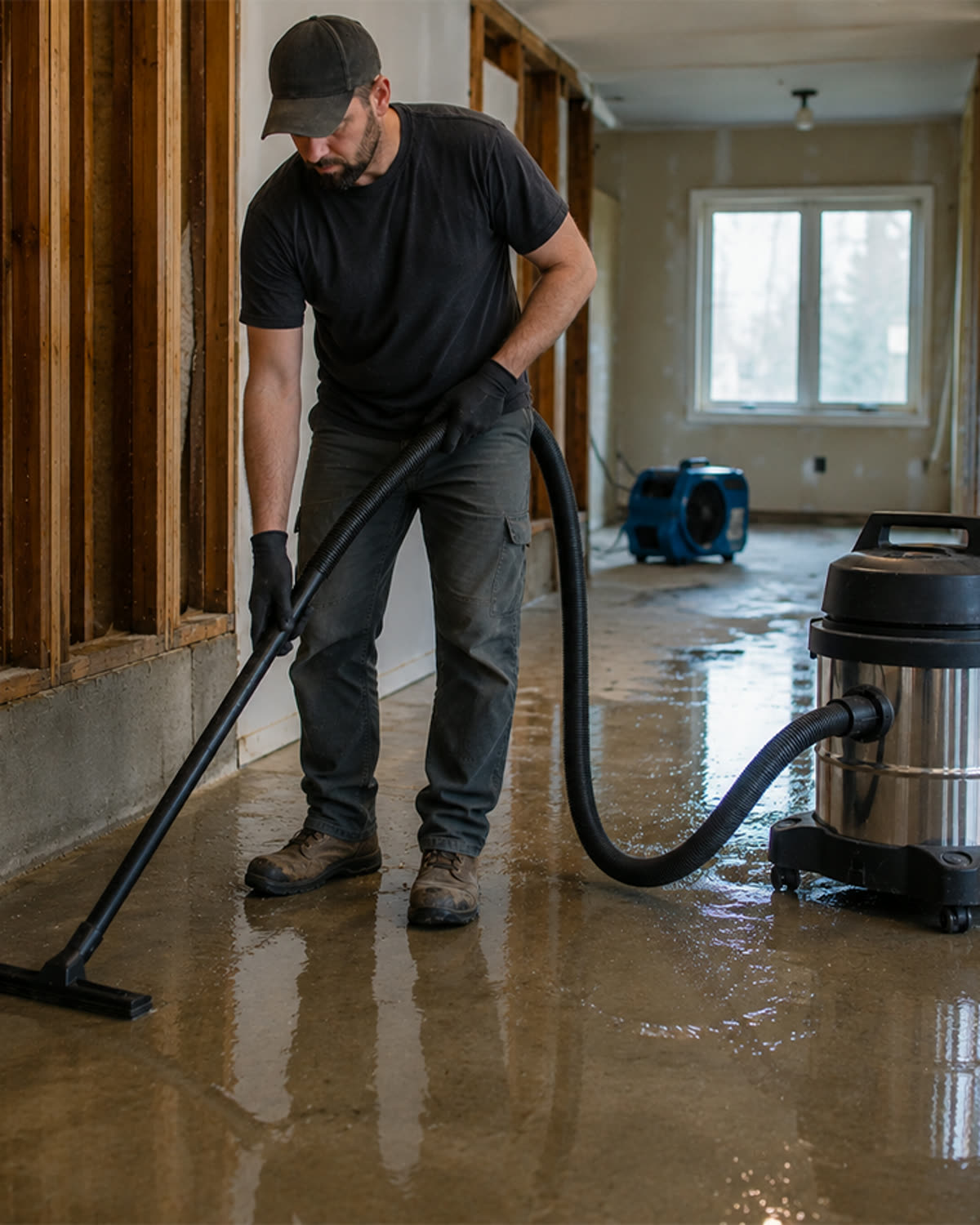
A shop vac that's lost its suction is one of the most useless tools on a jobsite. It still roars. It still sounds like it's working. But hold your hand to the nozzle and there's barely a pull. Meanwhile the dust you're trying to grab just sits there.
Good news: suction loss almost always comes down to one of four things, and you can find the culprit in about two minutes. Here's the checklist, in the order it's usually the problem.
Short answer: A shop vac loses suction when airflow gets choked — and nine times out of ten that's a clogged filter or a full bag packed with fine dust. Check those two first: pop the top and look at the filter pleats, then lift the bag. If either is caked, clean or swap it and the pull comes back. If it doesn't, check the hose and inlet for a clog and the lid seals for an air leak. The lasting fix is keeping fine dust off the filter in the first place.
1. A clogged filter (the #1 cause)
This is the one, most of the time. Fine dust — drywall, concrete, joint compound — works into the pleats of the filter and packs in tight. The vac pulls air through that filter, so once it's choked, suction dies.
How to check: pop the top and look at the filter. If the pleats are gray and caked instead of clean, that's your problem.
2. A full or clogged bag
If you run a bag (you should), it fills faster than you think on a dusty job. A packed bag chokes airflow the same way a clogged filter does.
How to check: lift the bag. If it's heavy or the dust is caked against the inlet, swap or empty it.
3. A clog in the hose or inlet
A chunk of debris — a wad of tape, a screw, a clump of wet sludge — can lodge in the hose or the inlet port.
How to check: pull the hose off and look through it. Drop something small through it and see if it falls out the other end. Clear any blockage.
4. A leak in the seals or lid
If the lid isn't seated, a seal is cracked, or the tank has a gap, the vac sucks air from the leak instead of the nozzle. Suction at the hose drops even though the motor's fine.
How to check: run the vac and feel around the lid and seams for air pulling in where it shouldn't.
The pattern underneath all of this
Run through those four and you'll find it. But notice the theme: three of the four are about dust reaching the filter. A clogged filter, a packed bag that lets dust through to the filter, fine dust everywhere — it all comes back to the same thing.
That's why "clean the filter" only buys you twenty minutes. You knock off the surface dust, but the fine stuff is jammed in the pleats for good. Suction comes back, then fades again by lunch. You're treating the symptom.
The filter isn't really the problem. The dust getting to the filter is the problem.
The fix that actually lasts
Keep the dust off the filter and the suction stays. That's the whole idea behind a reusable Muk Buddy bag — the two-chamber design separates the dust from the airflow path, so the pleated filter doesn't get packed in the first place.
- Suction holds through the whole job instead of fading
- The filter stays clear and lasts years, not weeks
- The motor breathes easy — no running hot against a choked filter
- No bag to empty and refill every few hours
Clean the filter — or replace it?
Cleaning buys time; eventually a filter is spent. Here's how to tell which one you've got:
| Sign | What it means | Do this |
|---|---|---|
| Knocks clean and suction returns | Surface loading | Clean it — tap it out, or rinse a rinsable filter and dry it fully |
| Gray stays ground into the pleats after cleaning | Fine dust packed deep | Replace it — it won't recover |
| Visible tear, hole, or crushed pleats | Physical damage | Replace it — a torn filter passes dust straight to the motor |
| Suction fades again within an hour of cleaning | Dust keeps reaching the filter | Fix the cause (bag it), not the filter |
A rinsable filter survives a few washes, but only if it dries completely before it goes back in — run it damp and the dust cakes into mud that finishes it off. And no filter, new or clean, helps if fine dust reaches it every time you switch the vac on. That's a bagging problem, not a filter problem.
When lost suction means the motor is dying
Most suction loss is airflow — filter, bag, hose, or seal. But if you've cleared all four and the pull is still weak, the motor itself may be going. The warning signs:
- The pitch changed — a higher, screaming whine or a new rattle instead of the usual roar.
- It smells hot — a burning or ozone smell means the motor's been running against choked airflow and overheating.
- It cuts out — a thermal overload trips and the vac shuts off until it cools down.
- Weak pull with a clean filter, empty bag, clear hose, and sealed lid — nothing left to blame but the motor.
Here's the part that matters: a choked filter is usually what kills the motor in the first place. When airflow is blocked, the motor pulls against dead air, runs hot, and wears out years early — the cheap clogged bag quietly destroys the expensive part. Keeping the filter clear isn't just about today's suction; it's what keeps the motor alive.
Your two-minute suction checklist
Next time the pull dies mid-job:
- Filter — caked? That's usually it.
- Bag — full or packed against the inlet?
- Hose/inlet — anything lodged in there?
- Seals/lid — pulling air where it shouldn't?
Find it, clear it, and you're back in business. But if you're doing this every single day, you're not fixing the cause — you're fighting fine dust that keeps reaching the filter.
Stop chasing it. See the reusable shop vac bag that keeps your suction → — one reusable bag, a filter that stays clear, and a vac that pulls like new all day.