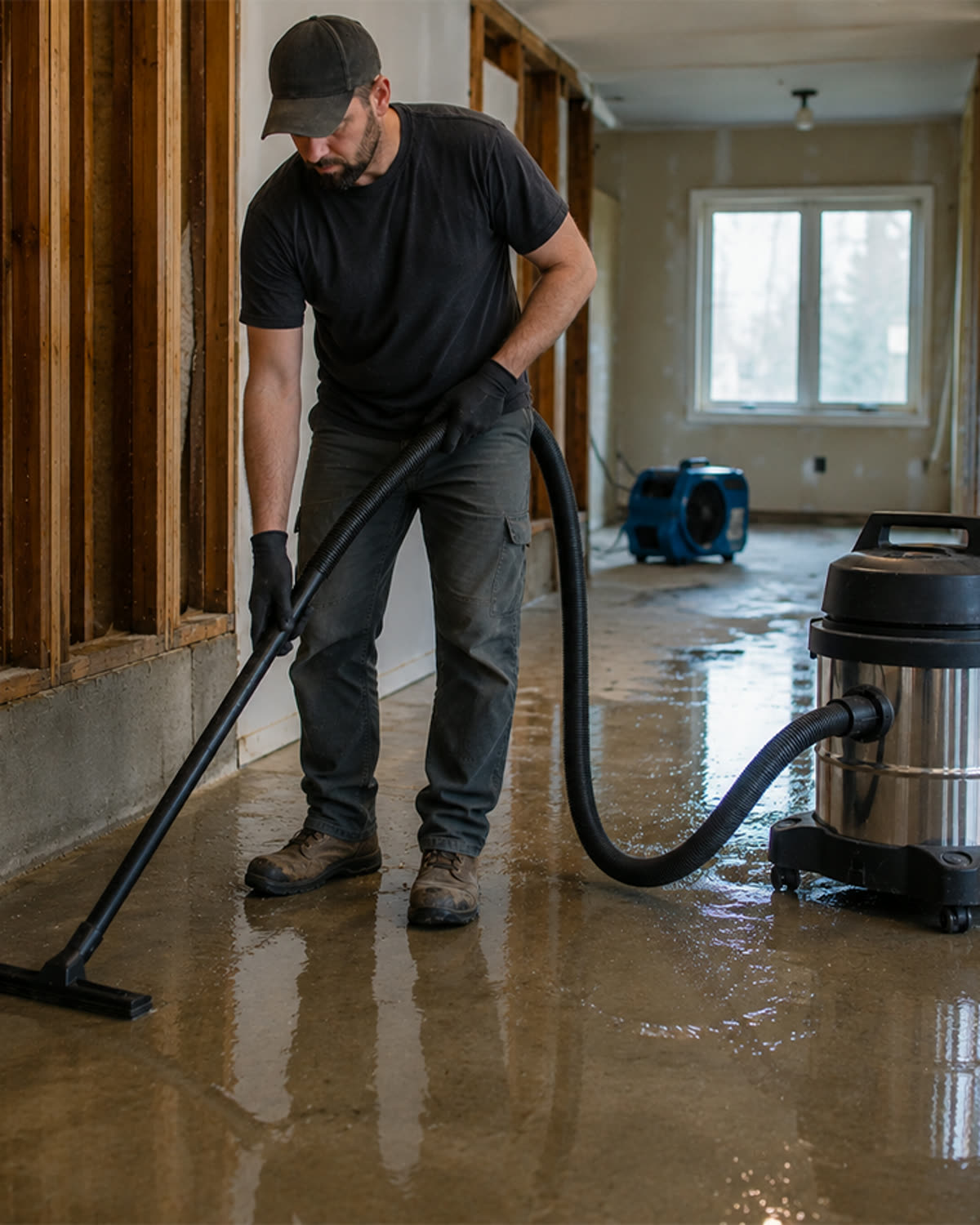
Hose diameter changes how a shop vacuum performs.
A small hose concentrates suction into a narrow opening.
A large hose carries more air and larger debris.
Neither is automatically better.
The correct hose depends on:
- Debris size
- Tool-port diameter
- CFM
- Water lift
- Hose length
- Clogging risk
- Portability
- Attachment design
Using the wrong hose may cause weak pickup, repeated clogs, excessive resistance, or poor tool connection.
Quick Answer
Small Hose: Approximately 1 to 1¼ Inches
Best for:
- Sanders
- Small power tools
- Vehicle detailing
- Crevices
- Fine localized dust
Medium Hose: Approximately 1½ to 1⅞ Inches
Best for:
- General contractor cleanup
- Remodeling
- Flooring
- Mixed debris
- Portable work
Large Hose: Approximately 2 to 2½ Inches
Best for:
- Wood chips
- Drywall fragments
- Leaves
- Water
- Pet hair
- Bulky construction debris
Use the smallest hose that transports the material reliably without excessive restriction.
The Hose Diameter Tradeoff™
Smaller Hose

=

Higher Air Velocity, Greater Restriction

Larger Hose

=

Greater Air Volume, Lower Clogging Risk
The vacuum must be capable of supporting the selected hose.
Small-Diameter Hoses
Small hoses are useful when the dust source is concentrated.
Examples include:
- Orbital sanders
- Routers
- Drills
- Track saws
- Vehicle interiors
- Electronics or equipment cleaning
Advantages of Small Hoses
- Lightweight
- Flexible
- Easier tool connection
- Better access
- Concentrated pickup
- Easier storage
Limitations of Small Hoses
- Greater airflow resistance
- More clogging
- Poor bulky-debris transport
- Reduced total airflow
- More whistling
- Greater sensitivity to bends
Medium-Diameter Hoses
Medium hoses provide a balance between:
- Portability
- Airflow
- Debris size
- Attachment compatibility
They are often the most versatile choice for contractors.
Advantages of Medium Hoses
- Handles moderate debris
- Reasonable flexibility
- Suitable for floor tools
- Compatible with many vacuums
- Less bulky than large hose
- Lower clog risk than small hose
Large-Diameter Hoses
Large hoses are designed for high-volume transport.
They are useful for:
- Wood chips
- Demolition debris
- Leaves
- Large sawdust
- Hair
- Water
- Muddy material
Advantages of Large Hoses
- Higher debris capacity
- Lower clog risk
- Better bulky-material transport
- Strong open-airflow potential
- Faster liquid movement
Limitations of Large Hoses
- Heavier
- Less flexible
- Harder to store
- Difficult to connect to small tools
- May reduce air velocity at small pickup points
- Larger attachments required
Hose Cross-Section Matters
A small increase in diameter creates a much larger increase in internal area.
That means a 2½-inch hose can transport far more air and debris than a 1¼-inch hose.
The exact performance depends on the vacuum and hose design.
The Capacity Expansion Principle™
Small Increase in Diameter

↓

Large Increase in Internal Area

↓

Greater Potential Air and Debris Capacity
Diameter changes are more significant than they appear.
Hose Size for Drywall Dust
For sanding tools:
- Small tool hose may fit the port best.
- Adequate water lift helps overcome restriction.
- The hose should remain flexible.
For final cleanup:
- Medium or large hose handles drywall fragments more reliably.
- Fine-dust bags and filters remain essential.
Many drywall workflows benefit from two hose sizes.
Hose Size for Sawdust
Fine Sanding Dust
Small or medium hose.
Table Saw or Miter Saw Cleanup
Medium hose may be appropriate, depending on port and airflow needs.
Planer Chips or Large Shavings
Large hose or dedicated dust collector.
Hose Size for Concrete Dust
Concrete tool ports are often restrictive.
Use the hose and extractor configuration specified for the tool and shroud.
Consider:
- Pressure requirements
- Dust volume
- Hose length
- Automatic filter cleaning
- Applicable requirements
Do not select only by physical fit.
Hose Size for Water
Large hose generally moves water faster.
A medium hose may provide:
- Easier control
- Better reach
- Lower weight
A narrow hose may be useful for crevices but slows bulk water removal.
Hose Size for Pet Hair
Long hair can bridge inside:
- Small hoses
- Reducers
- Cuffs
- Crevice tools
A medium or large hose usually reduces clogging.
Hose Size for Auto Detailing
A small hose provides:
- Flexible reach
- Crevice access
- Lighter handling
But it should remain large enough to transport:
- Gravel
- Food debris
- Pet hair
- Small objects
Hose Length
Diameter and length must be considered together.
Longer Hose

↓

More Surface Friction

↓

More Pressure Loss

↓

Lower Airflow at Tool
A long small-diameter hose creates much greater resistance than a short large-diameter hose.
Use only the length required.
Hose Corrugation
Flexible hoses often have internal ridges.
These ridges create turbulence and friction.
A smooth interior generally provides lower resistance.
But fully smooth hose may be:
- Less flexible
- More difficult to route
- Less practical for mobile work
The Hose Resistance Ladder™
Resistance increases with:
Smaller Diameter

+

Greater Length

+

More Corrugation

+

More Bends

+

More Adapters
Every factor compounds the others.
Adapters and Reducers
Reducing a 2½-inch hose to a small tool port may be necessary.
But multiple reducers create:
- Turbulence
- Clog points
- Air leaks
- Pressure loss
Use one secure, gradual transition when possible.
Hose Size Comparison
| Hose Size | Best Use | Main Advantage | Main Limitation |
|---|---|---|---|
| Small | Tools and detailing | Flexibility | Clogging |
| Medium | General contractor work | Balance | Moderate bulk |
| Large | Debris and liquid | Capacity | Weight and size |
Two-Hose Contractor Strategy™
A contractor may carry:
Small Tool Hose
For:
- Sanders
- Drills
- Detail work
Medium or Large Cleanup Hose
For:
- Floors
- Fragments
- Hair
- Water
- Mixed debris
This avoids forcing one hose to perform incompatible jobs.
Signs the Hose Is Too Small
- Frequent clogs
- Loud whistling
- Hose collapse
- Debris lodging at cuffs
- Weak large-area pickup
- Long cleanup time
- Motor pitch rises sharply
Signs the Hose Is Too Large
- Difficult tool connection
- Low air velocity at narrow pickup point
- Heavy handling
- Poor maneuverability
- Attachments too large
- Excessive storage space
Hose Selection Checklist
- Debris size identified
- Tool port measured
- Hose length minimized
- Vacuum pressure considered
- Vacuum airflow considered
- Clogging history reviewed
- Adapter count minimized
- Hose flexibility appropriate
- Wet or dry compatibility confirmed
- Storage considered
- Replacement cuffs available
Common Mistakes
Choosing the Largest Hose Automatically
Large hose may perform poorly on small tool ports.
Choosing the Smallest Hose for Stronger Suction
Restriction can reduce actual airflow.
Ignoring Hose Length
A long hose may erase the benefits of the chosen diameter.
Using Multiple Reducers
Every transition adds resistance.
Vacuuming Sharp Debris Through Thin Hose
Punctures may result.
Replacing Hose With an Unreinforced Alternative
It may collapse under pressure.
Frequently Asked Questions
Does a smaller hose have more suction?
It may create higher air velocity at a small opening, but total airflow usually decreases because resistance increases.
Does a larger hose increase CFM?
It can allow greater airflow when the vacuum motor can support it.
What is the best general-purpose hose size?
A medium hose is often the most versatile.
What hose is best for drywall sanding?
Use a hose that matches the sander port and maintains sufficient airflow.
What hose is best for water?
A large hose is generally faster for bulk liquid pickup.
Can I use a long hose?
Yes, but airflow declines as length and resistance increase.
Key Takeaways
Hose size should match:
- Debris
- Tool
- Vacuum performance
- Reach
- Clogging risk
Small hoses favor precision. Large hoses favor volume. Medium hoses provide the strongest general-purpose balance.