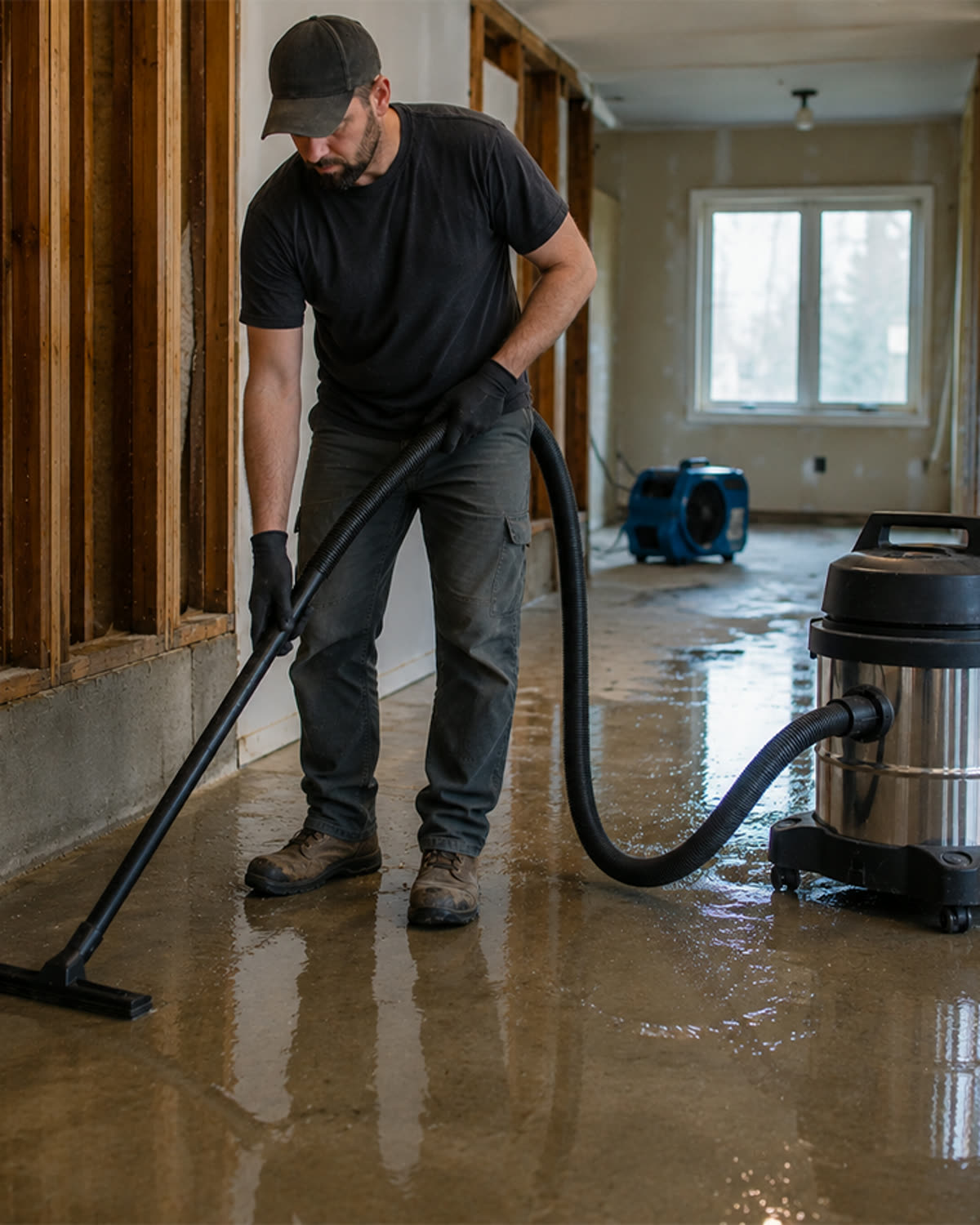
Renovation work creates two different cleanup demands.
The first is continuous dust capture from tools.
The second is general debris cleanup after the work.
A HEPA dust extractor is commonly designed around:
- Tool connection
- Fine-particle containment
- Maintained airflow
- Filter cleaning
- Controlled disposal
A shop vacuum is commonly designed around:
- General cleanup
- Mixed debris
- Water
- Larger fragments
- Portable versatility
The better choice depends on the task.
Many contractors need both.
Quick Answer
Choose a HEPA dust extractor for:
- Continuous sanding
- Grinding
- Drilling
- Cutting
- Fine-dust source capture
- Applications requiring a high-efficiency sealed system
- Long tool-connected work
Choose a shop vacuum for:
- Drywall fragments
- Wood chips
- Screws
- General floor cleanup
- Water pickup
- Mixed renovation debris
- Final cleanup
A shop vacuum with a HEPA filter is not automatically equivalent to a purpose-built HEPA dust extractor.
The Task Separation Principle™
Dust Created by Tool

↓

Dust Extractor

Mixed Debris After Work

↓

Shop Vacuum
Separate systems prevent sharp and bulky debris from damaging specialized extraction components.
What Is a Shop Vacuum?
A shop vacuum is a general-purpose wet/dry collection machine.
Common strengths include:
- Larger debris handling
- Wet pickup
- Simple tank design
- Wide hose options
- Lower purchase price
- Jobsite versatility
Performance varies widely by model.
What Is a HEPA Dust Extractor?
A dust extractor is generally designed to connect to tools and manage fine dust.
Common features may include:
- High-efficiency filtration
- Sealed filter housing
- Automatic filter cleaning
- Tool-activated power outlet
- Airflow monitoring
- Fine-dust bags or liners
- Anti-static hose
- Controlled disposal
Not every product marketed as an extractor includes every feature.
HEPA Filter vs. HEPA System
A HEPA-rated filter describes the filter media’s particle-capture performance under defined conditions.
A complete HEPA system also depends on:
- Filter gasket
- Housing seals
- Tank seal
- Hose connections
- Exhaust path
- System testing or certification when applicable
HEPA Filter

≠

Automatically Sealed HEPA Vacuum System
Fine-Dust Capture
Shop Vacuum
May handle fine dust when equipped with:
- Fine-dust bag
- Appropriate filter
- Good seals
- Frequent maintenance
HEPA Dust Extractor
Usually better designed for sustained fine-dust source capture.
Advantage: Dust extractor
Mixed Debris
Shop Vacuum
Often handles:
- Drywall pieces
- Sawdust
- Fasteners
- Packaging
- Water
- General dirt
Dust Extractor
May be more vulnerable to:
- Sharp fragments
- Large debris
- Mud
- Mixed demolition waste
Advantage: Shop vacuum
Filter Cleaning
Dust extractors commonly include:
- Automatic cleaning
- Semi-automatic cleaning
- Pressure pulses
- Filter monitoring
Many shop vacuums require manual filter service.
Advantage: Dust extractor
Wet Pickup
Many shop vacuums are designed for liquids.
Some extractors also support wet pickup, but the configuration varies.
Advantage: Usually shop vacuum
Portability
Compact extractors may move well with tools.
General shop vacuums may provide:
- Larger wheels
- Larger tanks
- Greater mixed-debris capacity
The better option depends on stairs, room size, and vehicle space.
Hose Design
Dust-extractor hoses often prioritize:
- Flexibility
- Tool handling
- Anti-static capability
- Secure locking cuffs
Shop-vacuum hoses often prioritize:
- General debris
- Durability
- Larger diameter
- Floor cleanup
Collection and Disposal
Shop Vacuum
Possible systems:
- Open tank
- Paper bag
- Fleece bag
- Reusable bag
Dust Extractor
Possible systems:
- Fine-dust fleece bag
- Plastic liner
- Continuous liner
- Sealed bag system
The correct choice depends on dust and disposal requirements.
Working-Airflow Stability
A dust extractor may maintain airflow better during continuous dust production because of:
- Larger filter area
- Automatic cleaning
- Fine-dust collection design
- Performance monitoring
A shop vacuum may start strongly but decline more rapidly.
Cost Comparison
Shop Vacuum Costs
- Lower purchase price
- General-purpose bags
- Filters
- More manual maintenance
- Possible downtime during fine-dust work
Dust Extractor Costs
- Higher purchase price
- Specialized bags and filters
- Lower interruption during tool extraction
- Better fine-dust workflow
- Potentially higher repair cost
The Productivity Comparison™
Equipment Cost

+

Consumables

+

Maintenance Labor

+

Cleanup Labor

+

Downtime

=

True System Cost
The lower-priced machine may cost more over repeated professional jobs.
Renovation Task Matrix
| Task | Better Starting Choice |
|---|---|
| Drywall sanding | Dust extractor |
| Concrete grinding | Application-specific extractor |
| Drilling masonry | Dust extractor |
| Final room cleanup | Shop vacuum |
| Demolition fragments | Shop vacuum |
| Water spill | Wet/dry shop vacuum |
| Saw connection | Task dependent |
| Occupied-home fine dust | Sealed extractor |
| Vehicle cleanup | Shop vacuum |
| Mixed remodeling debris | Shop vacuum |
One-Machine Compromise
A contractor may attempt to use one vacuum for everything.
This can work for light workloads.
But compromises may include:
- Frequent filter cleaning
- Bag tears from sharp debris
- Poor source capture
- Difficult wet/dry changes
- Higher consumable use
- Dust-contaminated hoses
Two-Machine Renovation Workflow™
Extractor
Dedicated to:
- Clean dry fine dust
- Tool connection
- Sensitive work areas
Shop Vacuum
Dedicated to:
- Larger debris
- General cleanup
- Liquids
- Dirty demolition work
This keeps the fine-dust system cleaner and more reliable.
Buying Checklist
- Primary renovation tasks identified
- Fine-dust volume estimated
- Tool connection required
- Filter cleaning considered
- Wet pickup needed
- Mixed debris expected
- Sealed filtration requirements defined
- Hose compatibility checked
- Disposal method selected
- Consumable costs calculated
- Portability evaluated
- Two-machine strategy considered
Common Mistakes
Assuming a HEPA Filter Makes Every Vacuum Equivalent
System sealing and design matter.
Using a Dust Extractor for Nails and Tile Fragments
Sharp debris may damage bags and hoses.
Using a Basic Shop Vacuum for Continuous Grinding
Filter loading may reduce capture rapidly.
Ignoring Disposal
Fine dust may be released during bag removal.
Buying by Purchase Price Alone
Labor and downtime may dominate total cost.
Using the Same Hose for Wet Demolition and Fine-Dust Extraction
Moisture and contamination may damage the dry system.
Frequently Asked Questions
Is a shop vacuum with a HEPA filter the same as a HEPA extractor?
Not necessarily. The complete system must also be sealed and designed for the application.
Which is better for drywall sanding?
A dust extractor is usually better for continuous sanding.
Which is better for final cleanup?
A shop vacuum is often more versatile for mixed debris.
Can one machine do both?
Possibly for limited work, but performance and maintenance compromises should be expected.
Are dust extractors always more powerful?
Not necessarily. Their advantage often comes from maintained airflow, filtration, and tool integration.
Should a remodeling contractor own both?
For frequent professional work, separate extraction and cleanup machines can improve productivity.
Key Takeaways
A HEPA dust extractor prioritizes:
- Fine-dust source capture
- Maintained airflow
- Tool integration
- Sealed filtration
A shop vacuum prioritizes:
- Versatility
- Mixed debris
- Liquids
- General cleanup
The extractor controls dust while it is being created. The shop vacuum handles the broader cleanup workload.
Related guides
- the guide to shop vacuum maintenance checklist
- the shop vacuum buying guide
- how much does a shop vacuum really cost to own
- what size vac the job calls for
- how to pick a bag that handles gypsum and silica
- understanding filter micron ratings
- related: multi stage shop vacuum filtration for shop vacuum vs hepa dust extractor renovation users
- what HEPA filtration actually means