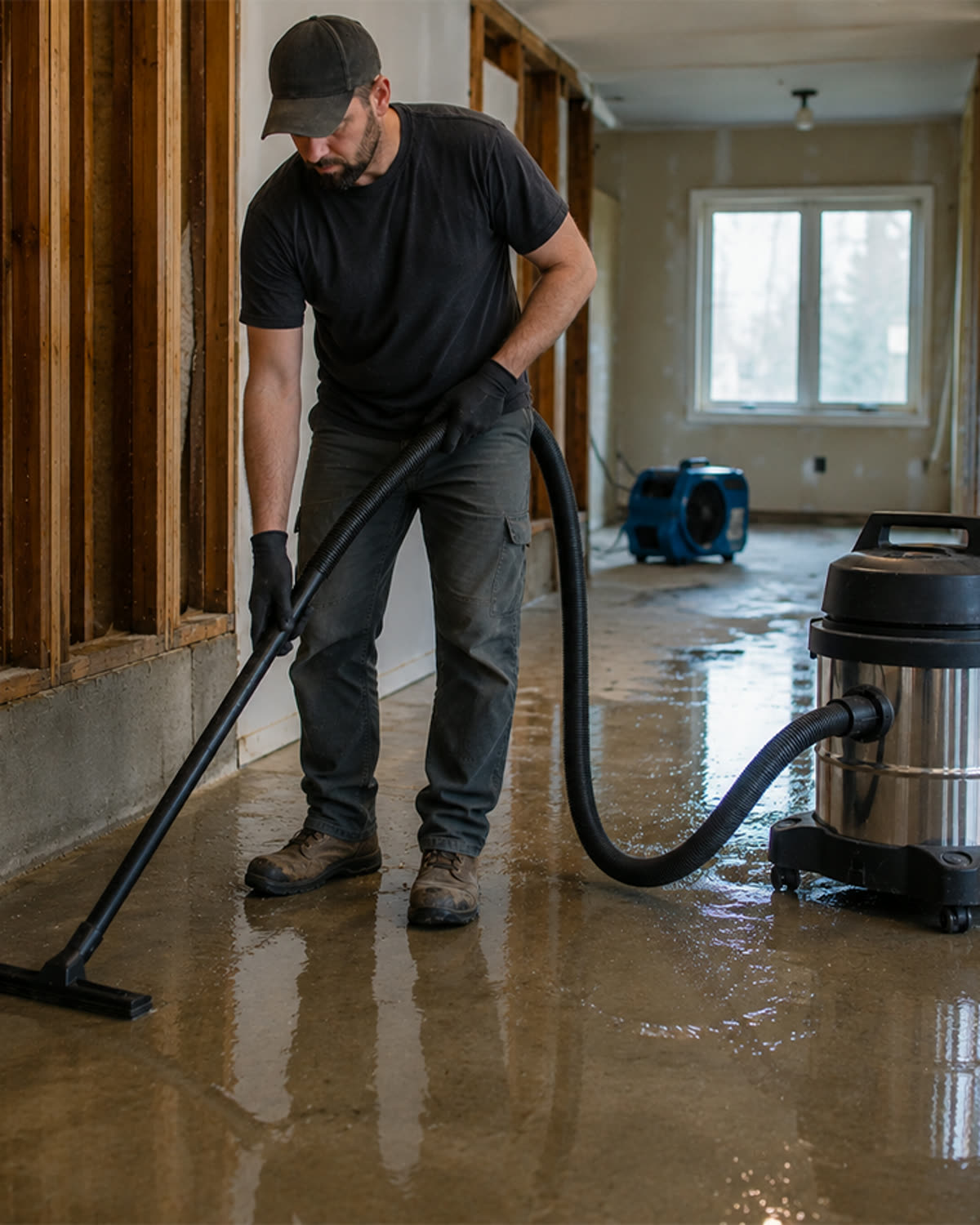
A vacuum filter should not be expected to perform every collection job by itself.
The most effective systems divide the dust burden across multiple stages.
One stage handles:
- Large debris
Another handles:
- Bulk dust
Another handles:
- Fine particles
The final filter protects the exhaust and motor area.
This approach can improve:
- Maintained airflow
- Filter life
- Collection capacity
- Disposal
- Motor cooling
- Cleaning productivity
Quick Answer
A multi-stage vacuum system may use:
- Tool shroud or source-capture hood
- Hose and inlet
- Cyclone or pre-separator
- Collection bag or reusable bag
- Primary cartridge filter
- High-efficiency final filtration
- Sealed exhaust path
Not every vacuum needs every stage.
The correct configuration depends on:
- Dust type
- Debris volume
- Portability
- Tool connection
- Disposal requirements
- Operating cost
The Dust Burden Distribution Principle™
Large Debris

↓

Handled Early

Fine Dust

↓

Handled Later

Final Filter

↓

Receives the Smallest Remaining Burden
The earlier stages protect the later stages.
Stage 1: Source Capture
Dust should be collected as close as possible to where it is created.
Examples include:
- Sander port
- Grinder shroud
- Saw enclosure
- Drill attachment
- Dust hood
Better source capture reduces the amount of dust entering the workspace.
Stage 2: Hose and Airflow Transport
The hose must carry the material without:
- Clogging
- Excessive resistance
- Leaks
- Static problems
- Sharp transitions
The hose is not a filter, but poor hose design can reduce the effectiveness of every later stage.
Stage 3: Cyclone or Pre-Separator
A cyclone uses airflow direction and centrifugal movement to separate heavier particles.
It is effective for:
- Sawdust
- Wood chips
- General debris
- Larger construction dust
It may be less effective for the finest particles.
The Cyclone Limitation™
Heavier Particles

↓

Separate Efficiently

Very Fine Particles

↓

May Continue Toward Vacuum
A cyclone does not replace final filtration.
Stage 4: Collection Bag
A porous collection bag captures debris while allowing air to pass.
Options include:
- Paper bag
- Fine-dust paper bag
- Fleece bag
- Reusable fabric bag
The bag reduces the burden reaching the primary filter.
Stage 5: Primary Filter
The primary filter captures particles remaining after pre-collection.
It may use:
- Pleated cartridge media
- Fine-dust media
- Washable synthetic media
- Application-specific filtration
The filter should remain properly sealed.
Stage 6: High-Efficiency Final Filtration
Some systems use high-efficiency filtration as the final defense.
Its performance depends on:
- Correct installation
- Filter integrity
- Gasket sealing
- Housing sealing
- Complete airflow path
A high-efficiency filter cannot compensate for major leaks around the bag, tank, or filter mount.
The Final-Defense Principle™
Earlier Stages Reduce Dust Volume

↓

Final Filter Handles Remaining Fine Particles

↓

Filter Loads More Slowly

↓

Working Airflow Lasts Longer
Multi-Stage System Examples
Basic General Cleanup
Hose

↓

Open Tank or Standard Bag

↓

General-Purpose Filter
Suitable for larger dry debris.
Fine-Dust Cleanup
Source Capture

↓

Fine-Dust Bag or Reusable Bag

↓

Fine-Dust Primary Filter

↓

Sealed Exhaust
Suitable for drywall, sanding, and similar dry dust when equipment is appropriate.
High-Volume Woodworking
Tool Port

↓

Cyclone Separator

↓

Vacuum Bag or Tank

↓

Primary Filter
The cyclone removes most chips before the vacuum.
Mobile Contractor System
Tool or Cleanup Hose

↓

Reusable Collection Bag

↓

Primary Filter

↓

Vacuum Motor
This reduces disposable-bag dependence while remaining portable.
Maximum Layered Protection
Tool Shroud

↓

Cyclone

↓

Collection Bag

↓

Primary Filter

↓

High-Efficiency Final Filter

↓

Sealed Exhaust
Each added stage also creates resistance and complexity.
More stages are not automatically better.
The Filtration Tradeoff™
Every stage may add:
- Resistance
- Cost
- Maintenance
- Leak points
- Setup time
More Filtration Stages

=

Potentially Better Dust Protection

But Also

More Resistance and Complexity
The system should use enough stages to control the dust without unnecessary burden.
How Multi-Stage Filtration Protects Airflow
Without pre-collection:
Fine Dust

↓

Primary Filter Receives Full Load

↓

Filter Clogs Quickly

↓

Airflow Falls
With pre-collection:
Fine Dust

↓

Bag or Separator Captures Bulk

↓

Primary Filter Receives Less

↓

Airflow Declines More Slowly
How Multi-Stage Filtration Protects the Motor
Vacuum motors depend on airflow for cooling.
Cleaner filters support:
- Better cooling
- Lower heat
- More stable performance
- Reduced motor stress
The benefit is indirect but important.
How Stages Affect Disposal
A collection system should contain dust during:
- Use
- Removal
- Emptying
- Transport
- Final disposal
A high-performing separator with poor emptying control may still create a large dust release.
The Collection-to-Disposal Chain™
Capture

↓

Separate

↓

Store

↓

Remove

↓

Dispose
Containment must continue through every stage.
Cyclone Plus Bag
Advantages:
- Cyclone removes large debris
- Bag captures finer material
- Filter receives less dust
- Disposal may be more controlled
Limitations:
- More equipment
- More hose resistance
- More connections
- More floor space
- More maintenance
Reusable Bag Plus Primary Filter
Advantages:
- Compact
- Mobile
- Lower disposable cost
- Filter protection
- Fewer hoses than cyclone setup
Limitations:
- Bag requires emptying
- Fine dust may embed in fabric
- Capacity limited by vacuum tank
- Controlled disposal required
Disposable Bag Plus HEPA Filter
Advantages:
- Convenient contained disposal
- Strong fine-dust protection when system is sealed
- No reusable-bag cleaning
Limitations:
- Recurring cost
- Inventory requirements
- Bag availability
- Single-use waste
Choosing the Correct Number of Stages
Ask:
- How fine is the dust?
- How much debris is produced?
- Is the vacuum mobile?
- Is the tool connected continuously?
- Is sealed disposal required?
- How quickly does the current filter clog?
- How much space is available?
- What is the annual consumable cost?
Multi-Stage Selection Matrix
| Workload | Recommended Stages |
|---|---|
| Light garage debris | Tank or bag plus filter |
| Drywall cleanup | Fine-dust bag plus filter |
| Contractor fine dust | Reusable or fleece bag plus filter |
| Stationary sawdust | Cyclone plus filter |
| High-volume wood chips | Cyclone or dust collector |
| Tool-connected sanding | Source capture plus bag and filter |
| Wet pickup | Approved wet collection and float system |
| Mixed sharp debris | Separate sharp material before bagged fine dust |
System Inspection Checklist
- Tool shroud seals
- Hose clear
- Hose cuffs tight
- Cyclone lid sealed
- Separator bin below capacity
- Bag installed correctly
- Bag below airflow capacity
- Primary filter clean enough
- Filter gasket intact
- Tank seal clean
- Exhaust path sealed
- Disposal process prepared
Common Mistakes
Adding Stages Without Measuring Resistance
Too much restriction may reduce source capture.
Treating a Cyclone as Final Filtration
Fine dust may continue through.
Installing a High-Efficiency Filter on a Leaking Vacuum
Air may bypass the filter.
Allowing the Pre-Separator to Overfill
Debris may be carried into the next stage.
Ignoring Bag Loading
A loaded bag restricts the system.
Designing Capture but Ignoring Disposal
Dust may be released at the end of the process.
Frequently Asked Questions
Does a cyclone eliminate the need for a vacuum bag?
Not always. Fine dust may still benefit from bagged collection.
Does a bag eliminate the need for a filter?
Usually not. The filter remains the final defense.
Is more filtration always better?
No. Every stage adds resistance and maintenance.
Can a reusable bag replace a cyclone?
It may be a more portable pre-collection option, but it does not provide the same external capacity.
Where should a HEPA filter be located?
It generally serves as a final filtration stage within a properly sealed system.
What stage protects suction the most?
The stage that captures the largest dust burden before it reaches the primary filter often creates the greatest maintained-airflow benefit.
Key Takeaways
Multi-stage filtration works by dividing the dust burden.
- Source capture limits spread.
- Hoses transport material.
- Cyclones remove heavier debris.
- Bags collect bulk dust.
- Primary filters capture remaining particles.
- Final filtration protects exhaust quality.
The best system does not force one filter to do every job. It assigns each particle range to the stage that can handle it most efficiently.
Related guides
- paper vs. fleece vs. reusable shop vacuum bags
- learn more about HEPA filters explained
- learn more about why fine dust destroys vacuums
- picking a bag that handles renovation debris
- the causes of dust leaving the exhaust
- when and how to replace the filter
- related: vacuum bag material for multi stage shop vacuum filtration users