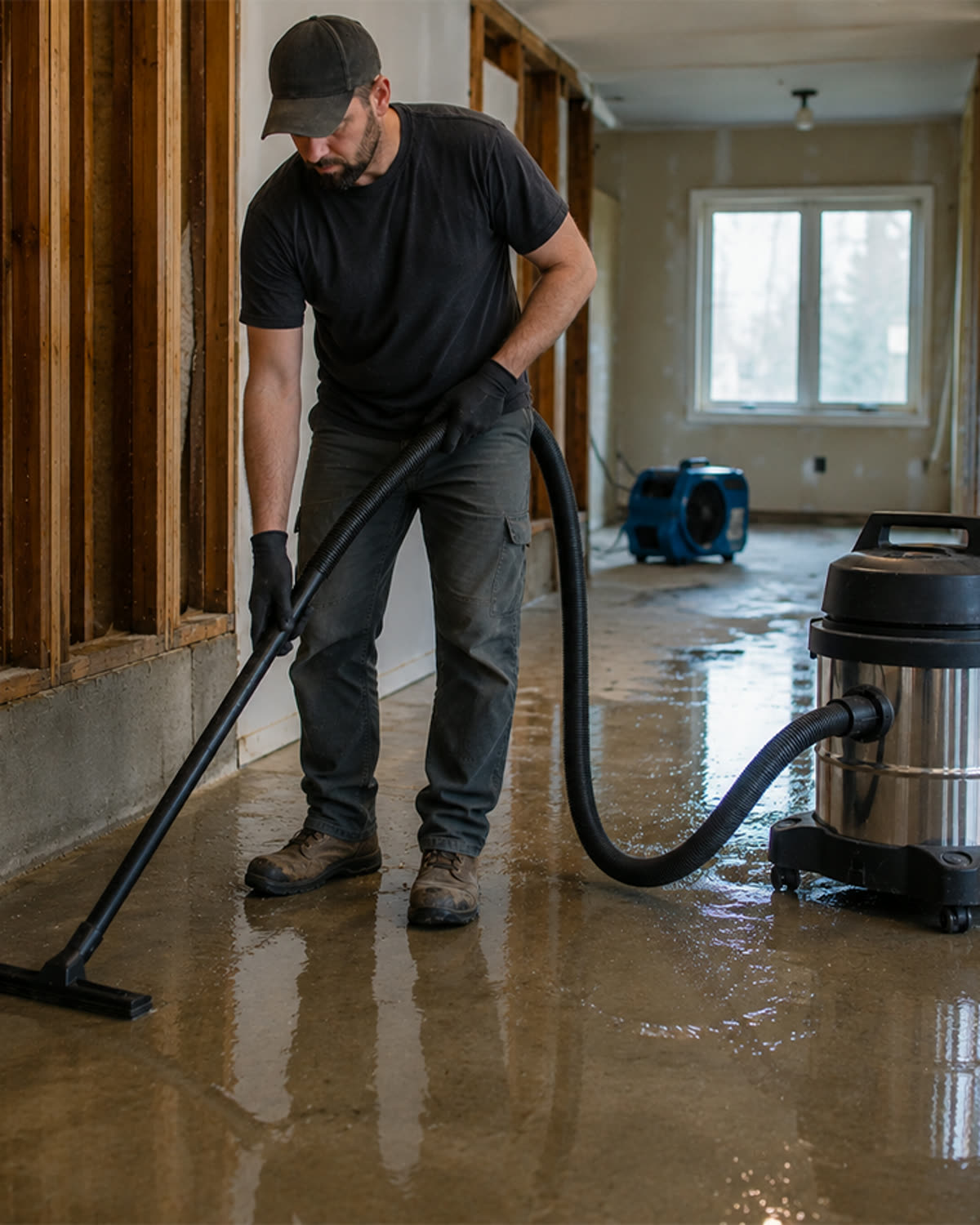
Shop vacuums are commonly sold by tank size.
Five gallons.
Nine gallons.
Twelve gallons.
Sixteen gallons.
That makes choosing one seem simple.
Small job?
Buy a small vacuum.
Big job?
Buy a big vacuum.
But tank capacity is only one part of the decision.
A sixteen-gallon vacuum may hold more debris, but that does not automatically mean it:
- Produces more suction
- Moves more air
- Captures finer dust
- Works better with power tools
- Maintains airflow longer
- Fits your jobsite more effectively
At the same time, a compact vacuum may have excellent suction but require constant emptying during heavy cleanup.
Choosing the right size means matching the entire vacuum system to the work—not simply selecting the largest container you can afford.
Quick Answer
The right shop vacuum size depends on five factors:
- The amount of debris you collect
- The type of material you collect
- The airflow and suction required
- The hose and attachment size
- How portable the vacuum needs to be
As a general framework:
- Small shop vacuums are best for vehicles, quick cleanup, small tools, and limited debris.
- Medium shop vacuums work well for workshops, remodeling, routine contractor cleanup, and moderate dust collection.
- Large shop vacuums are better for high-volume construction debris, frequent wet pickup, larger tools, and jobs where repeated emptying would reduce productivity.
Tank size measures capacity.
It does not measure cleaning power.
Always compare airflow, water lift, filtration, collection design, and hose size in addition to gallons.
What Does Shop Vacuum “Size” Actually Mean?
When people ask what size shop vacuum they need, they may be referring to several different things.
Tank Capacity
How much debris or liquid the container can hold.
Motor and Fan Performance
How much airflow and suction pressure the vacuum can generate.
Physical Footprint
How large and heavy the machine is.
Hose Diameter
How much air and what size debris can move through the hose.
Duty Level
How long and how frequently the vacuum can operate under demanding conditions.
A vacuum can be large in one category and small in another.
For example:
A machine may have a large tank but only moderate airflow.
Another may have a small tank with strong suction and professional filtration.
That is why gallon capacity alone is not enough.
🔬 Vacuum Science
A shop vacuum must perform three separate tasks:
- Capture the material
- Transport the material
- Store the material
Each task depends on different parts of the system.
Capture

↓

Airflow, Attachment and Source Position

Transport

↓

Air Velocity, Water Lift and Hose Design

Storage

↓

Tank or Collection-Bag Capacity
Tank size primarily affects storage.
It does not directly determine capture or transport performance.
The Vacuum Sizing Triangle™
The correct vacuum must balance three requirements.
Performance

Capacity

Portability
Improving one often creates a tradeoff somewhere else.
A larger vacuum may provide more capacity but be harder to carry upstairs.
A compact vacuum may be easy to move but require frequent emptying.
A high-performance extractor may capture fine dust effectively but cost more than a basic cleanup vacuum.
The best size is not the biggest.
It is the best balance for the work.
Small Shop Vacuums
Small shop vacuums generally include compact models with limited tank capacity.
They are designed for convenience, portability, and quick cleanup.
Best Uses
- Vehicle interiors
- Workbench cleanup
- Small spills
- Household projects
- Quick service calls
- Small power tools
- Light sawdust
- Limited debris
- Tight spaces
- Jobs requiring frequent movement
Advantages
- Easy to carry
- Easy to store
- Fits in smaller vehicles
- Convenient for stairs
- Faster to set up
- Usually less expensive
- Easier to maneuver around furniture
Disadvantages
- Limited debris capacity
- More frequent emptying
- Smaller filters on some models
- May clog more quickly under heavy use
- Smaller hoses may struggle with bulky debris
- May not support demanding continuous extraction
A small vacuum can be the right professional tool when mobility matters more than capacity.
Medium Shop Vacuums
Medium-capacity vacuums provide a balance between portability and storage.
For many homeowners, workshops, remodelers, and general contractors, this is the most versatile category.
Best Uses
- Garage cleanup
- Remodeling projects
- General construction debris
- Moderate drywall cleanup
- Sawdust
- Small-to-medium spills
- Routine contractor use
- Power-tool connection
- Flooring installation
- Maintenance work
Advantages
- Good balance of capacity and mobility
- Less frequent emptying than compact models
- Often available with larger hoses
- Suitable for a wider range of attachments
- Easier to transport than large machines
- Often powerful enough for general professional use
Disadvantages
- Still may require frequent maintenance with fine dust
- May be bulky on stairs
- Capacity may be insufficient for demolition debris
- Performance varies significantly between models
For buyers who need one general-purpose vacuum, a medium model is often the practical starting point.
Large Shop Vacuums
Large shop vacuums emphasize collection capacity and heavy-duty use.
They are common on construction sites, in larger workshops, and during jobs that generate significant volumes of debris or liquid.
Best Uses
- Demolition cleanup
- High-volume construction debris
- Large woodworking tools
- Repeated wet pickup
- Commercial maintenance
- Large renovation projects
- Heavy flooring work
- Frequent contractor use
- Jobs where downtime from emptying is expensive
Advantages
- Greater collection capacity
- Less frequent emptying
- Often equipped with larger hoses
- Better for bulky debris
- May include larger filters or heavier-duty components
- Useful for longer cleanup sessions
Disadvantages
- Heavier when empty
- Much heavier when full
- Difficult to carry upstairs
- Takes more vehicle and storage space
- May be harder to maneuver in finished homes
- Encourages overfilling
- Larger tank does not guarantee stronger performance
A large vacuum is valuable when high debris volume justifies the added size.
It can become inefficient when most jobs require mobility rather than capacity.
Capacity Is Not Usable Capacity
A vacuum labeled with a certain gallon capacity does not always hold that full amount during normal operation.
Usable capacity may be reduced by:
- Filter placement
- Collection bags
- Float mechanisms
- Internal components
- Airflow requirements
- The need to empty before debris reaches the inlet
- Expansion space needed by the collection bag
This distinction matters.
A vacuum may be labeled as sixteen gallons but perform best when emptied well before sixteen gallons of debris accumulate.
The Usable Capacity Principle™
Advertised Tank Capacity

−

Filter and Internal Space

−

Bag Expansion Space

−

Airflow Protection Margin

=

Practical Working Capacity
Filling the vacuum to its physical maximum may reduce airflow, increase filter loading, and make the machine extremely difficult to move.
The best operating point is usually below maximum capacity.
Why Bigger Is Not Always Better
It is easy to assume that buying the largest vacuum prevents future limitations.
But oversized equipment creates its own costs.
A larger vacuum may:
- Require more storage space
- Be slower to transport
- Be difficult to lift into a truck
- Be awkward in small rooms
- Damage finished surfaces when moved
- Become dangerously heavy when filled with liquid
- Encourage crews to postpone emptying too long
A contractor carrying a large vacuum up three flights of stairs may lose more time than they save through added tank capacity.
Choose size based on the complete workflow.
How Heavy Is a Full Shop Vacuum?
Water weighs approximately 8.3 pounds per U.S. gallon.
That means liquid dramatically changes the mobility of a vacuum.
Ignoring the weight of the machine itself:
- Five gallons of water weighs roughly 42 pounds.
- Ten gallons weighs roughly 83 pounds.
- Fifteen gallons weighs roughly 125 pounds.
A large wet/dry vacuum may become too heavy to lift safely once filled.
For wet work, consider:
- Drain access
- Tank drain design
- Wheel quality
- Distance to disposal
- Stairs
- Whether the vacuum must be lifted into a vehicle
The largest tank is not always the most practical tank.
Choose by Debris Volume
One of the easiest ways to estimate vacuum size is to consider how much material the job produces.
Low-Volume Debris
Examples:
- Vehicle crumbs
- Workbench dust
- Small drilling jobs
- Minor repairs
- Light household cleanup
A small vacuum may be sufficient.
Moderate-Volume Debris
Examples:
- Room remodeling
- Flooring installation
- Small woodworking projects
- Routine maintenance
- Drywall repairs
A medium vacuum usually offers a better balance.
High-Volume Debris
Examples:
- Demolition
- Large drywall projects
- Concrete grinding
- Commercial renovations
- Large woodworking machines
- Flood cleanup
A large vacuum or specialized dust-extraction system may be more appropriate.
Choose by Material Type
The volume of debris is not the only concern.
Different materials create different demands.
Fine Dust
Examples include:
- Drywall dust
- Concrete dust
- Cement powder
- Silica-containing dust
- Sanding dust
- Joint compound
Fine dust requires:
- Effective filtration
- Strong maintained airflow
- Good seals
- Filter protection
- Appropriate collection bags or pre-separation
- Frequent inspection
Tank size is less important than how well the system manages dust before it reaches the filter.
A large tank with poor filtration may perform worse than a smaller, well-designed fine-dust system.
Bulky Construction Debris
Examples include:
- Wood chips
- Drywall fragments
- Insulation
- Packaging
- Gravel
- Fasteners
- Small demolition waste
Bulky debris requires:
- Adequate hose diameter
- Open attachment passages
- Strong airflow
- Sufficient water lift
- Resistance to clogging
- More tank capacity
A small vacuum with a narrow hose may fill and clog too frequently.
Sawdust
Fine sawdust and large wood chips create different needs.
Fine Sanding Dust
Prioritize:
- Airflow
- Filtration
- Tool-port compatibility
- Filter protection
Large Chips
Prioritize:
- Hose diameter
- Tank capacity
- Clog resistance
- Sustained airflow
A vacuum connected to a sander does not require the same configuration as one connected to a planer or router table.
Liquids
Wet pickup requires:
- Adequate tank capacity
- Strong suction pressure
- A reliable float
- Easy drainage
- Appropriate wet-use configuration
- Stable wheels
- Safe disposal procedures
For small spills, a compact machine may be easiest.
For floods or high-volume extraction, tank capacity and drainage become much more important.
Choose by Airflow Requirements
Tank capacity tells you how long the vacuum can collect before emptying.
CFM helps indicate how much air it can move.
Higher useful airflow becomes important for:
- Wide floor tools
- Fine airborne dust
- Power-tool source capture
- Large cleanup areas
- Long hoses
- Continuous dust generation
Do not assume a larger tank includes higher airflow.
Compare performance specifications separately.
Choose by Water Lift
Water lift represents suction pressure.
Higher water lift becomes increasingly useful when:
- The hose is long
- The hose is narrow
- The tool port is restrictive
- The debris is heavy
- The filter creates resistance
- Liquid is being collected
- Material must be pulled from cracks or carpet
The best choice balances CFM and water lift for the application.
The Workload Matching Formula™
A practical sizing decision can be expressed as:
Debris Volume

+

Debris Type

+

Required Airflow

+

System Resistance

+

Operating Time

+

Mobility Requirements

=

Correct Vacuum Size
Tank gallons are only the first variable.
Choose by Hose Diameter
Hose size affects the type and volume of debris the vacuum can transport.
Small-Diameter Hose
Best for:
- Detail work
- Small tool ports
- Fine dust
- Vehicles
- Tight spaces
Limitations:
- Clogs more easily
- Higher resistance
- Poor for bulky debris
- May reduce total airflow
Medium-Diameter Hose
Best for:
- General-purpose cleanup
- Workshops
- Remodeling
- Mixed debris
- Common attachments
This is often the most versatile option.
Large-Diameter Hose
Best for:
- Wood chips
- Demolition debris
- Gravel
- Large fragments
- High-volume cleanup
Limitations:
- Bulkier
- Harder to manage
- May not connect directly to small tools
- May provide less concentrated velocity at tiny openings
Choose the hose based on the debris—not merely the tank.
Choose by Hose Length
Long hoses increase reach but also increase resistance.
A longer hose may be necessary when:
- The vacuum must remain outside a room
- The machine cannot fit near the work area
- Dust extraction is connected to stationary equipment
- The operator must move across a large area
When using a long hose, look for:
- Adequate water lift
- Appropriate hose diameter
- Minimal sharp bends
- Secure connections
- Strong airflow at the actual tool
A small vacuum may perform well through a short hose but struggle through a long, narrow setup.
Choose by Power-Tool Use
A shop vacuum used only for floor cleanup has different requirements from one connected to power tools.
Tool extraction must capture dust at the moment it is created.
Important considerations include:
- Tool-port diameter
- Required airflow
- Static pressure
- Hose compatibility
- Automatic startup
- Filter-cleaning system
- Fine-dust filtration
- Continuous operating capability
- Tool manufacturer requirements
Small handheld tools may work well with compact extractors.
Large saws, grinders, and production equipment may require substantially more airflow or specialized systems.
The Tool Extraction Rule™
The vacuum must be sized to the dust source—not the size of the tool.
A physically small grinder can generate a large volume of dangerous fine dust.
A large saw may release relatively coarse chips.
Evaluate:
- How much material is generated
- How quickly it is generated
- How fine the particles are
- How restrictive the dust port is
- How long the tool operates
Choose by Frequency of Use
Occasional Use
For infrequent household or hobby cleanup:
- Portability may matter most.
- Smaller capacity may be acceptable.
- Lower operating cost may be a priority.
Weekly Use
For regular workshop or remodeling work:
- Medium capacity may reduce interruptions.
- Filter availability becomes important.
- Hose quality and attachment selection matter more.
Daily Professional Use
For contractors and commercial crews:
- Maintained airflow matters more than initial specifications.
- Consumable cost becomes significant.
- Downtime becomes expensive.
- Durable hoses, wheels, latches, and filters matter.
- Capacity should match the daily debris load.
A vacuum used daily should be evaluated as production equipment, not a household appliance.
Choose by Operating Duration
A machine used for five-minute cleanup sessions faces different demands from one running beside a tool for hours.
Long operating periods increase the importance of:
- Motor cooling
- Filter maintenance
- Duty cycle
- Collection capacity
- Automatic filter cleaning
- Exhaust airflow
- Thermal protection
If the vacuum repeatedly overheats or shuts down, it may be undersized, poorly maintained, or mismatched to the application.
Choose by Portability
Ask how the vacuum will actually move through the workday.
Will it need to:
- Travel in a packed service vehicle?
- Move through occupied homes?
- Climb stairs?
- Fit in elevators?
- Cross finished flooring?
- Pass through narrow doorways?
- Be lifted by one person?
- Follow a worker from room to room?
A compact vacuum that reaches every work area may be more productive than a large machine left in the truck.
The Portability Cost™
Oversized equipment creates hidden labor costs.
More Weight

↓

Slower Setup

↓

Harder Transportation

↓

Greater Fatigue

↓

Less Frequent Use

↓

More Manual Cleanup
A vacuum only improves productivity when workers are willing and able to use it.
One Large Vacuum or Two Smaller Vacuums?
Sometimes the best solution is not one machine.
Two smaller vacuums may provide:
- Easier transport
- Simultaneous use by two workers
- Less downtime
- Backup equipment
- Better access to multiple floors
- Specialized configurations for wet and dry work
One large vacuum may provide:
- Greater capacity
- Fewer consumables
- Simpler maintenance
- Better support for high-volume debris
- Less frequent emptying
The right choice depends on staffing, workflow, storage, and job type.
Should Wet and Dry Work Use the Same Vacuum?
A wet/dry vacuum may be designed for both applications.
But switching between wet and dry work requires proper configuration.
Potential problems include:
- Wet filters
- Damp collection bags
- Mud formation
- Odors
- Mold
- Contaminated hoses
- Longer cleanup time between modes
Contractors who perform frequent wet and dry work may benefit from separate machines.
This reduces setup changes and prevents moisture from contaminating dry-dust components.
What Size Vacuum Is Best for a Car?
Vehicle cleanup generally benefits from:
- Compact size
- Flexible hose
- Narrow attachments
- Good sealed suction
- Easy portability
- Adequate filtration
- Moderate capacity
A large tank usually provides little advantage inside a vehicle.
Hose reach and attachment selection matter more.
What Size Vacuum Is Best for a Garage?
For general garage use, consider a medium-capacity vacuum capable of handling:
- Sawdust
- Vehicle debris
- Small spills
- Leaves
- Workbench cleanup
- Light renovation waste
Choose based on available storage and how frequently the vacuum will be emptied.
What Size Vacuum Is Best for Woodworking?
The answer depends on the tool.
Sanders and Small Tools
Focus on:
- Fine filtration
- Tool-port compatibility
- Strong maintained airflow
- Good static pressure
Table Saws and Miter Saws
Focus on:
- Higher airflow
- Good hood or port design
- Adequate hose diameter
- Collection capacity
Planers and Large Chip Producers
A standard shop vacuum may not move enough volume for heavy chip production.
A dedicated dust collector may be more appropriate.
What Size Vacuum Is Best for Drywall Dust?
For drywall dust, prioritize:
- Fine-dust filtration
- Effective collection before the filter
- Stable airflow
- Good sealing
- Sufficient CFM
- Easy filter maintenance
- Appropriate bag or reusable collection system
Tank size should match the project volume.
But a large tank does not solve rapid filter clogging.
The system must prevent excessive fine dust from reaching the filter.
What Size Vacuum Is Best for Concrete Dust?
Concrete dust cleanup may require equipment specifically designed and rated for the tool, application, and applicable dust-control requirements.
Important factors include:
- Source-capture airflow
- Water lift
- Fine-particle filtration
- Filter-cleaning ability
- Secure dust containment
- Compatible hose and tool connection
- Manufacturer instructions
- Applicable safety regulations
Do not choose concrete-dust equipment solely by tank size.
What Size Vacuum Is Best for Contractors?
A general contractor may need to collect:
- Drywall dust
- Sawdust
- Fasteners
- Packaging
- Flooring debris
- Small spills
- Demolition fragments
A medium-to-large vacuum is often useful, but the exact choice depends on mobility and daily volume.
Professional users should prioritize:
- Maintained airflow
- Filter protection
- Hose durability
- Easy emptying
- Consumable cost
- Mobility
- Available replacement parts
- Suitability for fine dust
The cheapest large tank is rarely the lowest-cost long-term solution.
Vacuum Size Comparison Table
| Vacuum Category | Best For | Primary Advantage | Primary Limitation |
|---|---|---|---|
| Compact | Cars, quick cleanup, small tools | Portability | Limited capacity |
| Small | Home repairs, workbenches, light debris | Easy storage | Frequent emptying |
| Medium | Workshops, remodeling, general contracting | Versatility | Moderate weight |
| Large | Construction, demolition, heavy wet pickup | High capacity | Reduced portability |
| Specialized extractor | Fine dust and tool extraction | Dust control | Higher cost |
| Dust collector | High-volume woodworking chips | Large airflow volume | Less portable |
Sizing by Job Table
| Job | Suggested Category | Most Important Features |
|---|---|---|
| Vehicle detailing | Compact or small | Portability and attachments |
| Small household repairs | Small | Easy storage |
| Garage cleanup | Small or medium | Versatility |
| DIY remodeling | Medium | Capacity and filtration |
| General contracting | Medium or large | Durability and maintained airflow |
| Drywall sanding | Fine-dust extractor or appropriate medium system | Filtration and filter protection |
| Concrete grinding | Application-specific extractor | Source capture and compliance |
| Woodworking hand tools | Small or medium extractor | Tool connection |
| Planer or high-chip woodworking | Dust collector | High-volume airflow |
| Flood or liquid cleanup | Medium or large wet/dry vacuum | Drainage and float |
| Demolition cleanup | Large | Hose diameter and capacity |
These are general categories, not universal requirements.
Always evaluate the specific machine and application.
The Emptying Frequency Test™
Estimate how often the vacuum would need to be emptied during a normal workday.
Emptying Once or Twice
Capacity is probably appropriate.
Emptying Every Hour
The vacuum may be undersized for the debris volume.
Carrying a Mostly Empty Vacuum All Day
The vacuum may be oversized for the work.
The ideal machine holds enough material to reduce interruptions without becoming unnecessarily large or heavy.
The Three-Job Rule™
Choose a vacuum based on the three jobs you perform most often.
Do not size it around the rarest or most extreme project.
Ask:
- What material do I collect most?
- How much do I collect on a normal day?
- Where must the vacuum travel?
A machine that fits 80% of your work is usually more valuable than one designed around an unusual maximum requirement.
Specialized jobs may justify renting or purchasing separate equipment.
Do You Need More Than One Vacuum?
One vacuum may not efficiently handle every application.
A practical professional setup may include:
- A compact vacuum for service calls and vehicles
- A medium vacuum for routine cleanup
- A fine-dust extractor for sanding or grinding
- A large wet/dry vacuum for high-volume liquids
- A dust collector for large woodworking equipment
Trying to force one machine into every role often produces:
- Poor dust capture
- Frequent clogs
- Excessive maintenance
- Slow cleanup
- Premature wear
The Right-Tool Principle™
One Vacuum for Everything

↓

Repeated Compromises

Several Purpose-Matched Systems

↓

Better Performance Per Job
More equipment is not always necessary.
But specialized work may require specialized collection.
Questions to Ask Before Buying
What Will I Vacuum Most Often?
The material determines filtration, hose, airflow, and collection needs.
How Much Debris Will One Job Produce?
This determines practical capacity.
Will I Carry It Upstairs?
This affects tank size and weight.
Will I Connect It to Tools?
This affects airflow, water lift, hose diameter, and duty requirements.
Will I Collect Fine Dust?
This affects filtration and filter protection.
Will I Collect Water?
This affects tank capacity, float design, and drainage.
How Long Will It Run Continuously?
This affects cooling and durability.
How Much Storage Space Is Available?
A vacuum that does not fit in the work vehicle or shop creates constant inconvenience.
How Much Do Replacement Bags and Filters Cost?
Operating cost matters more for frequent use.
Can It Maintain Performance as Dust Accumulates?
Working airflow matters more than clean-filter performance.
Shop Vacuum Buying Checklist
- Primary debris type identified
- Normal debris volume estimated
- Tank capacity appropriate
- Usable capacity considered
- Emptying frequency estimated
- CFM reviewed
- Water lift reviewed
- Hose diameter appropriate
- Hose length appropriate
- Filter suitable for material
- Collection bag or pre-collection available
- Filter replacement cost reviewed
- Bag cost reviewed
- Wet-use capability confirmed
- Tool-port compatibility confirmed
- Continuous-use requirements reviewed
- Vacuum weight considered
- Full liquid weight considered
- Stair and vehicle access considered
- Storage space confirmed
- Drainage method reviewed
- Replacement parts available
Common Sizing Mistakes
Buying by Gallons Alone
Tank capacity does not measure suction, airflow, or filtration.
Buying the Largest Available Vacuum
More capacity may create unnecessary weight and transportation problems.
Buying Too Small for Daily Production
Frequent emptying and filter maintenance can erase the initial savings.
Ignoring Hose Size
A narrow hose may make a large vacuum ineffective for bulky debris.
Ignoring Fine Dust
Tank capacity does not prevent filter clogging.
Ignoring Full Weight
A large liquid-filled vacuum may be impossible to move safely.
Choosing by Peak Horsepower
Horsepower does not directly represent real-world cleaning performance.
Ignoring the Work Environment
Stairs, finished homes, narrow hallways, and vehicle storage may matter more than tank capacity.
Expecting One Vacuum to Handle Every Job
Some applications require purpose-built extraction or collection equipment.
The Right-Size Vacuum Formula™
Enough Capacity to Reduce Interruptions

+

Enough Airflow to Capture Dust

+

Enough Water Lift to Overcome Resistance

+

Correct Hose for the Debris

+

Correct Filtration for the Material

+

Enough Portability to Reach the Work

=

The Right-Size Vacuum
Diagram Placeholder
Shop Vacuum Sizing Spectrum
Create a horizontal visual with four vacuum categories:
- Compact
- Small
- Medium
- Large
Under each category, show:
- Relative tank capacity
- Portability
- Typical debris volume
- Common hose size
- Best applications
- Expected emptying frequency
Add a separate badge above the chart:
Tank size does not equal suction power.
Interactive Tool Placeholder
What Size Shop Vacuum Do I Need? Calculator
Ask users:
- What material are you collecting?
- How many gallons of debris are produced per day?
- Are you collecting fine dust?
- Are you connecting to power tools?
- Do you need wet pickup?
- Will the vacuum be carried upstairs?
- How long will it run continuously?
- What is the largest debris size?
- How often are you willing to empty it?
Output:
- Recommended vacuum category
- Suggested tank-capacity range
- Suggested hose type
- Filtration requirements
- Priority performance specifications
- Warning when specialized extraction may be needed
Common Myths
Myth: A larger tank means stronger suction.
Reality: Tank capacity and vacuum performance are separate measurements.
Myth: Bigger is always better.
Reality: Oversized vacuums may reduce mobility and increase labor.
Myth: Small vacuums are only for homeowners.
Reality: Compact vacuums can be extremely useful for professional service calls, vehicles, stairs, and detail work.
Myth: One vacuum can handle every material.
Reality: Fine dust, bulky debris, power-tool extraction, and liquid pickup create very different requirements.
Myth: A large tank solves filter clogging.
Reality: Filter loading depends primarily on dust type and collection-system design.
Myth: The highest horsepower vacuum is the best size.
Reality: CFM, water lift, hose design, filtration, and maintained performance matter more.
Myth: You should fill the vacuum completely before emptying it.
Reality: Overfilling can reduce airflow and make the vacuum difficult or unsafe to move.
Frequently Asked Questions
What size shop vacuum is best for home use?
A compact or medium vacuum is usually sufficient for general home repairs, garages, vehicles, and occasional wet pickup. Choose based on storage space and debris volume.
What size shop vacuum is best for contractors?
Many contractors benefit from a medium or large vacuum, but fine-dust management, durability, hose size, and portability matter more than tank capacity alone.
Is a five-gallon shop vacuum big enough?
It may be sufficient for vehicles, workbench cleanup, service calls, small repairs, and limited tool extraction. It may require frequent emptying during renovation or demolition work.
Is a sixteen-gallon shop vacuum too big?
It may be unnecessarily large for quick cleanup, vehicles, stairs, and occupied homes. It can be appropriate for high-volume debris or liquid collection.
Does tank size affect suction?
Not directly. Suction depends primarily on motor, fan, airflow path, seals, filter, hose, and system resistance.
What size vacuum should I use for drywall dust?
Choose a system with suitable fine-dust filtration, filter protection, strong maintained airflow, and enough capacity for the project. Tank size alone should not determine the choice.
What size vacuum should I use with a sander?
The vacuum should match the tool’s airflow and dust-port requirements. Good static pressure, fine filtration, and a compatible hose are typically important.
What size vacuum should I use for concrete grinding?
Use an extractor appropriate for the grinder, dust volume, material, and applicable safety requirements. Do not select it solely by gallons or horsepower.
What size hose is best?
Small hoses work well for detail work and narrow tool ports. Larger hoses work better for bulky debris and high-volume cleanup. A medium hose offers general-purpose versatility.
Should I buy a larger vacuum to avoid emptying it?
Only when the reduced emptying time outweighs the added weight, size, storage demands, and transportation difficulty.
Can I use a small vacuum with a long hose?
You can, but hose length and diameter increase resistance. Confirm that useful airflow remains adequate at the hose end.
Is a dust collector better than a shop vacuum?
For high-volume woodworking chips, a dust collector may move more air and be more appropriate. Shop vacuums are often better for concentrated pickup through smaller hoses and general cleanup.
Should I own more than one shop vacuum?
Multiple vacuums may make sense when your work includes significantly different applications, such as fine-dust extraction, vehicle cleanup, wet pickup, and heavy construction debris.
Key Takeaways
Choosing the right shop vacuum size is not about finding the largest tank.
It is about matching the vacuum to the complete job.
Consider:
- What you collect
- How much you collect
- How fine the material is
- How far it must travel
- What hose it must pass through
- How long the vacuum will run
- Where the vacuum must be carried
- How often it can be emptied
- How effectively the system protects its filter
Tank capacity determines how much material the vacuum can store.
CFM helps determine how much air it can move.
Water lift helps determine how well it can overcome resistance.
Hose diameter helps determine what debris it can transport.
Filtration determines what particles it can capture.
Portability determines whether the vacuum can reach the work efficiently.
The correct size is the machine that provides enough capacity without creating unnecessary labor—and enough performance without sacrificing filtration or mobility.
Do not buy the biggest vacuum.
Buy the vacuum that best fits the work.
Related guides
- the guide to shop vacuum maintenance checklist
- the shop vacuum buying guide
- what actually ends a vacuum's life
- the difference between a vac and an extractor
- DeWalt and Craftsman sizing for a reusable bag
- RIDGID sizing for a reusable bag
- understanding CFM and water lift specs
- tank capacity considerations
- related: why fine dust destroys vacuums for what size shop vacuum users