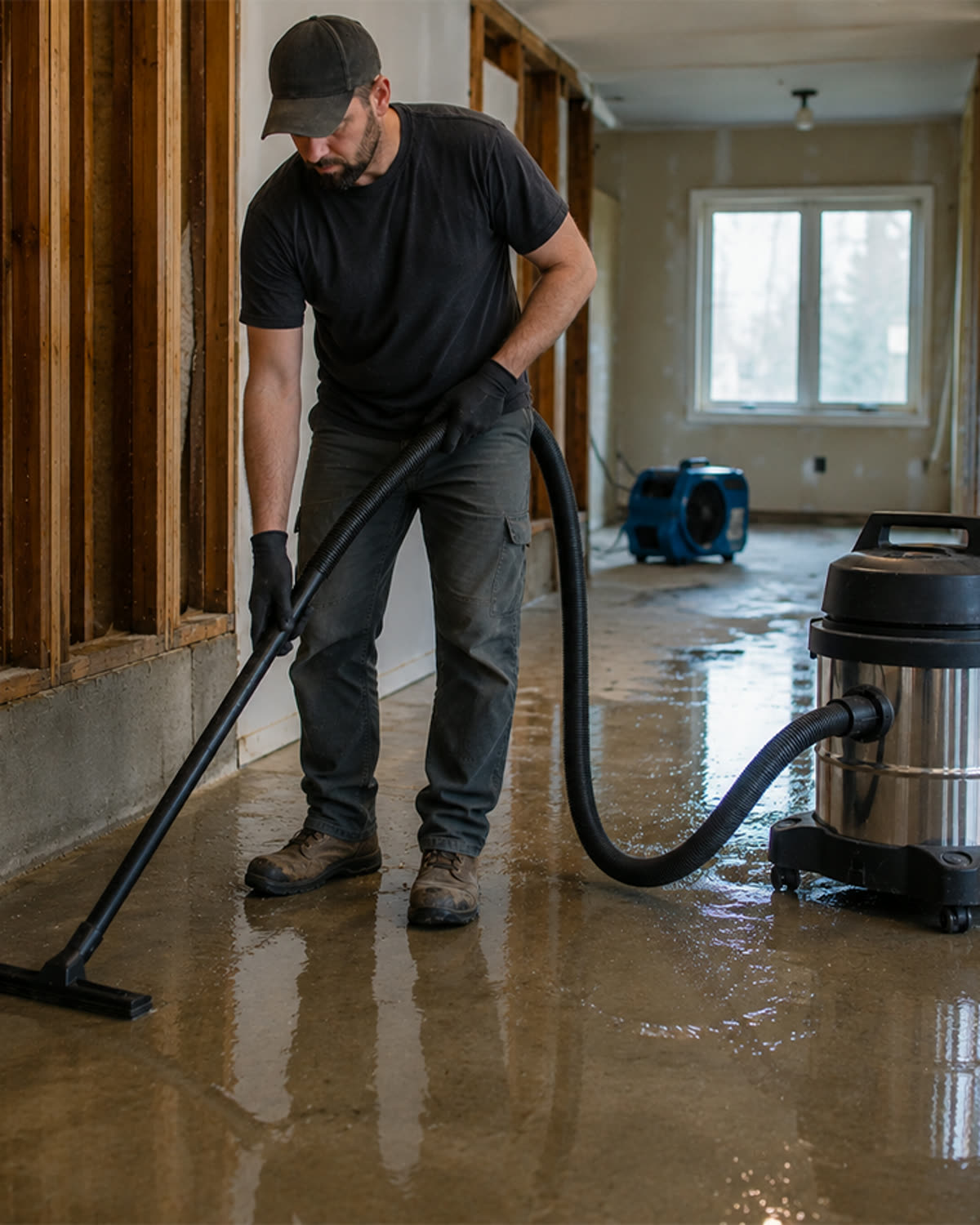
At first glance, a shop vacuum and a dust extractor appear to do the same job.
Both have:
- A motor
- A hose
- A collection container
- A filter
- Attachments for collecting dust and debris
Both can connect to power tools.
Both can clean floors.
Both can collect construction dust.
So why does one machine cost a few hundred dollars while another may cost significantly more?
The difference is not simply branding.
A traditional shop vacuum is generally designed as a versatile cleanup machine.
A dust extractor is generally designed as part of a controlled dust-capture system—often while dust is being created.
That distinction affects:
- Airflow
- Suction pressure
- Filtration
- Filter cleaning
- Dust containment
- Tool integration
- Continuous operation
- Disposal
- Jobsite suitability
Neither machine is automatically better.
The right choice depends on what you collect, how often you collect it, and whether you are cleaning dust after the job or capturing it at the source.
Quick Answer
A shop vacuum is typically designed for general cleanup, including dirt, wood chips, construction debris, spills, and mixed materials.
A dust extractor is typically designed to capture fine dust directly from tools while maintaining filtration and airflow during extended use.
Choose a shop vacuum when you need:
- General-purpose cleanup
- Wet and dry collection
- Bulky debris pickup
- Lower purchase cost
- Large tank capacity
- Basic workshop or jobsite use
Choose a dust extractor when you need:
- Fine-dust control
- Power-tool source capture
- More consistent airflow
- Better dust containment
- Automatic filter cleaning
- Sealed disposal
- Extended professional use
For contractors who collect both bulky debris and fine dust, the best answer may be using different equipment for different parts of the job.
The Fundamental Difference
The most important distinction is not what the machine looks like.
It is when and how the dust is collected.
Shop Vacuum
A shop vacuum is often used to clean material after it has landed.
Examples:
- Vacuuming a floor after demolition
- Picking up wood chips
- Cleaning a garage
- Removing screws and debris
- Collecting a spill
- Cleaning a vehicle
Dust Extractor
A dust extractor is often connected directly to the dust-producing tool.
Examples:
- Capturing dust from a sander
- Extracting dust from a grinder
- Connecting to a concrete saw
- Collecting dust from a drill shroud
- Capturing fine particles during cutting
This is known as source capture.
🔬 Vacuum Science
Dust is easiest to control before it spreads.
The moment dust leaves a tool, it begins moving into:
- The surrounding air
- Clothing
- Floors
- Equipment
- HVAC systems
- Nearby rooms
A source-capture system attempts to intercept particles immediately.
Dust Created

↓

Captured at Tool

↓

Moved Through Hose

↓

Collected and Filtered

↓

Less Dust Reaches the Room
General cleanup happens later.
Dust Created

↓

Dust Escapes

↓

Dust Settles or Remains Airborne

↓

Vacuum Cleans Some of It Later
Both forms of collection are useful.
But they solve different stages of the dust problem.
The Dust-Control Timeline™
Dust control can happen at three points.
Stage 1: Before Dust Is Created
Examples:
- Wet cutting
- Material selection
- Tool speed control
Stage 2: While Dust Is Created
This is where dust extractors are commonly used.
Stage 3: After Dust Has Spread
This is where general shop vacuum cleanup often occurs.
Prevention

↓

Source Capture

↓

Final Cleanup
The earlier dust is controlled, the less cleanup is usually required later.
What Is a Shop Vacuum?
A shop vacuum is a rugged general-purpose vacuum designed to collect materials that would be difficult or inappropriate for a conventional household vacuum.
Depending on the model, it may collect:
- Dirt
- Sawdust
- Wood chips
- Drywall fragments
- Fasteners
- Leaves
- Gravel
- Construction debris
- Water
- Mud
- Mixed waste
Shop vacuums are valued for versatility.
They are often equipped with:
- Large tanks
- Wide hoses
- Wet/dry capability
- Floor tools
- Crevice tools
- Blower ports
- Simple filters
- Disposable-bag options
Their greatest strength is flexibility.
Common Shop Vacuum Advantages
Versatility
One machine may handle both wet and dry materials.
Bulky Debris
Larger hoses can transport wood chips, gravel, and construction fragments.
Capacity
Many shop vacuums offer large tanks.
Lower Entry Cost
Basic models are often less expensive than professional dust extractors.
Simple Operation
Many are easy to use, empty, and maintain.
Broad Availability
Filters, hoses, and accessories are commonly available.
Common Shop Vacuum Limitations
A general-purpose shop vacuum may struggle when collecting large amounts of fine dust.
Possible limitations include:
- Rapid filter clogging
- Large airflow losses
- Limited filter cleaning
- Dusty emptying
- Poor tool-port compatibility
- Weak sealing around filters
- Inconsistent working airflow
- Limited continuous-use performance
These limitations vary significantly by model.
Some professional shop vacuums are highly capable.
The category name alone does not determine performance.
What Is a Dust Extractor?
A dust extractor is designed primarily to remove fine particles from a dust-producing process.
It is usually connected directly to:
- Sanders
- Grinders
- Saws
- Drills
- Routers
- Surface-preparation equipment
- Cutting tools
Dust extractors may include:
- High-efficiency filtration
- Automatic filter cleaning
- Sealed collection bags
- Tool-activated startup
- Anti-static hoses
- Adjustable suction
- Alarm or airflow monitoring
- Durable tool connections
- Continuous-use components
Their design emphasizes controlled dust capture rather than general debris cleanup.
Common Dust Extractor Advantages
Source Capture
Dust is collected before it spreads through the workspace.
Better Fine-Dust Management
Many extractors are designed specifically for small particles.
Maintained Airflow
Filter-cleaning systems may reduce airflow loss during use.
Tool Integration
Hoses and adapters are often designed for power-tool connections.
Cleaner Disposal
Fleece bags, plastic liners, or sealed systems can reduce dust exposure during emptying.
Continuous Operation
Professional units may be designed for extended tool use.
Common Dust Extractor Limitations
Higher Purchase Cost
Professional extraction equipment can cost significantly more.
Smaller Collection Capacity
Some extractors have less tank volume than large shop vacuums.
Narrower Hoses
Tool-focused hoses may clog on large debris.
Less Suitable for Mixed Waste
Screws, wood chunks, gravel, and demolition debris may damage or obstruct the system.
More Consumable Costs
Specialized bags and filters may be expensive.
More Complex Maintenance
Automatic filter-cleaning systems and sealed collection methods may require additional care.
Shop Vacuum vs. Dust Extractor Comparison
| Feature | Shop Vacuum | Dust Extractor |
|---|---|---|
| Primary purpose | General cleanup | Source capture |
| Fine-dust performance | Varies widely | Usually prioritized |
| Bulky debris | Often very good | Often limited |
| Wet pickup | Common | Model dependent |
| Tool connection | Possible | Usually central to design |
| Filter cleaning | Often manual | Often automatic or semi-automatic |
| Collection capacity | Often larger | Often moderate |
| Hose diameter | Often larger | Often smaller |
| Sealed disposal | Sometimes | More common |
| Automatic tool start | Sometimes | Common |
| Anti-static hose | Less common | More common |
| Working airflow | May decline rapidly | Often designed to remain stable |
| Purchase cost | Usually lower | Usually higher |
| Portability | Varies | Often designed around tools |
| Best use | Cleanup | Dust control during work |
Airflow: Which One Moves More Air?
There is no universal answer.
Some large shop vacuums move more air than compact dust extractors.
Some professional dust extractors outperform general-purpose vacuums through restrictive tool ports.
The important question is not simply:
Which machine has the highest CFM?
The better question is:
Which machine maintains enough airflow through the actual tool, hose, filter, and collection system?
Open Airflow vs. Restricted Airflow
A shop vacuum may produce excellent airflow through a large open hose.
But performance may fall significantly when connected to:
- A narrow sander port
- A long small-diameter hose
- A fine filter
- A dust shroud
- Multiple adapters
A dust extractor may be designed to maintain stronger performance under these restrictive conditions.
This is where water lift and system design become important.
The Working-Airflow Test™
Airflow at Vacuum Inlet

−

Hose Resistance

−

Tool-Port Resistance

−

Filter Resistance

−

Collection-Bag Resistance

=

Airflow at Dust Source
Airflow at the dust source determines how much dust is actually captured.
The number printed on the machine is only the starting point.
Water Lift and Static Pressure
Dust extractors often operate through narrow hoses and small tool ports.
These create resistance.
A vacuum with stronger static pressure can maintain airflow more effectively through that resistance.
Shop vacuums designed for wide hoses and open cleanup tools may prioritize airflow volume instead.
Neither design is inherently superior.
They are optimized for different conditions.
The Open-Hose vs. Tool-Port Principle™
Open Hose Cleanup
Prioritize:
- High airflow
- Large hose
- Bulky-debris capacity
Narrow Tool-Port Extraction
Prioritize:
- Strong static pressure
- Sealed connections
- Stable airflow under resistance
Wide Open Cleanup

↓

Air Volume Dominates

Restrictive Tool Capture

↓

Pressure Becomes More Important
Filtration Differences
Filtration is one of the biggest differences between basic shop vacuums and professional dust extractors.
A shop vacuum may use:
- Cartridge filters
- Foam sleeves
- General-purpose filters
- Fine-dust filters
- Optional HEPA filters
A dust extractor may use:
- Multi-stage filtration
- HEPA filters
- Pre-filters
- Self-cleaning filters
- Sealed bag systems
- Monitored airflow systems
However, never assume that every dust extractor has better filtration than every shop vacuum.
Always evaluate the specific machine.
Filter Efficiency Is Only One Part
A highly efficient filter cannot protect the workspace if:
- It is installed incorrectly.
- The gasket leaks.
- The housing is not sealed.
- The bag tears.
- Air bypasses the filter.
- The filter becomes overloaded.
- Dust escapes during emptying.
The Dust-Containment Chain™
Capture at Tool

↓

Transport Through Hose

↓

Collection in Bag or Tank

↓

Filtration

↓

Sealed Exhaust

↓

Controlled Disposal
Failure at any stage can release dust.
A complete dust-control system must manage the entire chain.
HEPA Filters
HEPA filters can capture extremely small particles at a defined efficiency under specific test conditions.
But there is an important difference between:
- A vacuum that accepts a HEPA filter
- A vacuum whose complete system is tested and designed for high-efficiency dust containment
A filter label does not automatically describe the performance of the full machine.
Check:
- Filter certification
- Vacuum system sealing
- Manufacturer application guidance
- Dust class or rating, when applicable
- Filter installation
- Collection-bag system
- Disposal process
Filter Cleaning
Fine dust gradually blocks the microscopic pathways inside a filter.
As resistance rises:
- CFM falls.
- Dust capture weakens.
- Motor cooling may decline.
- Productivity drops.
Professional dust extractors often address this with automatic or semi-automatic filter cleaning.
Manual Filter Cleaning
Common in shop vacuums.
Methods may include:
- Removing and tapping the filter
- Brushing approved surfaces
- Washing washable filters
- Using compressed air when permitted
Limitations:
- Requires stopping work
- Can release dust
- May damage filters
- May not restore full airflow
- Depends on operator consistency
Automatic Filter Cleaning
Some dust extractors pulse air through the filter or physically vibrate it during operation.
Potential benefits include:
- More stable airflow
- Less downtime
- Longer filter cleaning intervals
- Better performance during continuous dust generation
Potential limitations include:
- Added cost
- Added complexity
- Additional noise
- Imperfect cleaning
- Continued need for filter inspection
Automatic cleaning helps manage dust loading.
It does not make filters maintenance-free.
The Filter-Recovery Advantage™
Filter Loads

↓

Cleaning Cycle Activates

↓

Surface Dust Is Removed

↓

Airflow Partially Recovers

↓

Work Continues
The value is not that the filter never clogs.
The value is delaying severe airflow loss.
Collection Bags and Disposal
Many basic shop vacuums can be operated without a collection bag.
Debris falls directly into the tank.
This works well for:
- Wet pickup
- Large debris
- General cleanup
- Low-cost operation
But open-tank collection can create problems with fine dust.
When the vacuum is emptied, the dust may become airborne again.
Dust extractors often use:
- Fleece bags
- Paper bags
- Plastic liners
- Continuous liners
- Sealed disposal bags
These systems may reduce dust exposure during disposal.
The Emptying Paradox™
A vacuum can capture dust effectively during use and then release it during emptying.
Dust Captured

↓

Bag or Tank Opened

↓

Dust Cloud Released

↓

Contamination Returns
Dust control is not complete until the collected material is contained and disposed of properly.
Tool-Activated Startup
Many dust extractors include an electrical outlet for a power tool.
When the tool starts, the extractor starts automatically.
When the tool stops, the extractor may continue running briefly to clear the hose.
Advantages include:
- Improved convenience
- More consistent dust capture
- Reduced unnecessary runtime
- Less operator error
- Better workflow
Some shop vacuums include this feature as well.
Check the maximum tool amperage and combined electrical load.
Adjustable Suction
Professional extractors may allow the operator to reduce suction.
Why would anyone want less suction?
Too much suction can cause:
- A sander to stick to the surface
- Increased tool friction
- Poor sanding control
- Hose collapse
- Excessive noise
- Unnecessary power use
Adjustable suction allows the extractor to match the tool and application.
Anti-Static Hoses
Fine dry dust moving through plastic hoses can generate static electricity.
An anti-static hose may help reduce:
- Uncomfortable shocks
- Dust clinging to hose walls
- Static buildup around tools
Anti-static features can be especially useful during:
- Sanding
- Woodworking
- Fine-powder collection
- Continuous tool extraction
Do not assume that an anti-static hose makes equipment safe for combustible dust or hazardous environments.
Special applications require equipment specifically designed and approved for those conditions.
Hose Diameter Differences
Shop vacuums frequently use larger hoses.
Dust extractors frequently use narrower hoses.
That reflects their intended work.
Larger Shop-Vacuum Hose
Better for:
- Wood chips
- Screws
- Gravel
- Drywall fragments
- Mixed debris
- High-volume floor cleanup
Narrow Dust-Extractor Hose
Better for:
- Sanders
- Grinders
- Small tool ports
- Fine dust
- Precise source capture
The narrower hose creates more resistance but is easier to connect and maneuver around tools.
The Debris-Size Rule™
Fine Dust

↓

Smaller Tool Hose May Work Well

Bulky Debris

↓

Larger Hose Reduces Clogging
Do not use a narrow extraction hose as a demolition-debris hose.
Do not expect a large cleanup hose to connect efficiently to every small power tool.
Tank Capacity
Shop vacuums often offer larger tanks because they are designed for general debris and liquids.
Dust extractors may use smaller tanks because:
- Fine dust occupies less volume.
- Portability matters around power tools.
- Sealed bags reduce practical tank space.
- The system is designed for continuous source capture rather than demolition cleanup.
A smaller tank does not mean weaker performance.
A larger tank does not mean better dust extraction.
Capacity and performance are separate.
Wet Pickup
Wet/dry capability is common in shop vacuums.
Some dust extractors also support liquids, but not every extractor is designed for wet use.
Before collecting liquid, confirm:
- Correct filter configuration
- Collection bag removal
- Float mechanism
- Wet-use approval
- Electrical protection
- Drainage instructions
- Cleaning procedures
Never assume that a dust extractor designed for dry fine dust can collect liquids.
Continuous Operation
A vacuum connected to a power tool may run for long periods.
This increases the importance of:
- Motor cooling
- Filter cleaning
- Collection capacity
- Electrical load
- Thermal protection
- Duty cycle
- Hose durability
A shop vacuum may work well for occasional tool connection but overheat or lose airflow during continuous fine-dust production.
Professional extractors are often designed around longer operating periods.
Check the specific manufacturer’s rating.
Noise
Dust extractors are not necessarily quiet.
Automatic filter cleaning can create loud pulses.
However, professional units may include:
- Better motor insulation
- Adjustable suction
- Improved exhaust design
- Lower operating speed settings
Shop vacuums often prioritize low cost and high general airflow rather than sound control.
Compare sound ratings when available.
Portability and Storage
Shop vacuums may be:
- Wide
- Tall
- Mounted on casters
- Designed around large tanks
Dust extractors may be:
- Stackable
- Compact
- Designed to connect to tool cases
- Equipped with hose storage
- Easier to move with tools
The better design depends on the workflow.
A large wheeled vacuum may be ideal in a shop.
A stackable extractor may be easier for a contractor carrying tools between jobs.
Durability
Professional dust extractors may include:
- Reinforced hoses
- Heavy-duty connectors
- Replaceable cords
- Strong wheels
- Durable latches
- Serviceable motor components
But some heavy-duty shop vacuums may be equally durable.
Do not judge durability by category alone.
Inspect the actual construction.
Cost Comparison
A shop vacuum usually has a lower purchase price.
But purchase price does not equal ownership cost.
Include:
- Filters
- Bags
- Hose replacement
- Cleaning time
- Filter-cleaning time
- Downtime
- Lost productivity
- Motor wear
- Dust cleanup
- Disposal labor
The Dust-Control Cost Formula™
Purchase Price

+

Consumables

+

Maintenance

+

Downtime

+

Cleanup Labor

+

Dust Exposure Risk

=

True System Cost
A more expensive dust extractor may cost less over time if it:
- Captures dust faster
- Requires fewer cleanup passes
- Maintains airflow longer
- Reduces filter cleaning
- Protects surrounding areas
- Reduces jobsite downtime
A shop vacuum may remain the better value when the work involves general debris rather than continuous fine dust.
When a Shop Vacuum Is the Better Choice
Choose a shop vacuum when most of your work involves:
- General floor cleanup
- Vehicle cleaning
- Large debris
- Wood chips
- Gravel
- Fasteners
- Leaves
- Liquids
- Small spills
- Occasional fine dust
- Lower equipment budgets
A shop vacuum may also be preferable when:
- Large tank capacity matters.
- Wide hoses are needed.
- The machine must perform many unrelated tasks.
- Tool extraction is occasional.
- Fine-dust volume is low.
When a Dust Extractor Is the Better Choice
Choose a dust extractor when most of your work involves:
- Sanding
- Grinding
- Drilling
- Cutting
- Fine construction dust
- Continuous power-tool use
- Occupied buildings
- Finished homes
- Dust-sensitive environments
- Source capture
A dust extractor may also be preferable when:
- Maintained airflow is critical.
- Automatic filter cleaning reduces downtime.
- Sealed disposal is important.
- Tool-activated startup improves workflow.
- Anti-static hoses are useful.
- Dust containment is more important than tank capacity.
When You Need Both
Many professional contractors face two different cleanup problems.
Problem 1: Dust Generated by Tools
Best addressed with source extraction.
Problem 2: Debris Remaining After Work
Best addressed with general cleanup equipment.
A dust extractor may perform well on the tool but clog when used for:
- Screws
- Drywall chunks
- Wood scraps
- Insulation
- Gravel
A shop vacuum may clean the floor well but allow more dust to escape during cutting or sanding.
Using both allows each machine to perform the work it was designed for.
The Two-Machine Workflow™
Dust Extractor

↓

Captures Fine Dust at Tool

Shop Vacuum

↓

Collects Bulky Debris and Final Cleanup
This can improve:
- Dust control
- Equipment life
- Productivity
- Hose performance
- Filter life
- Cleanup quality
Shop Vacuum With a Separator vs. Dust Extractor
A separator can dramatically reduce the debris reaching a shop vacuum filter.
This may help a shop vacuum perform more effectively with:
- Sawdust
- Wood chips
- Drywall dust
- Bulk debris
Advantages include:
- Longer filter life
- Larger collection capacity
- Lower filter loading
- Easier debris disposal
However, separators also add:
- Hose length
- Resistance
- Air-leak opportunities
- Floor space
- Setup time
- Additional equipment
A separator does not automatically convert every shop vacuum into a professional dust extractor.
The system must still provide:
- Adequate airflow at the tool
- Appropriate filtration
- Good sealing
- Controlled disposal
- Application-specific suitability
Reusable Collection System vs. Dust Extractor Bag
A reusable collection system may reduce recurring bag costs and protect the vacuum filter.
A sealed disposable bag may provide cleaner disposal.
The correct choice depends on:
- Dust type
- Exposure concerns
- Cleanup frequency
- Emptying method
- Consumable budget
- Wet and dry use
- Filter-protection needs
The collection system should be evaluated as part of the complete vacuum—not as an isolated accessory.
Application Comparison
Drywall Sanding
Dust extractor advantage:
- Tool connection
- Fine-dust filtration
- Filter cleaning
- Source capture
Shop vacuum role:
- Final floor cleanup
- Larger drywall pieces
- Mixed debris
Concrete Grinding
An application-specific extractor is usually the more appropriate starting point.
Important requirements may include:
- Strong source capture
- Fine-dust containment
- Filter cleaning
- Secure tool connection
- Appropriate filtration
- Compliance with applicable safety requirements
A general-purpose shop vacuum may not be suitable.
Woodworking
Sanders
Dust extractor often performs well.
Table Saws
Depends on airflow requirements and port design.
Planers
A high-volume dust collector may be more appropriate than either a shop vacuum or compact extractor.
Floor Cleanup
A shop vacuum may be more convenient.
Remodeling
A contractor may need both:
- Dust extractor for cutting, drilling, and sanding
- Shop vacuum for fragments, fasteners, and final cleanup
Vehicle Detailing
A compact shop vacuum is usually sufficient.
A dust extractor may offer little advantage unless connected to specialized detailing tools.
Water Damage
A wet/dry shop vacuum or liquid extractor is generally the more relevant tool.
Fine-dust extractors may not be designed for large liquid volumes.
Decision Table
| Application | Better Starting Choice |
|---|---|
| General garage cleanup | Shop vacuum |
| Vehicle cleaning | Shop vacuum |
| Wood chips | Shop vacuum |
| Construction fragments | Shop vacuum |
| Wet pickup | Wet/dry shop vacuum |
| Sander extraction | Dust extractor |
| Grinder extraction | Application-specific dust extractor |
| Fine drywall sanding dust | Dust extractor |
| Concrete grinding dust | Application-specific extractor |
| Large planer chips | Dust collector |
| Mixed remodeling debris | Shop vacuum plus extractor |
| Final jobsite cleanup | Shop vacuum |
| Continuous power-tool use | Dust extractor |
The Vacuum Selection Decision Tree™
Are You Capturing Dust From a Tool?

↓

YES

↓

Is the Dust Fine or Continuous?

↓

YES → Dust Extractor

NO → Evaluate Shop Vacuum Compatibility

Are You Cleaning Bulky Debris?

↓

YES → Shop Vacuum

Are You Collecting Liquids?

↓

YES → Wet/Dry Vacuum or Liquid Extractor

Do You Perform Both Types of Work?

↓

YES → Consider Separate Systems
Questions to Ask Before Buying Either One
What Material Will I Collect?
Fine powder and bulky debris require different systems.
Am I Capturing Dust or Cleaning It Later?
Source capture favors an extractor.
General cleanup favors a shop vacuum.
How Restrictive Is the Tool Port?
Small ports require strong performance under resistance.
How Long Will the Machine Run?
Continuous use increases the importance of motor cooling and filter cleaning.
How Will the Dust Be Emptied?
Fine dust requires controlled disposal.
Do I Need Wet Pickup?
Confirm that the machine is designed for it.
How Much Do Filters and Bags Cost?
Consumables affect long-term ownership.
How Much Downtime Can I Accept?
Manual filter cleaning may interrupt production.
Do Applicable Rules Require Specific Equipment?
Certain dust-producing work may require particular controls or equipment.
Buying Checklist
Choose a Shop Vacuum When:
- General cleanup is the primary purpose
- Bulky debris is common
- Wet pickup is needed
- Large tank capacity matters
- Tool connection is occasional
- Lower purchase cost is important
- Wide hose is useful
- Fine-dust volume is limited or well controlled
Choose a Dust Extractor When:
- Power-tool source capture is the primary purpose
- Fine dust is generated continuously
- Maintained airflow is critical
- Automatic filter cleaning is useful
- Sealed disposal is important
- Tool activation improves workflow
- Anti-static hoses are useful
- Professional dust control is required
Consider Both When:
- You collect fine dust and bulky debris
- You perform sanding and demolition
- One machine causes repeated clogs
- The extractor must remain connected to a tool
- Final cleanup generates mixed waste
- Downtime from switching configurations is expensive
Common Buying Mistakes
Assuming They Are the Same Machine
They may look similar but are often optimized for different tasks.
Choosing by Horsepower
Horsepower does not determine filtration, source capture, or maintained airflow.
Buying a Dust Extractor for Demolition Debris
Narrow hoses and fine-dust bags may clog or tear.
Buying a Basic Shop Vacuum for Continuous Fine-Dust Extraction
Filters may load rapidly and airflow may collapse.
Ignoring Tool Compatibility
Adapters, hose diameter, and tool-port design affect performance.
Ignoring Disposal
Capturing dust is only part of the job.
Assuming HEPA Means the Entire System Is Sealed
Evaluate the complete vacuum and collection path.
Using One Hose for Every Material
Fine dust and bulky debris often require different hose configurations.
Ignoring Operating Cost
Filters, bags, downtime, and labor may exceed the purchase price.
The Source-Capture Principle™
The best time to collect dust is the moment it is created.
Capture at Source

↓

Less Airborne Dust

↓

Less Surface Contamination

↓

Less Final Cleanup

↓

Lower Total Labor
A dust extractor is designed around this principle.
A shop vacuum is often used after the source-capture opportunity has passed.
That does not make the shop vacuum less important.
It gives it a different role.
Diagram Placeholder
Shop Vacuum vs. Dust Extractor Cutaway
Create a side-by-side illustration.
Shop Vacuum
Label:
- Large hose
- Large tank
- General filter
- Mixed debris
- Wet/dry capability
- Floor-cleaning attachment
Dust Extractor
Label:
- Tool-connected hose
- Fine-dust bag
- High-efficiency filter
- Filter-cleaning mechanism
- Tool activation
- Sealed disposal
Caption:
Shop vacuums are generally optimized for cleanup. Dust extractors are generally optimized for source capture.
Common Myths
Myth: A dust extractor is just an expensive shop vacuum.
Reality: Many extractors include features specifically designed for tool integration, fine-dust control, maintained airflow, and sealed disposal.
Myth: A shop vacuum cannot capture fine dust.
Reality: Some shop vacuums can perform well with the correct filter, collection system, hose, seals, and application.
Myth: Every dust extractor is HEPA rated.
Reality: Filtration and certification vary by model.
Myth: A HEPA filter turns any vacuum into a dust extractor.
Reality: Tool integration, sealing, airflow, filter cleaning, and disposal also matter.
Myth: Dust extractors are always more powerful.
Reality: Performance depends on CFM, water lift, resistance, hose design, and application.
Myth: Shop vacuums are better because they have larger tanks.
Reality: Tank capacity does not determine fine-dust performance.
Myth: One machine should handle every cleanup task.
Reality: Fine-dust extraction and bulky-debris cleanup often require different configurations.
Frequently Asked Questions
Is a dust extractor more powerful than a shop vacuum?
Not always. Dust extractors are often designed to maintain airflow through restrictive tool ports, while shop vacuums may move more air through larger open hoses.
Can I use a shop vacuum as a dust extractor?
Sometimes, depending on the tool, dust, filter, hose, collection system, and applicable requirements. General-purpose vacuums may struggle with continuous fine-dust production.
Can I use a dust extractor as a shop vacuum?
It can handle some general cleanup, but narrow hoses, smaller bags, and specialized filters may not be suitable for bulky or sharp debris.
Do dust extractors have better filters?
Many do, but filtration varies. Evaluate the specific filter efficiency, system sealing, filter cleaning, and collection method.
What is automatic filter cleaning?
It is a mechanism that removes some accumulated dust from the filter during operation to help maintain airflow.
Do I need a dust extractor for sanding?
A dust extractor is often useful because sanding creates continuous fine dust through a relatively small tool port.
What is better for drywall dust?
A dust extractor is often better for capturing sanding dust at the source. A properly configured shop vacuum may be useful for final cleanup and larger debris.
What is better for concrete dust?
Use equipment designed for the specific tool, material, dust volume, and applicable safety requirements. An ordinary shop vacuum may not be appropriate.
What is better for sawdust?
It depends on the dust source. Extractors work well with sanders and smaller tools. Shop vacuums handle general cleanup. Dedicated dust collectors may be better for large chip-producing machinery.
Can both machines collect water?
Wet/dry shop vacuums commonly collect liquids. Some dust extractors can, but many require specific configurations or are dry-only.
Why are dust extractors more expensive?
They may include automatic filter cleaning, tool activation, anti-static hoses, better sealing, controlled disposal, professional components, and fine-dust filtration.
Is a HEPA shop vacuum the same as a HEPA dust extractor?
Not necessarily. Compare complete system certification, sealing, airflow, filter cleaning, tool compatibility, and intended use.
Which machine is better for contractors?
Contractors performing general cleanup may prefer a shop vacuum. Contractors generating continuous fine dust may need a dust extractor. Many benefit from owning both.
Key Takeaways
A shop vacuum and a dust extractor are not simply cheaper and more expensive versions of the same machine.
They are generally designed around different jobs.
A shop vacuum excels at:
- General cleanup
- Mixed debris
- Bulky material
- Wet pickup
- Large-capacity collection
A dust extractor excels at:
- Source capture
- Fine dust
- Power-tool connection
- Maintained airflow
- Filter cleaning
- Controlled disposal
The choice depends on where the dust is, when it is collected, and what happens after it enters the hose.
Use a shop vacuum when the primary job is cleaning the workspace.
Use a dust extractor when the primary job is controlling dust while the work is happening.
Use both when your work produces fine dust and bulky debris.
The most important distinction is simple:
A shop vacuum cleans the mess.
A dust extractor helps prevent the mess from spreading.
Related guides
- the guide to multi-stage shop vacuum filtration: how bags, filters, and cyclones work together
- the shop vacuum buying guide
- how many years a shop vac gives you
- shop vacuum accessories guide
- comparing bags for drywall and masonry cleanup
- choosing the right vacuum size
- understanding CFM and water lift specs
- related: why fine dust destroys vacuums for shop vacuum vs dust extractor users