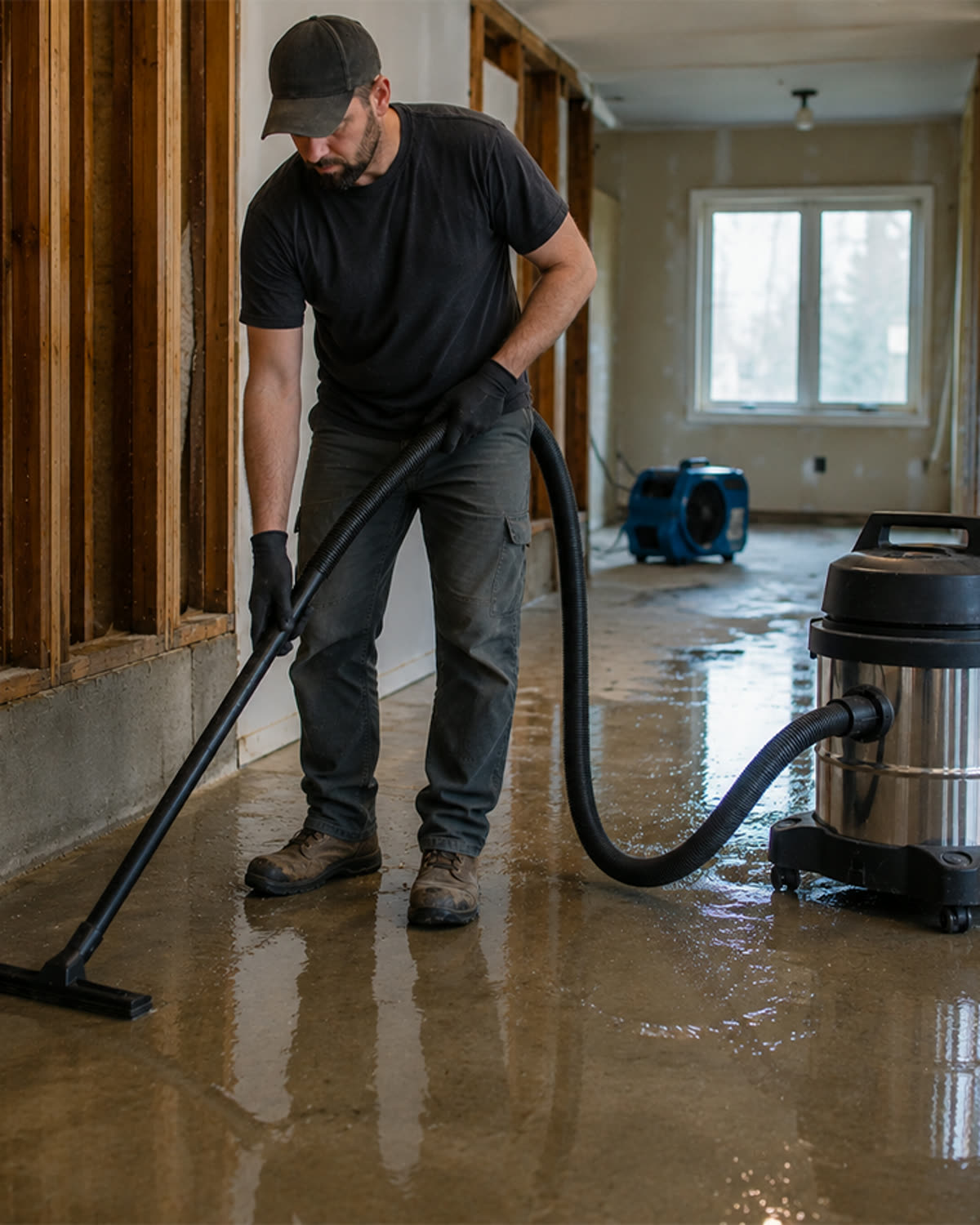
Shop vacuums are commonly labeled by tank size:
- 4 gallons
- 6 gallons
- 10 gallons
- 12 gallons
- 16 gallons
- 20 gallons
That number describes the approximate internal volume of the tank.
It does not necessarily tell you how much material the vacuum can collect before it should be emptied.
Real working capacity may be reduced by:
- Collection bags
- Filters
- Float assemblies
- Inlet position
- Internal supports
- Fine-dust restriction
- Debris weight
- Safe lifting limits
- Liquid shutoff level
A 16-gallon vacuum should not be expected to hold 16 gallons of usable debris during every type of work.
Quick Answer
Shop vacuum tank size describes total container volume.
Usable capacity is the amount of material that can be collected before one of these limits is reached:
- Airflow declines
- Debris reaches the inlet
- The float activates
- The bag becomes restrictive
- The vacuum becomes too heavy
- Safe disposal becomes difficult
Choose capacity based on the actual debris and workflow—not only the gallon label.
The Four Capacity Limits™
A shop vacuum reaches practical capacity when it hits the first of four limits:
Volume Limit

or

Airflow Limit

or

Weight Limit

or

Handling Limit
The lowest limit determines when the vacuum should be emptied.
1. Tank Volume
Tank volume is the total internal space.
Some of that space may be occupied by:
- Filter cage
- Float
- Inlet tube
- Bag material
- Internal supports
- Motor-head intrusion
Advertised capacity is useful for comparing general machine size.
It is not a guarantee of working collection volume.
2. Bag Capacity
A collection bag rarely uses every cubic inch of the tank.
Its usable volume depends on:
- Bag shape
- Collar location
- Expansion
- Tank geometry
- Filter clearance
- Airflow through the material
The bag may also reach its airflow limit before it is physically full.
The Bag Capacity Illusion™
Visible Empty Space Remains

But

Bag Material Is Dust-Loaded

↓

Suction Declines

↓

Working Capacity Has Been Reached
Fine dust makes this especially common.
3. Filter and Float Displacement
The filter and float occupy part of the tank’s upper area.
Debris or bags should not interfere with them.
Material reaching the filter cage may:
- Restrict airflow
- Damage the bag
- Contaminate the filter
- Prevent proper float movement
4. Inlet Height
The inlet may establish a practical fill line.
When debris reaches the inlet:
- New material may stop entering correctly
- The bag may block airflow
- Debris may accumulate in the hose
- Dust may bypass toward the filter
The vacuum should generally be serviced before material reaches this level.
5. Liquid Shutoff Level
During wet pickup, the float usually activates before liquid reaches the tank’s total rated volume.
The usable wet capacity may therefore be lower than the advertised tank size.
Foam may activate the float even earlier.
6. Weight Limit
Some materials become too heavy long before the tank fills.
Approximate water weight:
| Volume | Water Weight |
|---|---|
| 2 gallons | 17 pounds |
| 5 gallons | 42 pounds |
| 10 gallons | 83 pounds |
| 15 gallons | 125 pounds |
Add the vacuum’s empty weight to determine the total lifting load.
Sand, mud, and slurry may be even more difficult to handle.
The Weight-Before-Volume Rule™
Dense Debris

↓

Safe Weight Reached Early

↓

Vacuum Must Be Emptied

Even When Tank Has Space
Capacity by Material
Drywall Dust
Primary limit:
- Airflow through bag or filter
The vacuum may require service while appearing mostly empty.
Sawdust
Primary limits:
- Volume
- Airflow
Fine sanding dust loads media earlier than large chips.
Wood Chips
Primary limit:
- Physical volume
A cyclone or dust collector may provide better capacity.
Pet Hair
Primary limit:
- Inlet bridging
- Volume
Hair can create a false full condition near the inlet.
Sand
Primary limit:
- Weight
Water
Primary limits:
- Float shutoff
- Weight
- Drainage method
Mud
Primary limits:
- Weight
- Hose flow
- Cleaning difficulty
Nominal Capacity vs. Usable Capacity™
Nominal Capacity

=

Advertised Tank Volume

Usable Capacity

=

Material Collected Before Performance, Weight, or Safety Requires Emptying
Usable capacity is the more valuable number for real work.
Why Larger Is Not Always Better
A larger tank may provide:
- Fewer emptying cycles
- More bulky-debris capacity
- Better high-volume cleanup
But it also creates:
- Greater empty weight
- Larger storage footprint
- More difficult stair use
- Greater full weight
- Harder transport
- More difficult tank cleaning
A large vacuum that is rarely moved to the work area may reduce productivity.
Why Smaller Is Not Always Better
A compact vacuum may provide:
- Easy transport
- Fast setup
- Better stair access
- Smaller vehicle footprint
But it may require:
- Frequent bag changes
- Frequent liquid draining
- More job interruptions
- Smaller filters
- More careful debris management
The Capacity–Mobility Balance™
More Capacity

↓

Fewer Emptying Cycles

But

More Weight and Bulk

More Mobility

↓

Faster Movement

But

More Frequent Emptying
The correct size balances both.
Practical Size Categories
Compact Vacuum
Best for:
- Service calls
- Vehicles
- Small repairs
- Electrical work
- Stairs
Medium Vacuum
Best for:
- Remodeling
- Flooring
- General contracting
- Garage use
- Routine wet pickup
Large Vacuum
Best for:
- Demolition
- High-volume debris
- Commercial cleanup
- Large spills
- Stationary use
How to Estimate Required Capacity
Ask:
- How much material is collected before a natural stopping point?
- Is the debris bulky, fine, or dense?
- How far must the vacuum be carried?
- Are stairs involved?
- Can liquid be drained without lifting?
- How often can the vacuum be emptied?
- Will a bag or internal collection system reduce usable space?
- Is an external cyclone practical?
The Emptying Frequency Test™
Record:
- Job duration
- Number of emptying cycles
- Minutes per emptying
- Distance to disposal
- Lost setup time
If the vacuum is emptied too frequently, more capacity may improve productivity.
If the vacuum is difficult to move or empty, it may be too large.
Capacity Comparison Example
Vacuum A
- 6-gallon tank
- Emptied four times per job
- Five minutes per emptying
Total interruption:
4 × 5 Minutes

=

20 Minutes
Vacuum B
- 12-gallon tank
- Emptied twice
- Eight minutes per emptying
Total interruption:
2 × 8 Minutes

=

16 Minutes
The larger vacuum saves only four minutes and may be harder to transport.
Capacity should be evaluated through total workflow.
Buying Checklist
- Debris type identified
- Daily debris volume estimated
- Fine-dust loading considered
- Bag displacement considered
- Inlet height reviewed
- Float shutoff considered
- Full liquid weight calculated
- Stair use considered
- Vehicle storage measured
- Emptying time estimated
- Drain accessibility reviewed
- External separator considered
Common Mistakes
Assuming Gallon Rating Equals Collected Material
Internal components reduce usable volume.
Filling to the Lid
Debris may obstruct the inlet, filter, or float.
Ignoring Fine-Dust Restriction
Airflow capacity may be reached early.
Ignoring Full Weight
Large wet tanks can become unsafe to move.
Buying Maximum Capacity for Occasional Use
The extra size may reduce portability without meaningful benefit.
Buying Too Small for Continuous Cleanup
Frequent emptying creates labor cost.
Frequently Asked Questions
Does a 16-gallon vacuum hold 16 gallons of water?
Not necessarily. The float may activate earlier, and the tank should not be filled beyond the approved working level.
Does a collection bag reduce capacity?
Yes. Bag shape, filter clearance, and airflow requirements reduce usable tank volume.
Why is my vacuum full when the tank looks empty?
The bag or filter may have reached its airflow capacity.
What is the best tank size for contractors?
A medium capacity often provides the best balance, but workload and portability determine the answer.
Is a larger vacuum more powerful?
No. Tank size and suction performance are separate specifications.
Should I buy a large tank for drywall dust?
Not solely for drywall dust. Fine-dust collection and maintained airflow matter more than tank volume.
Key Takeaways
Advertised gallons measure tank size.
They do not measure:
- Working airflow capacity
- Safe liquid capacity
- Bag capacity
- Debris weight
- Practical portability
The correct vacuum is not the one with the largest tank. It is the one that completes the workload with the fewest costly interruptions and the least handling difficulty.
Related guides
- shop vacuum troubleshooting guide
- shop vacuum buying guide
- learn more about what shop vacuum hose size do you need
- learn more about shop vacuum vs. HEPA dust extractor for renovation work
- matching a reusable bag to a Craftsman tank
- related: what size shop vacuum for shop vacuum tank size capacity users
- understanding CFM and water lift specs