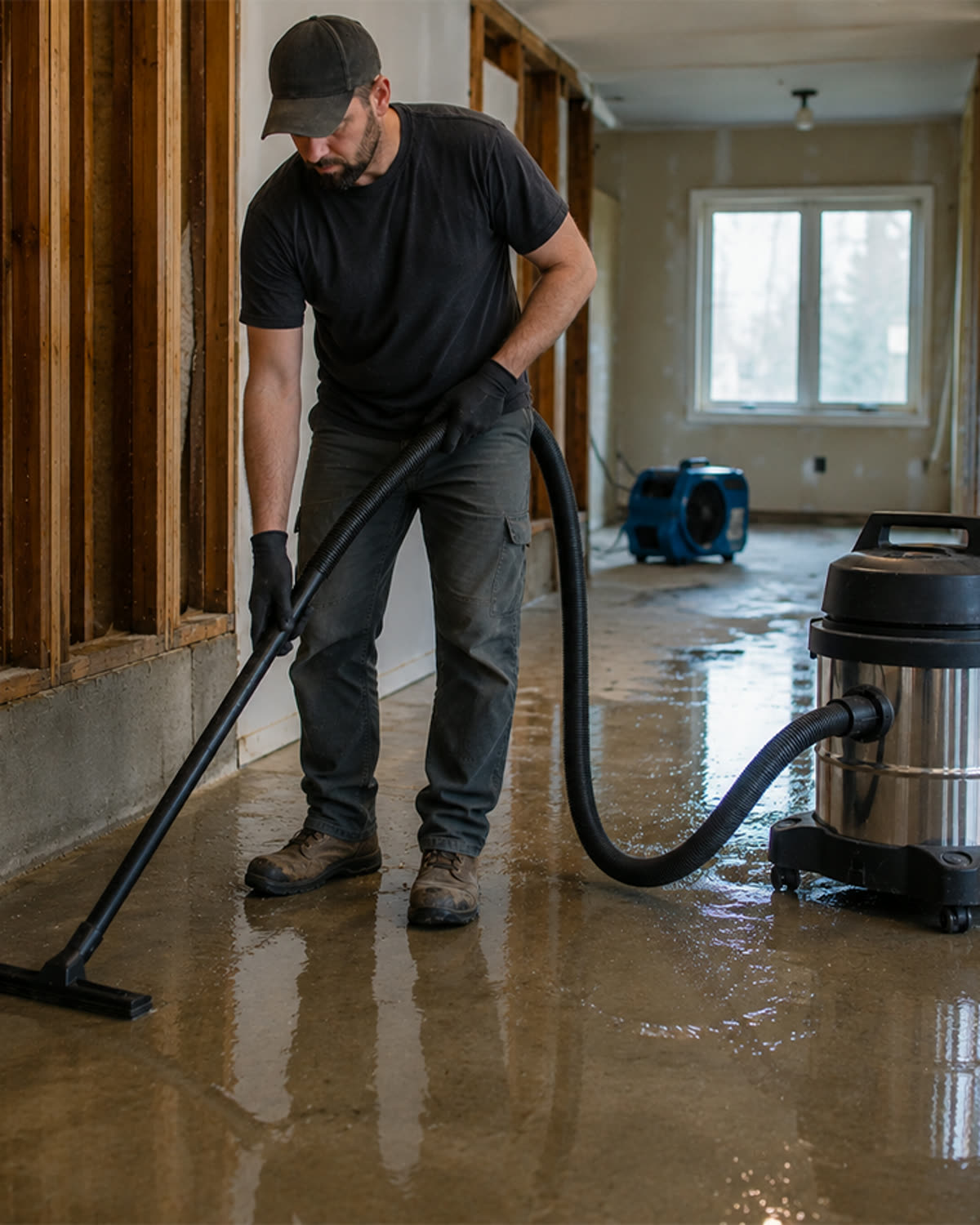
A wet/dry vacuum can collect materials that would damage an ordinary household vacuum.
Depending on its configuration, it may handle:
- Dry dust
- Wood chips
- Construction debris
- Mud
- Spills
- Standing water
- Mixed wet material
The machine does not pull debris directly with the motor.
It creates a pressure difference that causes surrounding air to move.
That moving air carries dust, debris, or liquid through the hose and into the tank.
The collection method changes depending on whether the material is wet or dry.
Quick Answer
A wet/dry vacuum works by:
- Using a motor-driven fan to lower air pressure inside the vacuum.
- Allowing higher-pressure room air to enter through the hose.
- Carrying dust, debris, or liquid into the tank.
- Separating the material from the airflow.
- Filtering remaining particles during dry pickup.
- Using a float mechanism to protect the motor when liquid rises too high.
- Returning air through the exhaust.
Dry collection relies heavily on bags and filters.
Wet pickup relies on the tank, float shutoff, and the manufacturer’s specified wet-use filter configuration.
The Pressure Difference
The vacuum motor spins a fan.
The fan moves air out of the vacuum.
This lowers pressure inside the tank and hose.
Higher-pressure air outside the machine moves toward the lower-pressure area.
Motor Spins Fan

↓

Air Moves Out

↓

Pressure Inside Vacuum Falls

↓

Room Air Enters Hose

↓

Debris Travels With Air
The vacuum does not create an empty space.
It creates continuous airflow.
How Dry Debris Is Collected
During dry pickup, debris enters the tank through the inlet.
Depending on the configuration:
- Large debris falls into the tank.
- A collection bag captures material.
- Fine particles continue toward the filter.
- The filter removes remaining dust.
- Air reaches the motor and exhaust.
Dry Debris

↓

Bag or Tank

↓

Primary Filter

↓

Motor and Fan

↓

Exhaust
Fine dust requires better pre-collection because it remains suspended in the airflow.
How Liquid Is Collected
Liquid enters through the hose and travels into the tank.
Because liquid is heavier than air, it falls into the collection area.
Air continues through the machine.
The float mechanism monitors the rising liquid level.
Liquid Enters Hose

↓

Liquid Falls Into Tank

↓

Air Continues Upward

↓

Float Rises With Water Level

↓

Air Path Closes When Tank Is Full
The exact airflow path varies by model.
The Float Shutoff
The float is a buoyant component near the motor inlet.
As the liquid level rises, the float rises.
When the tank reaches its safe working level, the float blocks the airflow opening.
This helps prevent liquid from reaching the motor.
What Float Activation Sounds Like
When the float closes, the vacuum may:
- Change pitch suddenly
- Sound louder or more strained
- Stop collecting liquid effectively
- Produce little or no airflow at the hose
Turn the vacuum off immediately.
Do not continue operating against the closed float.
The Float Protection Principle™
Liquid Level Rises

↓

Float Moves Up

↓

Motor Air Path Closes

↓

Liquid Pickup Stops
The float is a safety mechanism.
It is not a substitute for monitoring tank capacity.
Why Wet and Dry Configurations Differ
Dry dust requires filtration.
Liquid requires an open collection path and protection from water.
A dry setup may include:
- Paper bag
- Fleece bag
- Reusable dry collection bag
- Cartridge filter
- Fine-dust filter
A wet setup may require:
- Removal of the dry bag
- Removal or replacement of certain filters
- Installation of a wet-use filter or foam sleeve
- Confirmation that the float moves freely
Follow the specific machine instructions.
The Configuration Rule™
Dry Material

↓

Dry Collection and Filtration Setup

Liquid

↓

Approved Wet-Pickup Setup
Using the wrong setup can cause:
- Bag failure
- Restricted airflow
- Wet filters
- Motor risk
- Mud formation
- Odor
- Difficult cleanup
Why the Filter Matters During Dry Pickup
The filter prevents fine particles from reaching:
- Motor components
- Cooling passages
- Exhaust air
- The surrounding workspace
Without effective filtration, dust may:
- Damage the motor
- Blow from the exhaust
- Coat internal components
- Create premature wear
A collection bag usually does not replace the required primary filter.
Why Some Wet Setups Still Use a Filter
Some wet/dry vacuums use:
- A foam sleeve
- A wet-rated cartridge
- A reusable wet filter
- A specific manufacturer-approved configuration
These components may prevent droplets or debris from reaching sensitive areas.
Never assume the filter should always be removed.
Use the exact configuration specified for the model.
The Airflow Chain During Wet Pickup
Room Air and Water Enter Hose

↓

Water Separates Into Tank

↓

Air Moves Toward Motor

↓

Float Protects Motor at Full Level

↓

Air Exits Vacuum
Every stage must remain open until the float activates.
A clogged hose or saturated filter can reduce pickup before the tank fills.
Why Hose Diameter Matters
A larger hose can move:
- Greater liquid volume
- Larger debris
- Mud
- Leaves
- Construction fragments
A smaller hose provides:
- Easier handling
- Better access
- More concentrated pickup
But it may clog or move liquid more slowly.
Why Water Pickup Slows Down
Possible causes include:
- Tank nearly full
- Float beginning to rise
- Hose blockage
- Narrow attachment
- Air leak
- Wet filter restriction
- Foam entering the system
- Excessive hose length
Foam and Suds
Soap and cleaning products can create foam.
Foam may rise faster than liquid and reach the float or motor air path unexpectedly.
Use caution with:
- Shampoo
- Detergent
- Floor cleaner
- Carpet solution
- Grooming products
A tank that appears only partially full may still have high foam levels.
The Foam Expansion Problem™
Small Amount of Soapy Liquid

↓

Air Agitation

↓

Foam Expands

↓

Float Area Reached Early
Monitor foam-producing liquids closely.
Blower Function
Some wet/dry vacuums can reverse their practical use by moving the hose to a blower port.
The blower uses exhaust airflow to:
- Move leaves
- Clear light debris
- Dry certain surfaces
- Inflate compatible items
Do not use blower mode around fine dust when it will spread contamination.
Wet/Dry Vacuum Components
| Component | Function |
|---|---|
| Motor | Powers the fan |
| Fan | Creates airflow and pressure difference |
| Hose | Carries air and material |
| Tank | Stores debris or liquid |
| Bag | Collects dry debris before filter |
| Filter | Removes remaining dry particles |
| Float | Stops airflow when liquid rises |
| Drain | Allows controlled liquid removal |
| Lid seal | Prevents air leaks |
| Exhaust | Returns air to the room |
Common Mistakes
Vacuuming Water With a Paper Bag Installed
The bag may tear or block airflow.
Removing Every Filter Without Checking Instructions
Some machines require a wet-use filter.
Ignoring Float Activation
Continued operation may strain the motor.
Allowing Foam to Reach the Motor Area
Foam can rise unexpectedly.
Mixing Drywall Dust and Water
The result may become paste that coats the tank and hose.
Storing the Vacuum Wet
Moisture can create odor, mold, or corrosion.
Wet/Dry Operation Checklist
Before Dry Pickup
- Correct dry filter installed
- Bag or reusable collector installed when needed
- Tank dry
- Hose dry
- Float moves freely
- Seals inspected
Before Wet Pickup
- Vacuum approved for liquids
- Dry bag removed unless specifically wet-rated
- Filter configured correctly
- Tank emptied
- Float inspected
- Drain closed
- Disposal location planned
After Wet Pickup
- Vacuum unplugged
- Liquid drained or emptied
- Tank cleaned
- Hose cleared
- Float inspected
- Components dried fully
- Dry configuration restored before dry use
Frequently Asked Questions
Does a wet/dry vacuum suck water through the motor?
No. Liquid should fall into the tank while air continues toward the motor. The float helps block airflow before liquid reaches the motor area.
Can a wet/dry vacuum run without a filter?
It depends on the model and wet-use configuration. Follow the manufacturer’s instructions.
Why does the vacuum suddenly change sound during water pickup?
The float may have risen and blocked the airflow path.
Can I vacuum soapy water?
Only when the machine is suitable for the liquid. Foam can rise quickly and activate the float early.
Can I vacuum mud?
Some wet/dry vacuums can collect mud, but thick material may clog hoses and be difficult to dispose of.
Why must the vacuum dry before dry use?
Residual moisture can damage bags, trap dust, create mud, and cause odors.
Key Takeaways
A wet/dry vacuum uses moving air to transport both dry debris and liquid.
Dry pickup depends on:
- Bags
- Filters
- Dust containment
Wet pickup depends on:
- Correct configuration
- Tank capacity
- Float protection
- Controlled drainage
The motor creates airflow. The airflow carries the material. The collection system determines whether that material is handled safely and efficiently.
Related guides
- paper vs. fleece vs. reusable shop vacuum bags
- Best Vacuum for Pool and Hot Tub Cleanup
- cleaning out a wet/dry vac
- How to Prevent Mold and Bacteria in a Wet/Dry Vacuum
- Why Is My Shop Vacuum Filter Wet
- Why Does My Shop Vacuum Smell Bad
- How to Store a Shop Vacuum Properly
- How to Switch a Shop Vacuum From Dry to Wet Pickup
- whether your vac can handle mud
- picking up water safely
- related: shop vacuum maintenance checklist for how wet dry vacuum works users