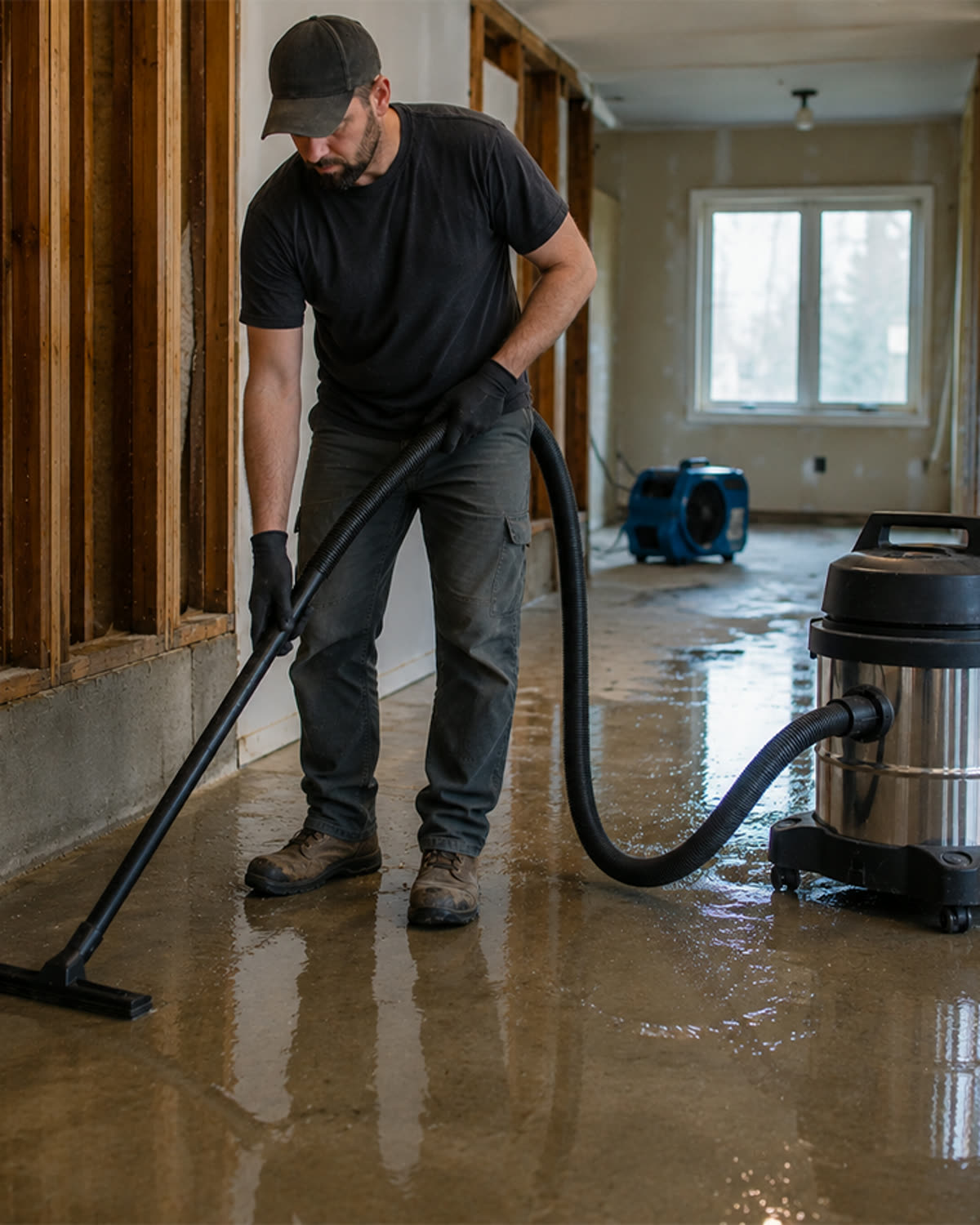
A wet/dry vacuum can collect some types of mud.
But mud is more difficult than ordinary water.
It may contain:
- Sand
- Soil
- Clay
- Gravel
- Drywall dust
- Concrete residue
- Organic debris
- Chemicals
- Sharp fragments
Thin muddy water may travel through the hose easily.
Thick mud may clog the hose, block the drain, jam the float, and add substantial weight.
The vacuum must be designed for wet pickup and configured correctly.
Quick Answer
You can use a wet/dry vacuum for mud when:
- The machine is rated for wet pickup.
- Large debris is removed first.
- The hose is large enough.
- The dry bag is removed.
- The filter is configured correctly.
- The mud can be disposed of appropriately.
- The tank is cleaned before residue hardens.
Do not vacuum mud containing unknown chemicals, sewage, hot material, flammable substances, or hazardous contamination with ordinary equipment.
Thin Mud vs. Thick Mud
Thin Muddy Water
Contains a high percentage of water.
It usually moves through the hose more easily.
Thick Mud
Contains more solids.
It may:
- Move slowly
- Stick to hose walls
- Block narrow tools
- Overload the tank
- Harden after drying
The Mud Flow Threshold™
More Water

↓

Easier Hose Transport

More Solids

↓

Greater Clogging and Weight
When material no longer flows easily, manual removal or pumping may be more efficient.
Step 1: Remove Large Debris
Before vacuuming, remove:
- Rocks
- Wood pieces
- Metal
- Leaves
- Cloth
- Plastic
- Large construction fragments
These can clog the hose or damage internal components.
Step 2: Use a Large Hose
A larger hose helps transport:
- Soil clumps
- Gravel
- Organic material
- Thick slurry
Avoid unnecessary reducers and narrow crevice tools.
Step 3: Configure for Wet Pickup
Usually this includes:
- Removing the dry collection bag
- Emptying dry dust
- Installing the correct wet filter
- Inspecting the float
- Closing the drain
Follow the vacuum’s instructions.
Step 4: Avoid Mixing Mud With Fine Dry Dust
Residual drywall or concrete dust can turn into thick paste.
Fine Construction Dust

+

Water and Soil

=

Adhesive Slurry
Clean dry dust from the tank before collecting mud.
Step 5: Collect in Small Cycles
Mud is heavy.
Even when the tank is not full, it may become difficult to move.
Stop and empty before:
- The float activates
- The tank becomes too heavy
- Mud reaches the inlet
- The drain becomes buried
- Thick solids settle and compact
Step 6: Dispose of Mud Properly
Do not automatically pour mud:
- Into a storm drain
- Into landscaping
- Into a household sink
- Into a toilet
- Onto neighboring property
Disposal depends on:
- Material source
- Contaminants
- Local requirements
- Soil composition
- Jobsite rules
Step 7: Clean Immediately
Mud becomes more difficult to remove as it dries.
Clean:
- Tank
- Hose
- Drain
- Float
- Attachments
- Lid gasket
Do not allow cement-based slurry to harden inside the machine.
The Hardening Clock™
Wet Mud Collected

↓

Water Begins Evaporating

↓

Solids Bond to Surfaces

↓

Cleaning Difficulty Increases
The best time to clean the vacuum is immediately after disposal.
Mud Types and Vacuum Suitability
| Material | General Suitability |
|---|---|
| Thin soil water | Often suitable |
| Light clay slurry | Possible with large hose |
| Thick clay | High clog risk |
| Sand and water | Possible, but abrasive |
| Drywall mud slurry | High residue risk |
| Concrete slurry | Application-specific handling needed |
| Sewage mud | Specialized equipment required |
| Chemical-contaminated mud | Specialized handling required |
Common Problems
Hose Clogging
Caused by:
- Thick mud
- Narrow diameter
- Rocks
- Leaves
- Long hose
- Sharp bends
Drain Clogging
Solids settle around the drain opening.
Float Jamming
Hair, clay, or debris may coat the mechanism.
Excessive Weight
Mud may weigh more than clear water because of suspended solids.
Abrasion
Sand and grit can wear hoses, tanks, and fittings.
Mud Pickup Checklist
- Vacuum rated for wet use
- Material identified
- Hazardous contamination ruled out
- Large debris removed
- Dry bag removed
- Correct wet filter installed
- Float inspected
- Large hose used
- Disposal method planned
- Tank weight monitored
- Vacuum cleaned immediately
- Hose and components dried
Common Mistakes
Vacuuming Thick Mud Through a Crevice Tool
The opening blocks quickly.
Filling the Tank to Maximum Capacity
Mud becomes dangerously heavy.
Allowing Slurry to Dry
Residue may become permanent.
Using the Drain for Thick Solids
The drain may clog.
Mixing Concrete or Drywall Dust With Water
The result can harden inside the vacuum.
Ignoring Contamination
Some mud requires specialized handling.
Frequently Asked Questions
Can a wet/dry vacuum collect thick mud?
It may collect limited amounts, but manual removal is often more efficient when the material barely flows.
Can mud damage the vacuum?
Yes. It may clog hoses, jam the float, abrade components, and harden inside the tank.
Should I add water to thin the mud?
Only when appropriate for the material, worksite, disposal method, and equipment. Added water increases volume and weight.
Can I drain mud through the tank drain?
Thin slurry may flow, but solids can clog the drain. Follow the vacuum instructions.
Can I vacuum concrete slurry?
Use equipment and disposal procedures appropriate for concrete slurry and the specific application.
How do I clean dried mud?
Use only methods approved for the tank and components. Avoid damaging plastic or seals with sharp tools.
Key Takeaways
A wet/dry vacuum can collect mud when the material is fluid enough to move through the hose.
The main risks are:
- Clogs
- Weight
- Abrasion
- Float failure
- Hardened residue
- Improper disposal
Remove large debris, use a wide hose, empty early, and clean the vacuum before the mud dries.