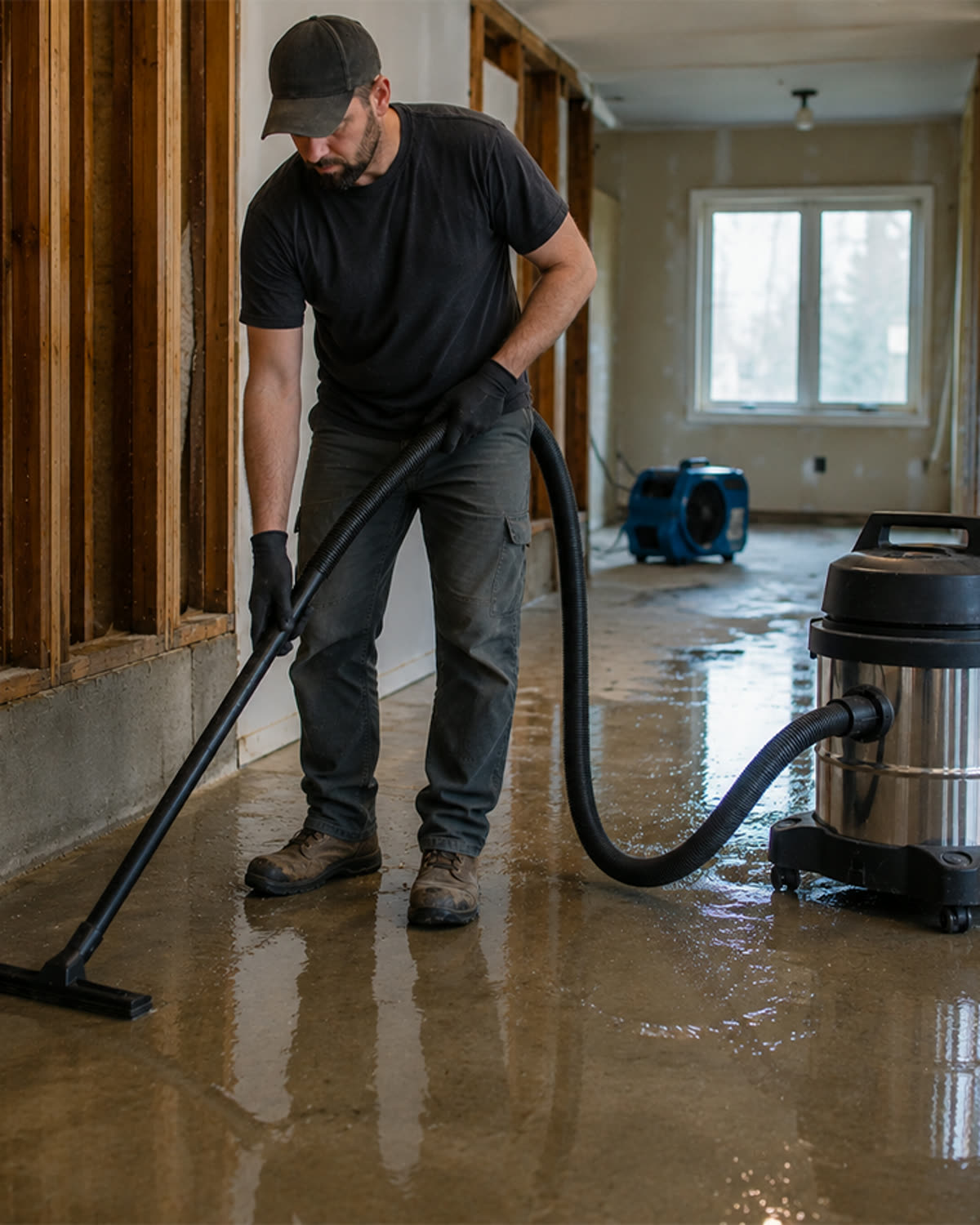
You can vacuum water only when the machine is designed for wet pickup.
A true wet/dry vacuum can collect:
- Small spills
- Standing water
- Water from floor cleanup
- Some wet debris
- Limited flooding
- Liquid from compatible equipment
But the vacuum must be configured correctly.
Using the dry setup for water can damage:
- Collection bags
- Filters
- Airflow
- Internal components
The machine must also be emptied before liquid reaches an unsafe level.
Quick Answer
To vacuum water safely:
- Confirm the vacuum is rated for wet pickup.
- Turn it off and unplug it.
- Empty all dry debris.
- Remove ordinary dry collection bags.
- Install, remove, or change the filter according to the manufacturer’s wet-use instructions.
- Check that the float moves freely.
- Confirm the tank drain is closed.
- Use a suitable wet-pickup attachment.
- Monitor the sound and liquid level.
- Stop immediately when the float activates.
- Drain or empty the tank.
- Clean and dry the vacuum completely.
Never use an ordinary dry-only vacuum for liquid.
Step 1: Confirm Wet-Pickup Capability
Look for:
- Wet/dry labeling
- Manufacturer instructions
- Float shutoff
- Wet filter guidance
- Drain
- Liquid capacity information
Do not assume a large tank means the machine can collect water.
Step 2: Remove Dry Debris
Dry material left inside the tank can mix with water.
This may create:
- Mud
- Paste
- Clogs
- Hardened deposits
- Odor
- Difficult disposal
Drywall and concrete dust are especially problematic when wet.
Step 3: Remove the Dry Collection Bag
Ordinary paper or fleece bags are generally intended for dry debris.
Water may cause them to:
- Collapse
- Tear
- Block airflow
- Release debris
- Become too heavy
- Stick to the tank
Some specialized bags may be rated differently.
Follow the bag and vacuum instructions.
Step 4: Configure the Filter
Possible manufacturer-approved wet configurations include:
- Removing the dry cartridge filter
- Installing a foam sleeve
- Using a wet-rated filter
- Leaving a specific cartridge installed
There is no universal rule.
The Wet Filter Rule™
Correct Filter Setup

=

Vacuum-Specific Instructions

Not

=

Assumption Based on Another Model
Step 5: Inspect the Float
The float should move freely.
Check for:
- Dried dust
- Hair
- Debris
- Sticky residue
- Damage
- Restricted movement
A stuck float may fail to protect the motor when the tank fills.
Step 6: Select the Attachment
For open water:
- Wide wet floor nozzle
- Squeegee attachment
- Open hose
For corners:
- Crevice tool
- Narrow nozzle
A very narrow attachment may reduce pickup speed.
Step 7: Begin With the Vacuum Upright
Keep the machine stable.
Avoid:
- Pulling it over by the hose
- Operating on steep slopes
- Allowing water near electrical connections
- Running with a damaged cord
- Using an unsuitable extension cord
Follow electrical safety instructions.
Step 8: Listen for Float Activation
When liquid rises, the vacuum may suddenly:
- Change pitch
- Lose suction
- Sound strained
- Stop pulling water
Turn it off immediately.
Step 9: Empty Before Maximum Fill
Do not wait for the float on every cycle.
Plan capacity based on:
- Tank size
- Liquid weight
- Distance to drain
- Stairs
- Disposal method
- Foam level
Water weighs approximately 8.3 pounds per gallon.
Wet Weight Examples
| Water Volume | Approximate Water Weight |
|---|---|
| 2 gallons | 17 pounds |
| 5 gallons | 42 pounds |
| 10 gallons | 83 pounds |
| 15 gallons | 125 pounds |
This does not include the vacuum’s own weight.
Use the drain when available rather than lifting a full tank.
The Mobility Limit™
More Liquid Collected

↓

More Weight

↓

Harder Transport

↓

Greater Spill and Lifting Risk
Practical wet capacity is often lower than tank capacity.
Can You Vacuum a Flooded Basement?
A wet/dry vacuum may help with limited water removal.
But large flooding may exceed:
- Tank capacity
- Emptying speed
- Electrical safety limits
- Practical labor
- Equipment duty cycle
A pump or professional water-extraction system may be more appropriate.
Never enter standing water where electrical hazards may exist.
Can You Vacuum Water From Carpet?
A wet/dry vacuum can remove some water from carpet.
Results depend on:
- Attachment
- Suction
- Carpet thickness
- Padding
- Water volume
- Contamination
- Drying equipment
Removing visible water does not guarantee the carpet, padding, or subfloor is dry.
Large or contaminated water losses may require professional remediation.
Can You Vacuum Water From a Pool or Hot Tub?
A wet/dry vacuum may help remove small remaining volumes after normal draining.
Consider:
- Chemical content
- Temperature
- Hose compatibility
- Tank capacity
- Safe disposal
- Electrical location
Do not use electrical equipment in a way that violates its safety instructions around pools or water.
Can You Vacuum Hot Water?
Do not collect hot liquids unless the machine is specifically rated for their temperature.
Hot liquid may damage:
- Hose
- Tank
- Seals
- Filters
- Internal components
It may also create burn hazards.
Can You Vacuum Soapy Water?
Foam is the primary concern.
Airflow can turn detergent solution into expanding foam.
Foam may reach the float or motor area before the tank is physically full.
Monitor closely and stop early.
Can You Vacuum Mud?
Thin muddy water may be collected by some wet/dry vacuums.
Thick mud may:
- Clog the hose
- Coat the float
- Block the drain
- Add extreme weight
- Harden during storage
Remove large solids separately when practical.
Why Water Comes Out of the Exhaust
Stop immediately if liquid or mist exits the vacuum.
Possible causes include:
- Tank overfilled
- Float stuck
- Excessive foam
- Vacuum tipped over
- Incorrect filter configuration
- Damaged internal components
Unplug the machine and inspect it before further use.
Why the Vacuum Stops Picking Up Water
Possible causes include:
- Float activated
- Tank full
- Hose blocked
- Wet filter restricted
- Attachment sealed to floor
- Air leak
- Foam reaching float
- Motor protection activated
Wet Pickup Checklist
- Machine rated for wet use
- Power cord undamaged
- Dry debris removed
- Dry bag removed
- Filter configured correctly
- Float moves freely
- Tank drain closed
- Wet attachment installed
- Disposal plan ready
- Tank weight monitored
- Foam monitored
- Vacuum kept upright
Common Mistakes
Using a Dry-Only Vacuum
This creates electrical and equipment hazards.
Leaving a Paper Bag Installed
The bag may fail.
Forgetting Drywall Dust in the Tank
Water turns it into paste.
Ignoring Foam
Foam may rise faster than liquid.
Lifting an Overfilled Tank
Water weight becomes substantial.
Continuing After the Sound Changes
The float may be closed.
Storing the Vacuum Wet
Moisture causes odor and contamination.
Frequently Asked Questions
Do I remove the filter before vacuuming water?
The correct answer depends on the vacuum. Follow its wet-use instructions.
Do I remove the bag?
Ordinary dry collection bags are generally removed before wet pickup.
How do I know when the tank is full?
The float may activate and change the motor sound. Stop immediately.
Can water damage the motor?
Yes, if liquid bypasses the collection and float system.
Can I vacuum water and dry dust together?
Avoid mixing them. Fine dry dust may form mud or hardened deposits.
Can I use a reusable bag for water?
Only when that reusable system is specifically designed for wet use.
Key Takeaways
A wet/dry vacuum can collect water when:
- The machine is designed for it
- The dry collection system is removed or reconfigured
- The filter is set up correctly
- The float works
- Tank capacity is monitored
- The equipment is cleaned and dried afterward
Wet pickup is not simply dry vacuuming with water added. It is a separate operating configuration.