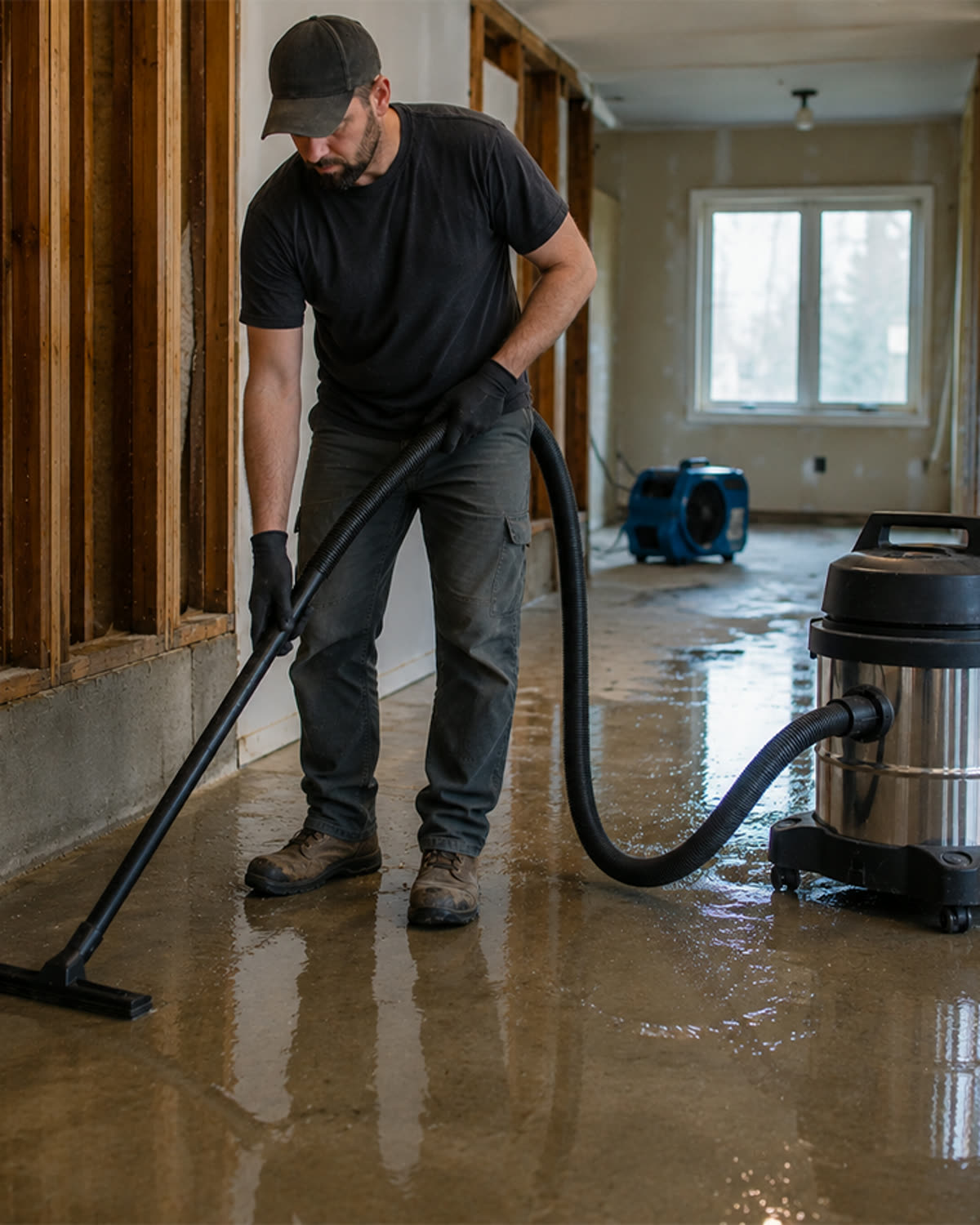
A shop vacuum filter may become wet after liquid pickup.
Sometimes that is expected because the vacuum uses a wet-rated filter.
In other cases, moisture on a dry cartridge filter signals a problem.
Possible causes include:
- Incorrect wet-pickup setup
- Tank overfilling
- Float failure
- Excessive foam
- Vacuum tipping
- Liquid mist
- Wet debris
- Condensation
- Residual water from previous use
A wet dry-use filter can lose airflow, deform, trap dust, and create odor.
Quick Answer
If a dry shop vacuum filter is wet:
- Turn off and unplug the vacuum.
- Stop collecting material.
- Empty the tank.
- Inspect the float.
- Check the wet-use configuration.
- Look for foam or evidence of tipping.
- Remove the filter according to manufacturer instructions.
- Replace non-washable damaged filters.
- Dry washable filters completely before reuse.
- Clean and dry the tank and hose.
Do not collect fine dry dust through a damp filter.
Cause 1: The Tank Was Overfilled
If liquid rises too high, it may reach:
- Filter cage
- Float housing
- Lid
- Motor air path
The float should close before this happens.
But the operator should still stop before maximum fill.
Cause 2: The Float Is Stuck
The float may be blocked by:
- Drywall paste
- Hair
- Mud
- Sawdust
- Adhesive residue
- Broken components
- Incorrect filter installation
A stuck float may fail to close the airflow path.
The Float Failure Chain™
Float Cannot Move

↓

Liquid Continues Rising

↓

Filter Area Becomes Wet

↓

Liquid May Approach Motor
Stop using the vacuum until the mechanism is corrected.
Cause 3: Excessive Foam
Soapy water creates foam that may rise above the liquid surface.
Foam can enter the filter area before the tank appears full.
Common sources include:
- Shampoo
- Detergent
- Carpet cleaner
- Floor cleaner
- Grooming products
Cause 4: The Vacuum Tipped Over
Tilting or tipping may send liquid directly toward the lid and filter.
Possible causes:
- Pulling by hose
- Small casters
- Uneven flooring
- Full heavy tank
- Long hose tension
- Obstacles
Keep the machine upright during wet use.
Cause 5: Incorrect Filter Setup
The dry cartridge may have been left installed when the machine requires:
- Filter removal
- Foam sleeve
- Wet-rated filter
- Different mounting arrangement
Follow model-specific instructions.
Cause 6: Fine Mist Reached the Filter
Fast-moving liquid, foam, or splash may create droplets that travel with the airflow.
This may leave the filter damp even before the tank is full.
Cause 7: Wet Debris Was Collected During “Dry” Use
Material may look dry on the surface but contain moisture.
Examples include:
- Damp sawdust
- Wet carpet fibers
- Muddy dirt
- Recently washed floors
- Damp construction debris
Moisture may accumulate gradually.
Cause 8: Condensation
Warm humid air entering a cooler tank may create condensation.
This is less dramatic than overfilling but can leave surfaces damp.
Storage temperature changes may also contribute.
Cause 9: The Vacuum Was Not Dried After Previous Wet Use
Water may remain inside:
- Hose
- Tank seam
- Float cage
- Filter mount
- Drain recess
- Attachments
When dry operation resumes, airflow carries that moisture toward the filter.
What Happens to a Wet Dry Filter?
A wet filter may:
- Restrict airflow
- Collapse or deform
- Trap fine dust
- Develop odor
- Grow microbial contamination
- Lose structural strength
- Shed material
- Fail to seal correctly
Paper-based filters may be permanently damaged by water.
The Wet-Filter Restriction™
Filter Fibers Become Wet

↓

Pathways Narrow

↓

Airflow Falls

↓

Motor Cooling Declines

↓

Vacuum Runs Hotter
A damp filter should not be treated as normal during dry collection.
Can a Wet Filter Be Reused?
Only when:
- The filter is designed to be washable or wet-rated.
- It has no structural damage.
- It is cleaned using the approved method.
- It dries completely.
- Airflow and sealing return to normal.
Replace it if:
- Pleats are distorted
- End caps loosen
- Media tears
- Odor remains
- Airflow does not recover
- The filter is not washable
How to Dry a Washable Filter
Follow the filter instructions.
General principles include:
- Remove loose debris gently.
- Rinse only when approved.
- Avoid high-pressure water.
- Do not wring or twist.
- Allow air circulation.
- Dry completely before installation.
- Do not use damaging heat.
A filter may feel dry outside while remaining damp deep in the pleats.
Never Vacuum Fine Dust With a Damp Filter
Drywall, concrete, and sanding dust can combine with moisture.
This creates buildup that:
- Adheres to the filter
- Blocks pleats
- Becomes difficult to remove
- Permanently reduces airflow
Damp Filter

+

Fine Dust

=

Embedded Paste
How to Fix the Underlying Problem
If the Tank Overfilled
- Empty earlier.
- Monitor sound.
- Use the drain.
- Reduce collection cycles.
- Consider larger or pump-assisted equipment.
If the Float Stuck
- Clean the float area.
- Remove obstructions.
- Replace damaged components.
- Confirm correct assembly.
If Foam Caused the Problem
- Stop earlier.
- Reduce foaming solution when appropriate.
- Use equipment and procedures suitable for foam-producing liquids.
If the Vacuum Tipped
- Improve hose routing.
- Reduce tank fill level.
- Use stable wheels.
- Keep the machine on level ground.
If the Setup Was Wrong
- Review the wet-use instructions.
- Install the correct filter.
- Remove incompatible dry bags.
- Train operators on changeover.
Wet Filter Diagnostic Table
| Symptom | Likely Cause | First Check |
|---|---|---|
| Filter soaked | Overfilled tank or tipping | Tank and float |
| Filter damp with foam | Detergent solution | Foam level |
| Filter wet after small spill | Wrong configuration | Wet-use instructions |
| Filter wet before dry job | Residual water | Hose and tank |
| Filter clogged with paste | Moisture plus fine dust | Replace or approved cleaning |
| Water at exhaust | Float failure or overfill | Stop immediately |
| Musty odor | Stored damp | Clean and dry system |
| Suction suddenly falls | Saturated filter or float | Inspect both |
Prevention Checklist
- Vacuum approved for wet use
- Dry bag removed when required
- Correct wet filter installed
- Float moves freely
- Tank emptied before full
- Foam monitored
- Vacuum remains upright
- Hose does not pull machine over
- Wet debris identified
- Tank and hose dried after use
- Dry filter installed only when system is dry
- Fine dust never collected through damp media
Common Mistakes
Drying Only the Tank
Water may remain in the hose or float cage.
Reinstalling a Damp Filter
The vacuum may immediately lose airflow.
Using Heat to Dry the Filter
Excessive heat can damage media and seals.
Ignoring a Stuck Float
This risks liquid reaching the motor area.
Vacuuming Drywall Dust After Wet Pickup
Residual moisture forms paste.
Reusing a Deformed Paper Filter
Its filtration and seal may be compromised.
Frequently Asked Questions
Is it normal for a shop vacuum filter to get wet?
Only when the filter and machine are designed for that wet configuration. A dry-only filter should not become soaked.
Why did the filter get wet before the tank was full?
Foam, tipping, mist, incorrect setup, or a stuck float may be responsible.
Can I dry and reuse the filter?
Only if it is washable or wet-rated and remains undamaged.
How long must the filter dry?
Until it is completely dry throughout. Drying time varies with conditions and filter design.
Can I vacuum dry dust with a slightly damp filter?
No. Fine dust may form paste and permanently restrict the filter.
Why does the vacuum smell after the filter gets wet?
Moist dust and organic debris can create odor and microbial growth.
What should I do if water comes from the exhaust?
Turn off and unplug the vacuum immediately. Inspect the float, tank level, setup, and internal components.
Key Takeaways
A wet filter is usually caused by:
- Overfilling
- Float problems
- Foam
- Tipping
- Incorrect configuration
- Residual moisture
A wet dry-use filter can reduce airflow and create permanent clogging when fine dust is collected.
Correct the cause before returning the vacuum to service.
The filter should match the material, the tank should be emptied before overfill, and the entire system should be dry before fine-dust collection resumes.