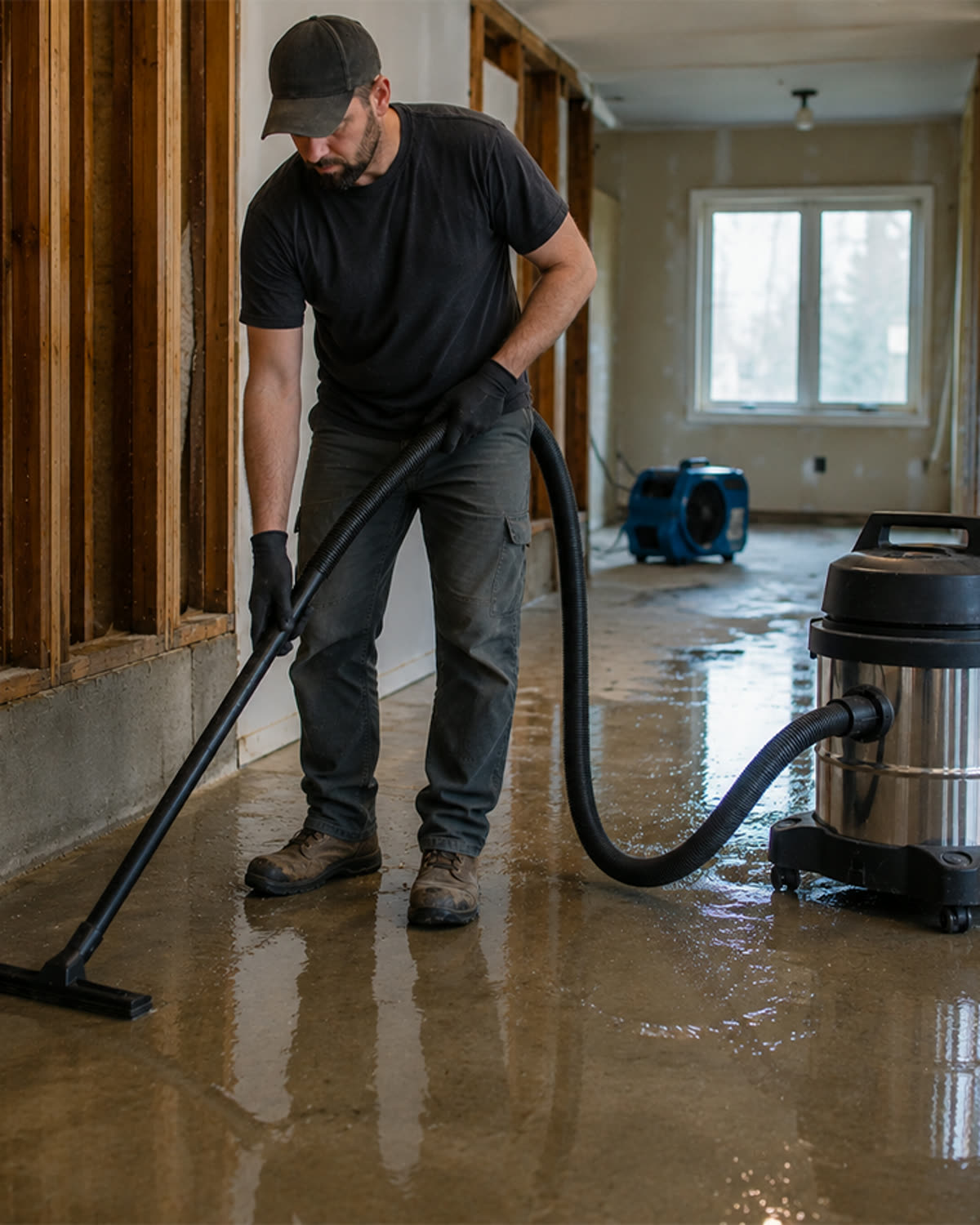
Pools and hot tubs create several cleanup problems that a standard household vacuum cannot handle.
A wet/dry vacuum may help collect:
- Remaining water after draining
- Dirt and grit
- Leaves
- Small debris
- Water from equipment compartments
- Residue around covers
- Limited water from maintenance work
But electrical equipment near pools and hot tubs requires careful use.
A wet/dry vacuum should only be used in a manner permitted by its manufacturer and applicable electrical-safety requirements.
It should never be submerged or positioned where it can fall into water.
Quick Answer
A practical vacuum for pool and hot tub maintenance should include:
- Approved wet-pickup capability
- Reliable float shutoff
- Easy tank drainage
- Sufficient hose reach
- Stable wheels
- A manageable tank size
- Corrosion-resistant components
- Easy hose and tank cleaning
- Suitable wet attachments
- A safe electrical configuration
For large water volumes, use the normal drain system, sump pump, or appropriate transfer pump first.
A wet/dry vacuum is most useful for the remaining water and debris.
The Bulk-Water Rule™
A shop vacuum is usually a finishing tool—not the primary method for draining thousands of gallons.
Main Drain or Pump

↓

Most Water Removed

↓

Wet/Dry Vacuum

↓

Remaining Water and Debris
This reduces tank cycles, labor, and lifting.
Feature 1: Practical Drainage
A vacuum used for water should have:
- Accessible drain
- Large drain opening
- Secure cap
- Controlled flow
- Tank shape that empties fully
A large tank without a convenient drain may be difficult to use.
Feature 2: Manageable Capacity
Larger capacity reduces emptying frequency.
But water weighs approximately 8.3 pounds per gallon.
| Water Volume | Approximate Weight |
|---|---|
| 5 gallons | 42 pounds |
| 10 gallons | 83 pounds |
| 15 gallons | 125 pounds |
Choose a tank that can be emptied safely.
Feature 3: Hose Reach
The hose may need to reach:
- Spa footwell
- Equipment compartment
- Steps
- Corners
- Drain recesses
- Cover storage area
Longer hoses add resistance.
Choose enough reach without creating unnecessary length.
Feature 4: Suitable Attachments
Useful wet attachments include:
- Squeegee floor tool
- Crevice nozzle
- Open hose cuff
- Narrow water nozzle
- Soft brush approved for wet use
Avoid attachments that may scratch pool or spa surfaces.
Feature 5: Float Protection
The float should:
- Move freely
- Remain clear of debris
- Close before liquid reaches the motor
- Be inspected before each wet job
Pool debris, hair, and residue can obstruct the mechanism.
Feature 6: Easy Cleaning
Pool and hot tub water may contain:
- Chlorine
- Bromine
- Minerals
- Organic residue
- Biofilm
- Cleaning products
After use:
- Empty the tank.
- Rinse approved components.
- Clear the hose.
- Inspect the float.
- Dry fully.
Do not store chemical residue inside the vacuum.
Pool Cleanup Applications
Remaining Water After Draining
A wet/dry vacuum can remove water left in:
- Low points
- Steps
- Drains
- Corners
- Equipment recesses
Debris Collection
It may collect:
- Dirt
- Grit
- Small leaves
- Insects
- Limited sediment
Equipment Compartment Cleanup
Use caution around:
- Wiring
- Pumps
- Heaters
- Control systems
Disconnect equipment as required and follow manufacturer instructions.
Hot Tub Cleanup Applications
A wet/dry vacuum may help remove:
- Footwell water
- Water from seats
- Plumbing-drain remnants
- Debris around jets
- Water beneath removable components
- Cover runoff
Do not force vacuum attachments into plumbing or jets unless permitted.
What a Wet/Dry Vacuum Should Not Do
Do not use it to:
- Operate while submerged
- Collect water while sitting in standing water
- Replace the main pool-drain system
- Collect hot water above its rated temperature
- Vacuum flammable chemicals
- Handle concentrated chemicals not approved for the machine
- Work with a damaged cord or plug
The Electrical Separation Principle™
Vacuum and Electrical Connection

↓

Remain Dry and Stable

Hose and Wet Attachment

↓

Reach the Water
Keep the machine itself away from the water source whenever practical.
Pool and Hot Tub Vacuum Checklist
- Vacuum approved for wet pickup
- Cord and plug undamaged
- Safe power connection
- Vacuum positioned on dry stable ground
- Dry bag removed
- Wet filter configured correctly
- Float moves freely
- Drain cap secure
- Hose long enough
- Attachments surface-safe
- Disposal location prepared
- Tank weight monitored
- Vacuum cleaned after use
Common Mistakes
Using the Vacuum as the Main Drain
This creates excessive tank cycles.
Placing the Vacuum Too Close to the Water
The machine may tip or be exposed to splashing.
Forgetting the Dry Bag
Water can destroy it.
Lifting a Full Large Tank
Drain the tank when possible.
Storing Chemical Water in the Vacuum
Residue can damage components and create odor.
Using a Hard Attachment on Delicate Surfaces
It may scratch finishes.
Frequently Asked Questions
Can I use a wet/dry vacuum to drain a hot tub?
It can remove remaining water, but the normal drain or a suitable pump is usually more efficient for the bulk volume.
Can it remove water from pool lines?
Only use it on plumbing when the pool or spa manufacturer permits that procedure.
Can it collect leaves and water together?
Yes, within the machine’s debris and wet-pickup limits. Large leaves may clog narrow hoses.
Can chlorine damage the vacuum?
Chemical residue may affect components over time. Empty, rinse approved surfaces, and dry after use.
What tank size is best?
Choose a size that balances fewer emptying cycles with manageable full weight.
Can the vacuum sit on a wet deck?
Keep the machine and electrical connection dry and stable according to safety instructions.
Key Takeaways
A wet/dry vacuum is useful for:
- Remaining water
- Low areas
- Dirt
- Small debris
- Final pool or hot tub cleanup
It should not replace the primary drainage system.
Prioritize safe positioning, float protection, practical drainage, and complete cleaning after use.
Use pumps and drains for bulk water. Use the wet/dry vacuum for precision cleanup.