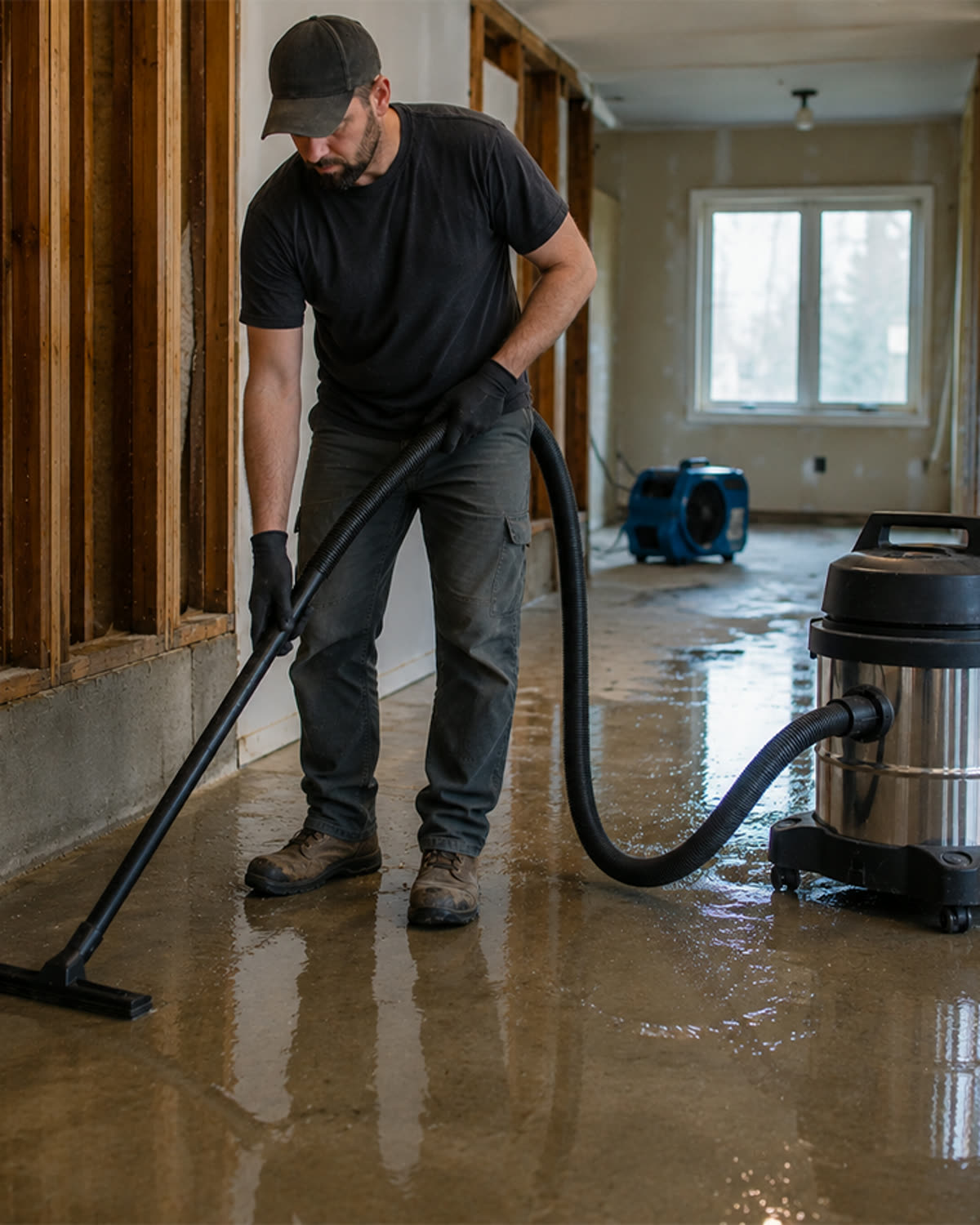
Contractors rarely vacuum one type of material.
A single project may produce:
- Drywall dust
- Sawdust
- Screws
- Flooring debris
- Concrete particles
- Insulation
- Packaging
- Water
- Demolition fragments
That makes contractor vacuum selection more complicated than choosing the machine with the largest tank.
The best contractor vacuum must balance:
- Performance
- Durability
- Filtration
- Capacity
- Portability
- Operating cost
No single vacuum is ideal for every trade and task.
Quick Answer
A strong contractor shop vacuum should offer:
- Maintained airflow
- Appropriate fine-dust filtration
- Effective filter protection
- Durable hose and fittings
- Secure tank and filter seals
- Practical tank capacity
- Easy movement through jobsites
- Controlled disposal
- Available replacement parts
- Reasonable bag and filter costs
- Wet/dry capability when needed
Contractors who generate continuous tool dust may also need a dedicated dust extractor.
The Contractor Workload Triangle™
A contractor vacuum must balance:
Dust Control

Capacity

Mobility
A large vacuum provides capacity but may be difficult to carry.
A compact vacuum is mobile but may require frequent emptying.
A fine-dust extractor controls sanding dust but may clog on demolition fragments.
The correct system fits the dominant workload.
Feature 1: Maintained Performance
Contractors should evaluate how the vacuum performs after collecting dust.
Ask:
- How quickly does the filter clog?
- Can dust be captured before the filter?
- Does suction recover after emptying?
- Does the vacuum overheat?
- How often must work stop for maintenance?
Working performance matters more than showroom performance.
Feature 2: Durable Construction
Jobsite components experience repeated impact and movement.
Inspect:
- Hose cuffs
- Power cord
- Switch
- Tank latches
- Wheels
- Carry handle
- Filter mount
- Accessory storage
- Drain cap
Small component failures can take the entire vacuum out of service.
Feature 3: Fine-Dust Capability
Even general contractors encounter:
- Drywall dust
- Concrete dust
- Sanding dust
- Fine sawdust
- Powdered compounds
The vacuum should support:
- Fine-dust bag
- Reusable collection system
- Appropriate primary filter
- Secure seals
- Controlled disposal
Bagless open-tank collection is often inefficient for fine dust.
Feature 4: Hose Versatility
Contractors may need:
- Narrow tool hose
- General-purpose hose
- Large debris hose
- Long reach
- Multiple adapters
One hose is rarely ideal for every task.
A modular system may provide better performance.
Feature 5: Practical Capacity
Choose capacity based on:
- Normal daily debris
- Emptying frequency
- Stair access
- Vehicle storage
- Full liquid weight
- Crew size
The best tank is large enough to reduce interruptions but small enough to move safely.
Feature 6: Portability
Consider:
- Empty weight
- Handle placement
- Stair carrying
- Wheel stability
- Doorway clearance
- Vehicle footprint
- Cord and hose storage
A vacuum that remains in the truck provides no productivity benefit.
Feature 7: Wet/Dry Flexibility
Wet capability is useful for:
- Small spills
- Plumbing work
- Floor preparation
- Water intrusion
- Equipment cleanup
Switching between wet and dry work must be simple and correctly configured.
Feature 8: Operating Cost
Calculate:
Purchase Price

+

Annual Bags

+

Annual Filters

+

Maintenance Labor

+

Downtime

+

Repairs

=

True Contractor Cost
A low-priced vacuum can become expensive if it consumes filters and bags or repeatedly interrupts the crew.
Contractor Vacuum Categories
Compact Service Vacuum
Best for:
- Punch lists
- Vehicles
- Small repairs
- Stairs
- Quick cleanup
Medium General-Purpose Vacuum
Best for:
- Remodeling
- Flooring
- Carpentry
- Routine jobsite cleanup
- Mixed debris
Large-Capacity Vacuum
Best for:
- Demolition
- High-volume debris
- Liquid pickup
- Commercial renovations
Fine-Dust Extractor
Best for:
- Sanding
- Grinding
- Drilling
- Continuous tool connection
- Source capture
One Vacuum or Multiple Systems?
Many contractors are better served by:
- A compact or medium shop vacuum for cleanup
- A dedicated extractor for fine-dust tools
- A large wet/dry vacuum for high-volume work when needed
Tool Dust

↓

Extractor

Bulky Debris

↓

Shop Vacuum

Large Liquid Volume

↓

Wet/Dry Recovery System
Purpose-matched equipment often lowers downtime.
Contractor Buying Checklist
- Primary trades identified
- Common debris listed
- Fine-dust capability confirmed
- Appropriate bag system available
- Filter replacement cost reviewed
- CFM and water lift reviewed
- Hose options available
- Tank capacity appropriate
- Full weight manageable
- Wheels and handles durable
- Parts readily available
- Wet-use configuration practical
- Controlled disposal possible
- Annual operating cost calculated
Common Mistakes
Buying One Vacuum for Every Possible Job
Specialized work may require specialized collection.
Choosing the Largest Tank
Capacity can reduce mobility and increase lifting risk.
Ignoring Fine Dust
General cleanup ability does not guarantee fine-dust performance.
Ignoring Consumables
Bags and filters can exceed the purchase price.
Running Until Suction Collapses
Restricted airflow increases labor and motor heat.
Failing to Carry Replacement Components
A missing bag or filter can stop the job.
Frequently Asked Questions
What size vacuum is best for contractors?
A medium vacuum is often the most versatile, but the correct size depends on daily debris volume and portability.
Should contractors use bags?
For fine dust, bags or reusable pre-collection systems can significantly protect the filter and preserve airflow.
Do contractors need HEPA filtration?
It depends on the material and application. The complete system must be appropriate for the work.
Is a dust extractor better than a shop vacuum?
For source capture from tools, often yes. For mixed debris and final cleanup, a shop vacuum is usually more versatile.
Is a reusable bag worth it?
It may be valuable for contractors who use disposable bags frequently and can empty the reusable system appropriately.
How many vacuums should a contractor own?
That depends on workload. Separate cleanup and extraction systems often improve efficiency.
Key Takeaways
The best contractor vacuum is not the machine with the largest label or tank.
It is the system that:
- Matches the debris
- Maintains airflow
- Protects the filter
- Survives jobsite use
- Moves easily
- Empties cleanly
- Costs less per completed job
Contractors should buy for the workflow—not the specification sheet.
Related guides
- paper vs. fleece vs. reusable shop vacuum bags
- vacuum setups for commercial cleaning crews
- Best Shop Vacuum for Dog Groomers
- what electricians need from a shop vac
- what flooring crews need from a vac
- Best Shop Vacuum for Remodeling Contractors
- a breakdown of bag choices for concrete and drywall
- tank and motor size guidance
- what to look for in a shop vacuum
- understanding CFM and water lift specs