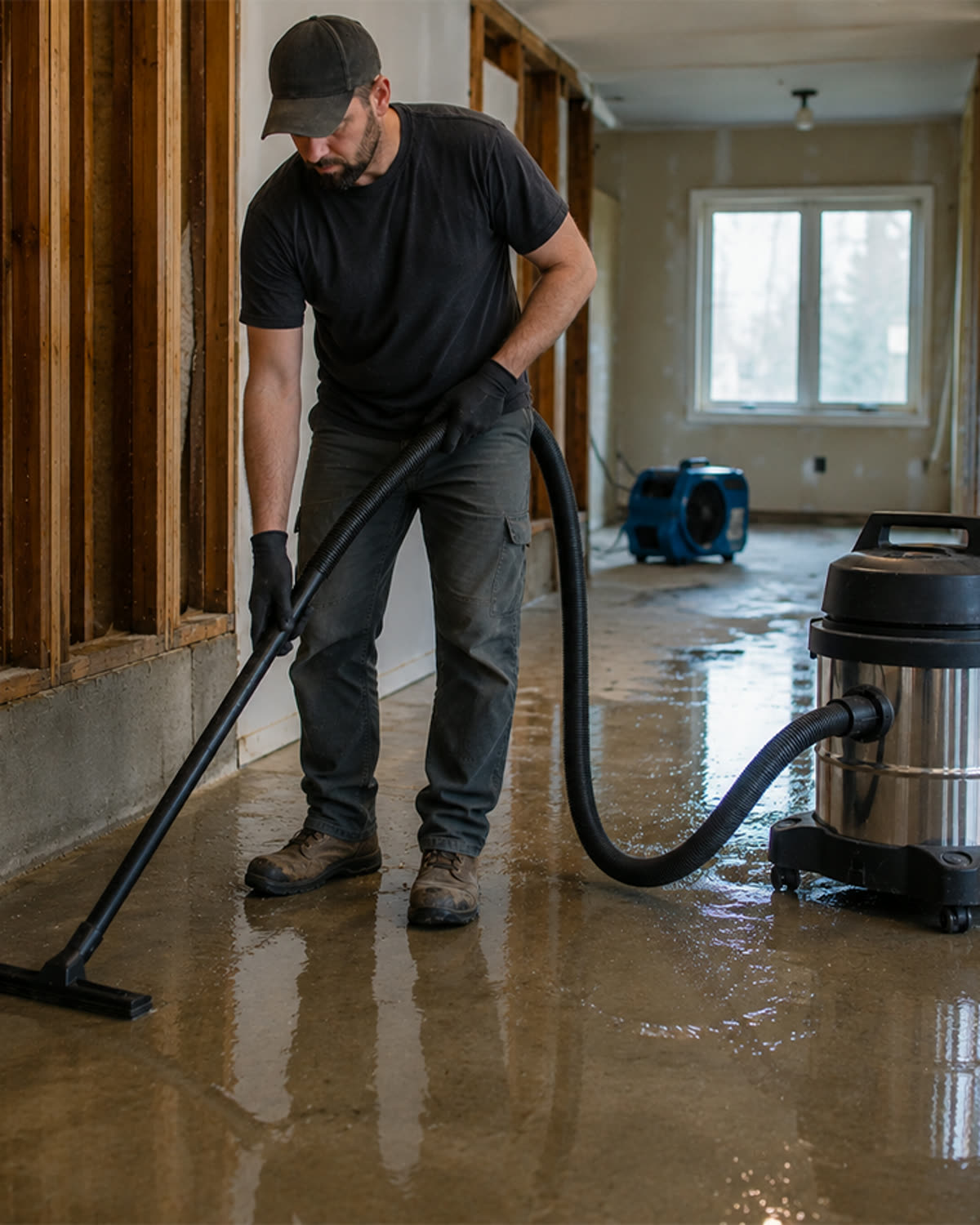
Remodeling produces nearly every type of debris a shop vacuum may encounter.
During one project, a contractor may collect:
- Drywall dust
- Wood chips
- Sawdust
- Screws and nails
- Tile fragments
- Insulation
- Concrete dust
- Carpet fibers
- Adhesive residue
- Small spills
- Demolition debris
This makes vacuum selection difficult.
A vacuum designed for fine sanding dust may clog on drywall fragments.
A large demolition vacuum may be too awkward for stairs and occupied homes.
A compact vacuum may be easy to carry but require constant emptying.
The best remodeling vacuum must balance dust control, durability, capacity, and mobility.
Quick Answer
A remodeling contractor should prioritize:
- Effective fine-dust pre-collection
- Appropriate filtration
- Maintained airflow
- Durable hoses and cuffs
- Multiple hose sizes
- Medium practical capacity
- Easy stair and vehicle transport
- Wet/dry capability
- Controlled disposal
- Available replacement parts
- Low recurring bag and filter costs
For continuous sanding, grinding, or cutting, a dedicated dust extractor may be more appropriate than a general cleanup vacuum.
Many remodelers benefit from owning both.
The Remodeling Debris Spectrum™
Remodeling debris ranges from microscopic particles to large fragments.
Fine Dust

↓

Sanding Dust

↓

Sawdust

↓

Fasteners and Scraps

↓

Tile and Drywall Fragments
No single hose, filter, or collection bag performs equally well across this entire range.
Stage 1: Demolition
Demolition may produce:
- Plaster pieces
- Drywall fragments
- Nails
- Screws
- Insulation
- Wood scraps
- Tile
- General dirt
Prioritize:
- Large hose
- Durable tank
- Open attachments
- Clog resistance
- Easy tank emptying
Avoid pulling large sharp debris into delicate fine-dust bags.
Stage 2: Cutting and Preparation
Cutting and surface preparation may generate:
- Sawdust
- Drywall dust
- Concrete dust
- Tile dust
- Adhesive particles
Prioritize:
- Tool-connected source capture
- Fine-dust filtration
- Secure adapters
- Strong maintained airflow
- Filter protection
This is often where a dust extractor provides the greatest value.
Stage 3: Installation
Installation debris may include:
- Packaging
- Wood chips
- Wire pieces
- Fasteners
- Flooring scraps
- Joint-compound dust
A medium general-purpose vacuum often provides the best balance.
Stage 4: Final Cleanup
Final cleanup may occur in an occupied or finished space.
Prioritize:
- Fine-dust containment
- Soft floor attachments
- Non-marking wheels
- Controlled disposal
- Clean hose and tools
- Low exhaust dust
The vacuum should not damage the completed work.
The Four-Stage Remodeling System™
Demolition

↓

Source Capture

↓

Installation Cleanup

↓

Final Detail Cleaning
Each stage may require a different configuration.
Feature 1: Fine-Dust Protection
Remodelers frequently encounter drywall, sanding, and concrete dust.
Use:
- Fine-dust collection bag
- Reusable collection system
- Cyclonic pre-separation when practical
- Appropriate primary filter
- Secure seals
The filter should not become the main dust container.
Feature 2: Multiple Hose Options
A remodeler may need:
Narrow Tool Hose
For:
- Sanders
- Saws
- Routers
- Drills
Medium General-Purpose Hose
For:
- Room cleanup
- Sawdust
- Mixed debris
Large-Debris Hose
For:
- Drywall pieces
- Wood chips
- Demolition fragments
A modular hose system reduces compromise.
Feature 3: Practical Portability
The vacuum may need to move through:
- Stairs
- Narrow hallways
- Finished homes
- Apartments
- Basements
- Work vehicles
Consider:
- Empty weight
- Carry handle
- Width
- Wheel stability
- Cord storage
- Hose storage
- Full tank weight
A medium vacuum is often more useful than the largest available model.
Feature 4: Durable Components
Inspect:
- Hose cuffs
- Tank latches
- Wheels
- Power cord
- Switch
- Drain
- Filter mount
- Carry handle
These parts often fail before the motor.
Feature 5: Wet/Dry Capability
Wet pickup may be needed for:
- Plumbing repairs
- Small leaks
- Floor preparation
- Water intrusion
- Equipment cleanup
The change between dry and wet use should be simple and clearly defined.
Feature 6: Controlled Disposal
In occupied homes, dumping loose dust may contaminate the entire space again.
Consider:
- Sealable disposable bags
- Reusable systems with controlled discharge
- Compatible liners
- External cyclone with liner
- Low-drop emptying methods
One Vacuum or Two?
A practical remodeling setup may include:
Vacuum One: Fine-Dust Extractor
For:
- Sanding
- Grinding
- Cutting
- Drilling
Vacuum Two: General Cleanup Vacuum
For:
- Drywall fragments
- Screws
- Sawdust
- Final cleanup
- Water
Tool-Generated Fine Dust

↓

Extractor

Mixed Jobsite Debris

↓

Shop Vacuum
This protects specialized filters and hoses from sharp demolition waste.
Remodeling Vacuum Buying Checklist
- Fine-dust collection available
- Suitable primary filter
- Secure filter seal
- Tool adapters available
- Multiple hose sizes supported
- Medium practical capacity
- Easy stair transport
- Durable wheels and latches
- Wet-use configuration available
- Soft finished-floor tools available
- Controlled disposal possible
- Filters and parts readily available
- Annual operating cost calculated
Common Mistakes
Using One Configuration for Every Stage
Fine dust and demolition fragments require different collection methods.
Vacuuming Screws Into Fine-Dust Bags
Sharp debris may puncture the bag.
Buying the Largest Tank
Large machines may become difficult in residential spaces.
Cleaning Fine Dust Bagless
The filter may clog rapidly.
Using Dirty Wheels on Finished Floors
Embedded grit can scratch surfaces.
Switching to Wet Pickup Without Removing Dry Dust
Water may create drywall or concrete paste.
Frequently Asked Questions
What size vacuum is best for remodeling?
A medium-capacity vacuum often provides the best balance of capacity and portability.
Should remodelers use a dust extractor?
A dust extractor is often valuable for continuous sanding, cutting, drilling, or grinding.
Are reusable bags good for remodeling?
They may reduce recurring costs and protect filters during frequent dry cleanup.
What hose size is best?
Use a narrow hose for tools, a medium hose for general cleanup, and a large hose for bulky debris.
Do remodelers need wet pickup?
It is useful for plumbing, spills, and water intrusion, provided the machine is configured correctly.
Is HEPA filtration necessary?
The filtration system should match the material, environment, and applicable requirements. The complete system must be sealed and properly configured.
Key Takeaways
The best remodeling vacuum should handle:
- Fine dust
- Mixed debris
- Sharp fragments
- Tool extraction
- Water
- Finished-space cleanup
No single configuration is ideal for every stage.
The strongest remodeling setup separates fine-dust extraction from general debris cleanup whenever practical.
Related guides
- paper vs. fleece vs. reusable shop vacuum bags
- shop vacuum guide for contractors
- shop vacuums suited to electrical trades
- shop vacuums built for flooring contractors
- which bag to buy once you stop buying disposables
- related: what size shop vacuum for remodeling contractors users
- the buying guide for shop vacs