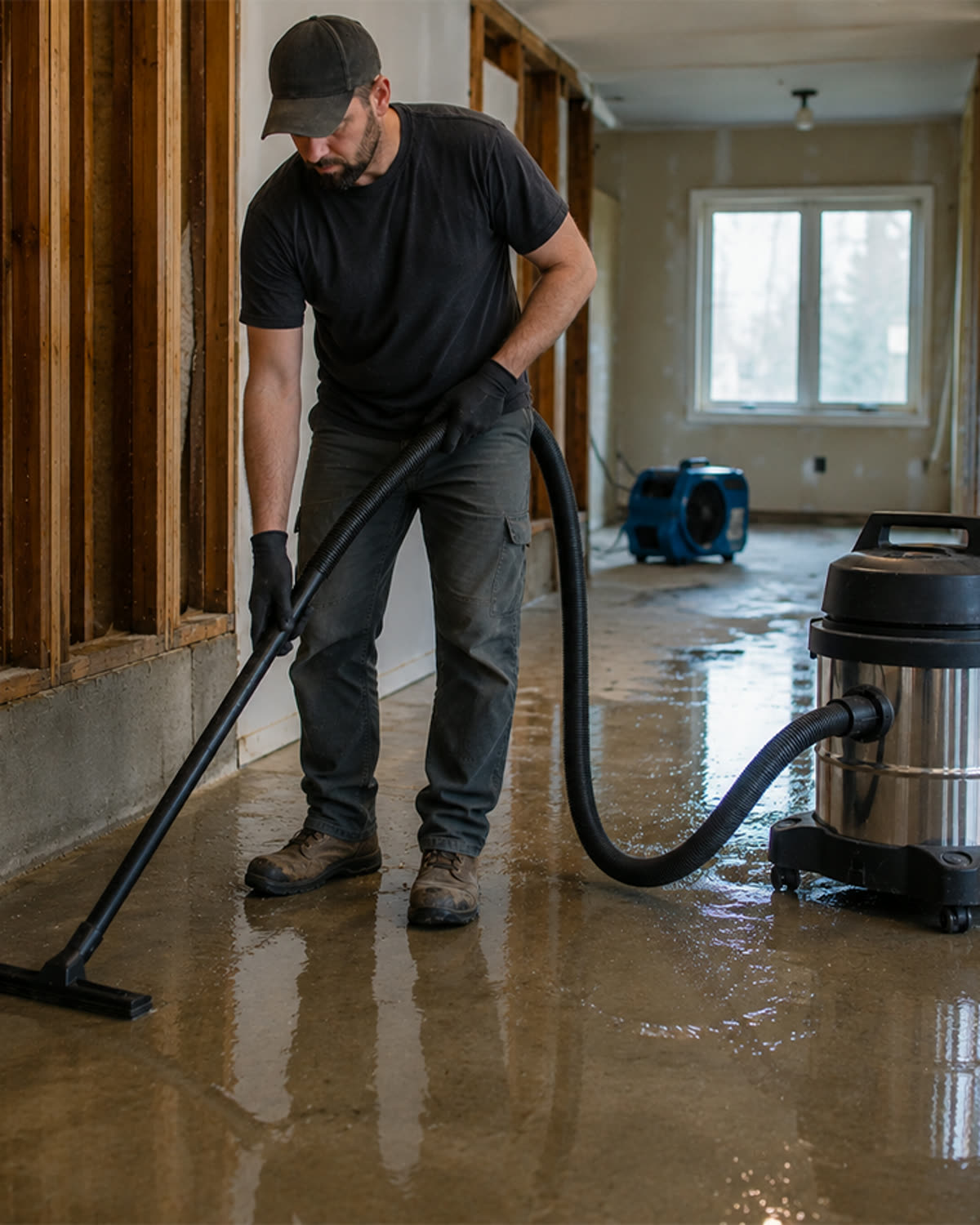
Flooring work creates several very different cleanup problems.
A flooring contractor may collect:
- Fine sanding dust
- Wood chips
- Carpet fibers
- Tack-strip fragments
- Fasteners
- Adhesive debris
- Concrete dust
- Underlayment
- Water
- General construction dirt
A vacuum that handles carpet fibers may struggle with concrete dust.
A machine suited to fine sanding dust may clog on tack-strip fragments.
The best flooring vacuum must support multiple stages of the job.
Quick Answer
A flooring contractor should prioritize:
- Fine-dust filtration
- Strong maintained airflow
- Tool compatibility
- Durable floor-safe wheels
- Effective filter protection
- Portable size
- Secure hose and cord storage
- Appropriate wet/dry capability
- Controlled disposal
- Low recurring bag and filter costs
For continuous sanding or grinding, a dedicated extractor may be necessary.
For demolition and final cleanup, a versatile shop vacuum is usually more practical.
The Flooring Cleanup Cycle™
Flooring jobs commonly involve four stages:
Removal

↓

Surface Preparation

↓

Installation

↓

Final Cleanup
Each stage produces different debris.
Removal
- Carpet fibers
- Nails
- Staples
- Tack-strip pieces
- Tile fragments
Surface Preparation
- Sanding dust
- Concrete dust
- Adhesive particles
- Leveling compound
Installation
- Sawdust
- Underlayment scraps
- Packaging
- Fasteners
Final Cleanup
- Fine dust
- Edges
- Corners
- Finished surfaces
One vacuum configuration may not be ideal for every stage.
Feature 1: Fine-Dust Control
Floor preparation can produce very fine particles.
Prioritize:
- Fine-dust bag or reusable collection system
- Appropriate primary filter
- Secure seals
- Maintained airflow
- Controlled disposal
Fine dust should be captured before it reaches the final filter whenever possible.
Feature 2: Floor-Safe Mobility
Vacuum wheels move across finished and partially finished surfaces.
Look for:
- Non-marking wheels
- Smooth casters
- Stable base
- No exposed sharp edges
- Secure accessory storage
- Hose that does not drag metal fittings
The cleanup equipment should not damage the floor it is meant to protect.
Feature 3: Tool Extraction
Possible connected tools include:
- Floor edger
- Handheld sander
- Track saw
- Grinder
- Undercut saw
- Router
- Surface-preparation tool
Tool extraction requires:
- Compatible adapters
- Flexible hose
- Adequate pressure
- Maintained airflow
- Appropriate filtration
- Continuous-use capability
Feature 4: Mixed-Debris Handling
Flooring debris may include sharp and bulky material.
Avoid placing:
- Staples
- Nails
- Tack-strip pieces
- Broken tile
into delicate fine-dust bags when possible.
Collect sharp material separately before switching to fine-dust cleanup.
Feature 5: Portability
Flooring crews frequently move between:
- Rooms
- Floors
- Homes
- Commercial spaces
- Vehicles
The vacuum should be:
- Easy to carry
- Stable on stairs
- Compact enough for doorways
- Simple to load
- Fast to set up
Feature 6: Low-Profile Attachments
Useful attachments may include:
- Wide floor nozzle
- Crevice tool
- Brush tool
- Edge-cleaning nozzle
- Soft floor tool
- Tool-specific adapters
Effective edge and corner cleanup reduces final hand labor.
Feature 7: Wet Pickup
Wet capability may help with:
- Small spills
- Floor washing
- Water intrusion
- Wet extraction
- Equipment cleanup
Dry fine-dust components must be removed or reconfigured correctly before wet use.
Recommended Configuration by Flooring Task
| Flooring Task | Recommended Priority |
|---|---|
| Carpet removal | Large hose and open-tank durability |
| Hardwood sanding | Fine-dust extractor |
| Tile demolition | Durable shop vacuum and large debris hose |
| Concrete surface preparation | Application-specific extractor |
| LVP installation | Portable medium vacuum |
| Subfloor cleanup | Mixed-debris capability |
| Final finished-floor cleanup | Soft tools and non-marking wheels |
| Water pickup | Correct wet configuration |
The Flooring Two-System Strategy™
A practical setup may include:
Extraction System
For:
- Sanding
- Grinding
- Cutting
- Fine dust
Cleanup Vacuum
For:
- Demolition debris
- Staples
- Scraps
- Final floor cleanup
- Liquids
This prevents sharp material from damaging fine-dust collection components.
Flooring Vacuum Buying Checklist
- Fine-dust filtration available
- Reusable or disposable pre-collection available
- Non-marking wheels
- Stable base
- Tool adapters available
- Hose flexible enough for sanding
- Larger debris hose available
- Floor and crevice tools included
- Tank capacity appropriate
- Vacuum easy to carry upstairs
- Wet-use configuration practical
- Consumable cost calculated
- Disposal process controlled
Common Mistakes
Using One Bag for Sharp Debris and Fine Dust
Sharp flooring debris may puncture the bag.
Dragging Metal Attachments Across Finished Floors
Equipment can create scratches.
Ignoring Concrete Dust
Subfloor preparation may require specialized extraction.
Oversizing the Vacuum
Large machines can be difficult in occupied homes.
Using Dirty Wheels on Finished Floors
Construction debris embedded in casters can mark surfaces.
Failing to Separate Wet and Dry Work
Moisture can damage dry collection components.
Frequently Asked Questions
What size vacuum is best for flooring contractors?
A medium-capacity vacuum often balances portability and debris volume. Specialized tools may require a separate extractor.
What is best for hardwood sanding dust?
A tool-connected fine-dust extractor with appropriate filtration and maintained airflow.
Can I use the same vacuum for tile demolition?
You can, but sharp fragments may damage fine-dust bags and hoses. Separate configurations may be more efficient.
Are reusable bags good for flooring contractors?
They may reduce recurring costs for frequent dry-dust cleanup when the material and emptying process are appropriate.
Do I need wet pickup?
It is useful for some flooring work, but the vacuum must be reconfigured correctly.
What wheels should I look for?
Stable, non-marking wheels that can be cleaned easily before entering finished areas.
Key Takeaways
Flooring contractors need more than raw suction.
They need a system that:
- Handles fine dust and mixed debris
- Protects finished surfaces
- Moves easily between rooms
- Connects to preparation tools
- Supports controlled disposal
- Keeps filters from clogging
- Minimizes recurring consumable cost
The best flooring vacuum supports every stage of the job without becoming another source of damage, dust, or downtime.
Related guides
- the guide to how to reduce shop vacuum bag and filter costs
- the shop vacuum guide for contractors
- choosing a vac for commercial cleaning
- best shop vacuum for dog groomers
- the bag lineup for contractors who vacuum fines
- related: what size shop vacuum for flooring contractors users
- how to pick the right shop vacuum
- understanding CFM and water lift specs