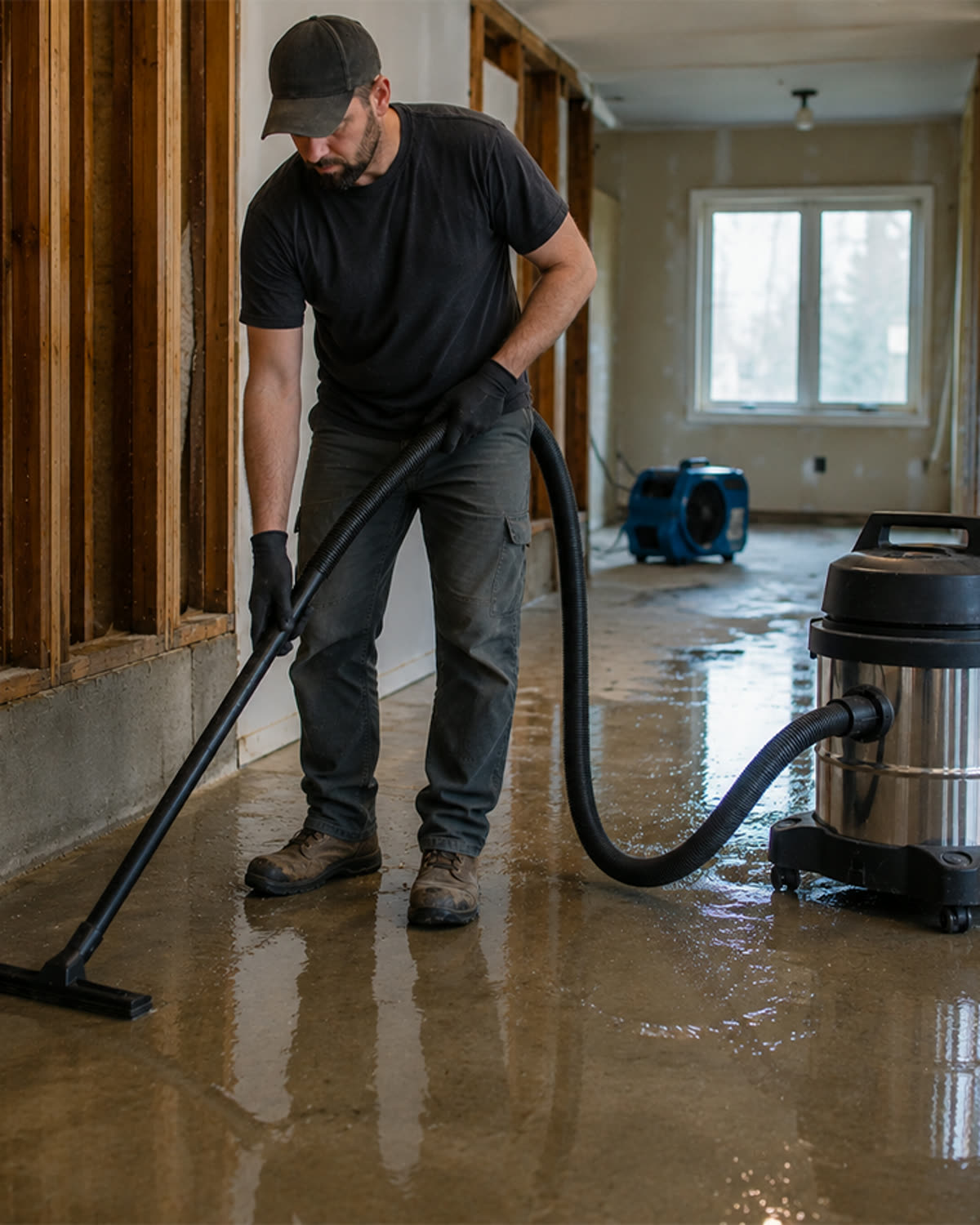
Electricians often work in areas where a large vacuum is impractical.
They may need to clean:
- Drilling dust
- Drywall particles
- Wire insulation
- Cable scraps
- Knockout pieces
- Sawdust
- Ceiling debris
- Attic dust
- Panel areas
- Finished floors
The vacuum may need to move between rooms, climb ladders and stairs, or fit into a crowded service vehicle.
For electricians, portability is often as important as power.
Quick Answer
An electrician’s shop vacuum should prioritize:
- Compact size
- Strong suction through small hoses
- Fine-dust collection
- Easy carrying
- Long power cord or suitable battery system
- Crevice and brush attachments
- Secure storage
- Durable hose
- Controlled disposal
- Low noise in occupied buildings
- Easy filter access
For drilling or cutting dust, source-capture attachments may reduce cleanup considerably.
The Electrician Cleanup Profile™
Electricians usually collect moderate debris volume from highly localized work.
Small Work Area

+

Fine Drilling Dust

+

Wire and Insulation Scraps

+

Frequent Movement

=

Portable Vacuum Priority
A large tank often provides less benefit than compact portability.
Feature 1: Compact Size
A service vacuum should fit:
- Inside a work van
- Under shelving
- Beside tool cases
- In closets
- In finished rooms
- On stairs
A smaller vacuum is more likely to be brought to the actual work area.
Feature 2: Strong Performance Through Small Hoses
Electrical work often involves:
- Drill attachments
- Small dust ports
- Crevice tools
- Narrow openings
These create resistance.
Adequate water lift and a well-sealed hose help maintain airflow.
Feature 3: Fine-Dust Collection
Drilling into:
- Drywall
- Plaster
- Masonry
- Wood
can generate fine particles.
A suitable collection bag or reusable pre-collection system helps protect the filter.
Feature 4: Source Capture
Dust can sometimes be collected during drilling with:
- Drill shroud
- Hollow drill attachment
- Dust-catching nozzle
- Vacuum-assisted drilling accessory
Dust Captured During Drilling

↓

Less Dust Enters Wall Cavity or Room

↓

Less Final Cleanup
Source capture is especially valuable in occupied homes and offices.
Feature 5: Crevice and Detail Tools
Useful attachments include:
- Crevice nozzle
- Soft brush
- Small floor tool
- Flexible extension
- Drill-dust attachment
- Narrow hose
These tools should store securely with the vacuum.
Feature 6: Debris Separation
Wire scraps, screws, and metal knockout pieces may damage fine-dust bags.
When practical:
- Pick up larger metal debris separately.
- Vacuum remaining fine dust.
- Inspect the hose and bag for sharp material.
Feature 7: Low Noise
Electrical service work often occurs around:
- Homeowners
- Office employees
- Retail customers
- School staff
A quieter vacuum reduces disruption and improves communication.
Feature 8: Corded vs. Battery
Corded Vacuum
Advantages:
- Longer runtime
- Consistent power
- No battery charging
Limitations:
- Requires outlet
- Cord management
- Trip hazard
Battery Vacuum
Advantages:
- Fast setup
- Mobility
- Useful where power is disconnected
Limitations:
- Runtime
- Battery cost
- Potentially lower sustained performance
The better choice depends on service-call length and available power.
Attic and Crawlspace Use
Prioritize:
- Low weight
- Secure lid
- Flexible hose
- Stable base
- Effective fine-dust filter
- Carry handle
- Controlled collection
Avoid dragging a large wheeled vacuum through insulation.
A longer hose may allow the vacuum to remain outside the confined area, but added length reduces airflow.
Finished-Home Cleanup
Use:
- Clean soft brush
- Non-marking floor tool
- Clean wheels
- Controlled bag removal
- Fine-dust filtration
- Low exhaust dust
The cleanup equipment should not create a second mess.
Electrician Vacuum Kit
- Compact vacuum
- Fine-dust collection bag or reusable system
- Appropriate primary filter
- Small flexible hose
- Crevice tool
- Soft brush
- Drill-dust attachment
- Spare bag
- Spare filter
- Hose adapter
- Extension cord suitable for the load when permitted
Electrician Buying Checklist
- Compact enough for service vehicle
- Easy one-person carry
- Strong small-hose performance
- Fine-dust collection available
- Filter easy to inspect
- Crevice tools included
- Drill source-capture options available
- Cord or battery supports workflow
- Low noise considered
- Controlled disposal available
- Spare parts easy to obtain
- Metal scraps collected separately
Common Mistakes
Choosing Too Large a Vacuum
The machine may remain in the van rather than being used.
Collecting Sharp Knockouts Into Fine-Dust Bags
Metal can puncture the bag.
Ignoring Plaster and Masonry Dust
Fine particles may load the filter rapidly.
Using a Long Narrow Hose Without Checking Airflow
Resistance may reduce capture at the drill.
Cleaning Panels With Conductive Debris Present
Electrical equipment should be de-energized and handled according to proper procedures.
Using the Vacuum Around Live Electrical Hazards
A vacuum is not a substitute for electrical safety controls.
Frequently Asked Questions
What size vacuum is best for electricians?
A compact vacuum is often ideal because service work requires frequent movement and moderate debris capacity.
Can electricians use battery vacuums?
Yes, when runtime and performance match the work.
Do electricians need collection bags?
Fine drywall, plaster, and masonry dust benefit from pre-collection.
What is best for drilling dust?
A source-capture drilling attachment connected to a suitable vacuum can reduce airborne debris.
Can a vacuum collect wire scraps?
Small scraps may be collected, but sharp metal may damage bags and hoses.
Is a wet/dry vacuum necessary?
Wet pickup may be useful but is less central for many electrical service workflows than portability and fine-dust control.
Key Takeaways
The best electrician vacuum should be:
- Compact
- Portable
- Strong through small hoses
- Effective with drilling dust
- Easy to empty
- Safe around finished surfaces
For electricians, the best vacuum is usually the one that reaches the work quickly and captures dust before it spreads.
Related guides
- the guide to how to reduce shop vacuum bag and filter costs
- the shop vacuum guide for contractors
- what commercial cleaning work demands from a vac
- vac selection for flooring work
- related: shop vacuum buying guide for electricians users
- related: why fine dust destroys vacuums for electricians users
- related: what size shop vacuum for electricians users