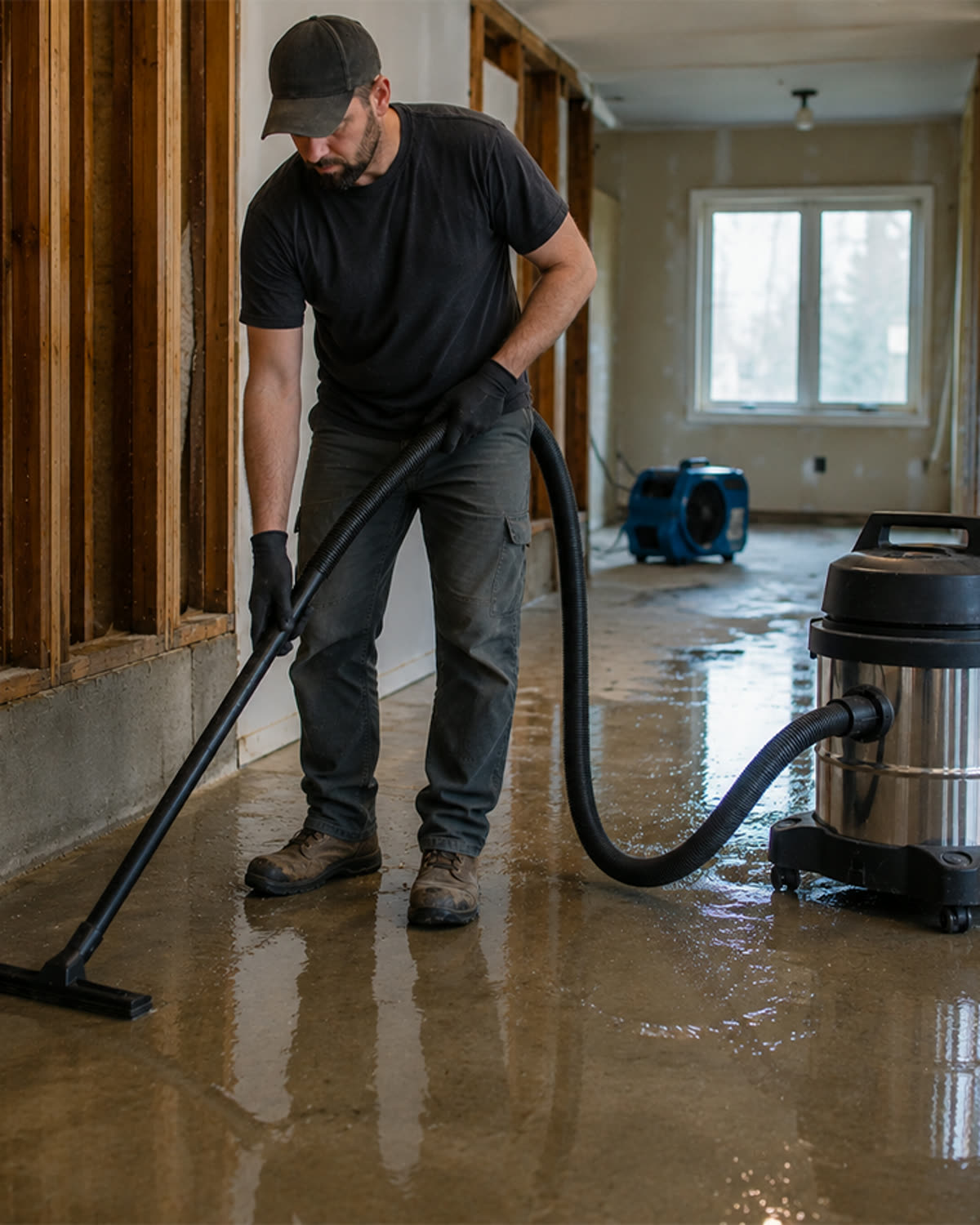
Shop vacuum exhaust normally feels warmer than room air.
The motor converts electrical energy into:
- Air movement
- Mechanical motion
- Heat
Air passing through or around the motor carries that heat to the exhaust.
Slightly warm exhaust is generally expected.
Air that becomes unusually hot—especially with weak suction, odor, smoke, shutdown, or abnormal sound—indicates a problem.
Quick Answer
Warm exhaust is usually normal.
Excessively hot exhaust may be caused by:
- Clogged filter
- Full or restricted bag
- Blocked hose
- Closed float
- Blocked cooling vents
- Long runtime
- High ambient temperature
- Undersized extension cord
- Motor wear
- Electrical failure
Stop using the vacuum if hot exhaust is accompanied by:
- Burning smell
- Smoke
- Sparks
- Melting plastic
- Repeated shutdown
- Breaker trips
- Grinding
- Severe suction loss
The Motor Cooling Loop™
Air Enters Hose

↓

Air Moves Through Collection System

↓

Air Passes Through Motor Cooling Path

↓

Heat Transfers to Air

↓

Warm Air Exits Exhaust
When airflow falls, cooling may decline.
Normal Warm Exhaust
Warm air may be normal when:
- Suction remains strong
- Motor sound is stable
- No odor is present
- Housing is not excessively hot
- Vacuum has operated for an extended period
- Room temperature is high
The exhaust should stabilize rather than continually become hotter.
Abnormal Heat Warning Signs
- Exhaust becomes progressively hotter
- Housing is difficult to touch
- Burning smell appears
- Suction falls
- Motor pitch rises
- Vacuum shuts off
- Cord or plug becomes hot
- Smoke appears
- Plastic deforms
Turn off and unplug the vacuum.
Cause 1: Clogged Filter
A loaded filter restricts airflow.
Filter Loads

↓

Airflow Falls

↓

Motor Cooling Declines

↓

Exhaust Temperature Rises
Inspect and service the filter.
Cause 2: Restricted Collection Bag
A bag may be restrictive because of:
- Fine-dust loading
- Overfilling
- Moisture
- Collapse
- Incorrect material
Replace or empty it.
Cause 3: Blocked Hose or Attachment
Common obstructions include:
- Hair
- Plastic
- Insulation
- Wood chips
- Cloth
- Mud
- Drywall fragments
Remove the attachment and test the open hose.
Cause 4: Closed Float
After wet pickup, the float may block the motor air path.
This can produce:
- High-pitched sound
- Weak suction
- Rapid heat increase
Empty the tank and inspect the float.
Cause 5: Blocked Cooling Vents
Cooling openings may be covered by:
- Dust
- Plastic
- Storage items
- Wall placement
- Clothing
- Debris
Keep all motor vents unobstructed.
Cause 6: Long Runtime
Continuous operation creates accumulated heat.
Professional work may require equipment designed for longer duty cycles.
Allow cooling only according to the manufacturer’s operating guidance.
Repeated overheating should not be treated as normal.
Cause 7: High Ambient Temperature
Heat builds faster when operating:
- In direct sunlight
- Inside a hot vehicle
- In an attic
- Near heaters
- In an unventilated room
Reduce environmental heat when practical.
Cause 8: Extension-Cord Voltage Drop
A long or undersized cord may cause:
- Lower voltage
- Higher motor stress
- Hot connections
- Weak startup
- Breaker trips
Use only suitable cords.
Cause 9: Motor Wear
Worn bearings, brushes, or internal components may create excess heat.
Possible signs include:
- Grinding
- Sparking
- Irregular speed
- Electrical odor
- Reduced power
- Repeated thermal shutdown
The vacuum may require service or replacement.
Cause 10: Fine Dust Inside the Motor Area
Dust bypass may coat:
- Cooling passages
- Motor components
- Internal vents
Possible causes include:
- Missing filter
- Torn filter
- Bag failure
- Poor filter seal
- Cracked housing
Continued operation can accelerate wear.
The Heat Cascade™
Dust Bypass or Restriction

↓

Cooling Declines

↓

Motor Heat Rises

↓

Electrical Resistance and Wear Increase

↓

Performance Declines Further
Heat can become a self-reinforcing failure cycle.
Diagnostic Order
- Turn off and unplug the vacuum.
- Check the attachment.
- Check the hose.
- Inspect the bag.
- Inspect the filter.
- Check the float.
- Check cooling vents.
- Inspect cord and plug.
- Allow the machine to cool.
- Test only when safe.
- Seek service if heat returns rapidly.
Heat Diagnostic Table
| Symptom | Likely Cause |
|---|---|
| Warm air, normal suction | Normal motor heat |
| Hot air, weak suction | Airflow restriction |
| Hot air after wet pickup | Closed float or wet filter |
| Hot plug | Cord or connection problem |
| Burning dust smell | Loaded filter or internal dust |
| Hot plastic smell | Electrical or motor problem |
| Shutdown after extended use | Thermal protection |
| Heat returns immediately | Motor or severe restriction |
How to Prevent Overheating
- Use appropriate pre-collection.
- Service bags before severe restriction.
- Keep filters clean enough.
- Clear hose clogs.
- Keep float operational.
- Leave cooling vents open.
- Use correct extension cords.
- Avoid unnecessary continuous blockage.
- Store the vacuum dry.
- Repair dust bypass promptly.
Heat Inspection Checklist
- Hose clear
- Attachment clear
- Bag below airflow capacity
- Filter serviced
- Float open
- Exhaust clear
- Cooling vents clear
- Cord undamaged
- Plug cool
- Extension cord suitable
- Motor sound normal
- No burning odor
- Housing not excessively hot
Common Mistakes
Assuming Hot Exhaust Means More Power
It may indicate wasted energy and poor cooling.
Continuing With Weak Suction
Restriction may overheat the motor.
Cleaning Only the Filter
The bag or hose may still be blocked.
Covering Exhaust or Cooling Vents
The motor needs open airflow.
Using an Inadequate Extension Cord
Electrical heat may develop outside the vacuum.
Repeatedly Restarting After Thermal Shutdown
The underlying cause remains.
Frequently Asked Questions
Is warm exhaust normal?
Yes. Vacuum motors naturally produce heat.
How hot is too hot?
Heat is concerning when accompanied by odor, smoke, shutdown, weak suction, or an unusually hot housing or plug.
Can a full bag make the exhaust hotter?
Yes. Restricted airflow reduces cooling.
Why is the exhaust hot after water pickup?
The float may be closed or the wet filter may be restrictive.
Can a clogged hose overheat the motor?
Yes. Severe airflow restriction reduces cooling.
Should I continue using the vacuum after it cools?
Only after identifying and correcting the cause.
Key Takeaways
Warm exhaust is usually part of normal operation.
Excessive heat often indicates:
- Restricted airflow
- Blocked cooling
- Electrical problems
- Motor wear
A shop vacuum stays cooler when air can move freely through the complete collection and cooling system.
Related guides
- the guide to multi-stage shop vacuum filtration: how bags, filters, and cyclones work together
- the complete shop vacuum troubleshooting guide
- learn more about why is my shop vacuum leaving dust behind
- learn more about why shop vacuums lose suction
- why the vacuum motor overheats
- related: test shop vacuum suction airflow for shop vacuum blowing hot air users
- preventing repeated blockages