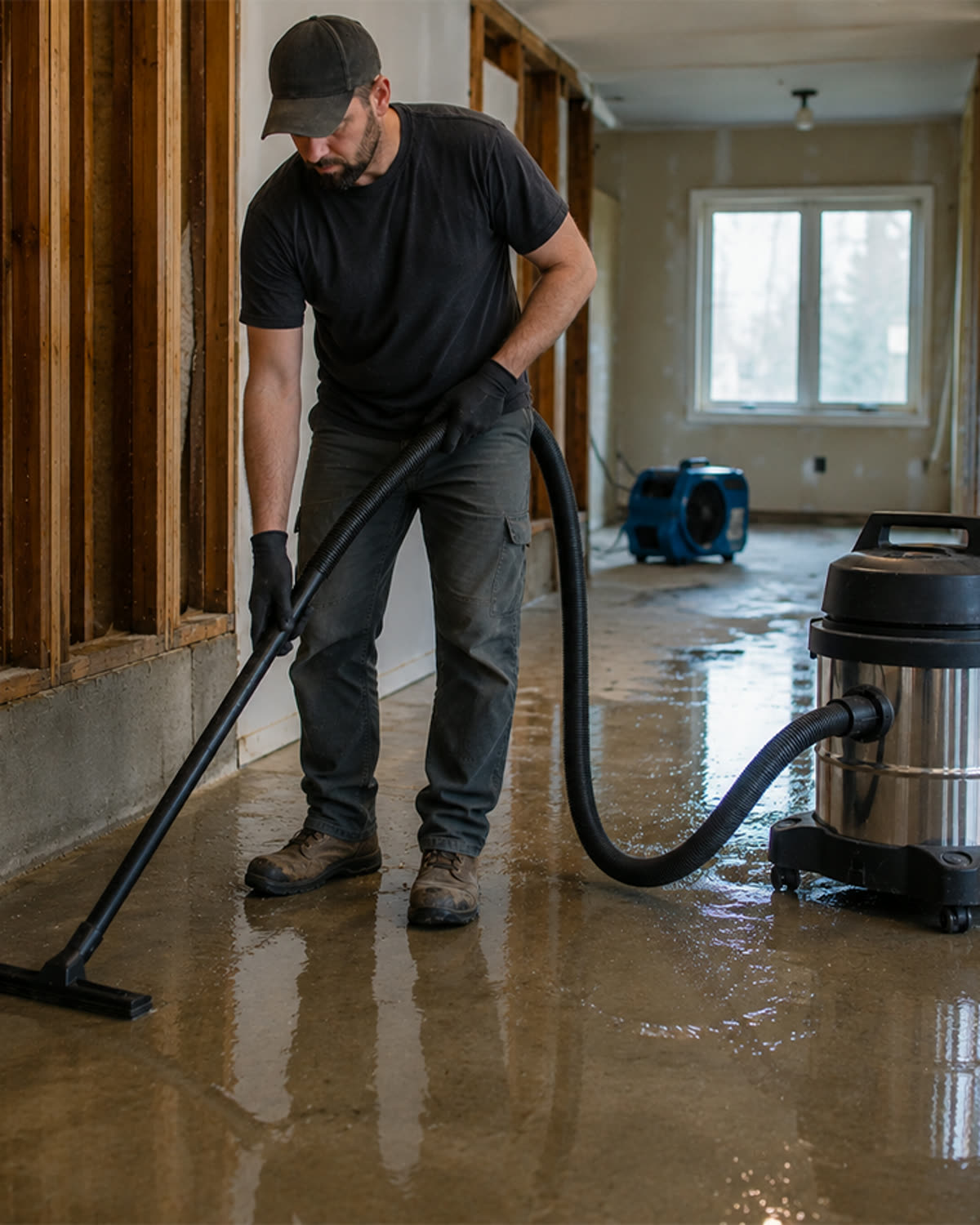
Few things are more frustrating on a jobsite than stopping every few minutes to unclog your vacuum.
You're making good progress...
Then suddenly:
The hose plugs.
Suction disappears.
The motor sounds different.
Cleanup slows to a crawl.
You clear the clog.
Five minutes later...
It happens again.
Most people assume they simply vacuumed something too large.
Sometimes that's true.
But surprisingly often, the clog isn't the real problem.
It's just the symptom of something happening elsewhere in the airflow system.
Understanding why clogs happen is the first step toward preventing them altogether.
Quick Answer
Most shop vac clogs occur because airflow slows enough that debris can no longer stay suspended inside the hose.
Large debris, fine dust buildup, overloaded filters, packed collection bags, and poor airflow all contribute to repeated clogging.
The solution isn't just removing the blockage—it's restoring healthy airflow throughout the entire vacuum.
Clogs Are an Airflow Problem
Many people think debris gets stuck because it's too large.
Sometimes.
But that's only part of the story.
Imagine tossing a leaf into a fast-moving river.
It keeps moving.
Throw that same leaf into slow-moving water...
It settles.
Your vacuum hose behaves exactly the same way.
Healthy airflow keeps debris moving.
Weak airflow allows debris to stop.
Once the first piece stops...
Everything behind it begins piling up.
🔬 Vacuum Science
Your vacuum doesn't transport debris with suction.
It transports debris with air velocity.
As long as air moves fast enough, debris remains suspended.
When airflow slows below a critical point...
Gravity and friction win.
That's when clogs begin.
The Airflow Highway™
Imagine the inside of your hose as a highway.
Cars represent debris.
Airflow is traffic speed.
At highway speed...
Everything keeps moving.
When traffic slows...
Cars begin stacking up.
Eventually...
Everything stops.
Debris behaves the same way.
Airflow

↓

Debris Suspended

↓

Debris Moving

↓

Healthy Cleanup
Slow the airflow...
and the entire system changes.
Cause #1 — Your Filter Is Restricting Airflow
This is the number one cause of repeated clogging.
As filters become loaded with fine dust:
Airflow decreases.
Debris slows.
Eventually larger material no longer has enough air velocity to remain suspended.
The clog may appear in the hose...
But it actually started at the filter.
Cause #2 — The Collection Bag Is Too Full
Many contractors try to squeeze every possible ounce of capacity from a collection bag.
Unfortunately...
Packed debris reduces airflow.
Reduced airflow reduces transport speed.
Eventually material begins accumulating inside the hose instead.
Emptying the collection system earlier often prevents repeated clogs.
Cause #3 — You're Mixing Large and Fine Debris
This combination creates one of the most difficult cleanup situations.
Imagine vacuuming:
- Drywall dust
- Wood scraps
- Insulation
- Plastic
- Tape
All together.
Fine dust slows airflow.
Larger debris now struggles to stay suspended.
That's when blockages develop.
Cause #4 — Hose Diameter Is Too Small
Every hose has a maximum debris size it can transport efficiently.
Trying to force oversized material through a small hose dramatically increases clog risk.
Larger hoses generally transport bulky debris more effectively.
Smaller hoses often provide better maneuverability.
Choosing the correct hose depends on the job.
Cause #5 — Sharp Hose Bends
Every bend creates resistance.
Multiple tight bends reduce airflow and create locations where debris naturally collects.
Watch especially for:
- Tight coils
- Kinks
- Crushed sections
- Elbows
These become natural clog points.
Cause #6 — Wet Material Meets Dry Dust
This combination creates a paste.
Drywall dust is especially notorious.
A little moisture can transform loose powder into material that sticks to hose walls.
Over time...
Each layer becomes a little thicker.
Eventually the hose diameter becomes smaller and smaller.
The Snowball Effect™
Most clogs don't happen instantly.
They grow.
Small Restriction

↓

Slight Airflow Loss

↓

Debris Slows

↓

More Debris Sticks

↓

Even Less Airflow

↓

Complete Blockage
Notice how every stage makes the next one worse.
Cause #7 — You're Vacuuming Material Faster Than the Vacuum Can Move It
More isn't always better.
Dumping piles of debris directly into the hose overwhelms the airflow.
Professional contractors often vacuum heavy debris in smaller passes instead of trying to collect everything at once.
Steady airflow usually outperforms overwhelming airflow.
Cause #8 — Hose Interior Is Dirty
Old drywall dust.
Concrete residue.
Tape adhesive.
Dried mud.
All reduce the inside diameter of the hose.
Even if the restriction appears small...
Airflow notices.
Regular hose inspections prevent gradual performance loss.
Cause #9 — The Wrong Attachment
Some floor tools have relatively narrow internal passages.
They're excellent for fine dust.
Less effective for larger debris.
Always match the attachment to the material being collected.
Cause #10 — Static Electricity
Fine dust moving through plastic hoses generates static electricity.
Some lightweight particles cling to the hose walls instead of remaining suspended.
While static alone rarely creates major clogs, it contributes to dust accumulation over time.
Cause #11 — You're Solving the Symptom Instead of the Cause
Many people repeatedly remove the clog...
Without asking why it formed.
If clogs happen repeatedly...
There's almost always an airflow problem somewhere else in the system.
Until that problem is corrected...
The clogs simply return.
The Clog Detective™
When your vacuum clogs, ask these questions in order.
Vacuum Clogged?

↓

Filter Dirty?

↓

YES → Clean or Replace

↓

Collection Bag Full?

↓

YES → Empty

↓

Hose Restricted?

↓

YES → Clear

↓

Attachment Too Small?

↓

YES → Replace

↓

Airflow Restored?

↓

YES → Continue Working
Never begin with the hose.
Begin with the airflow.
Five Ways Professionals Prevent Clogs
1. Protect airflow before protecting capacity.
Don't overfill collection bags.
2. Watch airflow instead of waiting for clogs.
Weak airflow is an early warning.
3. Keep hoses straight whenever possible.
Reduce unnecessary bends.
4. Match hose size to debris size.
Large debris needs room to travel.
5. Inspect the entire airflow system.
Not just the blockage.
The clog is usually the final symptom—not the first.
Common Myths
Myth: Bigger debris causes every clog.
Reality: Poor airflow causes many clogs long before debris size becomes the problem.
Myth: Clearing the hose fixes the issue.
Reality: If airflow remains restricted elsewhere, the clog will usually return.
Myth: More horsepower prevents clogs.
Reality: Healthy airflow—not horsepower—is what keeps debris suspended.
Myth: Full bags only reduce capacity.
Reality: They also reduce airflow, making clogs much more likely.
Frequently Asked Questions
Why does my shop vac clog when vacuuming drywall?
Fine drywall dust reduces airflow, allowing larger particles to settle and create blockages.
Why does my hose clog near the attachment?
This is often the narrowest point in the airflow system and where larger debris first encounters restriction.
Does a dirty filter cause hose clogs?
Yes. Reduced airflow lowers air velocity, making it harder to transport debris through the hose.
Why does my vacuum clog even when the bag isn't full?
Filter loading, hose restrictions, attachment size, or airflow leaks may be reducing transport speed.
Should I buy a larger vacuum?
Only if your current vacuum is undersized for the material being collected. Many clogging problems can be solved by improving airflow rather than increasing motor size.
Key Takeaways
A clogged hose is rarely the beginning of the problem.
It's the end of a chain reaction.
Airflow slows.
Debris loses velocity.
Particles begin settling.
Restrictions grow.
Eventually...
The hose plugs completely.
Professional contractors don't just clear clogs.
They identify what reduced airflow in the first place.
That's why they spend less time fixing hoses...
And more time getting work done.