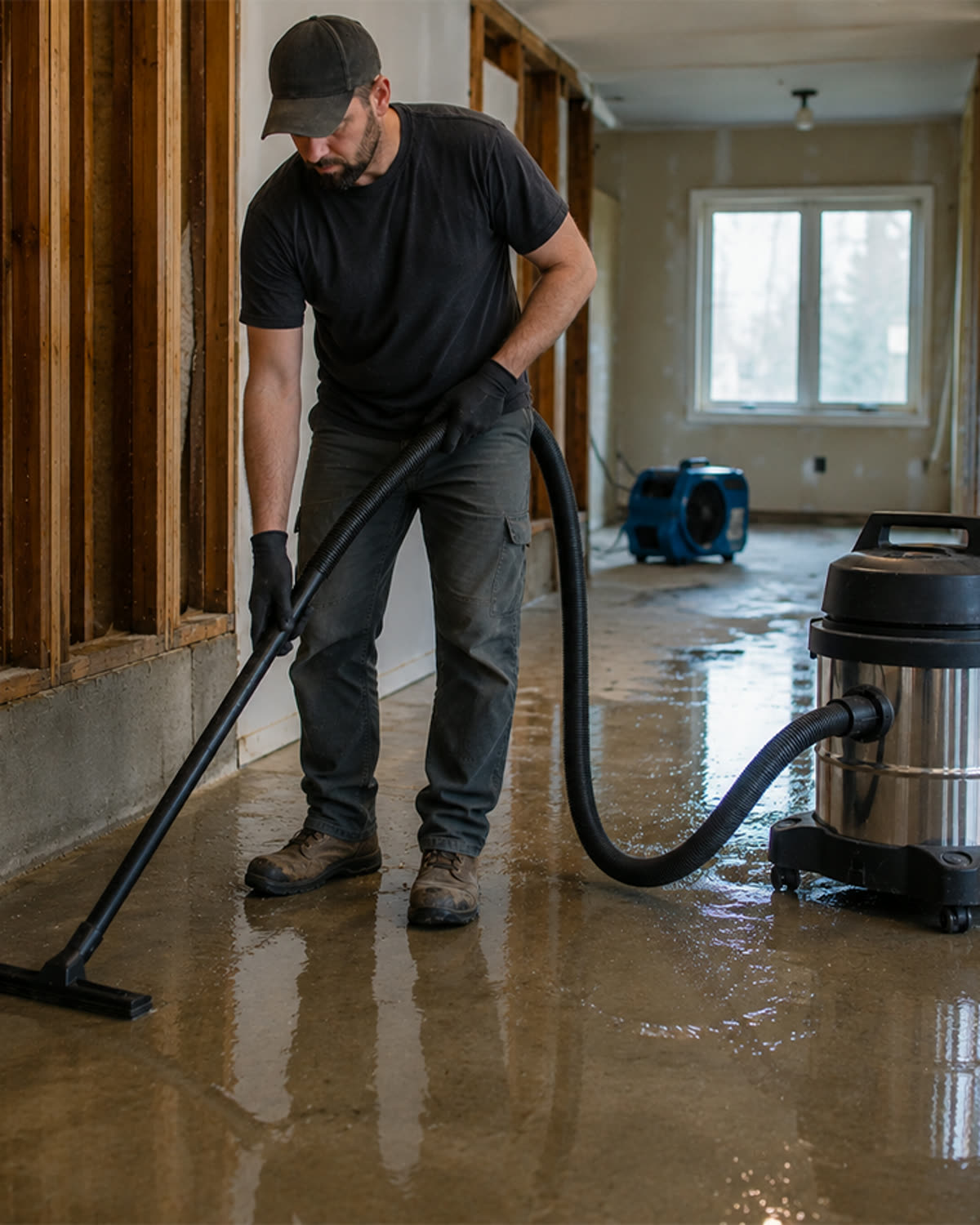
You install a brand-new filter.
Everything works perfectly.
Strong suction.
Great airflow.
Fast cleanup.
Then...
Ten minutes later...
The suction starts dropping.
The motor sounds different.
Cleanup slows.
You bang the filter against a trash can.
Dust flies everywhere.
It works again...
For another ten minutes.
If this sounds familiar, you're not alone.
One of the most common complaints among contractors isn't that their vacuum is broken.
It's that their filters seem to clog almost immediately.
The good news?
Most filters aren't failing.
They're simply being asked to do far more work than they were designed to do.
Quick Answer
Shop vacuum filters usually clog quickly because they're collecting too much fine dust.
Drywall dust, concrete dust, silica, joint compound, and sanding dust rapidly plug the microscopic pores in the filter.
Other contributing factors include:
- No collection bag
- Damaged collection bags
- Overfilled bags
- Improper filter selection
- Air leaks
- Wet dust
- Poor airflow management
The solution is usually reducing the amount of fine dust reaching the filter, not simply cleaning or replacing the filter more often.
Filters Don't Fail...
They Fill Up
Many people think a filter "clogs."
That's only partly true.
What's really happening is far more interesting.
Every filter contains millions of tiny pathways.
Air moves through them easily.
Dust doesn't.
As more particles become trapped...
Those pathways become smaller.
Eventually...
Air has a harder time getting through.
The filter didn't stop working.
It simply became full.
🔬 Vacuum Science
Think of your filter like a coffee strainer.
The holes allow liquid to pass.
The coffee grounds stay behind.
Now imagine making coffee all day...
Without ever emptying the filter.
Eventually nothing flows.
Vacuum filters behave exactly the same way.
Every particle that stays behind makes airflow slightly more difficult.
The Filter Loading Curve™
Filters don't lose airflow evenly.
Performance follows a curve.
New Filter

↓

Excellent Airflow

↓

Light Dust Loading

↓

Small Airflow Loss

↓

Heavy Dust Loading

↓

Rapid Airflow Loss

↓

Filter Restriction
Notice how the biggest performance drop occurs near the end.
That's why suction often seems to disappear "all at once."
Cause #1 — Drywall Dust
Drywall dust is one of the most difficult materials a shop vacuum will ever encounter.
The particles are:
- Extremely fine
- Lightweight
- Dry
- Easily airborne
Instead of settling quickly inside the collection chamber...
Many particles remain suspended long enough to reach the filter.
Large amounts of drywall dust can overwhelm a filter surprisingly fast.
Cause #2 — Concrete Dust
Concrete and masonry dust create similar problems.
Many particles are microscopic.
Some contain crystalline silica.
These particles readily fill the smallest openings inside the filter media.
The filter may appear clean from the outside...
While its internal pores are almost completely loaded.
Cause #3 — You're Not Using a Collection Bag
This is one of the biggest mistakes contractors make.
Without a properly functioning collection bag:
Every particle heads directly toward the filter.
The filter becomes the primary dust collector.
But that isn't its primary job.
A good collection system should remove most debris before the filter ever sees it.
The Two-Stage Protection Principle™
Professional dust collection works best in stages.
Dust

↓

Collection Bag

↓

Primary Filter

↓

Optional HEPA Filter

↓

Clean Exhaust
Every stage protects the next one.
If one stage is missing...
The following stage works much harder.
Cause #4 — Your Collection Bag Is Damaged
A torn bag may still collect larger debris.
But fine dust escapes.
Instead of stopping inside the bag...
Those particles travel directly to the filter.
Always inspect:
- Seams
- Mounting collar
- Tears
- Proper installation
Cause #5 — Air Leaks Around the Filter
If air bypasses the collection system...
Dust bypasses it too.
Leaking seals increase the amount of contamination reaching the filter.
Common locations include:
- Rubber gaskets
- Lid seals
- Loose filter mounts
- Cracked housings
Cause #6 — Wet Dust
Dry dust usually falls away from filter pleats when cleaned.
Wet dust behaves differently.
It sticks.
Once mud-like material dries inside the filter...
Airflow drops dramatically.
Many filters cannot be completely restored after this occurs.
Cause #7 — Cleaning the Filter Incorrectly
Many people clean filters by:
- Hitting them against concrete
- Using compressed air too closely
- Scraping pleats
- Washing filters not designed for washing
Aggressive cleaning can damage filter media.
Tiny tears reduce filtration efficiency while also shortening filter life.
Always follow the manufacturer's cleaning recommendations.
Cause #8 — Wrong Filter for the Job
Not every filter is designed for every material.
Fine dust requires much finer filtration than wood chips or leaves.
Using the wrong filter often results in:
- Faster loading
- Lower airflow
- More maintenance
Choose the filter based on the material—not just the vacuum.
Cause #9 — Overfilled Collection Chamber
Even if the filter is clean...
A packed collection chamber changes airflow patterns inside the vacuum.
More particles remain suspended.
More particles reach the filter.
Emptying earlier often extends filter life considerably.
Cause #10 — The Vacuum Is Doing All the Work
Many contractors expect one filter to stop 100% of the dust.
That's asking too much.
The collection system should be doing most of the heavy lifting.
The filter should be polishing the airflow—not serving as the primary dust container.
The Filter Workload Pyramid™
Think of dust collection like a team effort.
Large Debris

↓

Collection Bag

↓

Medium Dust

↓

Primary Filter

↓

Fine Particles

↓

HEPA Filter
When every layer performs its job...
No single component becomes overloaded.
The Filter Detective™
If your filter clogs quickly, work through this checklist.
Filter Clogging?

↓

Using Collection Bag?

↓

YES

↓

Bag Damaged?

↓

NO

↓

Filter Correct?

↓

YES

↓

Air Leaks?

↓

NO

↓

Collecting Fine Dust?

↓

YES

↓

Increase Pre-Collection Efficiency
Don't start by buying another filter.
Start by reducing the dust reaching it.
Seven Ways to Dramatically Extend Filter Life
1. Use a quality collection bag.
It should capture the majority of debris before it reaches the filter.
2. Empty collection bags before they're packed full.
Airflow matters more than squeezing out one more job.
3. Match the filter to the material.
Drywall requires different filtration than general cleanup.
4. Inspect seals regularly.
Air leaks become dust leaks.
5. Avoid vacuuming wet drywall dust.
It quickly forms stubborn deposits inside filter media.
6. Clean filters gently.
Aggressive cleaning shortens filter life.
7. Reduce fine dust before it reaches the filter.
This single habit produces the biggest improvement in filter longevity.
Common Myths
Myth: My filter is defective.
Reality: Most filters are simply overloaded by excessive fine dust.
Myth: Bigger motors keep filters cleaner.
Reality: Motor size doesn't reduce the amount of dust reaching the filter.
Myth: Cleaning the filter restores it to new condition.
Reality: Some airflow can be restored, but many microscopic particles remain embedded in the filter media.
Myth: More expensive filters never clog.
Reality: Every filter has a finite dust-holding capacity.
Frequently Asked Questions
Why does my filter clog after only a few minutes?
Fine dust such as drywall or concrete can rapidly fill the microscopic pores in the filter, especially if most of the dust reaches the filter directly.
Why does my filter clog even with a collection bag?
The bag may be damaged, improperly installed, overfilled, or not capturing enough fine particles before they reach the filter.
Can I use compressed air to clean my filter?
Some filters can be cleaned this way, but excessive air pressure or holding the nozzle too close can damage the filter media. Follow the manufacturer's recommendations.
How often should I replace my shop vac filter?
Replace the filter when it is damaged, no longer restores acceptable airflow after cleaning, or no longer filters effectively.
What's the best way to keep filters from clogging?
Reduce the amount of fine dust reaching the filter in the first place. A good collection system, proper maintenance, and healthy airflow extend filter life far more than frequent cleaning alone.
Key Takeaways
Your filter isn't supposed to collect all of the dust.
It's supposed to collect what the earlier stages missed.
If your filter clogs after just a few minutes...
The problem usually isn't the filter.
The problem is that too much fine dust is reaching it.
Professional dust collection isn't about installing a better filter.
It's about designing a system where:
- Large debris is captured first.
- Fine dust is reduced before it reaches the filter.
- Airflow stays healthy.
- The filter performs the final polishing instead of carrying the entire workload.
The contractors who spend the least time cleaning filters aren't lucky.
They simply understand one fundamental principle:
The best way to protect a filter is to give it less work to do.
Related guides
- shop vacuum troubleshooting guide
- how to clean a shop vacuum filter
- how often should you replace a shop vacuum filter
- why bagless running kills filters so fast
- how bags and filters work together
- understanding fine particle damage
- related: shop vacuum blowing dust for vacuum filter clogging fast users