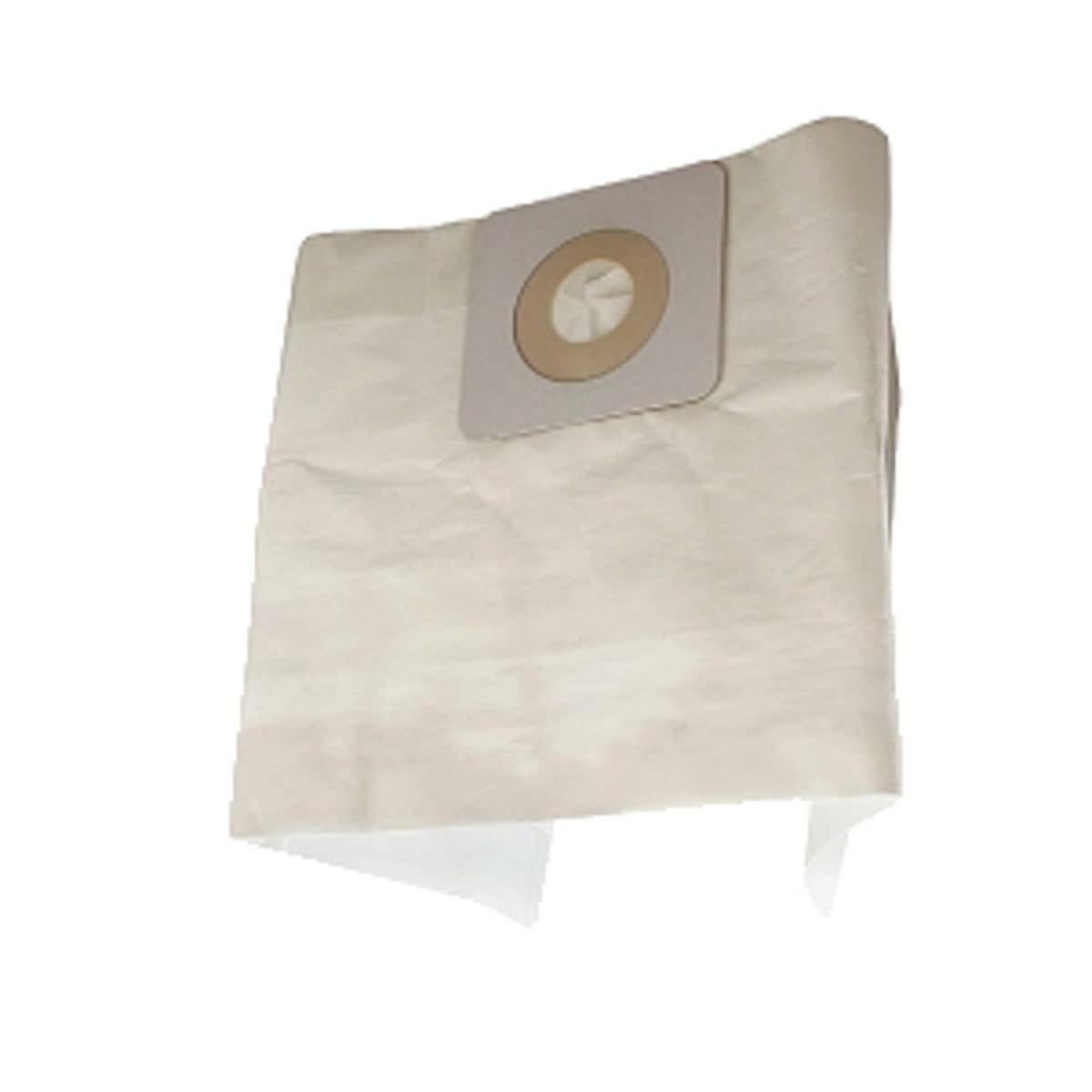
Plenty of contractors run their shop vac bagless. No bag to buy, no bag to empty — just suck it up and dump the tank. On the surface it looks like the cheapest way to work.
On fine jobsite dust, it's one of the most expensive habits there is. Here's what's actually happening when you skip the bag.
Why guys go bagless
The logic makes sense at first: bags cost money, they fill up, you have to keep buying them. So you pull the bag, run straight into the tank, and dump it when it's full. Feels efficient. Feels free.
It works okay on chunky, dry debris — wood chips, dirt, the big stuff. The problem starts when the dust gets fine.
What bagless actually does on fine dust
Drywall, concrete, and sanding dust is finer than flour. With no bag to catch the bulk, all of it goes straight at the pleated filter. And that filter is the one part of the vac that has to breathe.
Here's the chain reaction:
- The filter clogs in a job or two instead of months — fine dust packs the pleats solid
- Suction crashes — the vac can't pull air through a choked filter
- Dust blows back out the exhaust — into the room you just cleaned, and into your lungs
- The motor overheats — it's pulling against dead air, running hotter than it's built to
- Eventually the motor gives out — and now you're buying a vac, not a bag
The real cost, lined up
Bagless feels free because you only see the cost at the end. Let's line it up against the alternatives.
| Cost over a year | Bagless (fine dust) | Disposable bags | Reusable bag |
|---|---|---|---|
| Bags | $0 | ~$300–$1,600+ per vac | One-time purchase |
| Replacement filters | High — they die fast | Moderate | ~$0 (filter protected) |
| Motor / vac replacement | The big one — $200–$850+ | Occasional | $0 (motor protected) |
| Real outlay | Looks free, isn't | A steady subscription | Lowest over time |
The disposable-bag math is brutal on its own — we broke it down in the real cost of disposable bags. But bagless on fine dust is worse, because it trades a visible cost for an invisible one: dead filters and a cooked motor.
Bagless isn't free. It's a subscription — to replacement filters and dead motors. You just pay the bill all at once, later.
When bagless is actually fine
To be fair: bagless has its place. Pull the bag (and the filter) when you're:
- Vacuuming up water or wet slurry — that's what wet/dry vacs are for
- Grabbing big, chunky dry debris where fine dust isn't the issue
For everything dusty, though, you want a bag — and not just any bag.
The fix: a bag that protects the filter
The reason fine dust kills filters is that the dust and the airflow share the same path. A reusable Muk Buddy bag fixes that at the source — the two-chamber design keeps the dust away from the airflow, so:
- The filter stays clear and lasts years
- Suction holds through the whole job
- The motor breathes easy and doesn't cook
- You buy one bag instead of restocking disposables forever
Bagless feels like saving money right up until the motor dies. See how Muk Buddy works — protect the filter, protect the motor, and stop paying the bill later.