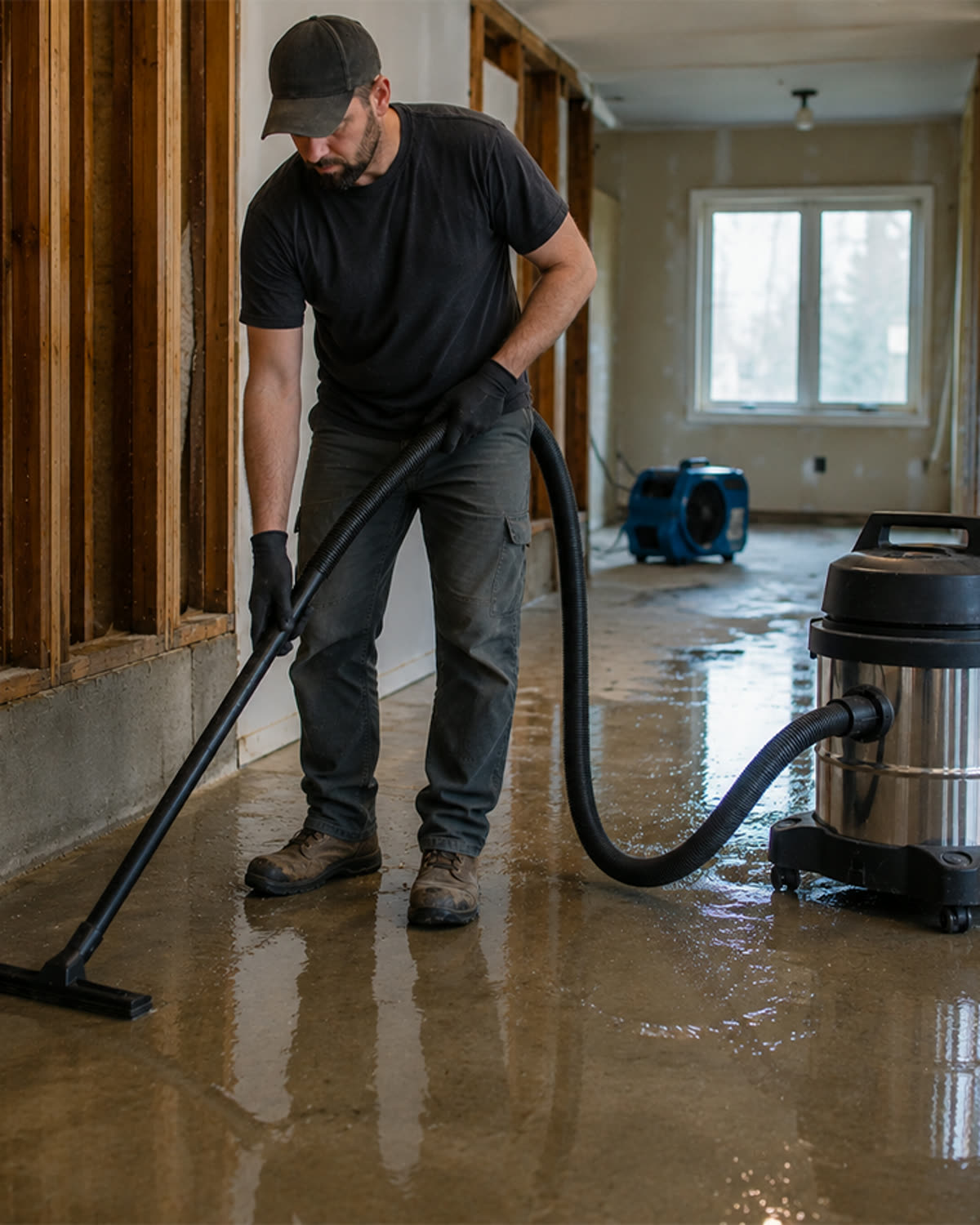
Nothing is more frustrating than a shop vacuum that suddenly stops picking up debris.
One minute it's pulling up drywall dust, sawdust, and construction debris with ease. The next, it's barely lifting dirt off the floor.
Most people assume their vacuum has "lost suction."
In reality, that's usually not what's happening.
The problem is almost always restricted airflow.
Understanding that one concept explains nearly every suction problem you'll ever encounter—and can save you hundreds of dollars in unnecessary repairs, replacement filters, and even new vacuums.
Quick Answer
A shop vacuum loses suction when airflow becomes restricted somewhere in the system.
The most common causes are:
- A clogged filter
- A full collection bag
- A blocked hose
- Air leaks
- Fine dust coating the filter
- Motor overheating
- Worn seals or damaged components
The good news is that most suction problems can be diagnosed and fixed in just a few minutes once you know what to look for.
How a Shop Vacuum Actually Works
Here's something most people never learn:
A shop vacuum doesn't actually create suction.
It creates airflow.
The motor spins a high-speed fan that lowers the air pressure inside the vacuum tank.
Because atmospheric pressure outside the vacuum is higher, air rushes through the hose carrying dirt, dust, and debris with it.
Think of your vacuum like breathing through a straw.
When the straw is clear, air flows freely.
Pinch the straw—even slightly—and breathing becomes difficult.
Your vacuum works exactly the same way.
Anything that restricts airflow reduces cleaning performance.
That's why protecting airflow is the key to maintaining maximum suction.
🔬 Vacuum Science
The motor isn't "pulling" debris.
The air outside your vacuum is actually pushing debris into the hose because the pressure inside the vacuum is lower.
Every suction problem eventually comes back to one thing:
Restricted airflow.
The Seven Biggest Reasons Shop Vacs Lose Suction
1. Your Filter Is Clogged
This is the number one cause of suction loss.
As air passes through the filter, dust collects inside the tiny pores.
Over time those pores become blocked.
Air can no longer pass through efficiently.
The motor works harder.
Airflow drops.
Cleaning performance falls dramatically.
Many people bang the filter against a trash can or blow it out with compressed air.
While that removes loose debris, it often leaves microscopic particles embedded deep inside the filter material.
Eventually the filter never returns to its original airflow.
Signs
- Weak suction
- Motor sounds louder
- Fine dust cleanup gets progressively slower
2. Your Collection Bag Is Full
A collection bag doesn't just hold debris.
It also allows air to pass through.
As the bag fills, airflow becomes more restricted.
Eventually air struggles to move through the packed debris.
This creates additional resistance inside the vacuum.
The fuller the bag becomes, the harder the motor has to work.
3. Your Hose Is Partially Blocked
Blockages don't always stop airflow completely.
Sometimes a small obstruction is enough to reduce performance significantly.
Common obstructions include:
- Drywall chunks
- Wood scraps
- Plastic
- Insulation
- Large piles of sawdust
Even a partial blockage can reduce airflow throughout the system.
4. Air Is Escaping Through Leaks
Your vacuum depends on maintaining pressure differences.
If air leaks into the system through damaged seals or loose connections, the pressure difference decreases.
Less pressure difference means less airflow.
Inspect:
- Lid gasket
- Hose connections
- Cracked hoses
- Drain plugs
- Tank seals
5. Fine Dust Is Slowly Choking Your Vacuum
This is the hidden problem most articles never discuss.
Large debris isn't usually what hurts a shop vacuum.
Fine dust is.
Materials like:
- Drywall dust
- Concrete dust
- Cement
- Joint compound
- Silica dust
- Fine sanding dust
contain microscopic particles.
These particles work their way deep into the filter where they gradually block airflow.
The process is so gradual that many users don't notice it until suction has already dropped significantly.
This is why contractors often believe their vacuum "just isn't as strong as it used to be."
The motor hasn't necessarily become weaker.
The airflow has become restricted.
6. The Motor Is Overheating
Shop vacuum motors rely on moving air for cooling.
When airflow decreases:
- Motor temperature rises.
- Efficiency drops.
- Thermal protection may activate.
- Suction decreases even further.
It's a vicious cycle.
Restricted airflow creates heat.
Heat reduces efficiency.
Reduced efficiency creates even less airflow.
7. Worn Components
If your vacuum is older, worn components can also contribute.
These include:
- Damaged fan blades
- Motor wear
- Cracked housings
- Worn gaskets
- Loose fittings
These issues are less common than clogged filters but should still be considered if all other causes have been ruled out.
Why Drywall Dust Is Especially Hard on Shop Vacs
Drywall dust is unlike ordinary dirt.
Its particles are extremely fine.
Instead of simply collecting inside the tank, they migrate into the filter material itself.
Over time they seal off the filter's pores.
Airflow decreases.
The motor runs hotter.
Suction drops.
This is one reason professional contractors often use collection systems designed to capture fine dust before it reaches the filter.
Suggested visual: Embed your airflow animation here with the heading: "See what happens to airflow before dust reaches the filter."
Why Cleaning the Filter Isn't Always Enough
Many people think:
"I cleaned the filter, so it should work like new."
Unfortunately, that's often not true.
Fine dust can permanently reduce airflow through filter media.
Even after visible dust is removed, microscopic particles remain trapped inside the fibers.
Eventually replacement becomes necessary.
Reducing the amount of fine dust that reaches the filter in the first place is usually a far more effective strategy than constantly cleaning or replacing filters.
How to Diagnose Low Suction
Follow this checklist.
Step 1
Empty the collection tank or bag.
Step 2
Inspect the hose for blockages.
Step 3
Remove and inspect the filter.
Look for:
- Heavy dust buildup
- Packed fine dust
- Tears
- Moisture
Step 4
Check every seal.
Listen for air leaks while the vacuum is running.
Step 5
Run the vacuum briefly without the hose attached.
If airflow is still weak, the restriction is likely inside the vacuum.
How to Prevent Suction Loss
Professional contractors tend to follow a few simple habits:
- Empty the collection bag before it becomes overfilled.
- Keep hoses free of obstructions.
- Inspect seals regularly.
- Clean filters before they're completely clogged.
- Replace damaged filters promptly.
- Capture fine dust before it reaches the primary filter whenever possible.
- Use the correct filter for the material being collected.
These small maintenance steps can dramatically extend both filter life and motor life.
Common Myths
Myth: Bigger horsepower means better suction.
Not necessarily.
Airflow design is often more important than motor size.
Myth: You should keep using a filter until it tears.
False.
A filter can lose a large percentage of its airflow long before it shows visible damage.
Myth: Dust only hurts the filter.
Fine dust affects the entire vacuum.
Reduced airflow impacts cleaning performance, motor cooling, and long-term reliability.
Frequently Asked Questions
Why does my shop vac have good suction at first but then lose it?
The filter is gradually becoming restricted, reducing airflow.
Can a dirty filter damage my vacuum?
Yes. Reduced airflow can increase motor temperature and shorten the life of the motor.
Why does drywall dust clog vacuums so quickly?
Drywall dust contains extremely fine particles that embed deep inside filter media.
Does a full collection bag reduce suction?
Yes. As debris fills the bag, airflow becomes increasingly restricted.
Should I clean or replace my filter?
If cleaning restores airflow, continue using it. If suction remains weak after cleaning, replacement is often the better option.
Can air leaks reduce suction?
Absolutely. Any leak reduces the pressure difference that drives airflow through the vacuum.
Key Takeaways
A shop vacuum rarely loses suction because the motor suddenly becomes weak.
Most suction problems come down to restricted airflow.
Understanding how airflow works makes diagnosing problems much easier.
Keep filters clean.
Prevent fine dust from reaching the filter whenever possible.
Inspect hoses and seals regularly.
Protect the airflow, and you'll protect the performance and lifespan of your vacuum.