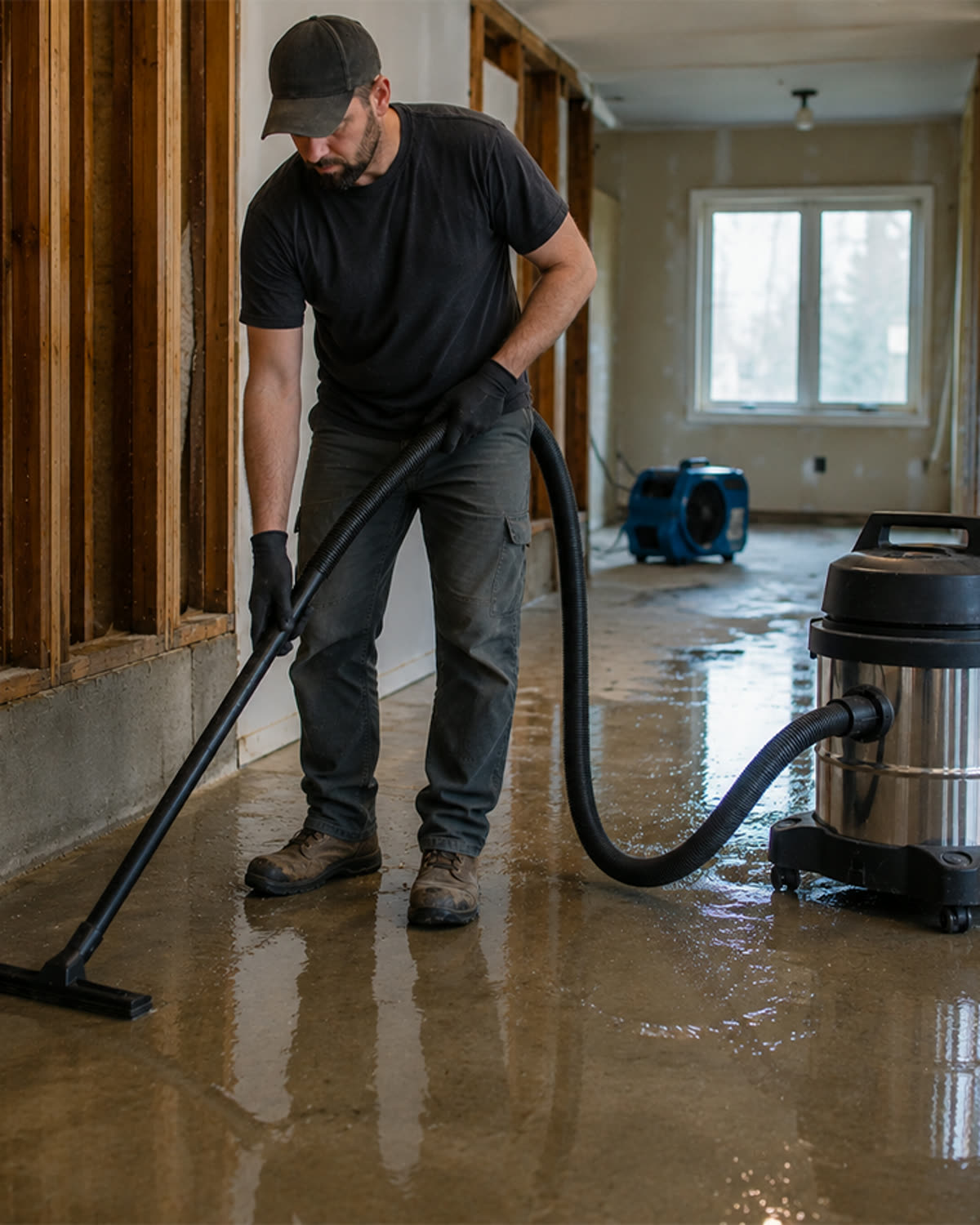
A shop vacuum hose should remain open while air moves through it.
If the hose pulls flat, whistles loudly, or feels like it is trying to collapse, the vacuum is creating pressure without receiving enough incoming air.
This usually indicates a restriction.
Possible causes include:
- Blocked attachment
- Clogged hose
- Full collection bag
- Loaded filter
- Closed float
- Small adapter
- Kinked hose
- Softened hose material
- Incompatible replacement hose
The vacuum motor may still sound powerful.
But useful airflow at the tool may be extremely low.
Quick Answer
A collapsing or whistling vacuum hose usually means airflow is restricted.
Check in this order:
- Remove the attachment.
- Inspect the hose inlet.
- Straighten the hose.
- Check for internal clogs.
- inspect the collection bag.
- Inspect the filter.
- Check the float after wet pickup.
- Inspect adapters and reducers.
- Look for soft, cracked, or heat-damaged hose walls.
- Confirm the hose is suitable for the vacuum.
Do not continue operating against a severe blockage.
Reduced airflow may increase motor temperature.
The Pressure Without Flow Problem™
The vacuum continues creating a pressure difference.
But the restriction prevents enough air from entering.
Motor Creates Pressure

↓

Air Path Is Restricted

↓

Pressure Outside Hose Exceeds Pressure Inside

↓

Flexible Hose Pulls Inward
The hose is not necessarily experiencing excessive vacuum power.
It may be experiencing insufficient airflow.
Cause 1: Blocked Attachment
Floor nozzles and crevice tools may become blocked by:
- Plastic
- Cloth
- Leaves
- Hair
- Tape
- Insulation
- Paper
- Wet debris
Remove the attachment and test the open hose.
If the hose returns to normal, the blockage is in the tool.
Cause 2: Internal Hose Clog
Common clog points include:
- Hose cuffs
- Sharp bends
- Reducers
- Crushed sections
- Areas where screws or hair catch
A partial clog may produce:
- Whistling
- Pulsing
- Reduced suction
- Hose movement
- Higher motor pitch
The Progressive Clog™
Small Obstruction

↓

Debris Collects Around It

↓

Opening Shrinks

↓

Air Velocity Increases Through Gap

↓

Whistling Begins

↓

Hose May Collapse
A whistle often means air is being forced through a small remaining opening.
Cause 3: Loaded Collection Bag
A collection bag can become restrictive before it appears physically full.
Fine dust may block the bag material.
Airflow declines even though empty volume remains.
Replace or empty the bag and retest.
Cause 4: Clogged Filter
A dust-loaded filter restricts air after it enters the vacuum.
This reduces total system airflow.
Signs include:
- Higher-pitched motor
- Weak pickup
- Hot motor housing
- Rapid hose collapse when attachment is covered
- Filter visibly coated
Clean or replace the filter using the approved method.
Cause 5: Activated or Stuck Float
After wet pickup, the float may remain closed because of:
- Full tank
- Foam
- Mud
- Hair
- Incorrect assembly
- Dried residue
When the float blocks the motor air path, the hose receives little or no airflow.
Turn off the vacuum and inspect the wet system.
Cause 6: Excessively Small Adapter
Reducing a large hose to a small opening increases resistance.
Common examples include:
- Small sander port
- Narrow crevice nozzle
- Multiple reducers
- Homemade adapters
- Small tubing
A narrow opening may be appropriate for some tools.
But the hose and vacuum must be capable of operating under the added resistance.
Cause 7: Hose Kink
A kink reduces the internal opening.
Kinks are commonly caused by:
- Tight storage coils
- Pulling around corners
- Heat
- Crushing
- Heavy attachments
- Permanent hose memory
Straighten the hose and inspect for permanent deformation.
Cause 8: Soft or Heat-Damaged Hose
Some hose materials soften in:
- Hot vehicles
- Direct sunlight
- High-temperature environments
- Contact with incompatible chemicals
A softened wall may collapse under normal vacuum pressure.
Replace the hose if it no longer holds its shape.
Cause 9: Incompatible Replacement Hose
A replacement hose may have:
- Thinner walls
- Wrong diameter
- Excessive length
- Poor internal support
- Loose cuffs
A hose should match the vacuum’s expected airflow and pressure.
The Restriction Signal Rule™
Three symptoms often point to the same problem:
Whistling

+

Hose Collapse

+

High-Pitched Motor

=

Restricted Airflow
The location of the restriction still must be identified.
Diagnostic Sequence
Test 1: Remove the Attachment
If airflow returns, inspect the attachment.
Test 2: Remove the Hose
Check airflow directly at the vacuum inlet.
Strong inlet airflow suggests a hose restriction.
Test 3: Inspect the Bag
Fine-dust loading may restrict the bag.
Test 4: Inspect the Filter
A loaded filter affects the entire airflow path.
Test 5: Check the Float
Especially after water, foam, or mud pickup.
Hose Restriction Table
| Symptom | Likely Cause | First Test |
|---|---|---|
| Hose collapses at tool | Blocked attachment | Remove attachment |
| Hose whistles at cuff | Partial clog | Inspect cuff |
| Entire hose pulls flat | Severe restriction | Remove hose |
| Hose collapses when warm | Softened material | Cool and inspect |
| Hose pulses | Moving clog or float | Check both |
| Strong inlet, weak hose end | Hose restriction | Clear or replace hose |
| Weak inlet and hose | Filter, bag, or motor-side restriction | Inspect vacuum |
Why Restrictions Increase Heat
Vacuum motors rely on airflow for cooling.
Restriction

↓

Lower Airflow

↓

Less Motor Cooling

↓

Higher Operating Temperature

↓

Greater Wear
A collapsing hose is not only an inconvenience.
It may be an early warning of motor stress.
How to Prevent Hose Collapse
- Use the correct hose diameter.
- Minimize unnecessary reducers.
- Store the hose in wide loops.
- Clear clogs promptly.
- Protect the hose from crushing.
- Replace loaded bags and filters.
- Keep the float clean.
- Avoid excessive hose length.
- Use reinforced hose for demanding applications.
- Keep the hose away from excessive heat.
Hose Inspection Checklist
- Cuffs secure
- No visible kinks
- No soft spots
- No crushed sections
- No punctures
- Internal path clear
- Attachment clear
- Adapters minimized
- Bag below airflow capacity
- Filter clean enough
- Float open
- Hose compatible with vacuum
Common Mistakes
Assuming the Vacuum Is Too Powerful
The problem is usually restriction or weak hose construction.
Continuing to Operate Against a Blockage
This reduces cooling.
Cleaning Only the Hose
The bag or filter may be the actual restriction.
Replacing the Hose With a Thinner One
It may collapse even more easily.
Using Multiple Small Adapters
Each transition adds resistance.
Ignoring Storage Damage
Tightly coiled hoses may develop permanent kinks.
Frequently Asked Questions
Why does the hose collapse when I cover the end?
Blocking the opening creates maximum pressure difference with almost no airflow. Some flexible movement may occur, but severe collapse suggests a weak or damaged hose.
Why does the hose whistle?
Air is likely moving through a narrow opening, partial clog, loose cuff, or restrictive attachment.
Can a dirty filter make the hose collapse?
Yes. A restricted filter reduces total airflow through the system.
Why does it happen after water pickup?
The float may be closed or the wet filter may be saturated.
Should I buy a larger hose?
A larger hose may reduce resistance and clogging, but it must be compatible with the vacuum and application.
Can I repair a collapsed hose?
Temporary repairs may fail. Replace hoses with weakened walls, permanent kinks, or structural damage.
Key Takeaways
A collapsing or whistling hose usually indicates restricted airflow.
Check:
- Attachment
- Hose
- Adapters
- Bag
- Filter
- Float
Do not evaluate suction by how tightly the hose pulls inward.
Useful vacuum performance requires both pressure and moving air. A collapsed hose has pressure—but very little useful flow.
Related guides
- multi-stage shop vacuum filtration: how bags, filters, and cyclones work together
- complete shop vacuum troubleshooting guide
- learn more about why does my shop vacuum keep tripping the breaker
- learn more about how to test shop vacuum suction and airflow
- recovering lost shop vacuum performance
- why suction pulses during operation
- related: shop vacuum keeps clogging for shop vacuum hose collapsing users