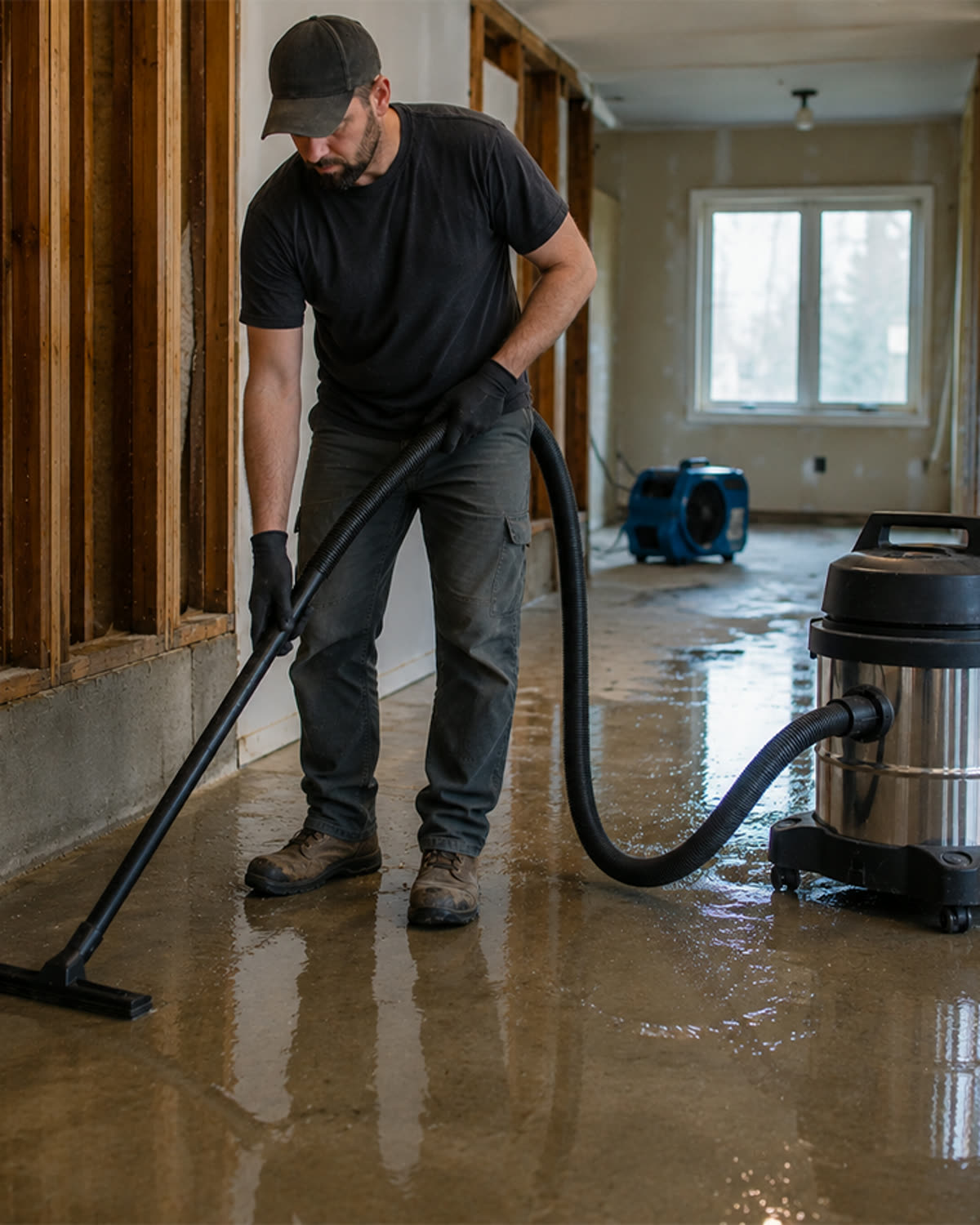
Most people think a vacuum motor overheats because it's working too hard.
That's only partially true.
The real question is:
Why is it working so hard?
The answer almost always comes back to one thing:
Airflow.
A shop vacuum motor isn't just designed to create airflow—it also depends on that same airflow to keep itself cool.
Reduce the airflow...
and you reduce the motor's cooling system.
That's why overheating is often a symptom of another problem—not the problem itself.
If you understand what causes motors to overheat, you can often prevent expensive repairs long before they happen.
Quick Answer
Most shop vacuum motors overheat because airflow has been restricted.
Clogged filters, packed collection bags, blocked hoses, air leaks, and fine dust all reduce the amount of air moving through the vacuum. Since that moving air also cools the motor, reduced airflow causes temperatures to rise.
Protecting airflow is the most effective way to protect your vacuum motor.
The Biggest Misconception About Vacuum Motors
Most electric motors are cooled by fans.
Shop vacuums are different.
The air you're vacuuming isn't just carrying debris.
It's carrying away heat.
Every minute your vacuum runs, thousands of gallons of air move through the motor housing.
That moving air removes heat from the motor components before it can build to damaging levels.
Reduce that airflow...
and heat begins accumulating almost immediately.
🔬 Vacuum Science
Electric motors convert electrical energy into mechanical energy.
Unfortunately, they're not 100% efficient.
Some of that energy always becomes heat.
That heat must go somewhere.
In a shop vacuum, moving air carries much of that heat away.
Less airflow means less cooling.
The motor hasn't suddenly become weaker.
It has simply lost part of its cooling system.
The Motor Cooling Loop™
Most people think of airflow as something that cleans floors.
It actually performs two completely different jobs.
Airflow

↓

Carries Dirt

AND

Removes Motor Heat
One airflow system.
Two critical functions.
If either function is interrupted, vacuum performance suffers.
What Causes Motors to Overheat?
Overheating rarely has a single cause.
Instead, several small restrictions often combine.
Dirty Filters
As filters become loaded with fine dust, airflow decreases.
The motor continues spinning.
But cooling airflow drops.
Motor temperatures begin climbing.
Full Collection Bags
Packed bags create additional resistance.
Less air reaches the motor.
Cooling decreases.
Blocked Hoses
A partial blockage doesn't just reduce pickup power.
It also reduces motor cooling.
Fine Dust
Drywall dust.
Concrete dust.
Joint compound.
Silica.
These materials clog filters much faster than ordinary debris, creating a gradual reduction in airflow.
Air Leaks
Leaks reduce pressure differences.
That means less moving air throughout the entire system.
The Heat Spiral™
Motor overheating usually follows a predictable pattern.
Restricted Airflow

↓

Less Motor Cooling

↓

Higher Motor Temperature

↓

Reduced Efficiency

↓

More Heat Generated

↓

Even Higher Temperatures
Notice what isn't at the top.
The motor.
The motor isn't causing the problem.
It's responding to it.
Why Overheating Shortens Motor Life
Heat is the enemy of every electric motor.
Higher operating temperatures accelerate wear on:
- Bearings
- Brushes
- Windings
- Insulation
- Lubricants
- Electrical connections
A motor that consistently operates cooler generally lasts much longer than one exposed to repeated overheating.
Warning Signs Your Motor Is Running Too Hot
Most vacuums don't suddenly fail.
They give warning signs first.
Watch for:
- Motor housing feels unusually hot
- Burning smell
- Reduced suction
- Motor sounds louder than normal
- Thermal shutoff activates
- Performance drops during long cleaning sessions
These symptoms often indicate an airflow problem before permanent damage occurs.
The Contractor Workload Problem
A homeowner might vacuum for ten minutes.
A contractor may run a vacuum for hours.
That's a completely different operating environment.
Longer run times mean:
- More dust
- More filter loading
- More airflow restriction
- Greater heat buildup
Professional users need to think about airflow maintenance as part of routine equipment care—not just when something goes wrong.
The Motor Protection Principle™
The best way to protect a vacuum motor isn't by focusing on the motor.
It's by protecting the airflow that cools it.
Think of airflow as the motor's air conditioning system.
When the air conditioner stops working...
The engine overheats.
The same thing happens inside a shop vacuum.
Five Ways to Keep Your Motor Cooler
1. Maintain Clean Filters
Don't wait until suction disappears.
2. Empty Collection Bags Before They're Packed
Air needs room to move.
3. Check for Hose Restrictions
Even partial blockages reduce cooling airflow.
4. Avoid Continuous Operation When Airflow Is Restricted
If performance suddenly drops, stop and inspect the vacuum before continuing.
5. Reduce Fine Dust Reaching the Filter
Keeping excessive dust away from the primary filter helps maintain airflow—and keeps the motor cooler throughout the job.
Common Myths
Myth: A hot motor means it's powerful.
Reality:
Excessive heat usually indicates reduced cooling efficiency.
Myth: Motors simply wear out with age.
Reality:
Many motors fail prematurely because they've operated with restricted airflow for extended periods.
Myth: If the motor still runs, everything is fine.
Reality:
Many overheating problems develop gradually long before complete failure occurs.
Myth: Buying a larger vacuum solves overheating.
Reality:
Any vacuum can overheat if airflow becomes sufficiently restricted.
Frequently Asked Questions
Is it normal for a shop vacuum motor to get warm?
Yes. Some heat is normal. Excessive heat, burning smells, or thermal shutdowns are signs that something needs attention.
Can clogged filters cause overheating?
Absolutely. Restricted filters reduce the airflow that cools the motor.
Why does my vacuum shut off after running for a while?
Many vacuums have thermal protection that shuts the motor down before permanent damage occurs.
Does running longer damage the motor?
Not necessarily. Running longer with restricted airflow is what creates the greatest risk.
Can overheating permanently damage a vacuum?
Yes. Repeated overheating accelerates wear on internal components and can significantly shorten motor life.
Key Takeaways
Vacuum motors don't usually overheat because they're weak.
They overheat because they've lost the airflow that keeps them cool.
Every clogged filter.
Every packed collection bag.
Every blocked hose.
Every restriction.
All reduce the cooling airflow your motor depends on.
Protect the airflow.
Protect the filter.
Protect the motor.
Protect your investment.
Related guides
- multi-stage shop vacuum filtration: how bags, filters, and cyclones work together
- complete shop vacuum troubleshooting guide
- learn more about why is my shop vacuum blowing dust out the exhaust
- learn more about why does my shop vacuum keep clogging
- what causes the burning smell
- related: vacuum filter clogging fast for vacuum motor overheating users
- related: shop vacuum lost suction for vacuum motor overheating users