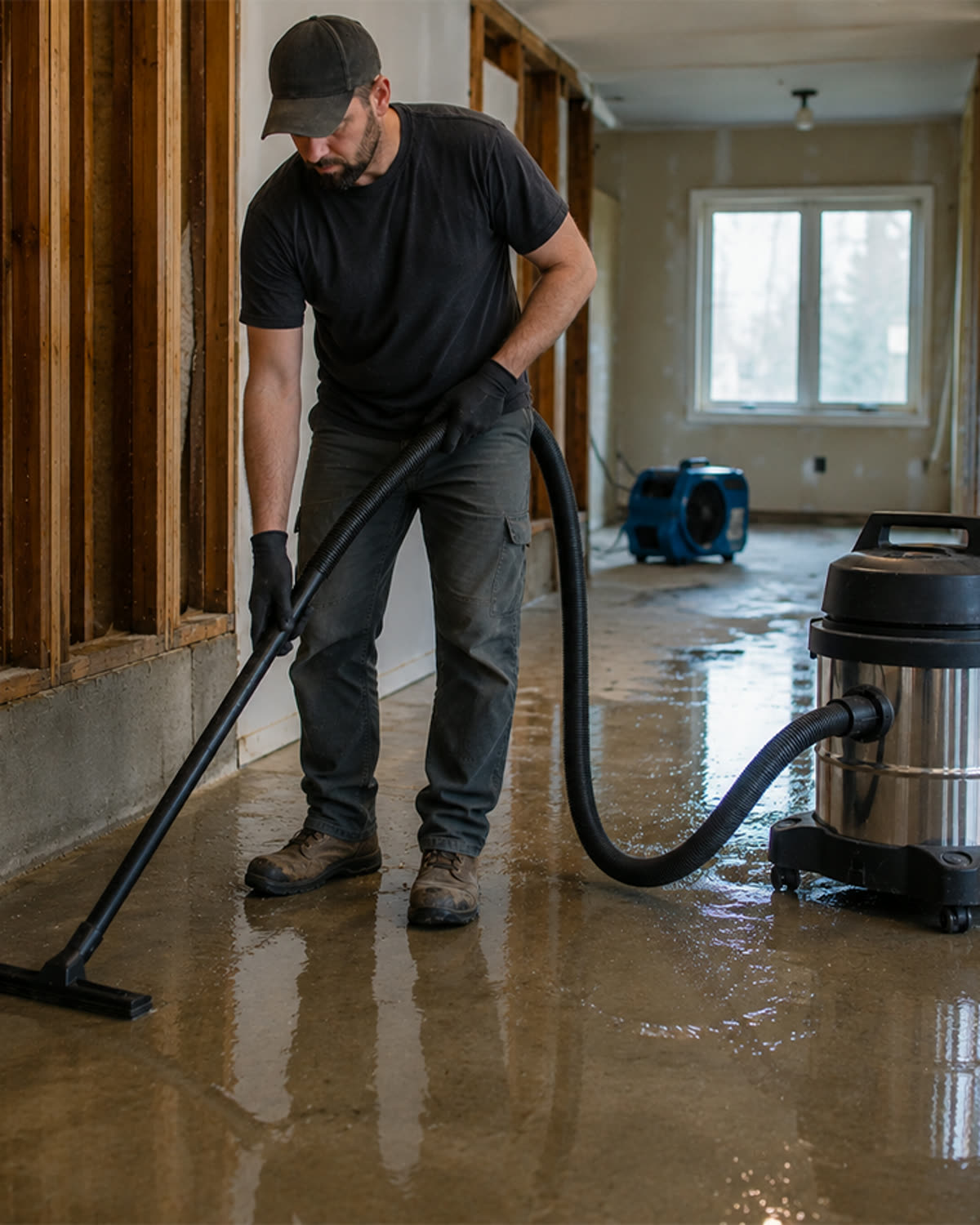
A shop vacuum can collect many types of sawdust.
It works especially well with:
- Sanders
- Routers
- Track saws
- Drills
- Small saw ports
- Workbench cleanup
- Floor cleanup
But sawdust is not one uniform material.
Woodworking may produce:
- Fine sanding dust
- Sawdust
- Chips
- Shavings
- Long curls
- Large planer waste
A shop vacuum that performs well with a sander may clog rapidly when connected to a planer.
The correct collection system depends on particle size and debris volume.
Quick Answer
Use a shop vacuum for:
- Handheld power tools
- Fine localized dust
- Small dust ports
- General workshop cleanup
- Moderate sawdust volume
Use a dust collector for:
- Planers
- Jointers
- Cabinet saws
- Large stationary tools
- High-volume chips
- Larger duct systems
For frequent sawdust collection, protect the vacuum filter with:
- Collection bag
- Reusable bag
- Cyclone separator
- Appropriate primary filter
The Wood-Debris Spectrum™
Fine Sanding Dust

↓

Saw Kerf Dust

↓

Small Chips

↓

Large Chips

↓

Planer Shavings
As debris becomes larger and more abundant, airflow-volume requirements increase.
Fine Sanding Dust
Fine wood dust behaves similarly to other fine particles.
It may:
- Remain airborne
- Load filters
- Pass through general-purpose bags
- Escape from weak seals
- Reduce motor cooling
Use fine-dust pre-collection and filtration.
Saw and Router Dust
Many handheld tools use small ports.
A shop vacuum is useful because it can maintain pressure through:
- Narrow tool outlets
- Small hoses
- Restrictive shrouds
Secure adapters are essential.
Large Chips and Shavings
Large woodworking tools produce material faster than many shop vacuums can transport it.
Potential problems include:
- Hose clogs
- Rapid tank filling
- Inlet bridging
- Bag overfilling
- Poor capture at tool hood
A dust collector usually moves a larger volume of air through wider ducting.
Shop Vacuum vs. Dust Collector
| Requirement | Shop Vacuum | Dust Collector |
|---|---|---|
| Small tool ports | Excellent | Limited without modification |
| High static pressure | Strong | Moderate |
| Large airflow volume | Limited | Strong |
| Portability | Strong | Limited |
| Planer chips | Limited | Strong |
| Vehicle and floor cleanup | Strong | Weak |
| Stationary duct system | Limited | Strong |
| Fine final filtration | Configuration dependent | Configuration dependent |
The Small-Port Rule™
Small Tool Opening

↓

Higher Pressure Requirement

↓

Shop Vacuum Often Performs Well
The Large-Hood Rule™
Large Tool Hood

↓

Higher Air Volume Requirement

↓

Dust Collector Often Performs Better
Hose Size for Sawdust
Small Hose
Best for:
- Sanders
- Routers
- Small saw ports
Medium Hose
Best for:
- General cleanup
- Miter-saw cleanup
- Moderate chips
Large Hose
Best for:
- Larger chips
- Floor cleanup
- High-volume debris
A planer may still overwhelm a large shop-vacuum hose.
Why Sawdust Clogs Filters
Fine particles follow the air stream.
Without effective pre-collection:
Sawdust Enters Tank

↓

Fine Particles Remain Airborne

↓

Filter Loads

↓

Airflow Falls

↓

Tool Capture Declines
A bag or cyclone reduces the filter burden.
Cyclone for Sawdust
A cyclone is particularly useful for:
- High sawdust volume
- Repetitive woodworking
- Stationary workshops
- Chip-producing tools
Advantages:
- Larger capacity
- Less filter loading
- Reduced bag use
- Easier bin emptying
Limitations:
- Additional hose resistance
- Larger footprint
- More connections
- Less portability
Reusable Bag for Sawdust
A reusable bag may suit:
- Mobile carpentry
- Remodeling
- Small workshops
- Handheld tools
- General cleanup
It is compact but has less external capacity than a cyclone.
Sawdust and Sharp Debris
Woodworking areas may also contain:
- Screws
- Nails
- Staples
- Broken blades
- Splinters
Separate sharp items to prevent bag and hose damage.
Sawdust and Moisture
Wet sawdust can:
- Become heavy
- Mat inside hoses
- Develop odor
- Support mold
- Restrict filters
- Stick to bag material
Confirm the vacuum and collection system are suitable for damp debris.
Combustible-Dust Considerations
Fine wood dust may present a combustible-dust hazard under certain conditions.
Risk depends on:
- Dust concentration
- Particle size
- Enclosure
- Ignition sources
- Ventilation
- Facility design
An ordinary shop vacuum should not be assumed suitable for industrial combustible-dust collection.
The Workshop Safety Rule™
Ordinary Cleanup

Is Not the Same As

Engineered Combustible-Dust Control
Commercial facilities may require specialized systems.
Tool-by-Tool Guide
| Tool | Typical Starting System |
|---|---|
| Orbital sander | Shop vacuum or extractor |
| Router | Shop vacuum |
| Track saw | Shop vacuum or extractor |
| Miter saw | High-airflow collection plus local cleanup |
| Table saw | Dust collector often preferred |
| Jointer | Dust collector |
| Planer | Dust collector |
| Drill press | Shop vacuum for local cleanup |
| Workbench | Shop vacuum |
| Floor cleanup | Shop vacuum |
Sawdust Collection Checklist
- Tool dust port identified
- Hose diameter matched
- Adapter sealed
- Collection bag installed
- Fine filter installed
- Cyclone considered
- Tank capacity adequate
- Hose clog risk evaluated
- Sharp debris separated
- Combustible-dust risk considered
- Disposal process prepared
- Filter inspected regularly
Common Mistakes
Using a Small Shop Vacuum for a Planer
Chip volume may exceed system capacity.
Running Bagless With Fine Sawdust
The filter may clog rapidly.
Using a Narrow Hose for Large Shavings
Bridging and clogs increase.
Treating a Cyclone as Final Filtration
Fine dust still requires a filter.
Ignoring Static
Dry wood dust and plastic hoses can generate charge.
Vacuuming Hot Wood or Sparks
Ignition may occur inside collected dust.
Frequently Asked Questions
Can a shop vacuum collect fine sanding dust?
Yes, with suitable pre-collection, filtration, seals, and maintenance.
Is a cyclone necessary?
Not always. It becomes useful when sawdust volume and filter loading are high.
Can I connect a shop vacuum to a table saw?
Some saw ports work with shop vacuums, but many table saws require more airflow than a small hose can provide.
What is best for a planer?
A dust collector is generally more suitable for high-volume chips.
Should I use a bag?
A collection bag or reusable system helps protect the primary filter.
Is wood dust hazardous?
Fine wood dust can create respiratory and combustible-dust concerns. Use equipment and procedures appropriate for the application.
Key Takeaways
A shop vacuum works best for:
- Small tool ports
- Handheld tools
- Localized dust
- General cleanup
A dust collector works best for:
- Large airflow volume
- Stationary tools
- Chips and shavings
- Permanent ducting
Match the collection system to the volume and size of the wood debris—not merely the tool brand or port diameter.
Related guides
- the guide to multi-stage shop vacuum filtration: how bags, filters, and cyclones work together
- the guide to connecting shop vacuums to power tools
- dust collector vs. shop vacuum
- running bagged vs. bagless for sawdust
- related: why fine dust destroys vacuums for vacuum sawdust shop vacuum users
- related: shop vacuum without filter for vacuum sawdust shop vacuum users
- related: shop vacuum keeps clogging for vacuum sawdust shop vacuum users