One of the most-asked shop vac questions, answered straight:
The short answer
Coarse, heavy, or wet → you can skip the bag. Fine, dry dust → use one.
A bag's real job isn't to hold debris (the bin does that) — it's to catch fine dust before it reaches the pleated filter. So whether you need one comes down to how fine the mess is.
| What you're vacuuming | Need a bag? | Why |
|---|---|---|
| Wood chips, shavings, leaves, big debris | No | Too big to clog the filter — just dump the bin |
| Water, slurry, standing liquid | No (remove it) | Remove the bag and paper filter — many vacs require no filter at all for liquids (check your manual) |
| Drywall dust, joint compound | Yes | Fine gypsum packs the filter and kills suction |
| Concrete / masonry dust, silica | Yes | Fine and abrasive — murder on a bare filter |
| Sanding dust, sawdust (fine) | Yes | Fine enough to blind the filter fast |
When you DON'T need a bag
For chunky, dry debris — wood offcuts, shavings, gravel, general shop cleanup — a bag is just a cost you don't need. The bin catches it, the filter handles the little bit of dust, and you empty it when it's full.
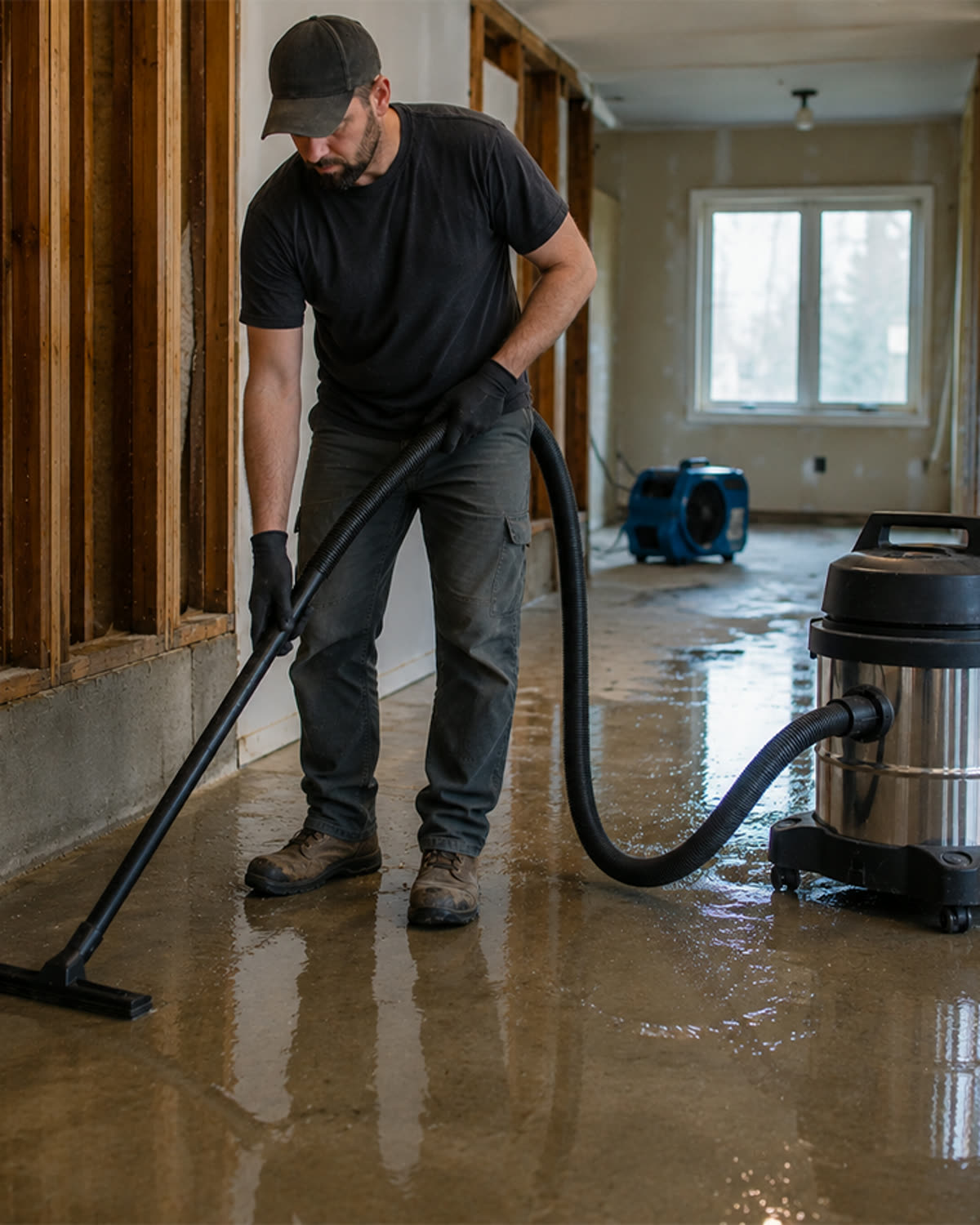
Same for wet pickup. When you're sucking up water or slurry, you remove the bag (most paper and fleece bags disintegrate when wet) and run the vac on its wet setting. Check your manual here — many vacs require removing the paper cartridge filter entirely for liquids; a foam sleeve only applies if your specific model calls for one. Bag comes out for wet work, goes back in for dry dust.
When you DO need a bag — and what happens if you skip it
The moment fine dust is involved, the math flips. Drywall, concrete, and sanding dust are fine enough to fly straight past the bin and pack into the pleated filter. Run bagless on a drywall job and here's the chain reaction:
- Fine dust loads the pleated filter directly.
- The filter blinds over — airflow chokes.
- Suction drops (often by lunch), and the motor works harder against the restriction.
- Every time you dump the bin, you get a dust cloud in your face.
On a drywall tearout I've watched suction drop noticeably in under an hour of running bagless — it happens that fast. That's why a bag matters on fine dust: it takes the load off the filter so the filter — and the motor behind it — stays healthy. (We go deeper on the airflow side of this in why your shop vac loses suction.)
The real question isn't bag or no bag — it's disposable or reusable
Here's the part most "do you need a bag" answers skip. Once you've established that fine dust needs a bag, the only real decision left is what kind. And disposables have a catch: they're a recurring cost you pay for the life of the vac (we broke that down in why shop vac bags are so expensive).
A reusable bag solves both problems at once — you get the fine-dust protection a bag is for, without rebuying one every couple of weeks. That's what Muk Buddy is (full disclosure: it's the bag I build): a reusable bag whose patent-pending 2-chamber design (dust loads into the first chamber before it reaches the filter) keeps suction steady on fine dust, and that you empty and run again instead of throwing away. It fits most 12–20 gallon wet/dry vacs (Shop-Vac, Ridgid, Craftsman, Stanley, DeWalt).
So: do you need a bag in a shop vac? Not for chips and water. Absolutely for fine dust — and when you do, a reusable one means you only buy it once.
See how Muk Buddy handles fine dust →
Want to compare your options first? Here's the 5 best shop vac bags, reusable and disposable — and a side-by-side disposable vs. reusable cost breakdown.