Tile and masonry work produces difficult combinations of material.
A contractor may collect:
- Tile dust
- Concrete dust
- Mortar powder
- Grout dust
- Broken tile
- Sand
- Cement residue
- Water
- Slurry
- Packaging and spacers
Fine mineral dust requires effective source capture and filtration.
Broken tile requires durable hoses and collection containers.
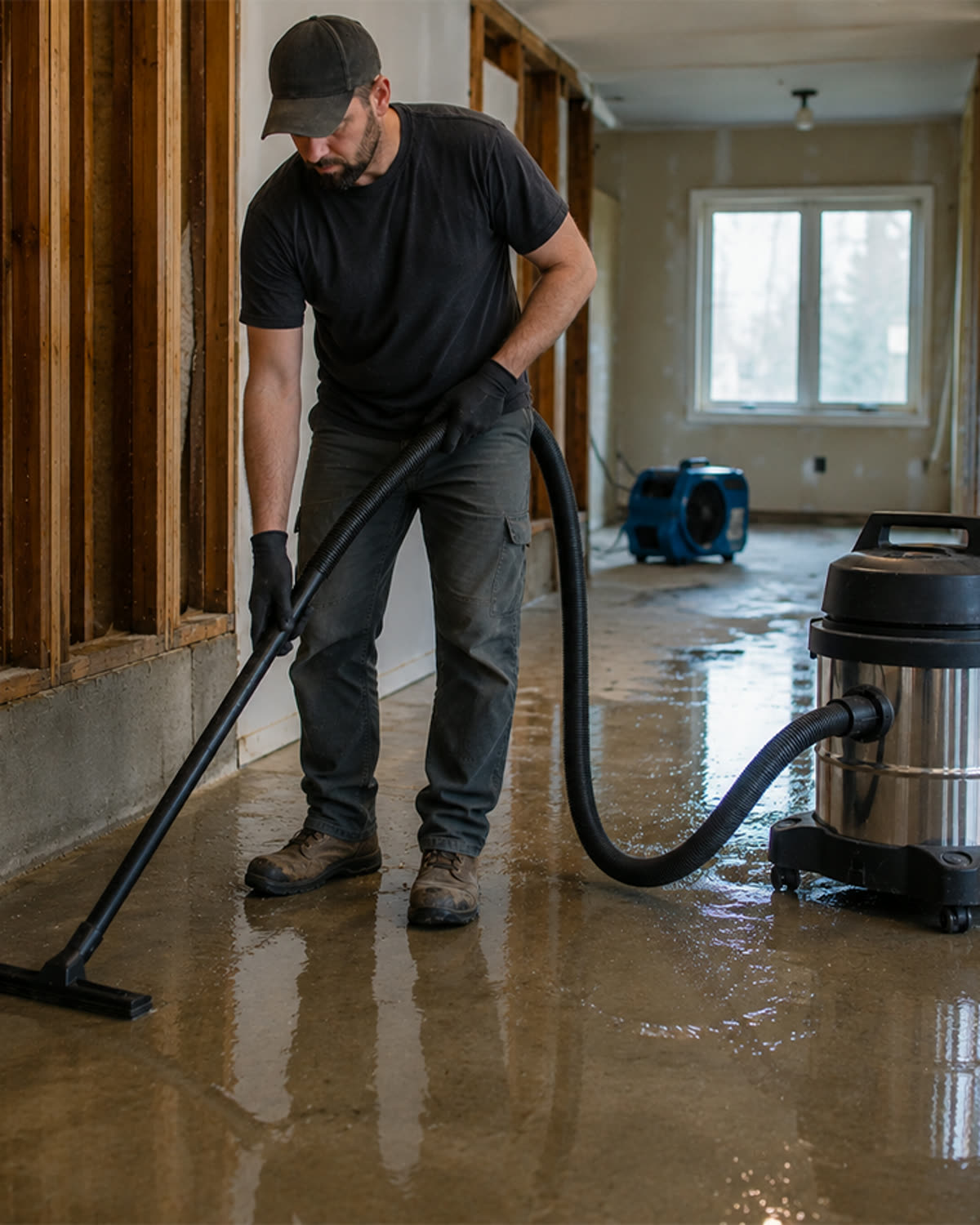
Water and slurry require a correct wet-pickup configuration.
One system must not be expected to handle every material in the same configuration.
Quick Answer
A tile or masonry contractor should prioritize:
- Application-appropriate dust extraction
- Strong maintained airflow
- Fine-particle filtration
- Tool and shroud compatibility
- Automatic or efficient filter cleaning
- Durable hoses
- Separate handling for sharp fragments
- Wet/dry capability where needed
- Controlled slurry disposal
- Easy tank and hose cleaning
- Secure collection bags or liners
For continuous cutting, grinding, or surface preparation, use equipment designed for the tool and application.
The Tile and Masonry Debris Split™
The work creates three distinct material classes.
Fine Dry Dust

↓

Sharp Solid Fragments

↓

Wet Slurry
Each class requires a different collection strategy.
Fine Dry Dust
Examples:
- Tile cutting dust
- Grout powder
- Mortar dust
- Concrete dust
- Sanding dust
Prioritize:
- Source capture
- Fine-dust collection
- Appropriate filter
- Secure system seals
- Maintained airflow
- Controlled disposal
Sharp Fragments
Examples:
- Broken tile
- Stone chips
- Metal trim
- Fasteners
- Hardened mortar
Prioritize:
- Large open hose
- Durable tank
- Puncture resistance
- Separate collection from fine-dust bags
Sharp tile fragments can tear disposable and reusable collection systems.
Wet Slurry
Examples:
- Wet cutting residue
- Concrete slurry
- Grout water
- Mortar cleanup water
Prioritize:
- Correct wet configuration
- Large hose
- Float protection
- Controlled drainage
- Immediate cleaning
- Appropriate disposal
Slurry should not be allowed to harden inside the vacuum.
The Material Separation Principle™
Fine Dust Collected Separately

+

Sharp Debris Collected Separately

+

Slurry Collected Separately

=

Lower Clogging and Equipment Damage
Separating materials reduces bag tears, paste formation, and difficult disposal.
Feature 1: Tool and Shroud Compatibility
Dust capture begins at the tool.
Check compatibility with:
- Tile saw enclosure
- Grinder shroud
- Mixing station
- Drill attachment
- Surface-preparation tool
- Mortar-removal system
A strong vacuum cannot capture dust that escapes outside the shroud.
Feature 2: Maintained Airflow
Fine mineral dust can load filters quickly.
Look for:
- Large filter area
- Automatic filter cleaning
- Suitable dust bag
- Pre-separation
- Secure seals
- Easy airflow monitoring
Feature 3: Durable Hose
A tile contractor’s hose may encounter:
- Abrasive particles
- Sharp fragments
- Slurry
- Repeated dragging
Choose:
- Reinforced walls
- Durable cuffs
- Appropriate diameter
- Easy cleaning
- Replaceable components
Feature 4: Controlled Dry-Dust Disposal
Suitable options may include:
- Fine-dust fleece bag
- Approved reusable system
- Plastic liner in a compatible extractor
- Multi-stage collection
Avoid open dumping of concentrated mineral dust.
Feature 5: Slurry Management
Wet slurry may:
- Settle
- Separate
- Harden
- Block the drain
- Coat the float
- Abrade components
Clean the vacuum promptly after use.
The Slurry Hardening Curve™
Fresh Slurry

↓

Water Separates or Evaporates

↓

Solids Concentrate

↓

Material Bonds to Surfaces

↓

Cleaning Becomes Difficult
Immediate cleaning reduces equipment damage.
Dry and Wet Equipment Strategy
Contractors performing frequent dry and wet work may benefit from separate machines.
Dry Extractor
For:
- Grinding
- Cutting
- Fine powder
- Source capture
Wet/Dry Cleanup Vacuum
For:
- Slurry
- Water
- Tile fragments
- Final cleanup
This prevents moisture from contaminating fine-dust filters and bags.
Tile and Masonry Vacuum Checklist
- Equipment suitable for application
- Tool shroud compatible
- Fine-dust filtration installed
- Filter-cleaning method available
- Dry collection system secure
- Sharp debris handled separately
- Wet-use configuration available
- Float inspected
- Hose abrasion-resistant
- Tank easy to clean
- Slurry disposal planned
- Replacement filters available
- Applicable safety requirements reviewed
Common Mistakes
Mixing Dry Powder and Water Inside the Vacuum
This can create hardened cementitious residue.
Collecting Tile Shards Into Fine-Dust Bags
The bag may tear.
Using a Basic Cleanup Vacuum for Continuous Grinding
Airflow may collapse rapidly.
Ignoring the Shroud
Poor source capture allows dust to spread.
Leaving Slurry in the Tank
It may harden around the drain and float.
Treating a Cyclone as Final Filtration
Fine particles still require appropriate filters.
Frequently Asked Questions
Can a shop vacuum collect tile dust?
It can collect limited dust when configured correctly, but continuous cutting or grinding may require an application-specific extractor.
Can it collect tile fragments?
Yes, provided the hose and tank can handle sharp debris. Avoid delicate bags.
Can a wet/dry vacuum collect grout water?
It may collect compatible liquid when configured for wet pickup, but disposal and cleaning must be handled correctly.
Why does mortar dust clog filters quickly?
The fine particles remain suspended and penetrate filter pleats.
Should dry and wet cleanup use separate vacuums?
Separate machines can reduce contamination and changeover labor for frequent professional use.
Are reusable bags suitable?
They may help with compatible dry dust but should be protected from sharp fragments and moisture.
Key Takeaways
Tile and masonry cleanup involves three different problems:
- Fine dry dust
- Sharp debris
- Wet slurry
The strongest system separates these materials and uses the correct configuration for each.
Do not ask one bag, one filter, and one hose setup to handle powder, broken tile, and slurry equally well.
Related guides
- multi-stage shop vacuum filtration: how bags, filters, and cyclones work together
- complete concrete dust cleanup guide
- learn more about best shop vacuum for concrete dust
- learn more about why is dust escaping from my power tool shroud
- silica-rated collection for masonry crews
- the right bag for fine dust collection
- the destruction fine particles cause
- when an extractor beats a shop vac
- what HEPA filtration actually means