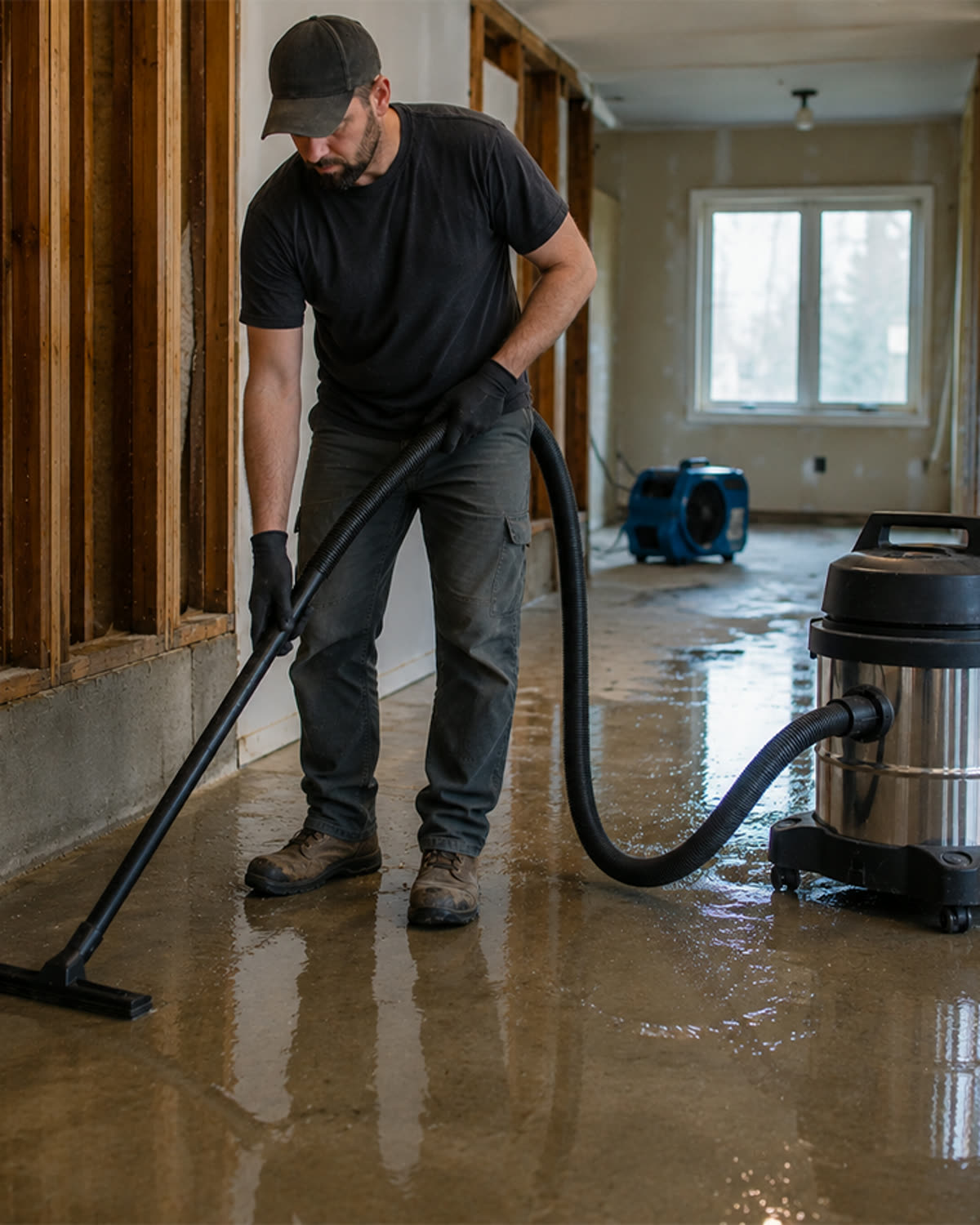
Concrete dust is one of the harshest materials your shop vacuum will ever encounter.
It looks harmless.
It feels like powder.
But don't let that fool you.
Concrete dust is incredibly abrasive, extremely fine, and capable of overwhelming a vacuum's filtration system in a surprisingly short amount of time.
Many contractors assume vacuum performance drops simply because concrete dust is "heavy."
That's not actually what's happening.
The real problem is that concrete dust behaves almost exactly like smoke—it stays suspended in the moving air, allowing microscopic particles to travel deep into your vacuum where they begin restricting airflow.
The result is familiar:
- Filters clog rapidly.
- Suction falls off.
- Motors run hotter.
- Productivity drops.
- Maintenance increases.
Fortunately, understanding how concrete dust behaves makes it much easier to manage.
Quick Answer
Concrete dust reduces vacuum performance because extremely fine particles remain suspended in the airflow and eventually become trapped inside the filter media.
As airflow decreases, motor cooling is reduced, cleaning performance declines, and the vacuum must work harder.
The key to successful concrete dust cleanup is maintaining airflow while minimizing the amount of fine dust reaching the primary filter.
Why Concrete Dust Is So Difficult
Concrete dust isn't simply crushed concrete.
It often contains:
- Cement particles
- Sand
- Silica
- Lime
- Aggregate fines
- Various mineral compounds
Many of these particles are incredibly small.
Unlike gravel or wood chips, they don't immediately fall into the collection chamber.
Instead...
They stay suspended inside the airflow.
The airflow carries them directly toward your filtration system.
🔬 Vacuum Science
The smaller a particle becomes...
The more it behaves like air.
Large debris quickly separates from moving air because gravity easily overcomes airflow.
Microscopic concrete dust is different.
Its low mass allows it to remain suspended until something removes it from the airflow.
Usually...
That's your filter.
Why Concrete Dust Is Harder Than Sawdust
Imagine dropping a handful of marbles into a river.
They sink almost immediately.
Now dump powdered cement into that same river.
It stays suspended much longer.
Concrete dust behaves much more like the powdered cement.
Because it remains airborne inside the vacuum, far more of it reaches the filter.
That's why contractors often notice clogged filters after relatively short periods of grinding or cutting concrete.
The Concrete Dust Journey™
Every particle follows the same basic path.
Concrete Surface

↓

Vacuum Hose

↓

Collection Chamber

↓

Primary Filter

↓

Motor Cooling Air

↓

Exhaust
Every stage has an opportunity to remove dust.
The earlier that happens...
The healthier your airflow remains.
Silica: The Hidden Concern
Many concrete products contain crystalline silica.
When concrete is cut, drilled, or ground, microscopic silica particles can become airborne.
These particles are not only difficult for vacuums to manage—they can also present serious health hazards when inhaled.
Because of this, contractors should follow applicable safety regulations, including the use of appropriate dust-control methods, respiratory protection where required, and equipment designed for the task.
For jobs involving respirable crystalline silica, always follow applicable OSHA requirements and manufacturer recommendations.
The Airflow Priority™
When contractors think about concrete cleanup, they usually focus on collecting the dust.
Professionals think differently.
Their first priority is protecting airflow.
Because once airflow begins decreasing:
- Pickup slows.
- Filters clog faster.
- Motors run hotter.
- Productivity drops.
Airflow isn't just another specification.
It's the foundation of vacuum performance.
Why Filters Load So Quickly
Concrete dust contains enormous numbers of microscopic particles.
Every minute the vacuum runs:
Thousands...
Millions...
Even billions of tiny particles impact the filter.
Most are successfully captured.
But each captured particle occupies space inside the filter media.
Eventually those microscopic pathways begin closing.
The filter may still look reasonably clean.
Yet airflow has already begun decreasing.
The Concrete Dust Cascade™
Concrete dust creates a predictable chain reaction.
Concrete Dust

↓

Filter Loading

↓

Restricted Airflow

↓

Reduced Motor Cooling

↓

Higher Operating Temperature

↓

Longer Cleanup Time

↓

More Dust Exposure

↓

Even More Filter Loading
Notice something important.
The first problem isn't reduced suction.
It's restricted airflow.
Everything else follows.
Five Mistakes Contractors Make
1. Waiting until suction drops
Performance has already been declining long before it becomes obvious.
2. Completely filling the collection system
Packed debris creates unnecessary airflow resistance.
3. Ignoring filter maintenance
Fine concrete dust accumulates much faster than ordinary debris.
4. Continuing to work with reduced airflow
Small restrictions become larger restrictions surprisingly quickly.
5. Assuming more horsepower solves the problem
Horsepower cannot compensate for poor airflow.
Best Practices for Concrete Dust Cleanup
Professional contractors typically:
- Begin with a clean filter.
- Empty collection systems before they're packed.
- Inspect hoses regularly.
- Watch for changes in airflow.
- Replace worn filters before major performance loss.
- Use appropriate filtration for the task being performed.
- Follow all applicable dust-control and safety regulations.
Small maintenance habits dramatically improve long-term vacuum performance.
The Multi-Stage Protection Strategy™
The best-performing vacuum systems don't rely on one filter to capture everything.
Instead, they reduce the workload placed on each component.
Large Debris

↓

Collection System

↓

Fine Dust Separation

↓

Primary Filter

↓

HEPA Filter (when equipped)

↓

Motor

↓

Clean Exhaust
Each stage protects the next.
The less concrete dust reaching the primary filter...
The longer airflow remains strong.
Common Myths
Myth: Concrete dust is heavy, so it should fall into the tank easily.
Reality:
Large fragments do. Microscopic particles remain suspended in the airflow much longer.
Myth: My filter looks clean, so airflow must be fine.
Reality:
Many airflow restrictions occur inside the filter media where they aren't immediately visible.
Myth: Bigger motors handle concrete dust better.
Reality:
Even the largest motor cannot overcome severe airflow restriction.
Myth: Concrete dust only affects filters.
Reality:
It affects airflow, motor cooling, cleaning speed, maintenance intervals, and overall vacuum lifespan.
Frequently Asked Questions
Why does concrete dust clog filters so quickly?
Because its microscopic particles penetrate deeply into the filter media and accumulate rapidly.
Should I use HEPA filtration for concrete dust?
For many applications involving fine concrete dust or respirable crystalline silica, HEPA filtration may be appropriate, depending on the work being performed and applicable safety requirements.
Why does my vacuum get hot while cleaning concrete?
Restricted airflow reduces the cooling air passing through the motor.
Can concrete dust permanently damage a vacuum?
Repeated operation with severely restricted airflow can accelerate wear and shorten the life of filters and motors.
What's the best way to protect my vacuum?
Maintain airflow by reducing unnecessary filter loading, inspecting the system regularly, and keeping the filtration system in good condition.
Key Takeaways
Concrete dust isn't difficult because there's a lot of it.
It's difficult because it's incredibly fine.
Those microscopic particles stay suspended in the airflow, eventually loading the filter, reducing airflow, increasing motor temperatures, and lowering cleaning performance.
The contractors who successfully manage concrete dust don't simply buy more powerful vacuums.
They understand how concrete dust moves through an airflow system—and they protect that airflow every step of the way.
Related guides
- shop vacuum safety guide
- Best Shop Vacuum for Concrete Dust
- Why Is Dust Escaping From My Power Tool Shroud
- Best Shop Vacuum for Tile and Masonry Contractors
- bag choice for silica and concrete dust