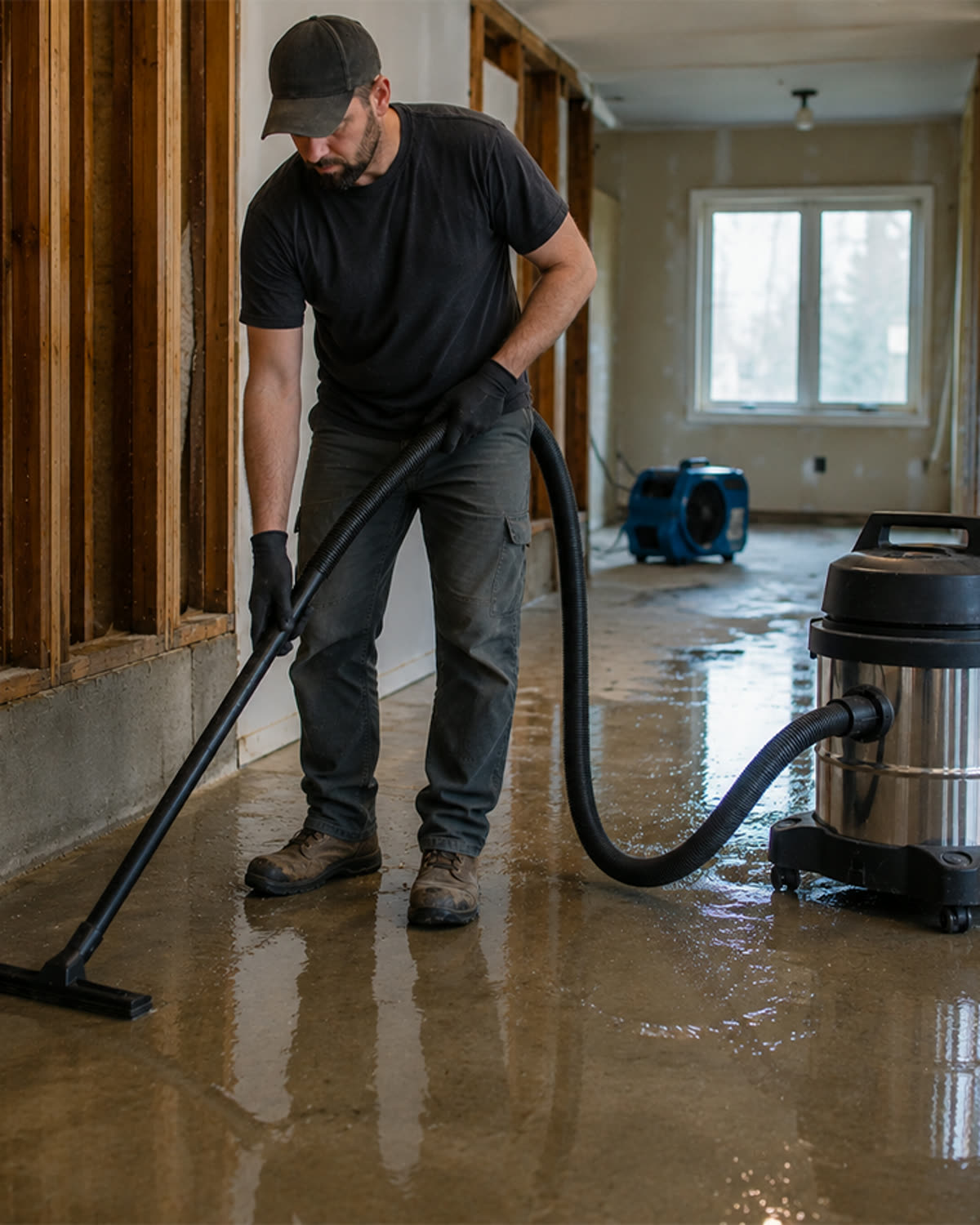
Static shocks commonly occur when dry dust moves rapidly through a plastic vacuum hose.
As particles rub against:
- Hose walls
- Other particles
- Plastic fittings
- Collection containers
electrical charge can accumulate.
The charge may discharge when the operator touches:
- Metal equipment
- A grounded tool
- A door frame
- The vacuum
- Another person
A small static shock may be irritating.
In environments involving combustible dust, flammable vapor, sensitive electronics, or specialized industrial processes, static discharge can become a serious hazard.
Quick Answer
Vacuum static is more likely when:
- Air is dry
- Dust is fine
- Hose is plastic
- Hose is long
- Air velocity is high
- Equipment is ungrounded
- Synthetic clothing is worn
- Dust repeatedly circulates
Potential solutions include:
- Manufacturer-approved anti-static hose
- Conductive fittings
- Properly grounded equipment
- Shorter hose
- Correct humidity control
- Application-specific dust-control systems
- Avoiding ordinary vacuums for combustible dust
Do not improvise grounding methods on electrical equipment without proper design and guidance.
The Triboelectric Effect™
Static charge develops when different materials contact and separate.
Dust Contacts Hose

↓

Electrons Transfer

↓

Dust and Hose Carry Opposite Charges

↓

Charge Accumulates

↓

Sudden Discharge Creates Shock
The process repeats continuously while the vacuum operates.
Why Dry Conditions Increase Static
Humidity allows electrical charge to dissipate more easily across surfaces.
When the air is very dry:
- Charge remains concentrated
- Plastic surfaces retain charge
- Shocks occur more frequently
- Dust clings to hose walls
Winter heating and dry climates may increase the problem.
Dust Types Associated With Static
Static may increase during collection of:
- Fine sawdust
- Plastic dust
- Drywall dust
- Powdered material
- Sanding dust
- Lightweight synthetic debris
The actual hazard depends on the material.
The Static Accumulation Triangle™
Dry Air

+

Insulating Plastic Hose

+

Fast-Moving Fine Dust

=

Greater Static Buildup
Reducing one factor may reduce shock frequency.
Standard Hose vs. Anti-Static Hose
Standard Plastic Hose
- Electrically insulating
- Common
- Low cost
- May retain charge
Anti-Static Hose
May use:
- Conductive material
- Embedded conductive wire
- Static-dissipative layers
- Ground-compatible cuffs
An anti-static hose must be connected to equipment designed to use its conductive pathway.
Conductive Does Not Mean Automatically Grounded
A hose may conduct charge but still lack a complete path to ground.
Conductive Hose

+

Nonconductive Adapter

or

Ungrounded Vacuum

=

Incomplete Static-Control Path
Every component must be compatible.
Tool and Adapter Compatibility
Static-control performance may be interrupted by:
- Plastic reducers
- Nonconductive cuffs
- Improvised adapters
- Broken conductive wires
- Painted or insulated connections
Use components intended to work as a complete system.
Shorter Hose
A shorter hose provides:
- Less surface contact
- Less resistance
- Fewer charge-generation opportunities
It may not eliminate static, but it can reduce total buildup.
Hose Diameter and Air Velocity
High air velocity can increase particle contact with the hose.
Small hoses may create high velocity but also greater resistance.
Choose diameter based on:
- Tool
- Debris
- Static-control system
- Vacuum performance
Do not reduce hose size solely to address static.
Humidity Control
Moderate humidity may reduce static buildup in some indoor environments.
However:
- Humidity must remain appropriate for the building
- Moisture can damage materials
- Dampness can affect dust collection
- Humidity does not replace engineered static control
Synthetic Clothing and Footwear
Static may also accumulate through:
- Synthetic clothing
- Rubber footwear
- Plastic flooring
- Vehicle interiors
- Carpet
The vacuum may be only one part of the charge path.
Static and Sensitive Electronics
Static discharge may affect:
- Computers
- Control boards
- Sensors
- Electronics
- Vehicle electrical components
Use equipment and procedures appropriate for electronic-service environments.
Static and Combustible Dust
This is the most important distinction.
Certain dusts may create a fire or explosion hazard when dispersed in air.
Examples can include some:
- Wood dust
- Metal dust
- Plastic dust
- Chemical powders
- Agricultural material
An ordinary shop vacuum should not be assumed safe.
The Combustible-Dust Rule™
Potentially Combustible Dust

↓

Do Not Rely on Informal Static Fixes

↓

Use Properly Rated Equipment and Procedures
Anti-static hose alone does not make a standard vacuum explosion-proof.
Safe Diagnostic Questions
- Which material is being collected?
- Is the environment unusually dry?
- Is the hose standard plastic?
- Does the vacuum support anti-static accessories?
- Are adapters interrupting conductivity?
- Is combustible dust possible?
- Are sensitive electronics nearby?
- Does the shock occur only with one material?
Static Reduction Checklist
- Material identified
- Combustible-dust risk evaluated
- Correct vacuum used
- Approved anti-static hose considered
- Conductive adapters compatible
- Grounding system verified
- Hose length minimized
- Damaged conductive components replaced
- Environment humidity considered
- Synthetic clothing contribution considered
- Sensitive electronics protected
Common Mistakes
Wrapping Random Wire Around the Hose
Improvised grounding may not work and may create new hazards.
Assuming an Anti-Static Hose Makes Any Vacuum Safe
The entire system must be compatible and properly designed.
Ignoring the Dust Type
Some materials create much greater risk.
Treating Repeated Shocks as Only an Annoyance
The operating environment may require better static control.
Adding Moisture to Dust
This may damage equipment, alter material, or create paste.
Using Ordinary Equipment for Combustible Dust
Specialized systems may be required.
Frequently Asked Questions
Why do shocks happen more often in winter?
Indoor air is often drier, allowing charge to accumulate.
Will an anti-static hose stop every shock?
Not necessarily. The hose, fittings, vacuum, grounding path, and environment must all work together.
Can I ground the hose myself?
Use only approved equipment and procedures. Improvised grounding may be ineffective or unsafe.
Is vacuum static dangerous?
It may be a minor nuisance in ordinary cleanup but a serious concern around combustible dust, flammable vapor, or electronics.
Why does dust cling inside the hose?
Static attraction may hold fine particles against the hose walls.
Does a metal tank prevent static?
Not automatically. The hose, connections, grounding, and equipment design still matter.
Key Takeaways
Vacuum static is created by repeated contact between dry particles and insulating surfaces.
Static control may require:
- Compatible anti-static hose
- Conductive fittings
- Proper grounding
- Material identification
- Correct industrial equipment
Static shocks should never be evaluated separately from the dust being collected and the environment where the vacuum operates.