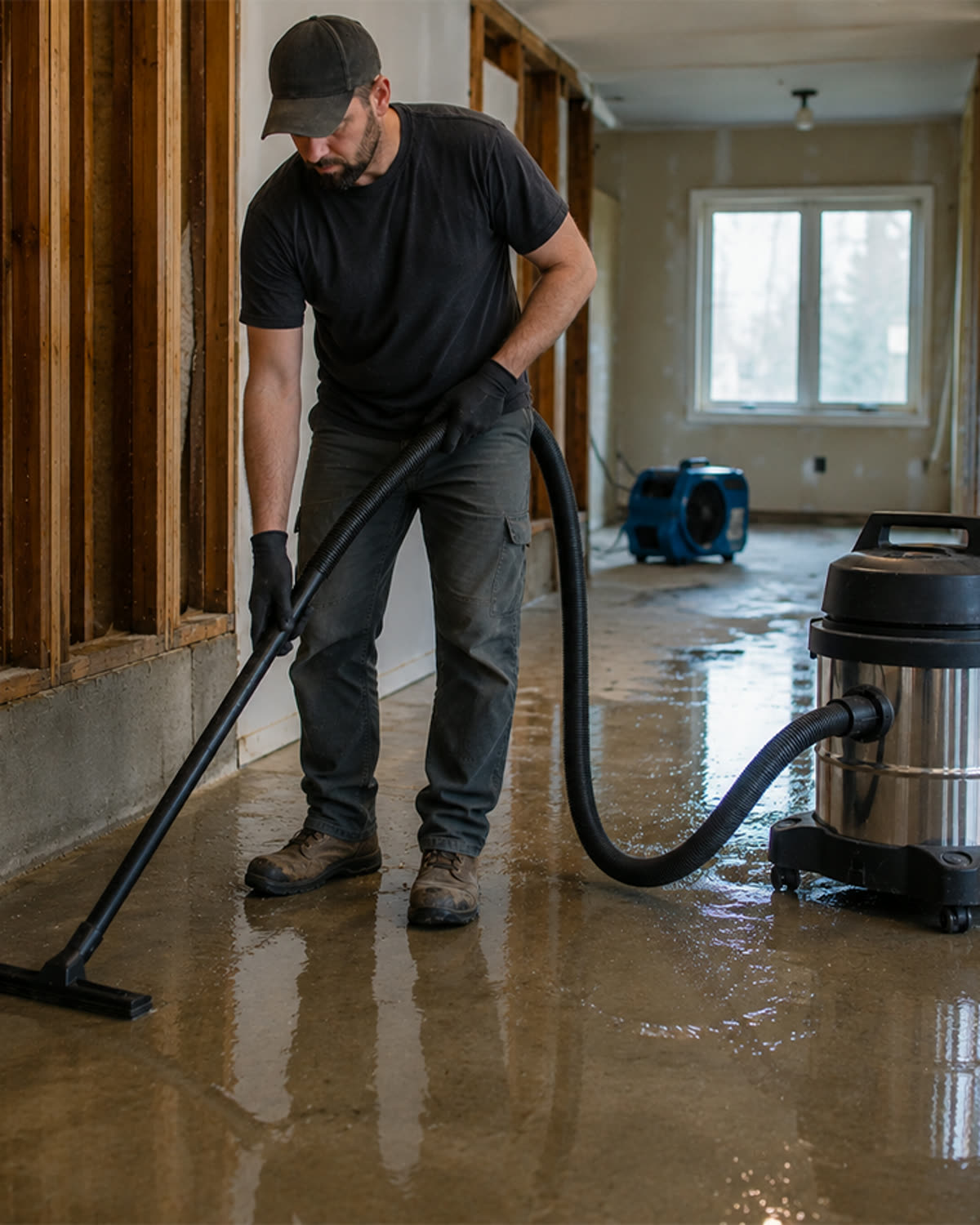
If your shop vacuum filter keeps clogging, there are two common ways to reduce the amount of dust reaching it.
You can install a collection bag inside the vacuum.
Or you can place a cyclone separator before the vacuum.
Both systems have the same basic goal:
Capture debris before it reaches the primary filter.
But they accomplish that goal differently.
A vacuum bag captures material inside a porous container.
A cyclone uses spinning airflow to separate heavier particles into an external bin.
One solution is compact and simple.
The other adds capacity and may dramatically reduce filter loading.
But neither is automatically better for every job.
The right system depends on:
- The type of dust
- Particle size
- Debris volume
- Hose length
- Portability
- Emptying method
- Airflow requirements
- Consumable costs
- Available workspace
Understanding how each system works will help you choose the one that protects your vacuum without creating unnecessary resistance, mess, or expense.
Quick Answer
A vacuum bag is generally better when you need:
- A compact setup
- Simple installation
- Cleaner disposal
- Fine-dust containment
- Fewer hoses and connections
- Easy transportation
- Minimal floor space
A cyclone separator is generally better when you need:
- Greater collection capacity
- Reduced filter loading
- Reusable collection
- High-volume sawdust or debris collection
- Less frequent vacuum emptying
- Better separation of larger particles
- Lower recurring bag costs
For extremely fine dust, a cyclone may not capture every particle by itself.
A collection bag or final filter is still needed to capture what passes through.
The strongest system may combine:
Cyclone Separator

↓

Collection Bag

↓

Primary Filter

↓

Optional Final Filter
Each stage protects the next.
Why Protecting the Filter Matters
A shop vacuum filter is not supposed to hold every pound of dust collected during the job.
Its primary purpose is to remove the particles that remain in the airflow before air reaches the motor or exhaust.
When the filter becomes the main collection container:
- Airflow falls rapidly.
- Suction appears weaker.
- The motor runs hotter.
- Cleanup takes longer.
- Hose clogs become more likely.
- Filter cleaning becomes frequent.
- Filter life shortens.
Protecting the filter is one of the most effective ways to preserve vacuum performance.
🔬 Vacuum Science
Dust travels through a vacuum because it remains suspended in moving air.
To remove dust from that airflow, the system must create a force that causes particles to leave the air stream.
A bag does this through filtration.
A cyclone does this through separation.
Bag Filtration
Air passes through porous material.
Particles too large to pass through the pores remain inside the bag.
Cyclonic Separation
Air spins rapidly inside a chamber.
Inertia drives heavier particles toward the outside wall.
Those particles lose velocity and fall into a collection bin.
Vacuum Bag

Air Passes Through Material

↓

Dust Is Trapped

Cyclone Separator

Air Spins

↓

Particles Move Outward

↓

Debris Falls Into Bin
The two systems remove dust using different physical principles.
The Pre-Collection Principle™
The more debris removed before the primary filter, the less work the filter must perform.
High Pre-Collection Efficiency

↓

Less Dust at Filter

↓

Lower Filter Resistance

↓

Stronger Working Airflow

↓

Lower Motor Temperature

↓

Longer Equipment Life
This principle applies whether pre-collection happens through:
- A disposable bag
- A reusable bag
- A cyclone
- A separator chamber
- A multi-stage collection system
The goal is always the same:
Give the final filter less work to do.
What Is a Vacuum Collection Bag?
A vacuum collection bag fits inside the tank and connects to the inlet.
Debris enters the bag before air reaches the vacuum filter.
As air passes through the bag material:
- Debris remains inside.
- Air continues toward the filter.
- The primary filter receives less dust.
Depending on the bag design, it may capture:
- General debris
- Fine dust
- Drywall dust
- Sawdust
- Concrete dust
- Sanding dust
Bag performance varies significantly.
A basic paper bag does not perform the same as a multi-layer fine-dust bag.
Types of Vacuum Bags
Standard Paper Bags
These are commonly used for:
- General debris
- Dirt
- Sawdust
- Light construction waste
Advantages:
- Low purchase cost
- Easy replacement
- Cleaner tank
- Simple disposal
Limitations:
- May tear
- Limited moisture resistance
- May not capture the finest particles
- Can load quickly
Fine-Dust Bags
Fine-dust bags use materials designed to capture smaller particles.
They may be appropriate for:
- Drywall dust
- Sanding dust
- Cement powder
- Fine sawdust
Advantages:
- Better filter protection
- Reduced fine-dust migration
- Cleaner disposal
- Less tank contamination
Limitations:
- Higher cost
- More airflow resistance
- May fill or load before appearing physically full
Fleece Bags
Fleece bags often use multiple layers of synthetic material.
Potential advantages include:
- Good fine-dust capture
- Greater durability than basic paper
- Improved dust distribution
- Reduced tearing
- Better airflow retention
Potential disadvantages include:
- Higher recurring cost
- Compatibility limitations
- Disposal waste
Reusable Vacuum Bags
Reusable collection bags can be emptied and used again.
Potential advantages:
- Lower recurring consumable cost
- Reduced waste
- Consistent availability
- Long service life
- Filter protection
Important considerations include:
- How effectively the fabric captures fine dust
- How easily the bag empties
- Whether cleaning releases dust
- Wet-use suitability
- Durability
- Proper installation
- Airflow performance
Reusable does not automatically mean better.
The collection material and system design still matter.
How a Vacuum Bag Protects the Filter
A correctly installed bag becomes the first major filtration stage.
Dust Enters Vacuum

↓

Bag Captures Most Material

↓

Primary Filter Captures Remaining Dust

↓

Cleaner Air Reaches Motor and Exhaust
This reduces the dust burden on the filter.
However, as the bag loads, resistance increases.
Air must pass through both:
- The bag material
- The primary filter
If the bag becomes overloaded, airflow may fall significantly.
The Bag Loading Curve™
A collection bag does not maintain identical airflow throughout its life.
New Bag

↓

Low Resistance

↓

Dust Accumulates

↓

Bag Pores Begin Loading

↓

Resistance Rises

↓

Airflow Falls

↓

Bag Requires Emptying or Replacement
A bag may still have physical space available while its airflow performance has already declined.
This is especially common with very fine dust.
Vacuum Bag Advantages
Compact Design
The bag fits inside the vacuum.
No separate collection bin is required.
Fewer Connections
There is no second hose, separator lid, or external container.
Fewer connections mean fewer opportunities for air leaks.
Easy Transport
The vacuum remains one piece.
This is useful for:
- Contractors
- Service calls
- Residential work
- Stairs
- Small workshops
- Crowded vehicles
Cleaner Disposal
Disposable bags can often be removed and sealed without dumping loose dust from the tank.
This may reduce airborne dust during disposal.
Fine-Dust Capture
A quality fine-dust bag may capture particles that a basic cyclone would allow to pass.
Simple Setup
Installation is usually fast and requires little additional equipment.
Vacuum Bag Limitations
Recurring Cost
Every disposable bag eventually becomes another purchase.
High-volume users may consume many bags each year.
Limited Capacity
The bag must fit inside the vacuum tank.
Its usable capacity may be significantly less than the tank’s advertised size.
Airflow Resistance
The bag adds another porous barrier to the airflow system.
As it loads with dust, resistance rises.
Risk of Tears
Sharp debris such as:
- Screws
- Metal fragments
- Wood splinters
- Broken tile
may damage some bags.
Poor Wet-Debris Compatibility
Many dry collection bags are not designed for water or wet debris.
Moisture may weaken the bag or create hardened dust.
Availability
The correct bag may not always be available locally.
Proprietary bags can become expensive or difficult to source.
What Is a Cyclone Dust Separator?
A cyclone separator is installed between the dust source and the vacuum.
The hose from the tool or floor attachment connects to the cyclone.
A second hose connects the cyclone to the vacuum.
Dust enters the separator and begins spinning.
Heavier particles move toward the chamber walls and fall into a separate collection container.
The remaining air continues toward the vacuum.
Dust Source

↓

Cyclone Separator

↓

Collection Bin

↓

Vacuum Filter

↓

Exhaust
The cyclone attempts to remove debris before it enters the vacuum at all.
How Cyclonic Separation Works
When air enters a cyclone tangentially, it begins rotating.
Particles resist changing direction because of inertia.
Heavier particles move toward the outside wall.
As they lose momentum, gravity pulls them into the collection bin.
Lighter particles remain suspended and continue toward the vacuum.
The Particle Escape Threshold™
Not every particle separates equally well.
Separation depends on:
- Particle size
- Particle mass
- Air velocity
- Cyclone shape
- Inlet design
- Cone dimensions
- Airflow rate
- Dust density
- Moisture
- Static buildup
Large Heavy Particle

↓

Separates Easily

Small Light Particle

↓

More Likely to Follow Airflow
This is why cyclones are often highly effective for wood chips but less complete with microscopic dust.
Cyclone Separator Advantages
Reduced Filter Loading
A properly functioning cyclone may capture a large portion of debris before it reaches the vacuum.
This can significantly extend filter-cleaning intervals.
Increased Collection Capacity
The external container may hold more debris than the vacuum tank.
This is useful for:
- Woodworking
- Drywall projects
- Workshops
- Remodeling
- High-volume cleanup
Reusable Collection
The collection bin can usually be emptied and reused.
There is no disposable bag required for the separator itself.
Easier Debris Inspection
Transparent or removable bins allow the operator to see how much material has been collected.
Good for Large Debris
Cyclones are often effective at separating:
- Sawdust
- Wood chips
- Drywall fragments
- Dirt
- Construction debris
Filter Protection
By removing most of the heavier material, the cyclone helps the final filter remain cleaner.
Cyclone Separator Limitations
Added Resistance
Every separator adds:
- Additional hose
- Internal turns
- Entry and exit ports
- Airflow friction
This can reduce the airflow reaching the tool.
More Connections
Every connection may leak.
Common leak points include:
- Separator lid
- Hose cuffs
- Bucket rim
- Adapters
- Collection-container seal
Larger Footprint
A cyclone requires space for:
- Separator body
- Collection container
- Additional hose
- Vacuum
This can be inconvenient in:
- Small shops
- Work vehicles
- Finished homes
- Narrow hallways
Reduced Portability
Moving two containers connected by hoses is more difficult than moving one vacuum.
Incomplete Fine-Dust Separation
Very fine dust may pass through the cyclone and reach the vacuum filter.
A cyclone should not replace final filtration.
Container Collapse
Thin plastic bins may collapse under vacuum pressure if the airflow path becomes blocked or the container is not strong enough.
Messy Emptying
Open-bin disposal can create a dust cloud if not managed carefully.
Cyclone vs. Bag Comparison
| Feature | Cyclone Separator | Vacuum Bag |
|---|---|---|
| Primary mechanism | Inertial separation | Filtration |
| Filter protection | Very good for larger particles | Good to excellent, depending on bag |
| Fine-dust capture | Variable | Often better with fine-dust bag |
| Capacity | Potentially large | Limited by vacuum tank |
| Portability | Lower | Higher |
| Floor space | More | Less |
| Airflow resistance | Added separator and hose resistance | Bag material resistance |
| Connections | Multiple | Few |
| Leak risk | Higher | Lower |
| Recurring cost | Low | Ongoing |
| Emptying cleanliness | Variable | Often cleaner |
| Wet use | Depends on design | Often limited |
| Bulky debris | Often good | Risk of tears or clogging |
| Setup time | Greater | Minimal |
| Filter life | Often significantly improved | Often improved |
Which Protects the Filter Better?
The answer depends on the dust.
Large Sawdust and Wood Chips
A cyclone often provides excellent filter protection because the particles separate easily.
General Construction Debris
A cyclone may capture most heavier debris effectively.
Drywall Dust
A cyclone may remove larger particles and some fine dust.
However, very small particles may continue to the vacuum.
A fine-dust bag may capture a greater percentage of those remaining particles.
Concrete Dust
Fine concrete particles may pass through less efficient cyclone systems.
Appropriate filtration and dust-control equipment remain essential.
Sanding Dust
The finest sanding particles may stay suspended through the cyclone.
A high-quality bag and final filter may still carry a significant workload.
The Particle Match Principle™
The best pre-collection method depends on particle behavior.
Large, Heavy Particles

↓

Cyclone Advantage

Fine, Lightweight Particles

↓

Bag Filtration Advantage
For mixed debris, combining both systems may provide the strongest filter protection.
Can You Use a Cyclone and a Bag Together?
Yes.
A cyclone can remove most of the larger debris.
The bag inside the vacuum can capture much of the fine dust that escapes the cyclone.
The final filter captures what remains.
Dust Source

↓

Cyclone

↓

Large Debris Removed

↓

Vacuum Bag

↓

Fine Dust Reduced

↓

Primary Filter

↓

Final Air Cleaning
This creates a multi-stage collection system.
The Layered Protection System™
Each collection stage specializes in a different particle range.
Stage 1: Cyclone
Captures:
- Large debris
- Heavy particles
- Wood chips
- Coarse dust
Stage 2: Collection Bag
Captures:
- Medium dust
- Fine dust
- Particles remaining in airflow
Stage 3: Primary Filter
Captures:
- Remaining fine particles
Stage 4: Final Filter or HEPA Stage
Captures:
- Very small particles that pass earlier stages
Large Particles Removed First

↓

Fine Particles Removed Later

↓

Final Filter Protected
The benefit is workload distribution.
No single component must capture everything.
Does a Cyclone Reduce Suction?
A cyclone does not necessarily reduce the motor’s pressure-producing ability.
But it adds resistance to the system.
That resistance may reduce useful airflow at the hose end.
Performance loss depends on:
- Separator design
- Hose diameter
- Hose length
- Number of bends
- Port size
- Air leaks
- Collection-bin seal
- Dust loading
A well-designed cyclone with short, wide connections may have a modest performance impact.
A poorly designed setup with long narrow hoses and multiple reducers may cause a major loss.
The Separator Resistance Equation™
Vacuum Potential

−

Cyclone Resistance

−

Extra Hose Resistance

−

Adapter Resistance

−

Air Leaks

=

Useful Airflow at Tool
The cyclone may protect airflow over time by keeping the filter cleaner.
But it may also reduce initial airflow through added resistance.
The goal is balancing both effects.
Initial Airflow vs. Maintained Airflow
Consider two systems.
Bag-Only System
- Higher initial airflow
- Bag loads with dust
- Resistance rises
- Airflow gradually falls
Cyclone System
- Slightly lower initial airflow
- Most debris stays out of the vacuum
- Filter remains cleaner
- Working airflow remains more stable
Bag System

Strong Start

↓

Gradual Restriction

Cyclone System

Moderate Start

↓

More Stable Performance
The better system is not always the one with the highest airflow during the first minute.
It may be the one that maintains useful airflow through the complete job.
The Maintained-Airflow Advantage™
A system that prevents filter loading may outperform a less restrictive system over time.
Lower Initial Airflow

+

Slower Filter Loading

=

Higher Average Jobsite Performance
Average working airflow may matter more than peak airflow.
Which Is Better for Drywall Dust?
Drywall dust is extremely fine.
A cyclone may remove:
- Larger drywall particles
- Joint-compound fragments
- Coarser dust
- Debris mixed into the dust stream
But some microscopic particles may continue to the vacuum.
A fine-dust collection bag can provide another barrier before the primary filter.
For heavy drywall use, the strongest system may include:
- Source capture where possible
- Cyclonic or pre-collection stage
- Fine-dust bag or reusable fine-dust collector
- Appropriate primary filter
- Good seals
- Controlled disposal
The cyclone should not be treated as the final filtration stage.
Which Is Better for Concrete Dust?
Concrete dust may contain extremely small particles.
A basic cyclone may not capture all of them effectively.
Prioritize:
- Equipment appropriate for the application
- Strong source capture
- Secure collection
- Fine-particle filtration
- Maintained airflow
- Proper disposal
- Applicable safety requirements
A cyclone can reduce filter loading, but it does not replace required filtration or dust-control procedures.
Which Is Better for Sawdust?
For high-volume sawdust and wood chips, a cyclone often has a major advantage.
It can capture:
- Planer chips
- Router debris
- Sawdust
- Wood shavings
before they reach the vacuum.
This may dramatically increase practical collection capacity.
However, fine sanding dust may continue through the cyclone.
A final bag or filter remains necessary.
Which Is Better for General Contractor Cleanup?
General contractors often collect mixed debris:
- Drywall dust
- Wood chips
- Screws
- Flooring debris
- Insulation
- Sawdust
- Packaging
A cyclone can be useful for high-volume debris.
But moving the separator between rooms may be inconvenient.
A bag-only system may be better when:
- Mobility matters
- Stairs are involved
- Work occurs in occupied homes
- Cleanup volume is moderate
- Fast setup is essential
The best choice depends on whether capacity or portability saves more labor.
The Mobility–Capacity Tradeoff™
Cyclone

↓

More Capacity

↓

More Equipment to Move

Bag

↓

Less Capacity

↓

Faster Setup and Transport
Neither advantage is free.
Which Is Better for a Small Workshop?
A cyclone may be useful if:
- The vacuum stays in one location.
- Multiple tools produce sawdust.
- Filter clogging is frequent.
- There is floor space for the separator.
A bag may be better if:
- The vacuum moves between tools.
- The shop is very small.
- Debris volume is limited.
- Floor space is valuable.
A wall-mounted or compact separator may reduce the cyclone’s footprint.
Which Is Better for Jobsite Work?
A bag is often more practical for mobile jobsite use.
Advantages include:
- One-piece transport
- Less setup
- Fewer hoses
- Less floor space
- Easier movement between rooms
A cyclone may still be worthwhile for:
- Large sanding jobs
- Repetitive cutting
- Long-duration work
- High debris volume
- Stationary work zones
Emptying and Dust Exposure
A collection system is only as good as its disposal process.
Emptying a Cyclone
Potential concerns:
- Dust released when lid opens
- Fine particles becoming airborne
- Heavy container
- Dust clinging through static
- Debris spilling during transfer
Replacing a Bag
Potential advantages:
- Bag can be closed
- Less loose tank dust
- Reduced cleanup
- Easier transport to disposal
Potential concerns:
- Bag tearing
- Dust around inlet collar
- Cost
- Overfilled bag handling
The Disposal Integrity Principle™
Dust containment should continue until the material is fully discarded.
Effective Capture

+

Controlled Emptying

+

Secure Disposal

=

Complete Dust Management
A system that captures dust well but releases it during emptying solves only part of the problem.
Cost Comparison
Cyclone Costs
Initial costs may include:
- Separator
- Collection container
- Hoses
- Adapters
- Casters or cart
- Replacement seals
- Storage space
Ongoing costs may include:
- Hose replacement
- Lid seals
- Maintenance labor
- Occasional liners
Vacuum Bag Costs
Initial cost is low.
Ongoing costs include:
- Replacement bags
- Shipping
- Inventory
- Disposal
- Emergency purchases
The Break-Even Question™
To compare costs, calculate:
Annual Bag Cost

×

Expected Years of Use

=

Long-Term Bag Expense
Then compare that with:
Cyclone Purchase

+

Additional Hoses

+

Maintenance

+

Storage and Setup Labor
A cyclone may save money for high-volume users.
A bag may remain more economical for occasional use.
Hidden Labor Costs
Do not compare equipment cost alone.
Include time spent:
- Setting up the cyclone
- Moving both containers
- Clearing extra hoses
- Emptying the bin
- Replacing bags
- Cleaning filters
- Buying supplies
- Managing leaks
- Storing equipment
Labor can exceed the cost of the collection components.
The Total Pre-Collection Cost™
Equipment

+

Consumables

+

Setup Time

+

Emptying Time

+

Maintenance

+

Downtime

+

Filter Replacement

=

True Collection Cost
The best system is the one that lowers total cost per job.
Cyclone Failure Points
A cyclone may perform poorly because of:
- Leaking lid
- Collapsing container
- Incorrect inlet direction
- Narrow hoses
- Long hose runs
- Blocked outlet
- Improper airflow
- Poor cyclone geometry
- Overfilled bin
- Dust re-entrainment
Re-Entrained Dust
If the collection bin becomes too full, debris may be pulled back into the spinning airflow.
That dust can then continue toward the vacuum.
Empty the separator before debris reaches the cyclone outlet or disrupts the internal vortex.
The Full-Bin Failure™
Bin Fills

↓

Debris Reaches Vortex

↓

Particles Re-Enter Airflow

↓

Dust Reaches Vacuum Filter
A cyclone’s capacity advantage disappears when the container is overfilled.
Bag Failure Points
A bag may perform poorly because of:
- Tear
- Loose collar
- Incorrect installation
- Wrong bag type
- Bag blocking inlet
- Bag packed with fine dust
- Moisture damage
- Sharp debris
- Incompatible size
Inspect the bag whenever filter loading suddenly increases.
The Bag Bypass Failure™
Bag Tear or Loose Collar

↓

Dust Escapes Bag

↓

Filter Receives Full Dust Load

↓

Airflow Drops Rapidly
A bag may still appear partially functional while releasing fine dust into the vacuum.
Static Electricity
Cyclones and plastic hoses can generate static during dry fine-dust collection.
Static may cause:
- Dust clinging to container walls
- Small shocks
- Fine debris resisting emptying
- Dust accumulation in hoses
Use manufacturer-approved anti-static components when appropriate.
Do not assume ordinary anti-static accessories make a system suitable for combustible dust or hazardous environments.
Wet Debris
Cyclones designed for dry dust may behave differently with wet material.
Wet debris may:
- Stick to cyclone walls
- Block narrow outlets
- Create mud
- Prevent clean separation
- Damage non-water-resistant components
Many vacuum bags are also unsuitable for wet pickup.
When collecting liquids or wet debris, follow the equipment manufacturer’s wet-use configuration.
Can a Cyclone Replace a Filter?
No.
A cyclone is a separator.
It is not a final filter.
Some fine particles remain suspended in the airflow and continue toward the vacuum.
The primary filter is still necessary unless the equipment manufacturer specifies a different configuration.
Can a Bag Replace a Filter?
Usually not.
The bag captures much of the debris, but particles may still pass through the bag material.
The final filter captures what remains.
Use the filter configuration specified by the vacuum manufacturer.
The Final-Defense Principle™
Pre-Collection Reduces Dust

Final Filtration Protects Air Quality and Motor
Pre-collection and filtration perform complementary roles.
They should not be treated as substitutes.
Cyclone vs. Bag Decision Tree™
Is Portability the Top Priority?

↓

YES → Vacuum Bag

NO

↓

Is Debris Volume High?

↓

YES → Cyclone

NO

↓

Is the Dust Extremely Fine?

↓

YES → Fine-Dust Bag or Layered System

NO

↓

Are Recurring Bag Costs High?

↓

YES → Cyclone or Reusable System

NO

↓

Is Clean Disposal Important?

↓

YES → Sealed Bag

Do You Need Maximum Filter Protection?

↓

YES → Combine Cyclone, Bag and Filter
When to Choose a Cyclone
A cyclone is often the better choice when:
- Debris volume is high.
- The vacuum stays mostly stationary.
- Sawdust or wood chips are common.
- Filters clog repeatedly.
- Large external capacity is valuable.
- Recurring bag costs are excessive.
- Workshop floor space is available.
- Long jobs justify additional setup.
When to Choose a Vacuum Bag
A bag is often the better choice when:
- Portability matters.
- Work occurs in multiple rooms.
- Setup must be fast.
- Fine-dust containment is important.
- Clean disposal matters.
- Debris volume is moderate.
- Storage space is limited.
- The vacuum frequently climbs stairs.
When to Use Both
Use a cyclone and bag together when:
- Dust volume is high.
- Fine dust is present.
- Filter replacement is expensive.
- Stable airflow is critical.
- The vacuum runs for long periods.
- The system remains relatively stationary.
- Maximum filter protection is worth the added complexity.
When Neither Is Enough
Some applications require purpose-built extraction equipment.
Examples may include:
- High-volume concrete grinding
- Hazardous dust
- Combustible dust
- Industrial processes
- Specialized manufacturing
- Regulated exposure environments
A basic cyclone or collection bag may reduce dust loading without making the system appropriate for the application.
Always follow applicable equipment and safety requirements.
Pre-Collection Performance Checklist
Cyclone Checklist
- Separator matched to vacuum airflow
- Inlet and outlet correctly connected
- Collection bin structurally strong
- Lid seals tightly
- Hoses short where possible
- Hose diameter appropriate
- Adapters minimized
- Bin emptied before overfilling
- Static concerns addressed
- Final filter correctly installed
Vacuum Bag Checklist
- Correct bag selected
- Bag appropriate for dust
- Collar fully attached
- Bag free from tears
- Bag has room to expand
- Bag not blocking inlet
- Moisture avoided when required
- Bag changed before airflow collapses
- Final filter correctly installed
Pre-Collection Comparison by Application
| Application | Cyclone | Vacuum Bag | Best Approach |
|---|---|---|---|
| Planer chips | Excellent | Poor to Moderate | Cyclone or dust collector |
| General sawdust | Excellent | Good | Cyclone |
| Fine sanding dust | Moderate | Very Good | Bag or layered system |
| Drywall dust | Good for coarse portion | Very Good with correct bag | Layered system |
| Concrete dust | Variable | Good with appropriate bag | Application-specific system |
| Vehicle cleanup | Unnecessary | Good | Bag |
| General jobsite debris | Good | Good | Depends on portability |
| Wet pickup | Model dependent | Usually unsuitable | Wet-use configuration |
| High-volume workshop use | Excellent | Expensive over time | Cyclone |
| Mobile contractor use | Bulky | Excellent | Bag |
Common Mistakes
Assuming a Cyclone Captures Everything
Microscopic particles may continue to the vacuum.
Removing the Final Filter
The cyclone does not replace required filtration.
Using Long Narrow Hoses
Added resistance may eliminate much of the airflow benefit.
Ignoring Air Leaks
A leaking cyclone lid can dramatically reduce pickup performance.
Overfilling the Separator
A full bin may send dust back toward the vacuum.
Using the Wrong Bag
A general-purpose bag may not capture fine construction dust effectively.
Filling Bags to Maximum Capacity
Fine-dust loading may reduce airflow before the bag appears physically full.
Comparing Only Purchase Price
Consumables, labor, filter life, and downtime matter.
Choosing Capacity Over Portability
A large separator may slow mobile crews more than it helps them.
Emptying Without Dust Control
Collected dust can become airborne again.
The Best-System Test™
A pre-collection system should improve at least three outcomes:
- Maintain stronger airflow
- Reduce filter maintenance
- Lower total operating cost
If the system creates:
- Excessive setup time
- Major suction loss
- Constant leaks
- Difficult transport
- Messy disposal
then the configuration may not fit the work.
Diagram Placeholder
Cyclone vs. Bag Airflow Path
Create a side-by-side cutaway.
Cyclone System
Show:
- Dust entering separator
- Air spinning
- Heavy particles falling
- Fine particles continuing toward vacuum
- Final filter capturing remaining dust
Bag System
Show:
- Dust entering bag
- Particles trapped in bag fibers
- Cleaned air passing toward filter
- Final filter capturing remaining particles
Caption:
Cyclones separate particles by inertia. Bags remove particles through filtration.
Interactive Calculator Placeholder
Cyclone or Bag Cost Calculator
Ask users to enter:
- Bags used per month
- Cost per bag
- Filter replacements per year
- Filter cost
- Minutes spent cleaning filters
- Labor rate
- Cyclone purchase cost
- Additional hose cost
- Estimated filter-life improvement
- Years of use
Output:
- Annual bag cost
- Annual filter cost
- Labor cost
- Cyclone break-even point
- Five-year ownership comparison
- Recommended system based on debris volume and portability
Common Myths
Myth: A cyclone increases vacuum power.
Reality: A cyclone separates debris. It may help preserve airflow by protecting the filter, but it also adds resistance.
Myth: A vacuum bag always reduces suction.
Reality: A new, properly sized bag may have modest resistance while protecting the filter. Airflow typically falls as the bag loads.
Myth: A cyclone removes all fine dust.
Reality: Very small particles may remain suspended and continue toward the vacuum.
Myth: A bag eliminates the need for a filter.
Reality: Fine particles may pass through the bag material. Required final filtration should remain installed.
Myth: A cyclone is always cheaper.
Reality: Setup time, hoses, floor space, and maintenance should be included in the cost.
Myth: Disposable bags are always cleaner.
Reality: They can provide controlled disposal, but damaged or overfilled bags may leak dust.
Myth: The largest separator works best.
Reality: Separator design must match the vacuum’s airflow and hose size.
Myth: Pre-collection solves every vacuum problem.
Reality: Filters, hoses, seals, motor cooling, and maintenance still matter.
Frequently Asked Questions
Is a cyclone better than a vacuum bag?
A cyclone is often better for large debris volume and reusable collection. A bag is often better for portability, simple setup, and fine-dust containment.
Does a cyclone stop shop vacuum filters from clogging?
It can significantly reduce filter loading, especially with larger particles. Some fine dust may still reach the filter.
Do I still need a filter with a cyclone?
Yes, unless the equipment manufacturer specifically states otherwise.
Do I still need a filter when using a collection bag?
Usually yes. The bag is a pre-collection stage, not the final filtration stage.
Can I use a cyclone for drywall dust?
Yes, but fine particles may pass through. A bag and final filter may still be needed.
Can I use a cyclone for concrete dust?
A cyclone may reduce filter loading, but it does not replace appropriate fine-particle filtration or application-specific dust-control equipment.
Is a cyclone good for sawdust?
Yes. Cyclones are often very effective at separating sawdust, wood chips, and heavier woodworking debris.
Does a cyclone reduce suction?
It adds airflow resistance. The actual performance impact depends on separator design, hoses, adapters, seals, and vacuum power.
Why is my cyclone not separating dust?
Possible causes include air leaks, incorrect connections, low airflow, poor cyclone design, an overfilled bin, or particles too fine to separate effectively.
Why did my cyclone bucket collapse?
The container may not be strong enough to withstand vacuum pressure, especially during a blockage.
Can I use a collection bag inside the vacuum after a cyclone?
Yes. This creates another collection stage and may further protect the final filter.
Are reusable bags better than disposable bags?
Reusable bags can reduce recurring cost and waste. Performance depends on fabric, filtration, cleaning, durability, and disposal method.
Which system is easier to transport?
A vacuum bag is generally easier because everything remains inside one machine.
Which system has more capacity?
A cyclone can use a much larger external collection container.
Which system is cleaner to empty?
A sealed disposable bag is often cleaner. Cyclone bins can be clean when carefully managed but may release dust during dumping.
Should contractors use cyclones on jobsites?
They can be useful for long-duration, high-volume work. For mobile room-to-room cleanup, the extra equipment may reduce productivity.
Key Takeaways
Cyclone separators and vacuum bags solve the same basic problem in different ways.
A cyclone uses spinning airflow to remove heavier particles.
A bag uses porous material to trap particles as air passes through.
Cyclones generally offer:
- Greater capacity
- Reusable collection
- Strong separation of larger debris
- Lower recurring bag costs
- Reduced filter loading
Vacuum bags generally offer:
- Greater portability
- Simpler setup
- Fewer air-leak points
- Better fine-dust capture
- Cleaner disposal
- Smaller equipment footprint
The best choice depends on particle size, debris volume, mobility, airflow, and operating cost.
For large woodworking debris, a cyclone may provide the greatest benefit.
For mobile fine-dust cleanup, a quality bag may be more practical.
For maximum filter protection, a layered system may perform best:
Cyclone

↓

Collection Bag

↓

Primary Filter

↓

Final Filtration
The most important principle is not whether you choose a cyclone or a bag.
It is whether the collection system removes enough dust before it reaches the final filter.
The best filter is the one that receives the least unnecessary dust.
Related guides
- the guide to multi-stage shop vacuum filtration: how bags, filters, and cyclones work together
- the shop vacuum bag comparison guide
- learn more about why does my shop vacuum bag collapse
- do you need a bag in a shop vac
- finding a bag that keeps suction through the job
- the value of switching to reusable bags
- related: vacuum bag material for cyclone separator vs vacuum bag users
- disposable versus reusable bags