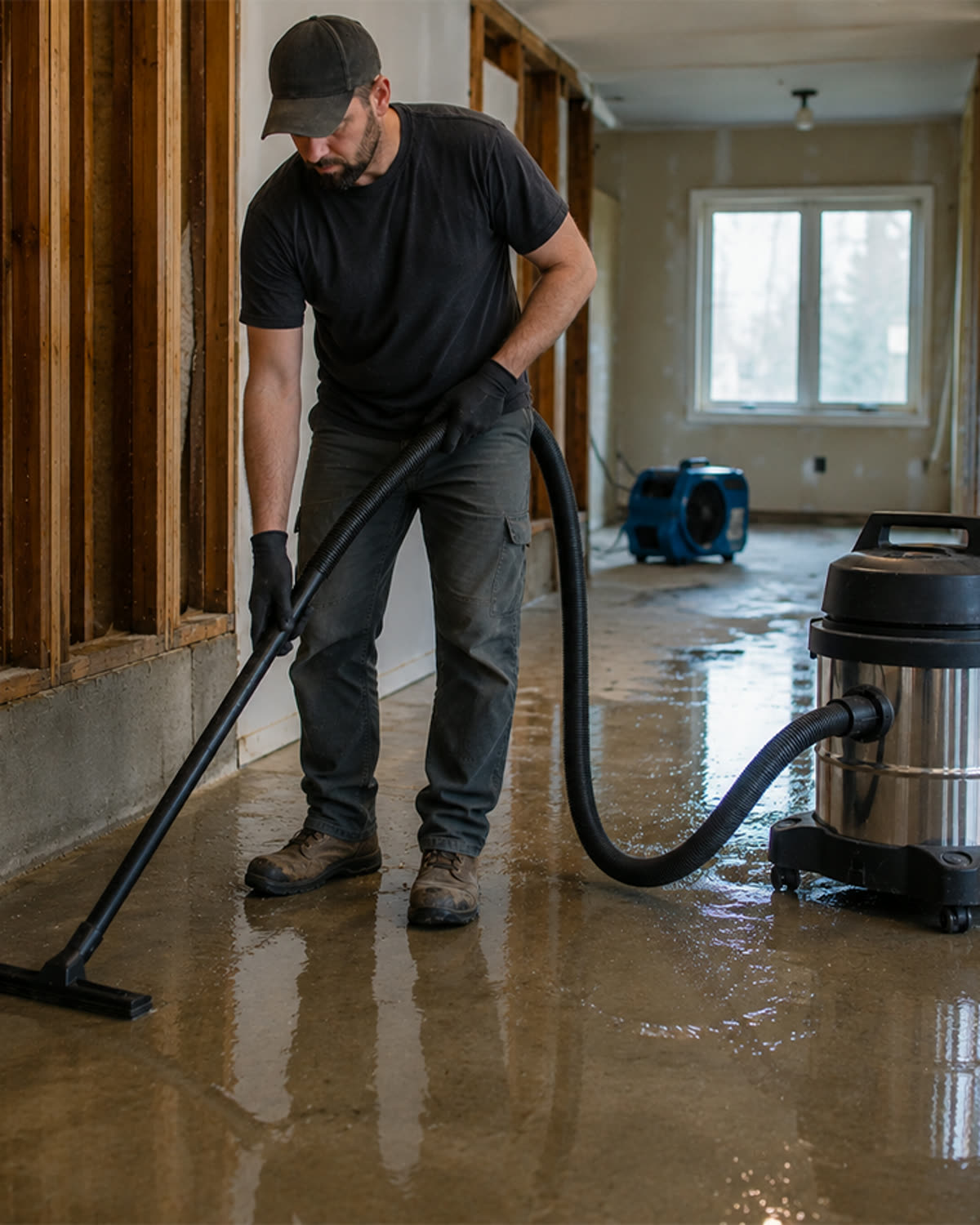
Disposable vacuum bags do not seem expensive when you buy them one at a time.
A bag may cost:
- $8
- $12
- $15
- $20
That feels like a small operating expense.
But professional contractors rarely use one bag.
They use bags:
- Every week
- On every dusty project
- Across multiple vacuums
- Throughout the year
A contractor using three $12 bags each week spends approximately $1,872 per year.
That is before calculating:
- Replacement filters
- Time spent buying bags
- Time spent changing them
- Jobs interrupted because supplies ran out
- Disposal costs
- Motor wear caused by poor dust collection
A reusable vacuum bag may cost more initially.
But if it replaces dozens or hundreds of disposable bags while maintaining airflow and protecting the filter, the long-term savings can be substantial.
The real question is not simply:
Does a reusable bag cost less than disposable bags?
The better question is:
Does it reduce the total cost of collecting dust without sacrificing performance, filtration, or convenience?
Quick Answer
A reusable shop vacuum bag may be worth the investment when:
- You use disposable bags frequently.
- You collect high volumes of dry dust.
- Replacement bags are expensive.
- Filters clog quickly.
- You want to reduce recurring consumable purchases.
- You can empty the reusable bag in a controlled manner.
- The bag is designed for the dust and vacuum.
- The bag maintains acceptable airflow over repeated use.
A disposable bag may remain the better choice when:
- You use the vacuum infrequently.
- Sealed disposal is essential.
- The dust should not be handled again.
- The collected material is contaminated or hazardous.
- Cleaning and emptying labor would exceed the savings.
- The reusable bag is not suitable for the particle size.
Reusable bags are not automatically better.
Their value depends on:
- Purchase price
- Service life
- Dust-capture performance
- Filter protection
- Emptying time
- Cleaning requirements
- Airflow retention
- Disposal needs
What Is a Reusable Shop Vacuum Bag?
A reusable shop vacuum bag is a collection bag designed to be emptied and placed back into service.
Unlike a disposable paper or fleece bag, it is intended to survive repeated cycles of:
- Dust collection
- Removal
- Emptying
- Inspection
- Reinstallation
Reusable bags may be constructed from:
- Filter-grade woven fabric
- Nonwoven synthetic material
- Multi-layer filtration media
- Reinforced textiles
- Moisture-resistant materials
They may empty through:
- A zipper
- A roll-top opening
- A hook-and-loop closure
- A removable cap
- A wide discharge opening
The exact design affects how cleanly, quickly, and safely the bag can be emptied.
A Reusable Bag Is More Than a Container
A reusable bag performs three jobs.
Job 1: Collect Debris
It stores dust and material inside the vacuum.
Job 2: Protect the Filter
It captures particles before they reach the primary filter.
Job 3: Preserve Airflow
By reducing filter loading, it may help the vacuum maintain stronger working performance.
Dust Enters Vacuum

↓

Reusable Bag Captures Material

↓

Primary Filter Receives Less Dust

↓

Airflow Remains Stronger

↓

Motor Runs Cooler
The bag’s value should be measured across all three jobs.
🔬 Vacuum Science
A collection bag is part of the vacuum’s airflow system.
Air must pass through the bag material.
Dust should remain inside.
This creates a necessary balance.
If the material is too open:
- Airflow remains strong.
- Fine dust may pass through.
- The primary filter loads quickly.
If the material is too restrictive:
- Fine dust remains inside.
- Airflow may fall.
- Pickup performance suffers.
A successful reusable bag must capture the intended dust while allowing enough air to pass throughout the job.
The Reusable Performance Balance™
A reusable bag must balance four factors:
Particle Capture

+

Airflow

+

Durability

+

Emptying Efficiency

=

Reusable Bag Performance
A bag that lasts for years but allows dust to pass is not effective.
A bag that captures dust perfectly but blocks airflow is not effective.
A bag that filters well but takes 30 minutes to empty may not be economical.
The complete balance matters.
Disposable Bag Cost Adds Up Quickly
Disposable vacuum bags create a recurring operating expense.
The annual cost depends on:
- Price per bag
- Bags used per week
- Working weeks per year
- Number of vacuums
Disposable Bag Cost Formula™
Bag Price

×

Bags Used Per Week

×

Working Weeks

×

Number of Vacuums

=

Annual Disposable Bag Cost
Example 1: Light Professional Use
Assume:
- $10 per bag
- 1 bag per week
- 50 working weeks
Annual expense:
$10 × 1 × 50

=

$500 per year
Five-year expense:
$500 × 5

=

$2,500
Example 2: Regular Contractor Use
Assume:
- $12 per bag
- 3 bags per week
- 50 working weeks
Annual expense:
$12 × 3 × 50

=

$1,800 per year
Five-year expense:
$1,800 × 5

=

$9,000
Example 3: Small Vacuum Fleet
Assume:
- $12 per bag
- 2 bags per week
- 50 weeks
- 5 vacuums
Annual expense:
$12 × 2 × 50 × 5

=

$6,000 per year
Five-year expense:
$6,000 × 5

=

$30,000
Small consumable purchases become large business expenses when multiplied across time and equipment.
The Consumable Multiplier™
Small Cost

×

Frequent Use

×

Multiple Vacuums

×

Multiple Years

=

Major Operating Expense
This is why reusable systems can create meaningful savings for professional users.
The Purchase Price Is Not the Full Cost
Disposable bags create costs beyond the invoice.
Additional costs may include:
- Time ordering supplies
- Emergency trips to buy bags
- Inventory storage
- Changing bags during jobs
- Disposing of used bags
- Downtime when bags are unavailable
- Shipping
- Filter replacement when bags fail
- Cleanup after torn bags
Reusable bags also create hidden costs.
These may include:
- Emptying labor
- Cleaning
- Inspection
- Drying time
- Dust-control procedures
- Eventual replacement
A fair comparison must include both sides.
The Total Bag Cost Formula™
For disposable bags:
Bag Purchases

+

Ordering Time

+

Changing Labor

+

Disposal

+

Downtime

+

Filter Impact

=

True Disposable Cost
For reusable bags:
Purchase Price

+

Emptying Labor

+

Cleaning Labor

+

Maintenance

+

Replacement

=

True Reusable Cost
The lower total determines the better financial choice.
The Reusable Bag Break-Even Point™
The break-even point is the number of disposable bags a reusable bag must replace before recovering its purchase price.
Basic Formula
Reusable Bag Cost

÷

Disposable Bag Cost

=

Break-Even Uses
Example
Reusable bag cost:
- $150
Disposable bag cost:
- $12
$150 ÷ $12

=

12.5 bags
The reusable bag recovers its purchase price after replacing approximately 13 disposable bags.
This simplified calculation does not include cleaning labor, filter savings, or downtime.
A More Complete Break-Even Formula™
Reusable Purchase Price

+

Expected Maintenance Cost

÷

Disposable Bag Cost

+

Filter Savings Per Use

+

Labor Savings Per Use

=

Estimated Break-Even Point
A reusable system that also reduces filter replacement may reach break-even sooner.
A system that requires significant cleaning labor may take longer.
Filter Savings Can Be Significant
Disposable and reusable bags both provide value by reducing the dust reaching the primary filter.
If a reusable bag performs well, it may reduce:
- Filter cleaning
- Filter replacement
- Motor heat
- Suction loss
- Job interruptions
Example Filter Cost
Suppose a contractor replaces a $45 filter every two months because of heavy fine-dust loading.
Annual filter cost:
$45 × 6

=

$270
If improved pre-collection doubles filter life, annual filter expense falls to approximately:
$45 × 3

=

$135
Estimated annual filter savings:
$270 − $135

=

$135
Filter savings increase the financial value of the collection system.
The Filter Protection Dividend™
A reusable bag may create savings in multiple places.
Less Dust Reaches Filter

↓

Less Filter Cleaning

↓

Fewer Replacement Filters

↓

Stronger Airflow

↓

Faster Cleanup

↓

Lower Motor Stress
The bag’s value continues beyond avoided disposable purchases.
Labor Is Often the Largest Cost
For contractors, labor frequently costs more than filters and bags.
Consider a vacuum that requires filter cleaning three times during a job.
If each interruption takes ten minutes:
3 Cleanings × 10 Minutes

=

30 Minutes
At a labor cost of $50 per hour:
30 Minutes

=

$25 in labor
A collection system that prevents those interruptions may save more than the cost of a disposable bag.
The Labor-First Evaluation™
When comparing collection systems, calculate:
- Minutes spent changing bags
- Minutes spent emptying reusable bags
- Minutes spent cleaning filters
- Minutes lost locating supplies
- Minutes lost troubleshooting airflow
- Minutes spent cleaning released dust
Then multiply by the true hourly labor cost.
Labor Cost Formula™
Minutes Lost

÷

60

×

Hourly Labor Cost

=

Labor Expense
Does a Reusable Bag Maintain Suction?
It can—when properly designed and maintained.
A reusable bag may help maintain suction by preventing rapid filter loading.
However, the bag itself can become restrictive as dust fills its pores.
Performance depends on:
- Bag material
- Surface area
- Dust type
- Dust volume
- Bag design
- Emptying frequency
- Embedded particles
- Moisture
- Cleaning method
A reusable bag should be monitored for airflow loss just like a disposable bag or filter.
New Performance vs. Working Performance
A vacuum may have slightly different initial airflow with a collection bag installed.
The more important comparison is performance throughout the job.
No Effective Pre-Collection
Strong Initial Airflow

↓

Filter Loads Quickly

↓

Rapid Suction Loss
Effective Reusable Collection
Moderate Initial Airflow

↓

Filter Remains Cleaner

↓

More Stable Working Suction
The Average Airflow Principle™
The best-performing system is not necessarily the one with the highest airflow during the first minute.
It is the system with the highest useful average airflow through the complete job.
Initial Airflow

+

Airflow After Dust Loading

+

Recovery After Emptying

=

Working Performance
How Reusable Bags Handle Fine Dust
Fine dust is the most difficult test for any collection bag.
Examples include:
- Drywall dust
- Concrete dust
- Fine sawdust
- Sanding dust
- Joint compound
- Cement powder
Fine particles may:
- Penetrate weak fabric
- Become embedded inside the material
- Reduce airflow
- Escape during emptying
- Remain after cleaning
A reusable bag intended for general debris may not perform well with professional fine-dust workloads.
Evaluate:
- Particle-capture capability
- Filter-grade fabric
- Seam construction
- Collar sealing
- Airflow retention
- Emptying design
- Manufacturer application guidance
The Fine-Dust Test™
A reusable bag used for fine dust should answer five questions:
- Does it stop most dust before the primary filter?
- Does airflow remain acceptable during use?
- Can it be emptied without releasing a large dust cloud?
- Does airflow recover after emptying?
- Does the material remain durable after repeated cycles?
If the answer to any of these is consistently no, the bag may not fit the application.
Are Reusable Bags Good for Drywall Dust?
They can be highly useful when designed for fine dust.
A suitable reusable drywall-dust bag may:
- Capture dust before it reaches the filter
- Reduce disposable-bag costs
- Maintain suction longer
- Reduce job interruptions
- Lower filter replacement
- Improve availability on jobsites
Important considerations include:
- Fine-particle capture
- Bag closure
- Emptying process
- Embedded dust
- Proper installation
- Dry conditions
Drywall dust should not be aggressively shaken from the bag.
Controlled disposal is essential.
Are Reusable Bags Good for Concrete Dust?
Concrete and masonry dust require careful equipment selection.
A reusable collection bag may reduce filter loading, but it does not automatically make a vacuum appropriate for:
- Concrete grinding
- Silica-containing dust
- Regulated jobsite applications
- Hazardous particle exposure
The complete system may require:
- Application-specific extraction
- Appropriate filtration
- Secure seals
- Controlled disposal
- Defined cleaning procedures
- Compliance with applicable requirements
A reusable bag is one component—not the entire dust-control solution.
Are Reusable Bags Good for Sawdust?
Reusable bags can work well for:
- Fine sawdust
- Sanding dust
- General woodworking cleanup
- Repeated workshop use
For large chips and shavings, a cyclone or larger collection system may offer greater capacity.
A reusable bag should be protected from:
- Sharp splinters
- Fasteners
- Long shavings that stress seams
- Excessive overfilling
Are Reusable Bags Good for Wet Pickup?
Only when specifically designed for wet use.
Many fabric collection bags are intended for dry debris.
Wet material may:
- Block airflow
- Create mud
- Add significant weight
- Cause odors
- Promote mold
- Damage closures
- Become difficult to remove
Follow the exact wet-use instructions for the vacuum and collection system.
Durability
A reusable bag must survive more than dust collection.
It must withstand:
- Vacuum pressure
- Repeated installation
- Repeated removal
- Collected weight
- Emptying
- Cleaning
- Transportation
- Abrasion
- Folding
- Storage
Important construction features include:
- Reinforced seams
- Durable collar
- Strong closure
- Tear-resistant fabric
- Protected stitching
- Stable shape
- Quality hardware
The Reuse Cycle™
Every service cycle creates wear.
Install

↓

Collect

↓

Remove

↓

Empty

↓

Clean or Inspect

↓

Reinstall
A reusable bag should be evaluated by the number of complete cycles it can perform—not simply by how long it sits inside the vacuum.
How Long Does a Reusable Bag Last?
There is no universal lifespan.
Service life depends on:
- Dust abrasiveness
- Collected weight
- Emptying frequency
- Sharp debris
- Cleaning method
- Fabric quality
- Seam quality
- Moisture exposure
- Storage
- Installation technique
Replace a reusable bag when it develops:
- Tears
- Weak seams
- Damaged closures
- Collar failure
- Permanent restriction
- Dust bypass
- Loss of structural integrity
- Reduced filtration performance
Reusable does not mean permanent.
It means repeated use before replacement.
The Cost Per Use™
A reusable product should be evaluated by cost per successful cycle.
Purchase Price

÷

Number of Effective Uses

=

Cost Per Use
Example
Reusable bag price:
- $150
Effective service cycles:
- 150
$150 ÷ 150

=

$1 per use
If the comparable disposable bag costs $12, the direct consumable saving is approximately $11 per cycle before labor and filter effects.
Controlled Emptying Matters
Reusable bags must be emptied.
This creates a potential dust-release point.
Poor emptying technique may undo the benefit of collecting the dust.
Avoid:
- Aggressive shaking
- Dumping from height
- Emptying into wind
- Beating the bag against hard surfaces
- Using compressed air
- Opening near HVAC intakes
- Cleaning inside occupied spaces
Controlled Emptying Process
- Turn off and unplug the vacuum.
- Allow internal dust to settle.
- Move to an appropriate disposal area.
- Use suitable protective equipment.
- Remove the bag slowly.
- Position the discharge opening close to the disposal container.
- Release the dust gradually.
- Avoid compressing the bag rapidly.
- Seal the waste.
- Inspect the reusable bag before reinstallation.
Follow the product manufacturer’s specific instructions.
The Disposal Efficiency Test™
A reusable bag creates practical value only when it can be emptied:
- Quickly
- Predictably
- Without damage
- With limited dust release
- Without excessive cleaning
A difficult emptying process increases labor and exposure.
Does the Bag Need to Be Washed?
Some reusable bags can be washed.
Others should only be emptied or gently cleaned.
Washing may affect:
- Filtration
- Fabric structure
- Seams
- Coatings
- Airflow
- Dimensional stability
Never assume a reusable bag is washable.
Follow the manufacturer’s instructions.
When washing is approved:
- Use the recommended method.
- Avoid harsh chemicals unless authorized.
- Rinse thoroughly when required.
- Allow the bag to dry completely.
- Inspect before reuse.
A damp bag may load quickly and create odors or mud.
Cleaning Can Reduce Bag Life
Aggressive cleaning methods may damage the collection material.
Avoid:
- High-pressure air at close range
- Wire brushes
- Scraping
- Bleach unless approved
- High-temperature drying
- Twisting or wringing
- Beating against concrete
The goal is restoring function—not making the bag appear new.
The Functional Clean Standard™
A reusable bag does not need to look factory-new.
It should:
- Maintain appropriate airflow
- Capture the intended dust
- Seal correctly
- Empty reliably
- Remain structurally sound
Appearance is secondary to performance.
Environmental Benefits
Reusable bags may reduce the number of disposable bags entering the waste stream.
Potential environmental benefits include:
- Less paper or synthetic bag waste
- Less packaging
- Fewer shipments
- Reduced recurring manufacturing demand
- Longer useful life per collection product
However, the environmental comparison should also consider:
- Bag materials
- Cleaning water
- Cleaning chemicals
- Product lifespan
- End-of-life disposal
- Shipping distance
Reusable systems generally create the greatest benefit when they replace a large number of disposable items.
The Waste Avoidance Formula™
Disposable Bags Replaced Per Year

×

Years of Reusable Service

=

Single-Use Bags Avoided
Example
If a reusable bag replaces:
- 3 disposable bags per week
- Over 50 working weeks
- For 3 years
3 × 50 × 3

=

450 disposable bags avoided
Actual results depend on the bag’s service life and the work performed.
Convenience and Availability
Disposable bags require inventory.
A contractor must:
- Order them
- Store them
- Carry them
- Monitor stock
- Avoid running out
A reusable bag may reduce supply dependence.
This can be valuable when:
- The vacuum uses proprietary bags.
- Local stores do not stock replacements.
- Work occurs in remote locations.
- Crews use several bags per week.
- Shipping delays interrupt projects.
The Availability Advantage™
Reusable Bag Already Installed

↓

No Emergency Bag Purchase

↓

Less Downtime

↓

More Predictable Workflow
Availability has economic value even when it does not appear on an invoice.
Disposable Bags Still Have Advantages
Reusable collection is not always the best choice.
Disposable bags may be preferable when:
- Dust should remain sealed after collection.
- The material is contaminated.
- The job is performed in a sensitive environment.
- The bag should not be reopened.
- Emptying labor is expensive.
- Cleaning facilities are unavailable.
- The vacuum is used infrequently.
- Customer requirements favor sealed disposal.
Disposable systems exchange recurring cost for convenience and containment.
The Convenience Premium™
The price of a disposable bag includes more than material.
It also purchases:
- Fast removal
- No bag cleaning
- Reduced handling
- Immediate replacement
- Potentially cleaner disposal
A reusable system must produce enough savings to justify taking responsibility for these tasks.
Reusable vs. Disposable Comparison
| Factor | Reusable Bag | Disposable Bag |
|---|---|---|
| Initial cost | Higher | Lower |
| Recurring cost | Lower | Higher |
| Emptying required | Yes | Usually no |
| Cleaning required | Sometimes | No |
| Waste volume | Lower | Higher |
| Sealed disposal | Varies | Often better |
| Availability | Consistent | Requires inventory |
| Long-term value | High for frequent users | Better for occasional use |
| Dust exposure during emptying | Possible | Usually lower |
| Filter protection | Design dependent | Design dependent |
| Durability | Higher | Single use |
| Wet compatibility | Product dependent | Usually limited |
| Cost predictability | Higher after purchase | Depends on bag prices |
Reusable Bag vs. Cyclone Separator
Both reduce disposable-bag use and filter loading.
Reusable Bag
Advantages:
- Fits inside the vacuum
- More portable
- Fewer hoses
- Smaller footprint
- Less setup
Limitations:
- Limited by tank capacity
- Requires emptying
- Material may retain fine dust
Cyclone
Advantages:
- Greater external capacity
- Strong separation of large particles
- Good for stationary use
- May keep most debris out of the vacuum
Limitations:
- Extra equipment
- Added resistance
- More leak points
- Reduced portability
The better choice depends on workflow.
Reusable Bag vs. Open-Tank Collection
Open-tank collection has no bag cost.
But fine dust reaches the primary filter more directly.
Open Tank
Advantages:
- Maximum internal capacity
- Simple
- Good for liquids when configured correctly
- Good for bulky or sharp debris
Limitations:
- Rapid filter loading
- Messier disposal
- More tank cleaning
- Less fine-dust containment
Reusable Bag
Advantages:
- Filter protection
- Cleaner tank
- Repeatable collection
- Reduced disposable cost
- More controlled dust handling
Limitations:
- Less practical capacity
- Requires emptying
- May not suit sharp or wet debris
The Value Threshold™
Reusable collection becomes more attractive as these factors increase:
Bag Usage

+

Filter Cost

+

Labor Cost

+

Dust Volume

+

Supply Problems

=

Reusable Value
Occasional users may never reach the threshold.
Daily professional users may reach it quickly.
Who Benefits Most From Reusable Bags?
Drywall Contractors
Potential benefits:
- High fine-dust volume
- Frequent disposable-bag use
- Rapid filter loading
- Repetitive work
- Significant long-term consumable expense
Flooring Contractors
Potential benefits:
- Sanding dust
- Adhesive debris
- Fine construction dust
- Frequent jobsite cleanup
- Mobile equipment needs
Remodelers
Potential benefits:
- Mixed dry debris
- Recurring cleanup
- Multiple rooms
- Need for portability
- Regular fine-dust exposure
Woodworkers
Potential benefits:
- Repeated sawdust collection
- Workshop-based emptying
- High consumable use
- Need for filter protection
Large chip producers may still benefit from a cyclone or dust collector.
Commercial Cleaners
Potential benefits:
- High usage frequency
- Predictable debris
- Multiple machines
- Significant consumable budgets
- Need for consistent equipment availability
Occasional Home Users
The financial savings may be smaller because bag usage is low.
A reusable bag may still be useful for convenience or waste reduction.
Questions to Ask Before Buying
How Many Disposable Bags Do I Use?
Estimate weekly and annual usage.
What Does Each Bag Cost?
Include shipping and taxes when applicable.
What Dust Do I Collect?
Fine dust demands better filtration performance.
How Often Does My Filter Require Cleaning?
Frequent cleaning suggests inadequate pre-collection.
How Much Is My Time Worth?
Include labor for changes, cleaning, and disposal.
Where Will I Empty the Bag?
A controlled disposal location is necessary.
Can the Bag Be Cleaned Correctly?
Confirm manufacturer guidance.
How Long Is the Expected Service Life?
Calculate cost per use rather than purchase price alone.
Is Sealed Disposal Required?
Some applications favor disposable containment.
Does It Fit the Vacuum Correctly?
Compatibility affects sealing, airflow, and safety.
Reusable Bag ROI Calculator™
Use this formula:
Annual Disposable Bag Cost

+

Annual Filter Savings

+

Annual Labor Savings

−

Annual Reusable Maintenance Cost

=

Estimated Annual Savings
Then calculate payback:
Reusable Bag Purchase Price

÷

Estimated Annual Savings

=

Estimated Payback Period
Example ROI Calculation
Assume:
- Disposable bags cost $12 each.
- Contractor uses 3 per week.
- Contractor works 50 weeks.
- Reusable bag costs $175.
- Reusable maintenance costs $100 per year.
- Improved filter protection saves $150 per year.
Disposable bag expense:
$12 × 3 × 50

=

$1,800 per year
Estimated annual benefit:
$1,800

+

$150 filter savings

−

$100 maintenance

=

$1,850 annual savings
Estimated payback period:
$175 ÷ $1,850

=

Approximately 0.095 years
That is roughly five weeks.
This is an illustrative example.
Actual results depend on usage, bag life, labor, dust type, and product performance.
The ROI Warning™
A reusable product creates no savings if it:
- Fails prematurely
- Allows dust through
- Reduces airflow excessively
- Requires excessive cleaning
- Damages the vacuum
- Creates uncontrolled dust exposure
- Does not fit the workflow
The least expensive collection method is the one that completes the job effectively at the lowest total cost.
Reusable Bag Inspection Checklist
Before each use:
- Collar secure
- Closure fully sealed
- Fabric free from tears
- Seams intact
- Bag correctly positioned
- Bag has capacity
- Material is appropriate
- Primary filter correctly installed
- Airflow tested
- Disposal plan prepared
After emptying:
- Fabric inspected
- Seams checked
- Closure cleaned
- Collar cleaned
- Embedded debris removed appropriately
- Bag completely dry when required
- Airflow performance acceptable
- Dust bypass absent
When to Stop Reusing the Bag
Retire the bag when:
- Dust escapes through the material.
- Airflow no longer recovers.
- Seams begin separating.
- The collar no longer seals.
- The emptying closure fails.
- Fabric becomes permanently stiff or clogged.
- Tears appear.
- Repairs become unreliable.
- Cleaning no longer restores function.
Continuing to use a failed bag may increase filter loading and exhaust dust.
Reusable Bag Decision Tree™
Do You Use Disposable Bags Frequently?

↓

NO → Disposable Bags May Remain Practical

YES

↓

Is the Dust Dry and Compatible?

↓

NO → Use Application-Specific Collection

YES

↓

Can the Bag Capture the Particle Size?

↓

NO → Choose Better Filtration

YES

↓

Can It Be Emptied Safely?

↓

NO → Use Sealed Disposable Collection

YES

↓

Will Savings Exceed Maintenance?

↓

YES → Reusable Bag May Be Worth It
Common Mistakes
Comparing Purchase Prices Only
Reusable systems should be compared against years of recurring disposable purchases.
Ignoring Emptying Labor
Reusable bags require handling after collection.
Assuming Reusable Means No Maintenance
Every reusable component requires inspection and care.
Using a General-Debris Bag for Fine Dust
The fabric may allow excessive dust to pass.
Overfilling the Bag
Airflow may fall and closures may become overstressed.
Mixing Sharp Debris With Fine Dust
One puncture may release the full dust load.
Cleaning Too Aggressively
Compressed air, scraping, and beating can damage filtration material.
Reusing a Damaged Bag
Tears and weak seams eliminate filter protection.
Ignoring the Primary Filter
A reusable bag usually does not replace required final filtration.
Assuming Every Job Should Use Reusable Collection
Contaminated or hazardous materials may require sealed disposable handling.
Diagram Placeholder
Reusable Bag Cost Comparison
Create a five-year cumulative-cost chart.
Disposable Bag Line
Begins low but rises steadily every month.
Reusable Bag Line
Begins with a larger initial purchase and then rises slowly through maintenance and eventual replacement.
Mark the point where the lines cross:
Break-even point
Add adjustable variables:
- Bag price
- Bags per week
- Reusable purchase price
- Maintenance cost
- Filter savings
Interactive Calculator Placeholder
Reusable Vacuum Bag Savings Calculator
Ask users to enter:
- Disposable bag price
- Bags used per week
- Working weeks per year
- Number of vacuums
- Filters purchased annually
- Filter cost
- Hourly labor cost
- Minutes spent changing disposable bags
- Reusable bag price
- Expected reusable lifespan
- Minutes spent emptying and maintaining it
Output:
- Annual disposable-bag expense
- Five-year disposable expense
- Reusable cost per use
- Estimated filter savings
- Estimated labor difference
- Break-even point
- Five-year net savings
- Disposable bags avoided
Common Myths
Myth: Reusable bags are always cheaper.
Reality: Savings depend on usage frequency, lifespan, maintenance labor, and performance.
Myth: Reusable bags never need replacement.
Reality: Fabric, seams, collars, and closures eventually wear.
Myth: Disposable bags are inexpensive.
Reality: Frequent use can create thousands of dollars in annual consumable expense.
Myth: A reusable bag eliminates the primary filter.
Reality: The bag generally acts as pre-collection. Required final filtration should remain installed.
Myth: Reusable bags cannot capture fine dust.
Reality: Performance depends on the filtration material and design.
Myth: Reusable bags are always messy.
Reality: A well-designed emptying system and controlled technique can reduce dust release.
Myth: The bag must look completely clean before reuse.
Reality: Functional airflow and filtration matter more than appearance.
Myth: Reusable bags are only for large contractors.
Reality: Any frequent user may benefit when recurring disposable costs are high enough.
Frequently Asked Questions
Are reusable shop vacuum bags worth the money?
They can be highly cost-effective for frequent users when they maintain airflow, capture the intended dust, protect filters, and survive repeated emptying.
How much can reusable vacuum bags save?
Savings depend on disposable-bag price and usage. Contractors using several bags per week may save hundreds or thousands of dollars annually.
How many times can a reusable vacuum bag be used?
It depends on the material, bag construction, cleaning method, and workload. Evaluate effective service cycles rather than assuming a fixed lifespan.
Do reusable vacuum bags reduce suction?
They create some airflow resistance, but a good bag may preserve working suction by preventing rapid filter clogging.
Are reusable bags good for drywall dust?
They can be when specifically designed to capture fine drywall particles and emptied using controlled methods.
Are reusable bags suitable for concrete dust?
They may reduce filter loading, but the complete extraction and filtration system must be appropriate for the application and applicable safety requirements.
Can reusable bags be washed?
Only when the manufacturer approves washing. The bag should be completely dry before reuse.
Do reusable bags replace vacuum filters?
Usually not. The primary filter should remain installed according to the vacuum manufacturer’s instructions.
Are reusable bags better than cyclones?
Reusable bags are more portable and compact. Cyclones may provide greater capacity and stronger large-particle separation.
Are reusable bags cleaner than open-tank collection?
They can provide more controlled dust containment and reduce loose dust inside the vacuum.
How do I know when a reusable bag is worn out?
Replace it when airflow no longer recovers, dust bypasses the material, seams fail, the collar leaks, or the fabric becomes damaged.
Can reusable bags collect water?
Only when specifically designed for wet use. Most fine-dust bags are intended for dry collection.
Do reusable bags reduce waste?
Yes, when they replace substantial numbers of disposable bags over their service life.
Are disposable bags better for hazardous dust?
Sealed disposable collection may be preferable or required for certain materials. Follow application-specific requirements.
Key Takeaways
Reusable shop vacuum bags can provide substantial financial value.
But the savings do not come from reusability alone.
They come from a complete performance system that:
- Replaces repeated disposable purchases
- Captures dust before it reaches the filter
- Maintains useful airflow
- Reduces filter cleaning
- Lowers replacement-filter costs
- Reduces downtime
- Remains durable through repeated use
- Empties efficiently
For occasional users, disposable bags may remain convenient and economical.
For contractors using multiple bags every week, reusable collection can dramatically reduce long-term operating costs.
The decision should be based on:
- Cost per use
- Dust-capture performance
- Airflow
- Service life
- Labor
- Filter savings
- Disposal requirements
- Workflow
Do not ask only:
How much does the reusable bag cost?
Ask:
How much is the disposable system already costing every year?
That is where the real comparison begins.
Related guides
- the guide to shop vacuum troubleshooting guide
- the shop vacuum bag comparison guide
- how a cyclone compares to a bag
- the disposable-versus-reusable comparison
- the case contractors make for switching to reusable
- our pick of bags for drywall work
- related: vacuum bag material for are reusable shop vacuum bags worth it users
- when to retire a reusable bag
- related: multi stage shop vacuum filtration for are reusable shop vacuum bags worth it users