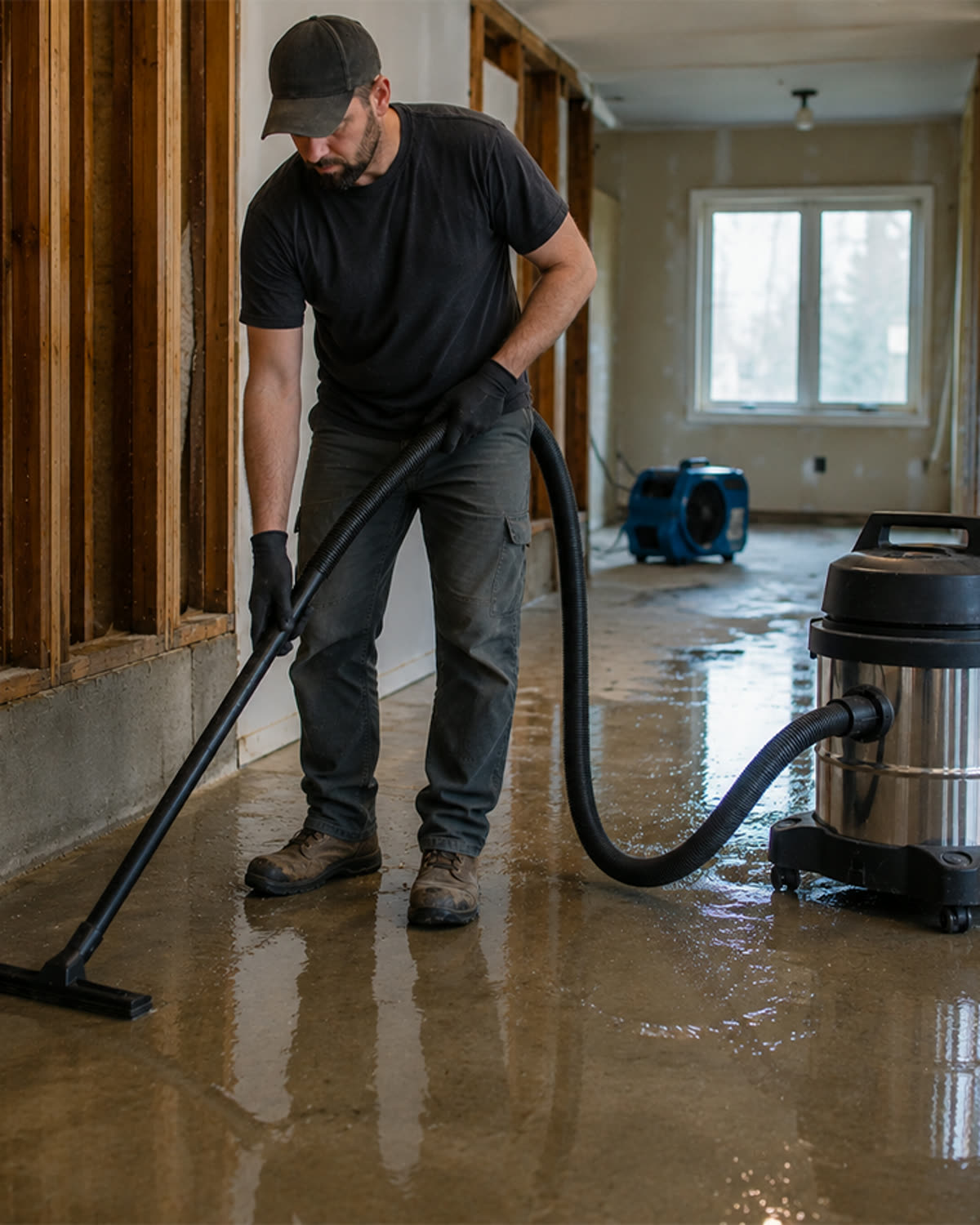
Reusable vacuum bags and cyclone separators solve a similar problem:
They reduce the amount of debris reaching the primary vacuum filter.
But they do so differently.
A reusable bag captures material inside the vacuum tank.
A cyclone separates debris into an external container before air reaches the vacuum.
Both may:
- Extend filter life
- Reduce disposable-bag use
- Maintain suction
- Lower operating costs
The better system depends on:
- Dust type
- Debris volume
- Portability
- Available space
- Disposal method
- Hose length
- Jobsite workflow
Quick Answer
Choose a reusable vacuum bag when you need:
- Compact portability
- Simple setup
- Fewer hoses
- Fast movement between rooms
- Lower recurring bag costs
- Fine-dust pre-collection
- One integrated vacuum system
Choose a cyclone when you need:
- High external capacity
- Frequent collection of sawdust or chips
- Stationary or workshop operation
- Easy separator-bin emptying
- Maximum reduction of bulky debris entering the vacuum
For mobile contractors, a reusable bag is usually simpler.
For stationary high-volume debris, a cyclone often provides greater capacity.
How a Reusable Bag Works
Air and debris enter the vacuum.
The bag captures material while air passes through its fabric.
Hose

↓

Reusable Bag

↓

Primary Filter

↓

Motor
The bag performs both collection and pre-filtration.
How a Cyclone Works
Debris enters an external chamber.
Air rotates.
Heavier particles move toward the walls and fall into the container.
Tool or Hose

↓

Cyclone Chamber

↓

Collection Bin

↓

Vacuum Filter

↓

Motor
The cyclone relies on particle momentum rather than porous filtration.
Portability
Reusable Bag
Advantages:
- Fits inside vacuum
- One machine to move
- Fewer hoses
- Smaller footprint
- Faster residential setup
Cyclone
Limitations:
- Separate container
- Additional hose
- More connections
- Larger footprint
- More difficult stairs and vehicles
Portability winner: Reusable bag
Capacity
Reusable Bag
Capacity is limited by:
- Vacuum tank
- Bag shape
- Working airflow
- Safe handling weight
Cyclone
Capacity can be increased through:
- Larger external bin
- Frequent bin emptying
- Stationary drum
- Multiple container sizes
Capacity winner: Cyclone
Fine-Dust Capture
Reusable Bag
Fine-dust performance depends on:
- Fabric
- Layers
- Seams
- Collar
- Surface area
Cyclone
Cyclones are generally more effective with heavier particles.
Very fine dust may remain in the airflow.
Fine-dust capture winner: Application-dependent, often reusable fine-dust bag
Final filtration remains necessary for both.
Large Debris
Cyclones commonly perform well with:
- Wood chips
- Sawdust
- Planer shavings
- General workshop debris
Reusable bags may fill quickly with bulky material.
Large-debris winner: Cyclone
Airflow Resistance
Reusable Bag
Resistance comes from:
- Fabric
- Dust loading
- Bag position
Cyclone
Resistance comes from:
- Cyclone geometry
- Additional hose
- Bends
- Connections
- Air leaks
Either system can reduce airflow if poorly designed or overloaded.
The Total-Resistance Rule™
Bag Resistance

Compared With

Cyclone Resistance

+

Extra Hose

+

Extra Connections
Compare the complete installed system—not one component in isolation.
Filter Protection
Reusable Bag
Can capture both larger debris and fine particles before the filter.
Cyclone
Often removes a high percentage of heavier debris but may pass more ultrafine dust.
Both systems can significantly reduce filter loading.
The result depends on the material.
Disposal
Reusable Bag
Requires:
- Bag removal
- Controlled opening
- Low-drop emptying
- Bag inspection
Cyclone
Requires:
- Bin removal
- Lid opening
- Dumping or liner removal
- Seal inspection
A cyclone may be cleaner when the bin uses an appropriate liner.
A reusable bag may be simpler because there is only one collection vessel.
Jobsite Footprint
A cyclone system may occupy:
- Floor space
- Cart space
- Vehicle space
- Setup area
A reusable bag remains inside the vacuum.
This matters in:
- Occupied homes
- Hallways
- Apartments
- Stairs
- Small rooms
Setup Time
Reusable Bag
- Install bag.
- Connect hose.
- Begin work.
Cyclone
- Position vacuum.
- Position separator.
- Connect first hose.
- Connect second hose.
- Inspect seals.
- Begin work.
Setup time may be minor in a workshop but significant across frequent mobile jobs.
Maintenance
Reusable Bag Maintenance
- Empty
- Inspect fabric
- Clean when approved
- Dry
- Check collar and closure
Cyclone Maintenance
- Empty bin
- Inspect lid seal
- Check hoses
- Remove internal buildup
- Prevent bin overfill
- Check for air leaks
Cost Comparison
Reusable-bag costs may include:
- Initial bag purchase
- Cleaning labor
- Eventual replacement
Cyclone costs may include:
- Separator
- Collection bin
- Additional hose
- Cart
- Liners
- Seal maintenance
- Added setup labor
Contractor Workflow Comparison
| Factor | Reusable Bag | Cyclone |
|---|---|---|
| Portability | Excellent | Moderate |
| Capacity | Moderate | Excellent |
| Fine-dust capture | Design dependent, often strong | Moderate without final filtration |
| Large debris | Moderate | Excellent |
| Setup time | Low | Higher |
| Floor space | Low | Higher |
| Hose complexity | Low | Higher |
| Filter protection | Strong | Strong |
| Emptying | Bag dependent | Bin dependent |
| Mobile jobs | Excellent | Moderate |
| Workshop use | Good | Excellent |
Best Choice by Trade
Drywall Contractor
Reusable fine-dust bag may provide compact mobile filtration.
Woodworker
Cyclone often provides better chip and sawdust capacity.
Remodeler
Reusable bag is generally easier between rooms.
Flooring Contractor
Reusable bag for mobile fine dust; cyclone for stationary sanding setups.
Commercial Cleaner
Reusable bag may reduce fleet consumables without adding carts.
Garage Workshop
Cyclone may be worthwhile when space is available.
The Mobility–Capacity Tradeoff™
Reusable Bag

=

Higher Mobility, Lower External Capacity

Cyclone

=

Higher Capacity, Lower Mobility
This is the central decision.
Can You Use Both?
Yes.
A system may use:
Cyclone

↓

Reusable Bag

↓

Primary Filter
Potential benefits:
- Cyclone handles large debris
- Reusable bag captures finer material
- Filter receives the smallest burden
Potential disadvantages:
- More resistance
- More equipment
- More maintenance
- Higher setup complexity
Use both only when the workload justifies the added stages.
Selection Checklist
Choose reusable bag when:
- Work is mobile
- Space is limited
- Fine dust is common
- Setup speed matters
- Disposable-bag costs are high
- External capacity is not essential
Choose cyclone when:
- Debris volume is high
- Large particles dominate
- Work is stationary
- Floor space is available
- Bin capacity is valuable
- Additional hoses are acceptable
Common Mistakes
Expecting a Cyclone to Capture Every Fine Particle
Final filtration is still required.
Overfilling the Cyclone Bin
Debris may carry into the vacuum.
Treating a Reusable Bag as Unlimited Capacity
It must be emptied before airflow and weight limits.
Ignoring Added Hose Resistance
Cyclone performance depends on the complete duct path.
Choosing by Filter Protection Alone
Mobility, disposal, labor, and capacity also matter.
Frequently Asked Questions
Is a cyclone better than a reusable bag?
It is better for high-volume large debris. A reusable bag is generally better for compact mobile use.
Which protects the filter better?
Both can protect it. Performance depends on particle size and system design.
Which is better for drywall dust?
A fine-dust reusable bag may capture ultrafine particles better, while a cyclone may reduce bulk loading.
Which is better for sawdust?
A cyclone is often more practical for high-volume sawdust and wood chips.
Does a cyclone reduce suction?
It adds resistance through its chamber, hoses, bends, and connections.
Can a reusable bag replace disposable liners in a cyclone?
Only if the separator and reusable system are designed to work together.
Key Takeaways
Reusable bags and cyclones solve different workflow problems.
Choose a reusable bag for:
- Mobility
- Compact setup
- Fine-dust collection
- Lower disposable costs
Choose a cyclone for:
- High capacity
- Large debris
- Stationary workshops
- Frequent sawdust collection
The reusable bag prioritizes portability. The cyclone prioritizes external capacity.
Related guides
- the guide to multi-stage shop vacuum filtration: how bags, filters, and cyclones work together
- the shop vacuum bag comparison guide
- learn more about are reusable shop vacuum bags worth it
- learn more about how to reduce shop vacuum bag and filter costs
- reasons a reusable bag beats bolting on a separator
- bags that actually handle the dust that kills filters
- related: vacuum bag material for reusable vacuum bag vs cyclone users
- related: clean reusable shop vacuum bag for reusable vacuum bag vs cyclone users
- recovering bag performance