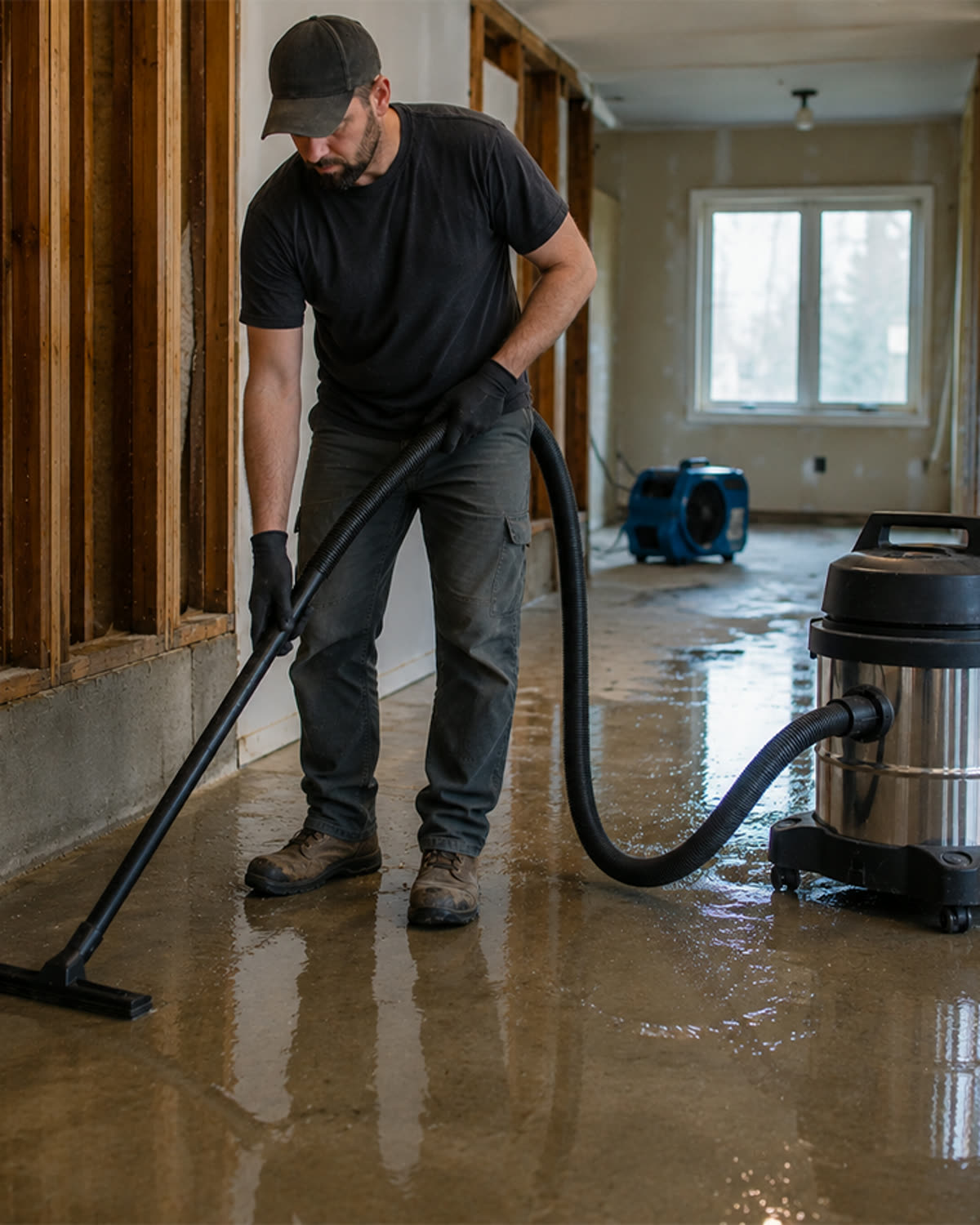
Most shop vacuums can collect dry debris directly into the tank.
That leads to an obvious question:
Do you really need a vacuum bag?
For leaves, wood chips, gravel, or a small amount of general debris, operating without a bag may work perfectly well.
But fine dust changes the equation.
When you vacuum drywall dust, concrete dust, cement powder, joint compound, or sanding dust without a collection bag, nearly every particle travels directly toward the filter.
The vacuum may start with strong airflow.
Then the filter loads.
Suction drops.
The motor runs hotter.
Cleanup slows.
Eventually, you spend more time cleaning the filter than cleaning the jobsite.
A bag is not required for every task.
But for certain materials, it becomes one of the most important parts of the entire dust-collection system.
Quick Answer
You can generally use a shop vacuum without a collection bag when collecting:
- Large dry debris
- Wood chips
- Leaves
- Gravel
- Fasteners
- General workshop waste
- Liquids, when the vacuum is configured correctly for wet pickup
A collection bag is usually beneficial when collecting:
- Drywall dust
- Concrete dust
- Cement powder
- Fine sawdust
- Sanding dust
- Joint compound
- Ash or other very fine dry particles
Without a bag, the primary filter receives the full dust load.
This can cause rapid filter clogging, reduced airflow, motor overheating, messy disposal, and dust escaping through weak seals or damaged filter media.
Always use the filter and collection configuration recommended by the vacuum manufacturer.
What Does a Vacuum Bag Actually Do?
A collection bag does more than hold debris.
It becomes the first major filtration stage inside the vacuum.
As dusty air enters the bag:
- Large debris remains inside.
- Fine particles are captured by the bag material.
- Air passes through the bag.
- The primary filter captures what remains.
- Cleaner air travels toward the motor and exhaust.
Dust and Debris

↓

Collection Bag

↓

Primary Filter

↓

Motor and Fan

↓

Exhaust
Without the bag, the airflow path changes.
Dust and Debris

↓

Open Tank

↓

Primary Filter Receives Full Dust Load

↓

Motor and Fan

↓

Exhaust
The filter must now perform two jobs:
- Collect the dust
- Clean the air
That is where many performance problems begin.
🔬 Vacuum Science
A vacuum filter contains microscopic pathways that allow air to pass while trapping particles.
Each particle that reaches the filter blocks part of those pathways.
Large debris may fall into the tank before reaching the filter.
Fine dust often remains suspended in the moving air.
That means the smaller the particles, the more likely they are to travel directly to the filter.
Large Heavy Debris

↓

Falls Into Tank

Fine Lightweight Dust

↓

Remains Suspended

↓

Reaches Filter
A bag removes more of that suspended dust before it reaches the final filtration stage.
The Filter Workload Principle™
The primary filter’s lifespan depends largely on how much dust reaches it.
More Dust Reaches Filter

↓

Faster Filter Loading

↓

Lower Airflow

↓

More Cleaning

↓

More Heat

↓

Shorter Filter and Motor Life
The purpose of a collection bag is not merely convenience.
It reduces the filter’s workload.
When Bagless Operation Works Well
Operating without a bag can be practical when the collected material is large, heavy, or wet.
Large Dry Debris
Examples include:
- Wood chips
- Leaves
- Gravel
- Screws
- Nuts and bolts
- Drywall fragments
- Packaging
- Large sawdust particles
- Small demolition debris
Much of this material falls quickly into the tank.
It does not remain suspended long enough to reach the filter in large quantities.
A bag may be unnecessary, especially when sharp debris could tear it.
Wet Pickup
Collection bags are generally removed for wet pickup unless the specific bag and vacuum are designed for liquids.
Liquid collection may require:
- Removing the dry collection bag
- Changing or removing the dry filter
- Installing a wet-use filter
- Confirming the float mechanism works
- Following manufacturer instructions
Never assume the same configuration is correct for wet and dry collection.
Sharp Debris
Sharp material may puncture some disposable bags.
Examples include:
- Screws
- Metal fragments
- Broken tile
- Wood splinters
- Sharp plastic
- Nails
For this material, direct tank collection may be more durable.
However, sharp debris should not be mixed unnecessarily with fine dust.
A punctured bag containing drywall or concrete dust can release the entire dust load toward the primary filter.
Occasional Light Cleanup
A collection bag may provide little benefit when vacuuming:
- A few wood chips
- A small garage spill
- Vehicle debris
- Workbench scraps
- Leaves from an entryway
Bagless operation can reduce consumable costs for light general cleanup.
When You Should Use a Collection Bag
A bag becomes increasingly valuable as particle size decreases.
Drywall Dust
Drywall dust is extremely fine and lightweight.
Without a bag:
- Dust reaches the filter almost immediately.
- Filter pleats load rapidly.
- Suction declines.
- The motor may run hotter.
- Emptying creates a large dust cloud.
- Dust may escape through damaged seals.
For drywall cleanup, a suitable fine-dust collection bag or reusable collection system can significantly improve working performance.
Concrete and Masonry Dust
Concrete, mortar, cement, and masonry dust can contain extremely fine particles.
A bag can:
- Reduce filter loading
- Improve dust containment
- Make disposal cleaner
- Help maintain airflow
The collection system must still be appropriate for the application and any applicable safety requirements.
A collection bag does not make an unsuitable vacuum appropriate for hazardous dust.
Sanding Dust
Sanding produces a continuous stream of fine particles.
When connected directly to a sander, the vacuum may collect dust for long periods.
Without effective pre-collection:
- The filter loads quickly.
- Airflow at the tool decreases.
- More dust escapes around the sander.
- Cleanup quality declines.
A suitable bag helps maintain source capture longer.
Fine Sawdust
Large wood chips may fall into the tank.
Fine sawdust behaves more like drywall dust.
Materials such as MDF can produce particularly fine particles.
A bag can substantially reduce the amount reaching the filter.
Ash and Powdered Materials
Cold ash and powdered materials can contain extremely fine particles.
Standard shop vacuums and bags may not be appropriate for every ash or powder application.
Never collect hot ash, glowing material, combustible dust, or unknown powders with equipment not specifically designed for that use.
The Particle-Size Rule™
Large Debris

↓

Bag Optional

Medium Dust

↓

Bag Helpful

Fine Dust

↓

Bag Strongly Recommended

Hazardous or Specialized Dust

↓

Application-Specific Equipment Required
The finer the material, the more valuable pre-collection becomes.
What Happens When You Vacuum Fine Dust Without a Bag?
The vacuum may appear to work normally at first.
The decline usually follows a predictable sequence.
Stage 1: Strong Initial Suction
The filter is clean.
Air passes through easily.
The vacuum feels powerful.
Stage 2: Fine Dust Reaches the Filter
Particles accumulate on:
- Pleats
- Filter fibers
- Seals
- Filter cage
- Motor housing surfaces
Stage 3: Airflow Begins to Fall
The filter’s microscopic pathways become restricted.
You may notice:
- Slower pickup
- Higher-pitched motor sound
- More dust left behind
- Debris moving slowly through the hose
Stage 4: The Motor Runs Hotter
Less airflow means less cooling.
The motor continues operating but retains more heat.
Stage 5: Cleanup Stops Repeatedly
The operator must:
- Remove the filter
- Clean the filter
- Reinstall it
- Clean the surrounding dust
- Restart the job
Stage 6: Permanent Performance Loss
Some fine dust becomes deeply embedded in the filter media.
Cleaning no longer restores full airflow.
The filter eventually requires replacement.
The Bagless Fine-Dust Spiral™
Fine Dust Enters Tank

↓

Dust Reaches Filter

↓

Filter Restriction

↓

Airflow Drops

↓

Motor Heat Increases

↓

Cleanup Slows

↓

Filter Requires Cleaning

↓

Dust Released During Maintenance
The bagless system may save the cost of a bag while creating larger costs elsewhere.
Does Using a Bag Reduce Suction?
A collection bag creates some airflow resistance.
Air must pass through the bag material before reaching the filter.
However, that does not automatically mean the vacuum performs worse.
A clean bag may create a small initial restriction while preventing the filter from loading rapidly.
Consider two systems.
Bagless System
- Slightly higher initial airflow
- Rapid filter loading
- Significant performance decline
- Frequent interruptions
Bagged System
- Slightly lower initial airflow
- Filter remains cleaner
- More stable working performance
- Fewer interruptions
Bagless

High Initial Airflow

↓

Rapid Decline

Bagged

Moderate Initial Airflow

↓

More Stable Performance
The relevant measurement is not the first minute of suction.
It is the average performance throughout the job.
The Maintained Suction Principle™
A system that protects the filter may deliver more useful suction over time, even when it creates slightly more initial resistance.
Small Initial Resistance

+

Major Reduction in Filter Loading

=

Stronger Average Jobsite Performance
A bag should be judged by how well it maintains airflow, not simply whether it creates resistance.
Can a Bag Become Clogged?
Yes.
A bag is also a filter.
As particles fill its pores:
- Resistance increases.
- Airflow decreases.
- Suction falls.
- The bag may collapse or distort.
- Fine dust may concentrate around the inlet.
A bag can appear only partially full while already restricting airflow.
This is common when collecting very fine dust.
The Bag Capacity Illusion™
Physical space and airflow capacity are not the same thing.
Bag Still Has Empty Space

But

Bag Material Is Loaded With Fine Dust

↓

Airflow Has Already Declined
Replace or empty the collection system based on performance—not only visible volume.
Can You Reuse a Disposable Vacuum Bag?
Disposable bags are generally intended for one-time use.
Attempting to empty and reuse them may cause:
- Tears
- Damaged seams
- Loose collars
- Reduced filtration
- Dust exposure
- Poor sealing
- Unexpected failure
Use reusable bags only when they are specifically designed for repeated emptying and cleaning.
Disposable vs. Reusable Bags
Both can protect the filter.
They differ primarily in cost, maintenance, and disposal.
Disposable Bags
Advantages:
- Cleaner removal
- Sealed disposal
- No bag cleaning
- Convenient for fine dust
- Consistent filtration when new
Limitations:
- Recurring cost
- Waste
- Dependence on supply
- Risk of tears
- Reduced usable tank capacity
Reusable Bags
Advantages:
- Lower recurring consumable cost
- Reduced waste
- Repeat use
- Consistent availability
- Potential long-term savings
Limitations:
- Must be emptied
- May release dust during cleaning
- Fabric must be maintained
- Fine dust may remain embedded
- Performance depends on material and design
The Reuse Tradeoff™
Disposable Bag

↓

Lower Maintenance

↓

Higher Recurring Cost

Reusable Bag

↓

Lower Recurring Cost

↓

Greater Emptying and Cleaning Responsibility
The correct choice depends on workload and operating priorities.
Can You Run a Shop Vacuum Without a Filter If You Use a Bag?
Usually not.
A collection bag is a pre-collection stage.
It does not necessarily capture every particle.
Fine dust may pass through the bag material.
The primary filter captures what remains.
Collection Bag

↓

Captures Most Debris

Primary Filter

↓

Captures Remaining Particles
Operate the vacuum with the filter configuration specified by the manufacturer.
Removing a required filter may allow dust to reach:
- Motor components
- Cooling passages
- Exhaust
- Surrounding air
Can You Use a Filter Without a Bag?
Yes, for many applications.
Most shop vacuums are designed to operate with a filter and no bag for certain types of debris.
The question is not whether the vacuum can run.
It is how efficiently it will perform with the material being collected.
For large debris, filter-only operation may work well.
For fine dust, the filter may load very quickly.
Can You Use a Bag Without a Filter?
Do not assume the bag replaces the filter.
Even high-quality bags may allow some particles to pass.
Use both when the manufacturer specifies both.
Do You Need a Bag for Wet Pickup?
Usually, no.
Most dry collection bags should be removed before liquid pickup.
A wet bag may:
- Tear
- Collapse
- Block airflow
- Create mud
- Contaminate the vacuum
- Become extremely heavy
Follow the exact wet-use configuration specified for the vacuum.
Can You Use a Bag for Leaves?
You can, but it may provide little benefit.
Leaves and other bulky debris can:
- Fill the bag quickly
- Block the inlet
- Reduce usable capacity
- Tear thin bags
Direct tank collection may be more practical.
Can You Use a Bag for Wood Chips?
Yes, but consider particle size.
Fine sawdust benefits from a bag.
Large chips may:
- Fill the bag rapidly
- Tear the bag
- Create unnecessary consumable cost
A cyclone or direct tank collection may be more practical for large woodworking debris.
Can You Use a Bag for Screws and Nails?
It is usually better to avoid collecting sharp metal debris into a fine-dust bag.
Sharp items may puncture the bag.
When fine dust and sharp debris are both present:
- Collect sharp objects separately.
- Use the appropriate collection system for the remaining dust.
- Inspect the bag before continued use.
Collection Bag vs. Open Tank
| Feature | Collection Bag | Open Tank |
|---|---|---|
| Filter protection | Good to excellent | Limited |
| Fine-dust control | Better | Poorer |
| Bulky debris | Moderate | Better |
| Sharp debris | Tear risk | Better |
| Wet pickup | Usually unsuitable | Better when configured |
| Disposal cleanliness | Better | Messier |
| Recurring cost | Higher | Lower |
| Tank cleaning | Less | More |
| Initial airflow resistance | Higher | Lower |
| Maintained airflow with fine dust | Better | Poorer |
| Portability | Similar | Similar |
| Usable capacity | Lower | Higher |
Collection Bag vs. Cyclone Separator
A collection bag and cyclone perform similar roles but use different methods.
Bag
Captures particles through filtration.
Best for:
- Fine dust
- Portable work
- Controlled disposal
- Simple setup
Cyclone
Separates particles through spinning airflow.
Best for:
- Large debris volume
- Sawdust
- Stationary work
- Reduced recurring bag use
A layered system may use both.
Cyclone

↓

Collection Bag

↓

Primary Filter
The cyclone removes heavier debris.
The bag captures finer particles.
The filter handles what remains.
When Bagless Operation Costs More
Skipping a collection bag saves the purchase price of the bag.
But it may increase:
- Filter replacements
- Filter-cleaning labor
- Motor wear
- Downtime
- Cleanup time
- Dust exposure
- Disposal mess
- Lost productivity
The Bagless Cost Equation™
Bag Cost Saved

−

Additional Filter Cost

−

Cleaning Labor

−

Downtime

−

Motor Wear

−

Disposal Cleanup

=

Actual Savings
For fine-dust work, the savings may disappear quickly.
Example Operating-Cost Comparison
Suppose a contractor avoids using a $10 collection bag.
During the job, bagless operation causes:
- Three filter cleanings
- Ten minutes per cleaning
- A replacement filter sooner than expected
- Additional cleanup after emptying the tank
At a labor rate of $45 per hour, 30 minutes of filter maintenance costs $22.50 before including the filter or cleanup.
Saving $10 may have created more than twice that amount in labor cost.
The exact numbers vary.
The principle does not.
Consumables should be evaluated against total operating cost.
The Labor-First Principle™
For professional users, labor is often more expensive than bags and filters.
Cheaper Consumable Choice

+

More Labor

=

Higher Total Cost
Choose the system that reduces cost per completed job—not cost per accessory.
How to Use a Vacuum Bag Correctly
Step 1: Select the Correct Bag
Confirm:
- Vacuum compatibility
- Material compatibility
- Fine-dust rating
- Wet or dry limitation
- Tank size
- Inlet collar size
Step 2: Inspect the Bag
Do not install a bag with:
- Tears
- Damaged seams
- Crushed collar
- Moisture damage
- Weak material
Step 3: Attach the Collar Securely
The bag opening must seal around the vacuum inlet.
A loose collar allows dust to bypass the bag.
Step 4: Position the Bag Correctly
Allow the bag to expand inside the tank.
Do not twist or fold it in a way that blocks the inlet.
Step 5: Install the Required Filter
The collection bag does not usually replace the primary filter.
Step 6: Monitor Airflow
Do not rely only on visible bag capacity.
Replace or empty the bag when:
- Suction declines
- The motor sound changes
- The bag blocks the inlet
- The bag becomes heavy
- The filter begins loading more quickly
Step 7: Remove It Carefully
Allow dust to settle.
Disconnect the bag collar slowly.
Seal the opening when possible.
Avoid compressing or dropping the bag.
The Bag Installation Failure™
A good bag installed incorrectly provides poor protection.
Loose Collar

↓

Dust Bypasses Bag

↓

Filter Receives Full Dust Load

↓

Airflow Drops
Installation matters as much as bag quality.
Warning Signs the Bag Is Failing
Stop and inspect the collection system if you notice:
- Sudden filter loading
- Dust inside the tank outside the bag
- Dust around the inlet collar
- Visible tears
- Bag collapse
- Dust from the exhaust
- Sudden suction loss
- Bag blocking the inlet
- Unusual rattling or flapping
Why Bags Collapse
A bag may collapse because:
- The inlet is blocked.
- The bag is incorrectly installed.
- The bag material is overloaded.
- Air cannot pass through the bag.
- The bag is incompatible.
- The filter or airflow system is restricted.
- Wet debris has entered the bag.
A collapsed bag can obstruct airflow and create sudden performance loss.
Bagless Operation Checklist
Use this checklist before choosing open-tank collection.
- Debris is large or heavy
- Fine-dust volume is low
- Material is not hazardous
- Filter is appropriate
- Filter is correctly installed
- Tank can be emptied cleanly
- Sharp debris will not damage internal components
- Wet-use configuration is correct when applicable
- Airflow will be monitored
- Filter can be inspected during the job
Bagged Operation Checklist
- Bag matches the vacuum
- Bag matches the dust
- Bag collar is secure
- Bag has room to expand
- Bag does not block the inlet
- Bag is dry when required
- Required filter is installed
- Sharp debris is removed separately
- Airflow is monitored
- Replacement bag is available
- Disposal method is prepared
Bag or No Bag Decision Tree™
What Are You Collecting?

↓

Liquid?

YES → Use Wet-Pickup Configuration

NO

↓

Fine Dust?

YES → Use Appropriate Collection Bag or Pre-Collection

NO

↓

Sharp Bulky Debris?

YES → Consider Open Tank

NO

↓

High Debris Volume?

YES → Consider Cyclone or Reusable System

NO

↓

General Cleanup

↓

Bag Optional
Common Mistakes
Vacuuming Drywall Dust Directly Into the Tank
This sends most of the fine dust toward the filter.
Removing the Filter Because a Bag Is Installed
The bag may not capture every particle.
Using a General-Debris Bag for Fine Dust
The bag may allow excessive fine particles to pass.
Using a Dry Bag for Wet Pickup
Moisture may destroy the bag and block airflow.
Overfilling the Bag
Airflow can collapse before physical capacity is reached.
Mixing Screws With Fine Dust
Sharp debris may puncture the bag.
Reusing Disposable Bags
The seams and collar may no longer seal correctly.
Ignoring Dust Outside the Bag
Loose dust inside the tank indicates bypass or damage.
Choosing Bagless Operation Only to Save Money
Maintenance and labor may cost more than the bag.
Diagram Placeholder
Bagged vs. Bagless Airflow
Create a split cutaway illustration.
Bagged Vacuum
Show:
- Dust entering bag
- Large debris contained
- Fine particles captured
- Reduced dust reaching filter
- Strong airflow remaining
Bagless Vacuum
Show:
- Dust entering open tank
- Large debris falling
- Fine dust remaining airborne
- Fine dust coating filter
- Airflow arrows becoming smaller
Caption:
Without a collection bag, the primary filter receives nearly the entire fine-dust load.
Interactive Tool Placeholder
Do I Need a Vacuum Bag?
Ask users:
- What material are you collecting?
- Is the material wet or dry?
- Is the dust fine or bulky?
- Are sharp objects present?
- How many gallons are collected per job?
- Is the work mobile or stationary?
- How often does the filter clog?
- Is clean disposal important?
- Are recurring bags acceptable?
- Is a reusable system preferred?
Output:
- Bag required, recommended, optional, or unsuitable
- Recommended collection-system type
- Filter requirement
- Sharp-debris warning
- Wet-use warning
- Disposal recommendation
- Expected filter workload
Common Myths
Myth: A shop vacuum always needs a bag.
Reality: Bags are optional for many large-debris and wet-pickup applications.
Myth: A collection bag only holds debris.
Reality: It also protects the primary filter by capturing dust earlier.
Myth: A bag always reduces performance.
Reality: A clean bag may add resistance but help maintain stronger airflow by preventing filter loading.
Myth: You can remove the filter when using a bag.
Reality: The bag usually does not replace the required primary filter.
Myth: Bagless operation is always cheaper.
Reality: Additional filter cleaning, replacement, labor, and motor wear may cost more.
Myth: A bag should be filled completely.
Reality: Fine dust may restrict airflow before the bag reaches physical capacity.
Myth: Every bag captures drywall or concrete dust.
Reality: Bag filtration varies. Select one appropriate for the particle size and application.
Myth: Reusable bags never need replacement.
Reality: Reusable bags can wear, clog, tear, or lose performance over time.
Frequently Asked Questions
Can I use my shop vacuum without a bag?
Yes, for many types of large debris and wet pickup when correctly configured. Fine dust usually benefits from a collection bag.
Do I need a bag for drywall dust?
A suitable fine-dust bag or reusable collection system is strongly recommended because drywall dust rapidly clogs primary filters.
Do I need a bag for sawdust?
Fine sawdust benefits from a bag. Large wood chips may be collected directly into the tank or through a cyclone.
Do I need a bag for water?
Most dry collection bags should be removed before wet pickup. Follow the manufacturer’s wet-use instructions.
Can I vacuum leaves without a bag?
Yes. Direct tank collection may provide more capacity and reduce the risk of bag blockage.
Can I vacuum screws without a bag?
Yes, but make sure the vacuum is suitable for the debris. Sharp objects may puncture collection bags.
Does a vacuum bag protect the filter?
Yes. It captures a large portion of the debris before air reaches the primary filter.
Will a vacuum bag reduce suction?
It creates some resistance, but it may preserve suction longer by reducing filter loading.
Can I run the vacuum with a bag but no filter?
Usually not. Use the filter configuration specified by the manufacturer.
Why is there dust outside the collection bag?
The bag may be torn, improperly installed, overloaded, or leaking around the inlet collar.
Why does my bag look empty but suction is weak?
Fine dust may have clogged the bag material, increasing resistance before the bag reaches full physical capacity.
Can I reuse a paper vacuum bag?
Disposable bags are not generally designed for repeated emptying and reuse.
Are reusable vacuum bags effective?
They can protect filters and reduce recurring costs when properly designed, installed, emptied, and maintained.
Is a cyclone better than a bag?
A cyclone is often better for high-volume or large debris. A bag is often better for fine dust, portability, and clean disposal.
Can I use both a cyclone and a bag?
Yes. The cyclone removes heavier debris, the bag captures finer particles, and the primary filter handles what remains.
Key Takeaways
You do not need a collection bag for every shop vacuum task.
Bagless operation works well when collecting:
- Large debris
- Wood chips
- Leaves
- Gravel
- Sharp material
- Liquids in the correct wet-use configuration
A bag becomes increasingly valuable when collecting:
- Drywall dust
- Concrete dust
- Fine sawdust
- Sanding dust
- Cement powder
- Other fine dry particles
Without a bag, the primary filter receives the full fine-dust workload.
That leads to:
- Faster filter clogging
- Reduced suction
- More motor heat
- More maintenance
- Messier disposal
- Higher long-term operating cost
The best decision depends on the material—not habit.
Use open-tank collection for debris that falls easily.
Use a bag or pre-collection system for dust that remains airborne.
Keep the required primary filter installed.
And evaluate performance across the entire job—not only during the first minute.
A collection bag is optional for debris.
For fine dust, it is often essential filter protection.