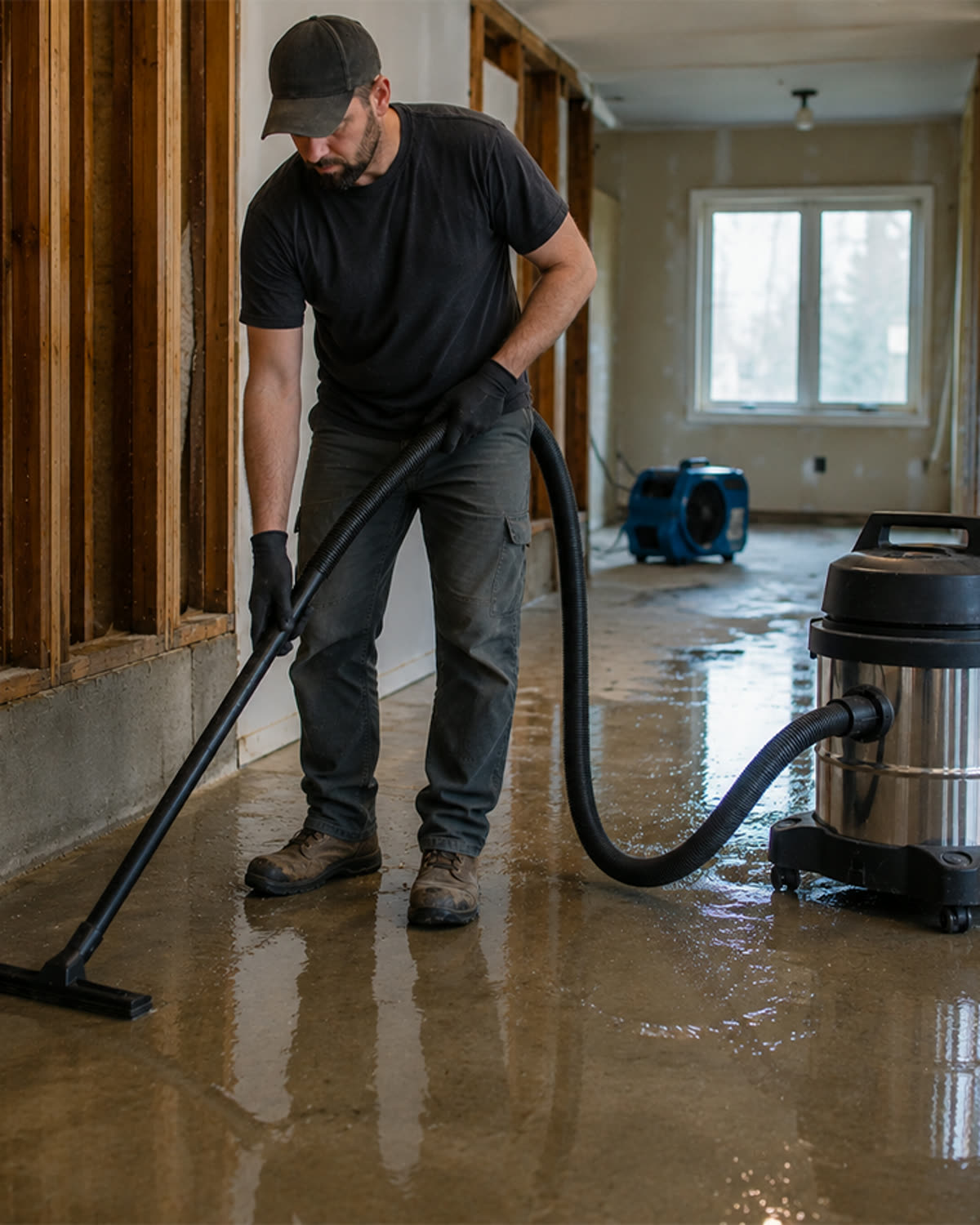
Construction dust behaves differently in an occupied home than on an open jobsite.
It can travel through:
- Doorways
- Hallways
- HVAC systems
- Stairwells
- Clothing
- Tools
- Foot traffic
- Vacuum exhaust
Dust may settle on:
- Furniture
- Electronics
- Bedding
- Kitchen surfaces
- Children’s items
- Finished flooring
The objective is not merely to clean the room at the end.
It is to prevent dust from escaping throughout the work.
Quick Answer
Control construction dust in an occupied home by:
- Isolating the work area.
- Protecting HVAC openings.
- Capturing dust at the tool.
- Using appropriate vacuum filtration.
- Maintaining airflow inward toward the work zone.
- Separating clean and dirty pathways.
- Cleaning in stages.
- Controlling vacuum-bag removal.
- Preventing exhaust from disturbing settled dust.
- Performing final detail cleaning after airborne dust settles.
Containment should be planned before demolition or sanding begins.
The Dust-Control Timeline™
Before Work

↓

During Dust Generation

↓

Between Work Stages

↓

Final Cleanup

↓

Disposal
Dust control must operate through the entire timeline.
Step 1: Identify Dust Sources
Common sources include:
- Drywall sanding
- Saw cutting
- Concrete drilling
- Tile removal
- Floor sanding
- Demolition
- Insulation
- Joint compound
- Adhesive removal
Each source should have a capture strategy.
Step 2: Establish the Work Zone
Use appropriate barriers to separate:
- Work area
- Occupied area
- Material path
- Waste path
- Equipment staging
Containment may include:
- Temporary walls
- Plastic barriers
- Door seals
- Floor protection
- Zippered access
- Dust-control poles
Barriers should remain secure throughout the project.
The Containment Boundary™
Dust-Producing Work

Stays Inside

Protected Living Areas

Stay Outside
Every opening weakens the boundary.
Step 3: Protect HVAC Systems
Dust entering return-air pathways may travel through the home.
Before work:
- Identify supply and return registers.
- Follow appropriate HVAC-control procedures.
- Avoid operating systems in ways that spread dust.
- Protect openings using suitable methods.
- Coordinate with building requirements.
Do not block systems in ways that create unsafe conditions.
Step 4: Use Source Capture
Capture dust before it reaches the room.
Examples include:
- Sander connected to extractor
- Grinder shroud
- Saw dust port
- Drill attachment
- Local capture hood
Dust Captured at Tool

↓

Less Dust Reaches Air

↓

Less Dust Reaches Barriers

↓

Less Final Cleaning
Source capture is more efficient than room-wide cleanup.
Step 5: Maintain Inward Air Direction
A controlled work zone may use negative pressure so air moves from the occupied area toward the work area rather than outward.
This requires:
- Suitable equipment
- Controlled exhaust
- Secure barriers
- Appropriate filtration
- Monitoring
Improper airflow can spread dust rather than contain it.
Step 6: Use the Correct Vacuum System
The vacuum should include:
- Fine-dust collection bag or reusable pre-collection
- Appropriate primary filter
- Secure seals
- Suitable hose
- Controlled exhaust
- Adequate maintained airflow
A leaking or bagless vacuum may spread fine dust.
Step 7: Separate Debris Types
Collect separately:
Sharp and Bulky Debris
- Screws
- Nails
- Tile
- Drywall pieces
- Wood fragments
Fine Dust
- Sanding dust
- Drywall powder
- Concrete dust
- Fine sawdust
Separating sharp debris protects fine-dust bags.
Step 8: Control Foot Traffic
Dust travels on:
- Shoes
- Carts
- Cords
- Hoses
- Tools
- Clothing
Create:
- Defined entry point
- Clean transition area
- Tool-cleaning process
- Floor protection
- Waste route
The Tracking Path™
Dust on Floor

↓

Dust on Shoes and Wheels

↓

Dust in Hallway

↓

Dust Throughout Home
Containment includes movement control.
Step 9: Clean in Stages
During Work
Remove accumulating debris before it interferes with containment.
End of Each Shift
- Vacuum surfaces
- Remove waste
- Inspect barriers
- Clean transition areas
Final Cleanup
- High surfaces first
- Walls and ledges
- Equipment
- Floors
- Edges and corners
Allow airborne dust to settle before the final inspection.
Step 10: Control Vacuum Exhaust
Position the vacuum so exhaust does not:
- Blow across dust piles
- Lift plastic barriers
- Disturb finished surfaces
- Push dust under doors
- Create turbulence around cleanup
If dust exits the exhaust, stop and inspect filtration immediately.
Step 11: Remove Bags Carefully
A well-contained project can be contaminated during disposal.
Use:
- Dust-settling time
- Slow tank opening
- Supported bag removal
- Sealed waste
- Secondary containment
- Defined removal route
Step 12: Final Verification
Inspect:
- Window sills
- Door tops
- Baseboards
- HVAC grilles
- Cabinet tops
- Light fixtures
- Floor edges
- Adjacent rooms
Use angled lighting to reveal residual fine dust.
Occupied-Home Dust-Control Checklist
Before Work
- Dust sources identified
- Barriers installed
- HVAC considered
- Floor protection installed
- Waste route established
- Vacuum inspected
- Bags and filters stocked
During Work
- Source capture operating
- Barriers remain sealed
- Work zone airflow controlled
- Debris removed in stages
- Sharp debris separated
- Foot traffic controlled
- Vacuum exhaust directed safely
Final Cleanup
- High surfaces cleaned
- Ledges inspected
- Floors vacuumed slowly
- Edges detailed
- Waste sealed
- Equipment cleaned before removal
- Adjacent areas inspected
Common Mistakes
Relying on Plastic Alone
Barriers without source capture become heavily contaminated.
Leaving HVAC Unaddressed
Dust may spread through the system.
Using a Vacuum With a Loaded Filter
Source capture declines during the job.
Removing Barriers Too Early
Airborne dust may still be settling.
Carrying Open Waste Through the Home
Dust escapes outside the work zone.
Cleaning Floors First
Dust from higher surfaces settles onto them again.
Frequently Asked Questions
Is plastic sheeting enough to contain construction dust?
No. Effective containment also requires source capture, airflow control, cleaning, and disposal procedures.
Should the HVAC system be turned off?
The correct action depends on the home and system. The goal is to prevent dust circulation without creating unsafe conditions.
What vacuum should be used?
Use equipment appropriate for fine construction dust with effective collection, filtration, and seals.
How often should the work zone be cleaned?
Remove debris during work and complete a controlled cleanup at the end of each shift.
When should barriers be removed?
After dust-generating work ends, surfaces are cleaned, airborne dust has settled, and the area passes final inspection.
How can contractors reduce customer complaints?
Prevent dust migration, communicate the containment plan, maintain clean pathways, and verify adjacent areas before completion.
Key Takeaways
Dust control in occupied homes requires:
- Isolation
- Source capture
- Airflow control
- Proper filtration
- Clean pathways
- Staged cleanup
- Controlled disposal
The best dust cleanup is the dust that never escapes the work zone.