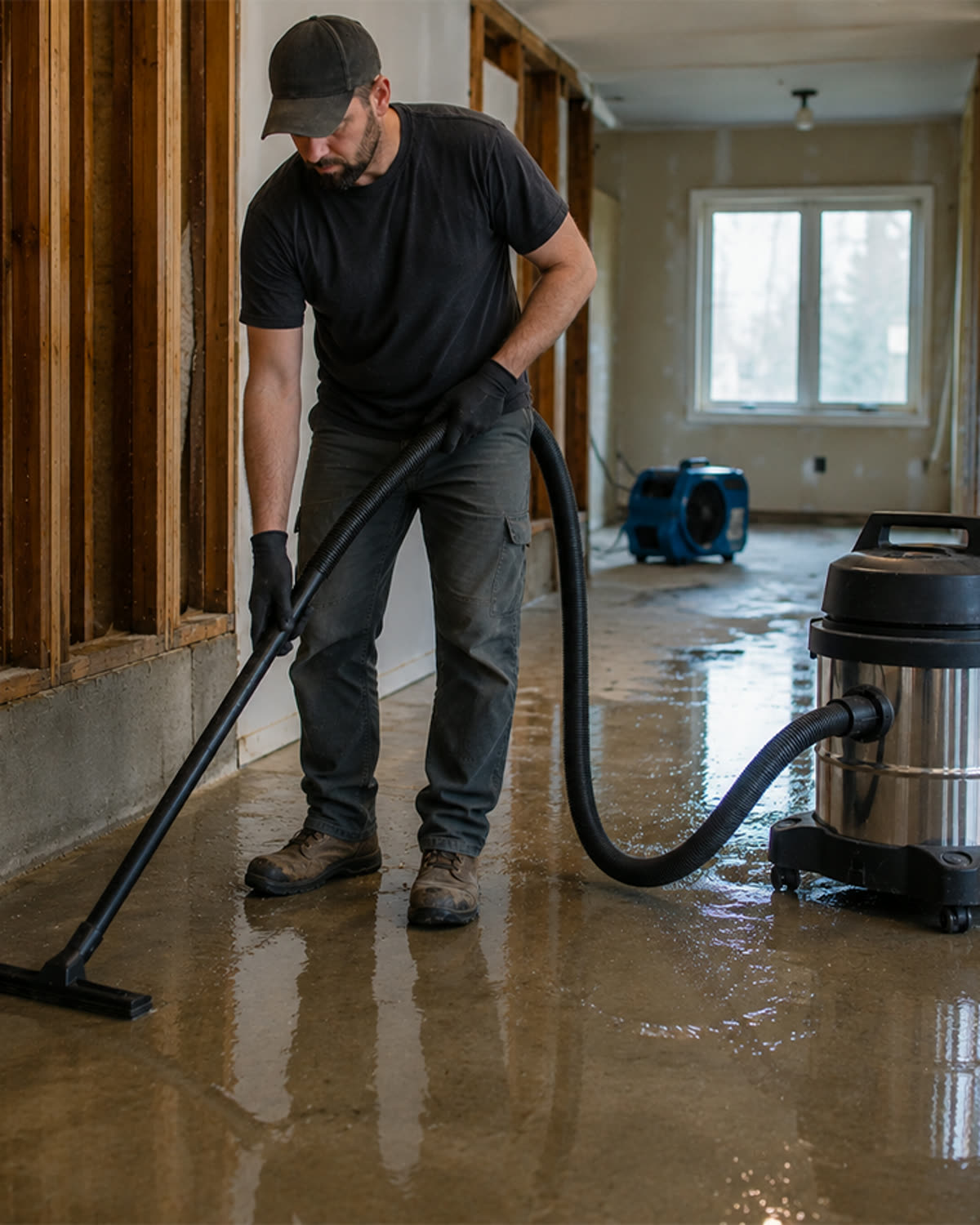
How to stop buying shop vac bags is one of those questions that sounds like it has a trick answer. It doesn't. You stop buying them by switching to a bag you only buy once. Here's how that works, what it costs, and why nobody tells you about it at the register.
The short answer
You stop buying shop vac bags by switching to a reusable one. A reusable bag is designed to be emptied and reloaded, not thrown away. You buy it once, and the rebuy cycle ends. Muk Buddy is $99. It replaces the $500 to $2,000 a year a busy crew spends on disposables, and it keeps suction steady instead of letting it die by lunch.
The subscription nobody signed up for
Here's something worth noticing: the vac was sold to you once, but the bags are sold to you forever.
That's not an accident. Disposable shop vac bags work on the same razor-and-blades model as printer ink and coffee pods. Sell the machine cheap, make the money back on consumables you buy over and over. Nobody calls it a subscription, but that's what it is: a recurring cost you didn't agree to and can't easily opt out of.
Let's put real numbers on it:
| Brand | Part number | Current price | Per-bag cost |
|---|---|---|---|
| RIDGID | VF3502 (2-pack) | $24.98 at Home Depot | $12.49/bag |
| DeWalt | DXVA19-4102 (3-pack) | $20.99 on Amazon | $7.00/bag |
| Craftsman | CMXZVBE38749 (3-pack) | $16.55 on Amazon | $5.52/bag |
| Shop-Vac | Type F (3-pack) | $19.99 at shopvac.com | $6.66/bag |
| Vacmaster | VHBL (3-pack) | $22.99 at vacmaster.com | $7.67/bag |
(Prices as of October 2026.)
A crew on fine dust can burn two or three bags a week. At $5 to $13 per bag, that's roughly $500 to $2,000 a year, per vac, every year. The vac itself might have cost $150. The bags cost more than the machine, and they never stop.
The one-time alternative
A reusable shop vac bag is the exit from that cycle. It's a different product: heavier material, designed to be dumped and reloaded, built to survive hundreds of jobs. You pay once and stop paying.
Muk Buddy is $99. It fits most 2.5-inch inlet wet/dry vacs (Shop-Vac, RIDGID, Craftsman, Stanley, DeWalt). At two disposable bags a week, it pays for itself in roughly two to three months. At three bags a week, even faster. After that, the savings continue as long as you own the vac.
Why it works better (not just cheaper)
The cost math is easy to see. The performance difference is the part people miss until they've lived it.
A disposable bag sends dust and air through the same path. As it fills, fine drywall or concrete dust packs against the filter media and chokes airflow. Suction drops. The motor works harder against the clog, runs hotter, and dies sooner. By lunch, the bag is "full" even though it's barely loaded with debris.
A reusable bag with a 2-chamber design works differently. Debris drops into the first chamber. Airflow passes through the second. The filter stays clean, suction stays steady, and the motor isn't straining against choked air. That's what keeps a vac pulling through a full shift.
So the choice isn't just "$99 once versus $500 a year." It's also "suction that holds versus suction that dies."
How to compare your options
| Option | What it is | Best for | Trade-off |
|---|---|---|---|
| Muk Buddy | Reusable 2-chamber bag, $99 once | Crews who vac regularly and want to stop the rebuy | Higher upfront cost than one disposable pack |
| Disposable bags | Single-use filter bags, $5-13/bag | Light occasional use where convenience beats cost | Recurring expense, suction fades on fine dust |
| Bagless / foam sleeve | No bag, just the filter | Chunky debris with no fine dust | Filter clogs fast, requires frequent cleaning |
We make Muk Buddy, so we're not pretending neutrality. But we're also not pretending a reusable bag is right for everyone. If you vac twice a year for attic cleanout, a pack of disposables is fine. If you run a vac every day on drywall or concrete, you're throwing money and suction away with the disposable model.
The bottom line
How to stop buying shop vac bags: buy one you don't have to keep buying. A reusable bag ends the subscription, holds suction through fine dust, and pays for itself in weeks to months. That's the whole answer.
See how Muk Buddy fits your vac and how the 2-chamber design works →
More on why disposables cost so much and why the model is designed that way: why shop vac bags are so expensive and the best shop vac bags compared.