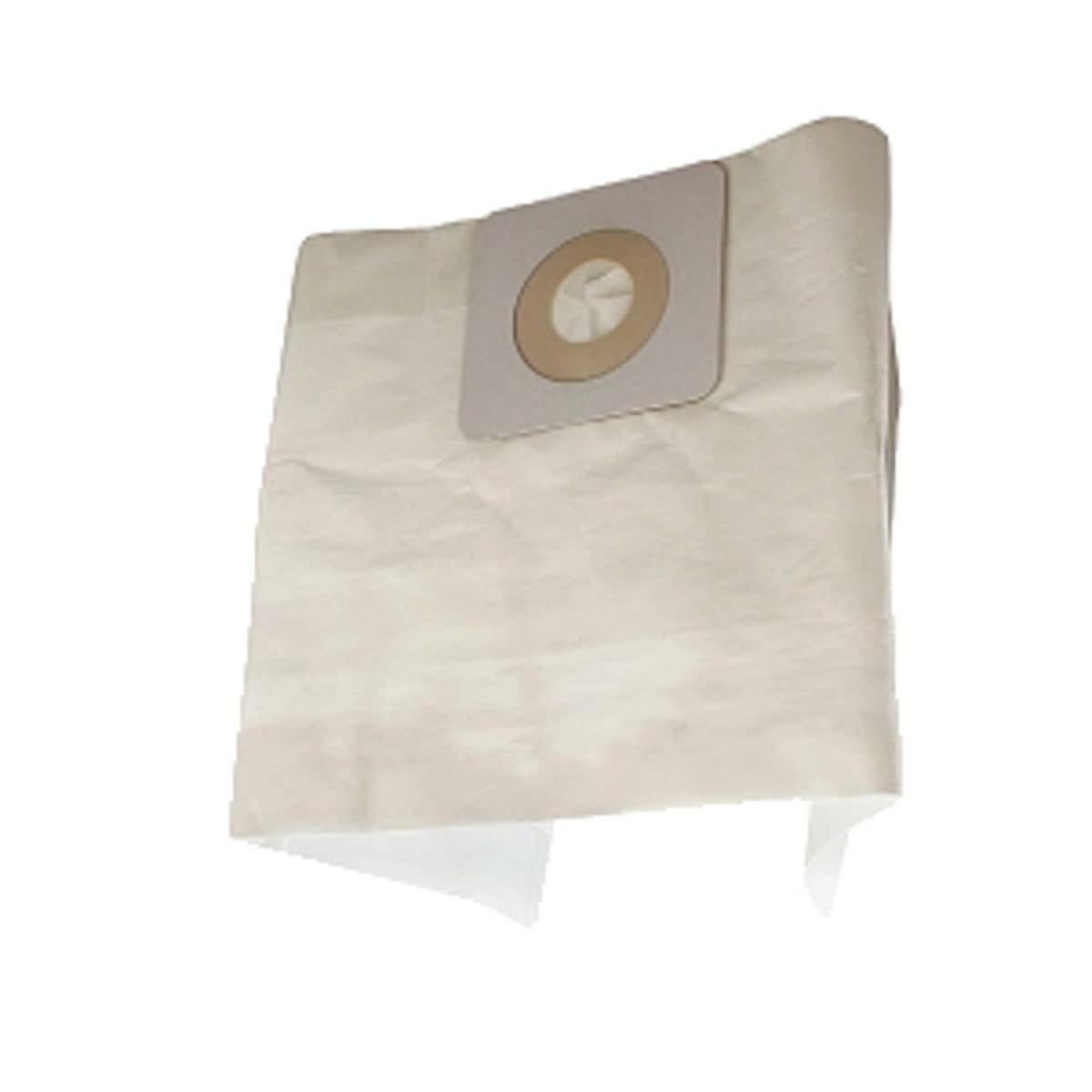
There's a specific kind of bad day a disposable shop vac bag gives you. You're moving along, the bag's getting full, and then — without warning — it rips. Or the seam lets go and the whole load blows back out into the room you just cleaned. Now you're doing the job twice, breathing the dust, and digging a torn bag out of the tank.
Disposable bags don't wear out gracefully. They fail.
Why they fail
Disposable bags are built to one spec: cheap. Thin paper or a light fleece, glued seams, made to be thrown away after one use. That's fine in a magazine ad. On a real jobsite it's a liability.
Here's what pushes them over the edge:
- Fine dust packs heavy. Drywall and concrete dust is dense. A bag that looks half full can already be carrying serious weight against a thin wall.
- Pressure builds as airflow drops. As the bag loads and the filter behind it clogs, pressure climbs inside the tank — right when the bag is weakest.
- Edges and debris. A stray screw, a chunk of tile, a sharp offcut — any of it can nick a thin bag and start a tear.
Put those together on a heavy job and it's not if the bag fails, it's when.
What a blowout actually costs you
The bag is the cheap part. The blowout is expensive:
- You clean the same mess twice — lost time on the clock
- Dust goes everywhere — into the air, the finished work, your lungs
- The filter and motor eat the fallout — a sudden dump of fine dust straight past a failed bag
- Your crew stops — everyone waits while you deal with it
A $9 bag that blows out on a finished floor doesn't cost you $9. It costs you the redo, the dust cleanup, and the time your whole crew lost watching.
Reusing them is worse
A lot of guys try to stretch a disposable bag — empty it, knock it out, run it again. Understandable, but it's the most likely one to fail. Every reuse weakens the paper and the seams. You're loading a bag that's already compromised. That's not saving money; it's scheduling the blowout.
The fix: a bag built to be reused
The reason disposable bags fail is that they were never built to take it. A reusable Muk Buddy bag is the opposite — heavy-duty material made to be filled, emptied, and run again, job after job. The 2-chamber design also keeps the load off the filter, so you don't get the pressure spike that bursts a thin bag in the first place.
- No thin paper to tear
- No glued seams to let go
- Built to be emptied and reused, not gambled on
- No surprise blowouts in the middle of a job
A bag failing mid-job isn't bad luck — it's what disposable bags are built to do eventually. See how Muk Buddy holds up — one heavy-duty bag, no blowouts, no redo.